
SLI home
User login

A BLOG FOR E-COMMERCE LEADERS

  • Blog
  • Resources
  • Webinars
  • Customer Experience Scorecard

SLI Blog

Posts with Amazon Tag

Survey Says . . . Amazon More E-commerce Foe Than Friend
Posted by Christina StublerApril 27, 2017Amazon, E-commerce Research, EPIC, Uncategorized

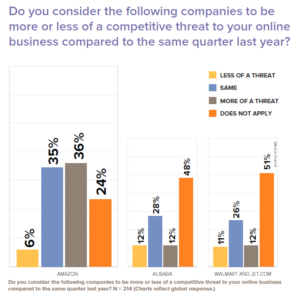
epic-competive-threats-chartWhether friend or foe to your online business, Amazon marketplaces are shaking up retail norms globally – from personalization to fulfillment. Even with Walmart and Jet.com encroaching on Amazon’s discount market share, the online mega mall added “tens of millions” of new Prime subscribers in 2016, reports investor site Motley Fool.

Add consumer expectations for relevance, price and fulfillment speed, and retailers face notable challenges in attracting, converting and keeping customers online as they seek to nab their share of retail e-commerce sales that eMarketer forecasts will top $27 trillion in 2020.

Findings in SLI Systems E-commerce Performance Indicators and Confidence (EPIC) Report illustrate the level of concern about various marketplaces among global online and multichannel merchants. The report provides insight from more than 200 e-commerce professionals — nearly 40% of whom sell on at least one Amazon marketplace, with 42% selling on additional marketplaces.

The key takeaway? Only 6% say Amazon is less of a threat.

“The Amazon Factor”

The e-commerce giant continues to challenge online businesses worldwide, with 11 Amazon marketplaces across North America, Europe and Asia.

Only 6% of the SLI study respondents feel Amazon poses less of a competitive threat. Thirty-two percent of U.S. respondents and 38% of those in the UK report that Amazon is more of a competitive threat compared to the same quarter last year.

And in Australia, where Amazon reportedly plans to open a new marketplace, 47% of respondents viewed the e-commerce giant as an increased threat.

Interestingly, Australian merchants chose “Advertising or Paid Search” as their top online retail initiative for the quarter, potentially indicating that the region’s merchants are gearing up for heightened online competition.

Other Mega Competitors

When it comes to Walmart and Alibaba, the “threat level” depends much more on region. Eighteen percent of the study’s U.S. respondents view Walmart/Jet.com as more of a threat. However, a majority of respondents in the UK (67%), Australia (60%) and New Zealand (62%) said the mega retailer was not a threat to their particular online businesses.

Looking at sentiment about Alibaba, the marketplace is a notable contender for APAC, where 20% of Australia-based and 31% of New Zealand-based merchants view Alibaba as more of competitive threat to their online business in Q1 2017 compared to the same quarter last year.

Whether selling on Amazon (friend) and/or competing with Amazon (foe), online retailers are having to keep pace with the giant as it sets the bar for the front office as well as the back office. When asked to select the single most important initiative for their online retail business, Customer Experience earned the top spot from 26% of all respondents, followed by Inventory, Logistics and Fulfillment, which earned 14% of the “votes.”

To learn about practical ways to combat Amazon, read the The Ecommerce Secret Weapon You Haven’t Heard Of on MediaPost’s SearchMarketingDaily.

Findings in the SLI Systems EPIC Report for Q1 2017 are based on a survey conducted between February 6, 2017 to March 6, 2017. For a copy of the full chart-packed report, visit: http://sitesearch.sli-systems.com/Epic-Report.html

For a Successful B2B Site, Take Advice from B2C

Posted by Christina StublerAugust 31, 2015eCommerce, Mobile/Tablets, Site Search

b2b_orange_600x350

The business-to-business industry is rarely considered glamorous. But don’t let its reputation fool you. Think of the almost-invisible wallflower who shows up to prom transformed and looking like a knockout. That’s B2B, and based on the numbers, it should stand for Big and Beautiful.

With more B2B buyers expecting to find what they need online, a growing number of B2B companies are embracing e-commerce. According to a survey by TradeGecko Pte. Ltd., 41% of wholesalers said e-commerce would be their top sales channel in 2015, up from 31% in 2014. In addition, 24% said they will sell online for the first time in 2015 (TradeGecko).

B2B Shoppers Have Higher Expectations

Shoppers have come to expect a customer-centric online experience, and B2B sites would be wise to step up their game. The addition of Amazon Business to the e-commerce scene only increases the pressure to act more like B2C. Why should shopping for work be any less efficient (and fun) than shopping for yourself? B2B buyers want a seamless online experience – even though the B2B path to purchase is usually more cumbersome.

The B2B buying process often requires in-depth research, approval from multiple stakeholders and possibly price negotiation. This combination of complexity and great expectations means your site has more chances to hit (or miss) the mark.

Here are a few ways you can do this:

Showcase Your Expertise

Nothing against your sales team, but your corporate web site is the first choice among executives for learning about business products and services, according to the 2015

Sullivan survey “Executive Buying Behavior.” Make sure potential buyers can easily find the information they desire, whether it’s demo videos, case studies, consumer guides or blogs. A superior site search experience will deliver product results and non-product content, so your visitors find everything they are looking for and more.

Go Anywhere, Be Everywhere

Work-life balance often means blurring the lines between both – and getting tasks done when you can. Research is no longer constrained to the dual-screen desktop at the office. Your customers might be traveling for business or couch surfing from the comfort of their home. Either way, go with them via their smartphone or tablet. As a bonus, the more mobile friendly you are, the higher you will rank in Google’s search page results.

Be Supportive

Set a gold standard for customer service. While today’s B2B shoppers want to independently scope out what you’ve got, they also want to know you’re there when they need you. Make it easy to place orders, track orders, make payments, get answers to frequently asked questions, find technical documentation and talk to a real person.

For more tips on creating an exceptional online shopping experience that will win loyal customers, take a look at this B2B Industry Brief from SLI Systems.

Christmas in July? The More (Sales) the Merrier!

Posted by Christina StublerJuly 14, 2015eCommerce, Merchandising

^F4DAD660483473260EA5D4FE26EE12DA0E23D897E35805D695^pimgpsh_thumbnail_win_distrLike many, I wasn’t planning on a shopping spree this week, but now I feel it’s unavoidable. I started making a mental wish list as soon as I heard Amazon’s Prime Day described as “more deals than Black Friday.”

Now with Walmart and others joining the frenzy, Wednesday will be a must-not-miss shopping day. Just like that, the power of the words “Black Friday” have magically created a shopping holiday on a normal weekday in the middle of the year surrounded by no real shopping occasion.

Of course, Christmas in July sales aren’t new, and there’s a reason they work. We aren’t feeling the pain from last year’s holiday purchases and we aren’t yet concerned about saving for the upcoming holiday season, either. In fact, it’s the perfect time to buy something you’ve been eying for yourself.

While many retailers have mid-summer sales, the idea of many retailers having them at the same time creates an event – and compels shoppers to buy. (Think of the original Black Friday and Boxing Day.)

But why should Amazon and Walmart have all the fun? It’s not too late to ride the tide of Prime Day with your own better-than-Black-Friday sale. The beauty of online retailing is merchandising can be changed quickly based on what’s trending. In this case, it’s a mid-summer sale, and I say, the more the merrier.

For more merchandising strategies, check out this blog post or download our white paper “Use Site Search Data to Improve Merchandising.”

Advice for Amazon: Be Honest with Search Results

Posted by Dawn MortensenJuly 8, 2015eCommerce, Merchandising, No Results, Site Search, Site Search Tips

Amazon’s practice of misleading customers with search results is again on trial, after the 9th Circuit U.S. Court of Appeals overturned a lower court ruling on a trademark infringement suit by Multi Time Machine, Inc. (MTM).

Amazon trademark lawsuit by MTMMTM charged Amazon with infringing on its trademark by creating “a likelihood of confusion” when customers search Amazon for “MTM Special Ops Watch,” which is the name of a military-style watch sold by MTM. Amazon uses the MTM Special Ops name multiple times on search results pages, even though they do not sell MTM watches.

Now MTM is entitled to a new trial, or Amazon may try to settle. Either way, it’s time for Amazon to stop fooling its shoppers. Whether they win or lose the case, Amazon should think more about site search best practices that will win loyal customers.

Here’s some advice on how Amazon and other retailers can expertly handle searches that turn up zero results:

  1. Be honest. Search results should never be tricky. The search box is the one area of your site where customers get to tell you exactly what they want. Smart retailers either give customers what they ask for or apologize for not having it. If you mislead customers into looking at other items, they’ll soon realize that you aren’t showing what they want. They’ll feel fooled and will leave frustrated.
  1. Think of the customer experience first. Online businesses depend on repeat customers. You’re not a temporary pop-up shop trying to get quick impulse buys without the concern of having buyers return to your store. When you show customers that you understand what they’re requesting and you’re doing your best to help them find it, it builds lasting respect.
  1. Be smart about merchandising on no-results pages. When you don’t have the specific product or brand that a customer requests, you can still offer alternate items without insulting his or her intelligence. There are a number of possible responses, like “We’re sorry we don’t carry items from that brand, but the following brands are popular with our customers.” In the case of MTM watches, Amazon should state up-front: “We don’t sell MTM watches, but here are similar products you might like.”Sports Authority SLI Systems Site Search
  1. Give suggestions for better search results. Sports Authority handles the no-results page by offering a “Did you mean _____” suggestion, along with the text: “You may have typed your word incorrectly or are being too specific. Try using a broader search phrase or try one of our most popular search phrases,” followed by a word cloud of popular searches.
  1. Reduce the number of no-results pages. Be sure your site search provider includes synonyms and alternate spellings in your search to reduce the number of “no result” searches. After implementing this practice with SLI Systems Learning Search®, Sports Authority saw a 300% reduction in no-results searches.
  1. Study the search terms that end in no results. In its Big Book of Site Search Tips, SLI encourages clients to review their Top No-results Search Report regularly to see what customers look for that does not come up in search results. Paying attention to no-results searches often uncovers opportunities for new items to add to the inventory. It also allows businesses to craft creative responses to a specific no-results result.

Maternity no-results page exampleUK clothing retailer Oasis handles a search for maternity clothes with the message: “Whoops, we’re sorry we don’t cover bumps – shop our accessories instead.”

Beyond potential legal ramifications, Amazon should change the language on its search results pages for the sake of delivering what customers want. Other retailers can follow best practices from the start, and not have to worry about trademark infringement.

From Blog to Buy: Content That Converts

Posted by Dawn MortensenAugust 20, 2014eCommerce, Site Search, Site Search Tips, Social Media, Success Stories

It’s no secret here at SLI that we are arming online retailers with the e-commerce tools they need in the battle against Amazon – and creative content is proving to be a valuable weapon of choice. Many savvy e-commerce retailers use content (videos, blogs, social posts, etc.) to draw shoppers and turn browsers into buyers.

Target is a great example. Target’s e-commerce site now allows shoppers to buy items directly from its blog, A Bullseye View. All a shopper has to do is click a red box (“shop this look”) that hovers over the image of the desired product. Instantly, a box pops up with the item ready to be added to the consumer’s shopping cart.

TargetTarget’s new catchphrase? “Buy the products you want from the content you love.”

Creative content is driving sales in a way that it never has before. Converting shoppers into buyers directly on a compelling blog post is what all retailers strive for with their content. While a blog is a pretty traditional form of content, here are two great examples of SLI customers using non-traditional forms of content to ease the shoppers’ path-to-purchase:

1. King Arthur Flour Shares Recipes

Retailer of specialty flours and baking tools King Arthur Flour combines aspects of its community and knowledge base into its site, providing a wealth of searchable recipes, videos and blogs from expert bakers. Visitors can find enticing recipes with high ratings, see that they have been Pinned to Pinterest 1,000+ times, or read reviews from other users who have made those dishes themselves. Since customers can click a link in the recipe to buy ingredients they need from King Arthur Flour, it’s a seamless path-to-purchase for those eager to try the recipe.

Since working with SLI Systems to integrate this recipe content into its e-commerce search (versus its previous use of Endeca), King Arthur Flour has seen its conversion rate jump from 3.7% to nearly 6%.

If you’re an online retailer that sells any kind of food or kitchen product, you’ll want to offer recipes to showcase your expertise and the value of your products. When you create links from your recipes to the products or ingredients needed to complete the recipes, you’ll see the increase in sales.

FTD Infographic2. FTD Gets Graphic

Online flower delivery retailer FTD uses infographics to drive visitors to its site and help generate sales. When the brand created an infographic using interesting stats about Mother’s Day, it was a nice visual article showing that 76% of moms polled would choose flowers as their gift. It was a popular infographic to share on Facebook, Twitter and Pinterest as millions of sons and daughters considered what to give their moms for Mother’s Day. The infographic not only provided the insight and incentive for buying flowers for mom, but it also linked straight to the FTD site, offering easy access to purchase that Mother’s Day bouquet.

Infographics combine visual appeal with condensed information, making them perfect for grabbing people’s attention and giving them content quickly. They are also nice for the skimmers out there – those of us who are short on time or attention span. Finally, infographics are easy to share. Whether on social media or blogs, infographics are just the kind of content thought leaders love to re-post.

To learn more about how e-commerce sites can increase conversions by creating remarkable content, watch a recorded webinar on this subject or download our free e-book, Use Creative Content to Turn Online Shoppers into Buyers.

Learn to Entice Shoppers with Great Content

Posted by Dawn MortensenJune 25, 2014eCommerce, Site Search, Site Search Tips, Success Stories

Want to drive e-commerce sales, plus bring customers to your site instead of going to competitors’ sites or Amazon? Think content. The creative use of content can give your customers a unique and memorable shopping experience – one that creates powerful brand loyalty and moves customers along the path to purchase.

ContentWPscreengrabIn our new e-book, “Use Creative Content to Convince Online Shoppers to Buy,” you’ll learn how e-commerce sites can increase conversions by creating remarkable content – social media posts, videos, blogs, infographics and more – and then bringing that content into their search results.

As I explain in today’s post on Ecommerce Outtakes, some online shopping decisions are easy, like finding a new water filter using the replacement number. But many online purchasing decisions – buying clothes, shoes, electronics, toys, etc. – are made through closer scrutiny of product details and non-product content, like Instagram photos of real product users or a how-to video showing what can be done with the product.

Such content can really help convince a browser to click the “Add to Cart” button. Consider this sampling of advice from the e-book:

  • Always add photos to your blog or social media post to catch readers’ attention through visuals as well as content.
  • If you’re an online retailer that sells any kind of food or kitchen product, it is a no-brainer to add a recipe section to your e-commerce site.
  • A standout site search is especially critical for retailers with products that don’t lend themselves to very specific searches.

The new e-book features many more tips, along with success stories of companies who have used content to increase conversions, including e.l.f. Cosmetics, FTD, King Arthur Flour, Kidrobot and others. Click here for a free download.

Amazon, You Don’t Know Me

Posted by Max BunagMarch 11, 2014Related Search, User Experience

I’m an avid online shopper. It’s convenient and simple, and best of all, I don’t have to deal with annoying store clerks. These are attributes that are absolutely necessary in my ideal shopping experience. Amazon.com is one of my shopping destinations of choice because of its wide selection of products. It’s like Walmart with a cooler name and actual customer service. The online juggernaut also gets into my head via typical big data fashion — it always tries to guess what I want. The keyword in that last statement, however,  is “tries.”

Amazon thinks it has me figured out as a shopper. The retail giant knows that if I click through to an item on a search query — an item like “Legend of Zelda” — even if I don’t ‘add to cart,’ I have shown interest in said item. Ideally for Amazon, the next time I visit, I would see, click, and buy one of these ‘recommended’ items related to “Legend of Zelda” that are scattered throughout my view as I browse the site. Although Amazon’s concept is spot on, it’s not quite right in execution.

I searched for “The Legend of Zelda,” and as we all know, “Zelda” and all its associated products are exclusively Nintendo products. Therefore, if I’m performing search queries for anything “Zelda” or “Mario” or “Metroid”-related, you’d think that Amazon would recommend Nintendo-specific products to me.

This isn’t the case with Amazon’s recommendations. On my Amazon homepage, I have an entire “recommended” section devoted to — you guessed it — Sony and PlayStation accessories and games. Not only is this a waste of valuable real estate, it’s a missed opportunity. If Amazon’s recommendation algorithms were effective, they would surmise my interest in Nintendo and show Nintendo accessories and games in my feed. PlayStation 3 games are absolutely no interest to me as a Wii U owner.

Now I was curious; would Amazon’s algorithms make similar incorrect assumptions outside the realm of the video game console wars? The conclusion was what I expected. I performed search queries for iPhone and Apple products, clearly showing Amazon that I have an interest in iPhones and Apple products. But, back on my homepage, I get a section dedicated exclusively to LG and Samsung phones. I have literally asked Amazon in all its infinite wisdom to show and bring me directly to iPhones, and the retailer shows me something it should know I don’t want. It’s no different than asking a sales associate where the iPhones are and that associate trying to up-sell LG and Samsung accessories — it does not make sense. In the brick-and-mortar retail world, this would be a lost customer.

There are countless instances of these faulty “product recommendations” not only on Amazon, but all over the e-commerce web space. In theory, product recommendations are a form of suggested selling. It’s the same as merchandising like-products next to each other on a store endcap. If you put too many random products near each other, or completely unrelated ones, you’ll confuse and lose that customer to the store with better merchandising. Need proof? Look at the in-store customer experience in T.J.Maxx and Marshalls versus the experience at Target or Best Buy.

Effective recommendations are a proven way to up-sell and increase conversion. To be effective, however, relevancy is absolutely necessary. SLI Systems recently announced the availability of a new product, SLI Learning Recommendations, which uses the power of SLI Learning Search data to provide contextually relevant recommendations. To learn more, take a look at our Learning Recommendations product page, or contact me at max.bunag@sli-systems.com.

Max Bunag, who clearly favors Nintendo over Sony, is an enterprise sales representative for SLI Systems. 

Stay up to date with SLI

Featured Posts

  • Maximize Revenue with Enhanced Product Impact Testing
  • Top Five Ways to Prepare for Peak Season
  • Facets, Facets, Who’s Got the Facets?
  • Personalization: It’s Kind of a Big Deal
  • M is the New E: Mobile Commerce Trends and Predictions

Categories

About SLI Systems

  • What We Do
  • Who We Are
  • Why SLI

Learn

  • Webinars
  • News Room
  • Events

Connect

© Copyright SLI Systems, 2018. All Rights Reserved | US: (866) 240-2812 | Legal