SLI home
User login

A BLOG FOR E-COMMERCE LEADERS

  • Blog
  • Resources
  • Webinars
  • Customer Experience Scorecard

SLI Blog

[Quiz] Are You Giving Your Site Visitors a Personalized E-commerce Experience?

Posted by Amy LindseyMarch 9, 2017Uncategorized

Providing your site visitors with a personalized e-commerce shopping experience is critical to drive conversions and increase customer loyalty. Are you giving your site visitors a personalized e-commerce experience? Take this short quiz to find out!

Read More

4 Ways Content Drives Commerce

Posted by Chris Brubaker, Chief Marketing OfficerMarch 7, 2017Uncategorized

To have a chance in the battle against Amazon.com and other megastores, retailers are arming their e-commerce sites with the most powerful online tools — and creative content is proving to be a valuable weapon of choice. Your online presence needs to be about much more than the products you sell. A website or mobile site should be an educational resource for consumers, offering unique photos, videos, tools, blog posts, reviews and more, which amplify your brand and convince shoppers to buy.

After all, marketing with content pays off. The Content Marketing Institute found that companies that adopt content marketing see conversion rates that are nearly six times higher than their competitors. In fact, content marketing leaders experience 7.8 times more site traffic than nonleaders.

While content marketing requires an investment of time, money and skill, here are four practical ways any online business can provide shoppers with useful content that drives commerce:

1. Get seriously social. Be sure to align your social media strategy with the way your customers use it, applying resources where they matter most. Find out which channels your customers use most with tools like BuzzSadorebeautyumo and others that do the in-depth research for you. If you have more fans on Pinterest than Twitter, then cater to those users with high-quality photo content that’s perfect for pinning.

You can also integrate content from your social media networks into your website to deliver more information to shoppers and get them excited about buying your products. For example, with more than 26,000 Facebook likes and nearly 5,000 Twitter followers, Adore Beauty knows that it makes sense to bring its social conversations into its product search. When you use the search box on the adorebeauty.com site, you’ll see related product results along with social media posts, discussions and articles related to the same search term.

2. Bust out your blog. A blog is an excellent way to incorporate non-product content while showcasing your brand’s individual voice. It can also generate some great organic traffic to your site and naturally improve your search engine optimization.

elfbeautyblog

The e.l.f. Cosmetics beauty blog offers a prime example. Posts share a wide range of beauty topics, from tips and how-tos to the most up-to-date seasonal beauty trends. Many of these posts don’t actually promote e.l.f. products, but provide fun insight or helpful information. The celebrity-inspired looks, with links to the products needed, are powerful for driving conversion.

To make finding valuable content seamless, include blog content in search results — somewhere below best-selling products but above the fold. Keep in mind that while a blog can be an impactful tool for posting information about new products, it should first be an educational resource. Balance promotions with content that’s purely meant to educate and help solve readers’ problems.

3. Serve up tips, tutorials and recipes. Whether selling fishing rods or casserole dishes, specialty retailers can offer great educational value and a sense of community to their customers online. Step-by-step articles with photos or video instructions build excitement about the products needed for a task.

recipes

For instance, for every product search, Andersen Windows’ site serves up results with support information and technical documents, including spec sheets, installation guides and how-to videos. As a one-stop shop for the products and instructional information its customers need, Andersen has become an invaluable resource.

Catering to food fans? King Arthur Flour, a popular site for bakers of all levels to purchase baking products, has made it easy for customers to share recipes, read reviews, shop for ingredients, and link to related videos or blogs. By connecting users with ingredients and products that can be bought right on-site, King Arthur Flour increased its conversion rates from 3.7 percent to almost 6 percent, and search-based revenue from 17 percent to nearly 50 percent.

4. Get real with FAQs. The Frequently Asked Questions (FAQ) page doesn’t have to be dull — it can be a great tool for content marketing. By answering customer questions in a creative way, the FAQ page can help engage your customers, demonstrate knowledge and show your brand’s personality. Customer questions can also fuel ideas for other content, such as a new blog post or a helpful how-to video. Then, when people search for answers, they’ll find even more of your content to help.

REI is one retailer that makes great use of FAQs. The outdoor retailer fields actual questions from its customers and turns them into how-to and advice videos on its “REI Find Out” YouTube channel. The effort positions REI as an authority. When people look online for answers to questions like how to fix a bike flat, REI’s content will pop up in their search.

These four strategies, among others, increase customer engagement, loyalty and, ultimately, sales. To be effective, content-rich sites must ensure shoppers can quickly find relevant content. Be sure that you provide site search that exceeds expectations with an advanced autocomplete function (i.e., makes suggestions as you type) and intuitive navigation. A search box drop-down with thumbnail images, mini descriptions and prices are eye-catching features. After all, your customers may not even know you offer a particular product until you show them.


This article first appeared in Total Retail on January 7, 2017.

Read More

Is Your Site Navigation Optimized for Conversion?

Posted by Amrita Sohal, Sales Director at SLI SystemsFebruary 28, 2017Uncategorized

The opportunities provided by e-commerce are at an all-time high. Technology is evolving, customer behavior is changing, and sales are skyrocketing. In fact, by 2020, e-commerce sales are expected to reach $4 trillion. This growth is prompting companies to ask what they can do to capture a bigger piece of this expanding market.

Website navigation is something that most companies know is important, but far too many don’t spent enough time optimizing it for maximum results. When shoppers arrive and find navigation that isn’t friendly, they click away, often straight into the arms of competitors.

Even small changes can have a serious impact on the bottom line. Here are seven strategies for improving navigation and maximizing conversions.

Draft “A” Players to the Menu

Most navigation menus are created logically based on what companies believe customers will search for without much consideration about the impact of quantity. When it comes to the number of choices available on the menu, less is always better. But why?

Psychological experiments show that a person’s short-term memory holds only a limited number of items. When you pass that limit, you start forgetting items. But what is that perfect number?

There are seven days in a week, seven colors in a rainbow, seven seas and a seven-number limit on what people will remember (it can be plus or minus a couple of items, depending on the individual). So start thinking about your navigation menu as the “A team.” There are a limited number of spots, so reserve those spots for the very best performers.

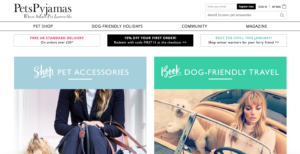
For example, check out PetsPyjamas website. The company has narrowed down its navigation menu to four items.

petspyjamas-navigation

Key takeaway. The navigation menu should contain no more than seven items. Test different items to discover which combination produces the best results.

Order Items with Purpose

When creating the navigation menu, consider what is known as the “serial position effect,” which explains the tendency of people to recall the first and last item on a list. All those items that appear in the middle are generally lost.

For example, the last time you visited the grocery store you may have asked your significant other, “Hey, do you need anything?” He or she then rattled off several items, which you tried to commit to memory. The first few items stuck and the last items stuck — but everything else in the middle was lost. This is the serial position effect in action. But how does it apply to optimizing your navigation?

The answer is simple. Take the two most important items from your navigation list, and place those in the prime spots, which are the first and last navigation positions.

For example, if your most profitable category is shoes, you should list it first on the navigation menu, followed by another highly important category. Contact Us should be placed last. Number each page that will appear on the navigation menu by importance and place as appropriate.

Key takeaway. Ordering your navigation menu intuitively is a good start, but if you want to drive greater results, you need more. The most important items should always go first and last in the lineup.

Use Descriptive Words

Visit any website and you’ll often view general navigation headers such as Products, Services or About Us. These labels get the job done, but if you want to drive greater conversions, you need to get descriptive.

Most customers start by searching something specific, not “products” or “services.” So when you find a way to incorporate the descriptive words that customers search into your navigation headings, it creates optimized results.

For example, perhaps a customer searches for “winter boots” and locates several retail stores that offer that category of product. If you have a navigation category titled “winter boots,” that will help optimize your website and conversions.

If you aren’t sure which terms are being searched, check out the Google Keywords tool, which reveals the keywords that customers are searching to find similar products and services. There are also various analytics tools that will uncover this information.

Key takeaway. If you have a choice between listing “services” or a specific service on the navigation menu, always opt for the latter. Being specific results in a website that is instantly more optimized and relevant to customers.

Break Down Search Barriers

Site search does not get enough credit. Shoppers who use site search are some of your most profitable customers, with order values 11 percent higher than non-searchers’ order values. Evaluate your existing site search and ask, “Could it work better?”

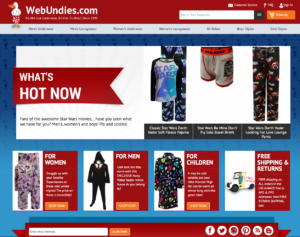
Start by placing the search bar strategically. For example, make your search bar more noticeable by changing the color so it stands out. WebUndies.com created an off-white navigation bar to ensure that users can easily find it.

webundies-navigation

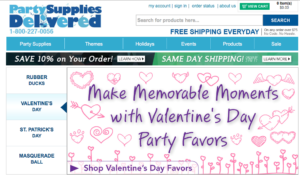
Party Supplies Delivered includes a colored button next to the search feature to make it stand out.

party-supplies-delivered-navigation

You can also place text inside the search bar to encourage visitors to use it. For example, you can include text such as “enter keyword or item number” to get customers started. And finally, it’s always important to ensure that your search functionality works properly and customers don’t turn up empty-handed when searching your products.

Key takeaway. Customers who use search are more likely to purchase. If your website navigation strategy does not optimize search, consider revising it. Shoppers who search are proven to convert and spend more on average. Capture these shoppers and you can quickly improve your bottom line.

Create Strategic Navigation for Different Audiences

In Lewis Carroll’s Alice in Wonderland, Alice says, “Would you tell me, please, which way I ought to go from here?” The Cheshire Cat replies, “Well, that depends a good deal on where you want to get to.” Alice says, “I don’t much care where.” And the Cheshire cat replies, “Well, then it doesn’t much matter which way you go.”

Like Alice, customers need direction. They have a general sense of where they’d like to go, but need companies to illuminate their path and make it easy. Some companies have two or more very different segments they serve. As a result, the content they need to view is distinctly different.

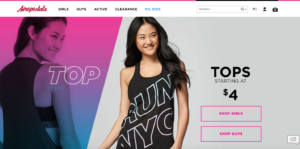
For example, clothing company Aeropostale serves both men and women. They must provide relevant experiences for both audiences, but first and foremost they need to get them headed in the right direction.

The company accomplishes this with a choice on the home page, “Shop Girls” or “Shop Guys”, which helps people navigate in the right direction.

aeropostale-navigation

Key takeaway. If you serve two very different segments, navigation should be optimized to lead each group quickly to the right path. Accomplishing this results in far fewer lost visitors, decreased bounce rates, and higher online conversions.

Create Fat Footers

Navigation fatigue is a real thing. To combat it, use all of your website real estate, especially that footer. This is a place where you can provide a bird’s-eye view of the site and allow users to zoom in and find what they need most.

This is also a huge SEO opportunity, because you can include commonly searched words to drive more traffic. Plus, since the footer is neatly tucked away at the bottom of the page, it doesn’t clutter up the user experience.

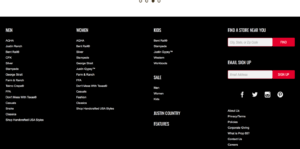
Justin Boots uses this strategy. The company, which sells high-quality boots for men and women, lists relevant SEO terms with links to their pages at the footer.

justin-boots-navigation

Key takeaway. Include your most important navigation terms in the header of the page, but don’t forget about the footer space. This commonly unused space can provide additional navigation and SEO opportunities.

Monitor Customer Behavior

Reach your customers and generate greater results by understanding their behavior on your website. For example, analytics tools provide insight into a customer’s journey through your website, ranging from where they originated to the various pages they visited.

Tapping into this data can help you understand overarching themes in customer navigation and behavior. For example, you may discover that a large percentage of customers are exiting your website on the same page. Why are bounce rates for this page so high? Could it be an issue with the navigation, or does the content need revising? Make changes and test the results to uncover the problem.

Key takeaway. Understand customer behavior to optimize navigation. These patterns tell a story and allow you to make changes to enhance the customer experience and drive greater impact.

Delight Your Customers

Navigation is about decreasing bounce rates and driving conversions, but at its core it’s about the customer. Strategically optimizing navigation is a time commitment for companies, but to the customer it must always feel simple. Navigation menus, search boxes, and all pieces of the puzzle must work together effortlessly to create experiences that eliminate friction.

Jeff Bezos, founder of Amazon, said, “We see our customers as invited guests to a party, and we are the hosts. It’s our job every day to make every important aspect of the customer experience a little better.” When you start thinking like a host rather than an e-commerce company, you naturally create more delightful experiences — and the conversions quickly follow.

What is SLI Systems?

At SLI, our machine-learning platform offers up the most advanced technology available to accelerate your e-commerce and continuously delight customers at every click. SLI Learning Navigation® builds dynamic navigation based on shopper behavior to guide shoppers to what they want in the fewest amount of clicks.

For more tips, check out our e-book The Big Book of Navigation Tips.

Read More

How to Adapt Your SEO Strategy to Better Support E-Commerce

Posted by Kim Presser, Director of SalesFebruary 18, 2017Uncategorized

seo_cmykasset-22

Adapting your SEO strategy to support your e-commerce site can be a daunting process. This is particularly true for companies that are just beginning to venture into e-commerce. Consistently achieving high rankings on search engines is vitally important to the success of your e-commerce business.

High rankings equal more traffic, which, in turn, results in larger sales and a higher bottom line.  But staying on top of the rapidly shifting algorithms search engines use to rank websites can seem nearly impossible at times. In this article we’ll go over some basic tips that can help your company effectively transition your SEO strategy to better support your e-commerce goals.

Adopting some of these basic guidelines can help ensure that traffic to your site, and consequently sales, don’t dip as search engine algorithms change.

Use a Platform That Integrates SEO

While this tip may be obvious, many companies still attempt to implement effective SEO in-house. Although there are varying degrees of success with this, it is important for many companies seeking to expand their e-commerce site to build their SEO strategy around a flexible platform that incorporates a robust SEO functionality into its framework.

By using a platform to streamline your SEO efforts, you are able to better focus on two other areas of e-commerce that matter: your products and your customers. Platforms that integrate SEO have the inherent advantage of being able to apply seamless changes across the framework of your site to adapt to changing search engine algorithms.

Additionally, a platform that incorporates support for SEO will allow you the flexibility to make quick and effective adjustments to your landing pages and internal linking so that you continually rank high on search engines.

Create Smart Landing Pages

Creating smart landing pages for your products should be an integral part of your SEO strategy.  Your platform should be flexible enough to allow you to create landing pages based on the products that your customers are searching for.

These landing pages will then be crawled and picked up by search engines, resulting in higher rankings and more traffic. Ensure that your landing pages can be created dynamically, so that you can quickly and effectively adapt to both your customer’s changing shopping patterns and changes to search engine algorithms.

Make Your E-Commerce Site Mobile-Friendly

Although ensuring that your site can be accessed easily and quickly from both mobile and desktop devices should be a cornerstone of your e-commerce strategy, many companies fail to account for mobile accessibility in their SEO efforts.

Having responsive pages that load quickly on mobile devices will result in higher rankings on search engine results. When designing or making improvements to your e-commerce site, make sure that each page is optimized for mobile.

Prioritize User Experience

Adapting your site design to enhance user experience should also be a cornerstone of your SEO strategy. Ensure that your site is easily navigable and searchable. Include robust search and autocomplete functionality that will allow your customers to easily find the products they’re looking for.

Also implement intelligent structuring into your site, and verify that search queries end up where they are intended to go. Focus on curating quality content over quantity. Lastly, respond to feedback from customers, whether it be through direct feedback or analysis of usage patterns, to ensure that your site is structured and designed for optimal usability.

Don’t Forget About Security

Utilizing SSL or HTTPS security on your site is a necessity in todays e-commerce world. Not only will your customers feel more secure, but your rankings on search engines will also be positively impacted. Failure to use SSL or HTTPS on your website will result in search engines labelling your site as “not secure,” which will impact both your rankings and the traffic generated to your site.

Ensure that your SEO strategy includes shoring up any security vulnerabilities on your site, and verify that your site is utilizing SSL or HTTPS. Your customers will appreciate it, and your rankings will improve.

For more help improving your SEO strategy to better support e-commerce, watch our webinar How to Get the SEO-Driven Revenue You’re Missing.


Read More

Increase Sales This Easter With E-Commerce Recommendations

Posted by Amy LindseyFebruary 16, 2017Uncategorized

original

As Easter draws near, online retailers around the world should be prepared to maximize every dollar they can from the increase of shoppers they’ll have over the holiday.

In 2016, more than 8 in 10 Americans celebrated Easter, according to an NRF survey. Those who celebrated spent an average of $146 per person on planned Easter purchases—a 3.8 increase over the previous years’ spending.

In some locales, Easter is a much larger shopping holiday than it is in the U.S. In the UK last year, planned Easter purchases rose 4.3 percent, when compared to sales in April 2015. Easter shoppers in the UK spend more since the UK declares the Friday before Easter Sunday and the Monday after, bank holidays. Also over Easter, schools in the UK close for two weeks, prompting many families to increase spending not only on traditional Easter goods, but also on travel, sporting goods and DIY projects.

Online retailers whose markets cover areas where Easter celebrations are pronounced can benefit from taking proactive steps to prepare their e-commerce strategy for an influx of customers in the coming months. Here’s what e-commerce companies need to know.

Industries That Should Be Prepared for Easter Shoppers

While all e-commerce retailers will do well to prepare for Easter shoppers this year, it’s more critical in some industries than others. Apparel, sporting goods, travel and home improvement retailers should be prepared for larger-than-average sales numbers this Easter season, as should retailers selling movies, books and magazines.

Personalization: The Key to a Successful E-Commerce Presence

Today, customers shopping online have more opportunities than they could ever hope to redeem. Thousands of online merchants provide products that are similar to or duplicates of one another, and it’s harder than it’s ever been to get noticed online.

Fortunately, e-commerce merchants still have one secret weapon: personalization.

In a world where the possibilities are limitless and customers can have anything they want, whenever they want it, personalization can serve as the added “boost” that helps differentiate one company from another.

Personalize Your Shopping Experience with Smart Recommendations

Today, there are dozens of different solutions for e-commerce retailers who want to make the shopping experience more personal for customers. Tools designed to “learn” from customer behavior and make recommendations based upon it are a great place to start. In addition to providing a more personalized shopping experience, these tools can also do the following things:

  • Boost E-Commerce Sales. Tools that learn from customer behavior can take a great deal of the guesswork out of your merchandising strategies. By automatically adapting to your customers, they make it easier for your company to cycle products according to customer desire, which allows for more (and simpler) e-commerce sales.
  • Create Cross-Sell & Upsell Opportunities. Companies that already have customers on their website over the Easter holiday want to do everything in their power to enhance the order value of each shopper. The right recommendations can provide compelling cross-sell and upsell opportunities. When this is done efficiently, it can help boost a company’s bottom line.
  • Provide Tailored Recommendations. When a tool can learn from a customer’s shopping and browsing behavior, it can display products that are likely to appeal to a given customer. This makes the shopper feel understood by your company, and will lead to repeat sales.

Better Easter Sales Start Here

While many merchants struggle to prepare their sites for sales booms over the Easter holiday, machine learning, cloud-based tools are the perfect place to turn.

Recommendations that are powered by cloud-based machine learning reduce site managers’ legwork and make it easier for companies to deliver a highly personalized, targeted shopping experience to each and every customer, naturally leading to happier shoppers and higher Easter sales.

To learn how you can maximize average order values on a cloud-based, machine learning platform, read the SLI Systems Learning Recommendations™ product brief.

Read More

Why Autocomplete is Essential to Site Search

Posted by Katherine Belshae, Sales Director at SLI SystemsFebruary 11, 2017Uncategorized

In today’s e-commerce environment, using a robust site search system with autocomplete has been recognized as one of the key steps in generating higher revenue. Shoppers that use site search have higher average order values and higher revenue per visit than shoppers that simply browse.

Additionally, shoppers that search for items are more likely to be converted from browsers to buyers, and less likely to move on to other vendors. While site search functionality can be found on nearly every e-commerce site today, many sites fail to capitalize on the power of search because they don’t incorporate a powerful autocomplete feature in their search design.

First, let’s cover some of the top reasons why autocomplete is essential for site search functionality, particularly in the changing e-commerce landscape of 2017. Finally, I’ll discuss how autocomplete can be enhanced to provide a rich shopping experience that leads to even higher conversions.

More Mobile Shoppers Than Ever Before

For the first time ever, more people are shopping from mobile over desktop devices. This trend is expected to continue throughout 2017 and beyond. Autocomplete is essential for catering to mobile shoppers on your site. Many shoppers on mobile devices expect a powerful autocomplete function so that they can easily navigate between different products.

Shoppers desire the convenience of not having to type out complete product names or descriptions on a small screen keyboard. Accommodating this will result in higher revenue per visit and greater customer retention.

Seamless Desktop to Mobile Shopping Experience

Autocomplete functionality for both desktop and mobile devices allows you to deliver a consistent shopping experience across all devices. Users on mobile devices have begun to expect a similar shopping experience regardless of the device they access your site through, and it is up to you to deliver on this expectation.

Autocomplete assures desktop and mobile users that they can quickly access whatever product they are searching for without having to deal with lengthy search terms or search filtering options that may be unwieldy on mobile devices.

Easier Site Navigation

Intelligent site design, with a focus on simple navigation, has always been crucial to shaping a satisfactory online shopping experience. Incorporating autocomplete into your site’s search tool is an essential aspect of overall site design. Although smart site layout, menu options, and filtering tools are important aspects of ensuring shoppers can find the products they desire, autocomplete adds another dimension to these tools.

Autocomplete enables your customers to quickly and easily find the products they are looking for, without having to scroll through pages of similar products first. If customers are confident they can find products quickly and efficiently, they are more likely to be converted from one-time shoppers to repeat customers.

 A Richer Autocomplete Experience

The benefits of autocomplete are not limited to quick and easy navigation, however. While this is the core function of autocomplete, it can also be configured to learn from shopper’s behavior and offer dynamic product recommendations based on a customer’s shopping and purchasing history.

This will allow shoppers to quickly access products they repeatedly purchase, or products similar to those they have already searched for. Additionally, if a shopper is using more general search terms, autocomplete can offer category recommendations by brand, product type, or department level – allowing shoppers to quickly navigate to the level they want to browse.

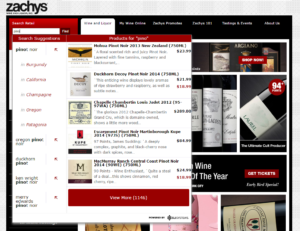
Zachy’s Wine and Liquor capitalizes on the converting power of autocomplete by enhancing their standard functionality with search suggestions based on user behavior, made visually appealing with product images and short product descriptions.

By combining intelligent recommendations and product images into its autocomplete feature, Zachy’s increased conversion rate by 10x for shoppers using site search, and average order values by 2x for those same shoppers.

zachys

These aspects of predictive autocomplete create a more customized shopping experience for your customers, and can result in higher revenue per transaction through recommendations. Leveraging a rich autocomplete platform on your site is crucial to generating greater revenue online. Autocomplete allows you to easily offer a more customized shopping experience for nearly every site visitor.

Autocomplete is an essential tool for catering to mobile shoppers by giving them the tools they need to quickly and conveniently navigate through your site to the products they want.  Autocomplete also allows you to cater to both desktop and mobile shoppers – giving shoppers the seamless shopping experience they desire regardless of the device they are using.

To learn more about autocomplete and how to improve the search functionality on your site, take a peak at our e-book The Quick Guide to Better Site Search.


Read More

5 Personalization Tactics to Leverage in Your E-commerce Strategy

Posted by Amrita Sohal, Sales Director at SLI SystemsFebruary 2, 2017Uncategorized

personalization

Travel back a century, and personalized experiences weren’t the exception but rather the norm. When you entered a department store, the clerk would know your name, remember recent purchases and make personalized shopping recommendations.

A few items from the most recent store shipment may have even been held for you because the clerk truly understood your preferences. Fast-forward several decades, and brands today are creating these same experiences — but they’re doing it much differently.

Retail e-commerce sales are forecasted to reach almost $1.92 trillion this year, with double-digit growth expected through 2020. At the heart of this growth are personalized experiences. Gartner predicts that by 2018, B2B companies with effective personalization strategies will outsell their competitors by 30 percent.

But where should you start? Here are five personalization tactics to leverage in your e-commerce strategy.

Personalizing Email: Going Beyond First and Last Name

People frequently receive emails from retailers that include first and last name personalization. But think about it. After reading these emails, do people really feel a personal connection with the brand? Probably not. This “first and last name” tactic was the earliest form of personalization, but marketers today are taking this one step further to achieve excellent results.

A study by Experian revealed that personalized email promotions resulted in a 29 percent open rate and a 41 percent click-thru rate when compared to emails that do not have personalization.

But it’s important to note that customers aren’t just reading and opening these emails at higher rates. They are also making purchases. In fact, 41 percent of customers report purchasing more from retailers that send them personalized emails. But where should you start?

If you want to optimize your email campaigns to drive greater open rates, click-through rates, and sales, consider segmenting your customers into carefully selected categories so that each individual receives more relevant emails.

Start by examining the behavior of each customer. For example, you could evaluate how frequently customers have purchased in the past and segment them into three different categories – one-time buyers, three-time buyers, and buyers who are no longer engaged.

Once you have these segments, you can create messaging designed to resonate with each group based on that group’s levels of engagement. This means that emails sent to frequent purchasers will be much different than emails sent to those with low engagement levels. For example, you may choose to send the disengaged customers a “we miss you” email with a special offer or other incentives to shop again.

Implementing triggers is another great way to reach and engage with customers on a more personal level. Begin by carefully tracking the behavior of customers on your website. You can set up triggers that will send off emails based on this behavior. For example, let’s say that a customer abandons her shopping cart. Within seconds, she could receive an email focused on reengagement that includes a discount if she purchases within the next 24 hours. drives her to make a purchase (more on that in a minute).

Key takeaway. Use data about your customers’ behavior to drive personalization efforts. Segment groups of customers with the same behavior to create targeted, personalized campaigns, such as email campaigns to reengage shoppers and drive sales.

Webpages: Add Relevancy to Your Pages

Most companies have a standard website that greets all customers. Maybe you’ve even evaluated the performance of your website through A/B testing. But your home page could be converting an even larger number of visitors with some simple tactics in personalization.

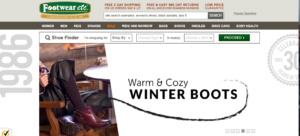
Footwear etc. was able to leverage past customer data to display personalized products on its home page in real time. While this may seem like a small change, they saw a 10% increase in revenue per visitor as well as a 5% increase in conversion rate and average order value (AOV).

footwear

Key takeaway: Get customers to the products they want faster by delivering personalized experiences in real time.

Ramp Up Relevancy with Real-Time Offers

Real-time personalization is one of the most innovative strategies for e-commerce companies to deploy. This technology creates a highly personalized experience for every visitor. But how does it work?

Real-time data is collected from visitors on your website through cookies and other tools. Logic rules match the visitors’ data and segment them into groups. For example, you may show a targeted pop-up to a visitor who arrives from a certain website. Here are a few more methods used to create real-time offers and experiences.

  • Past content: Some companies are capturing details about content the customer has viewed in the past. In fact, 48 percent of marketers use this type of data to create real-time offers.
  • Geographic location: Forty-five percent of companies use location to create contextually relevant offers.
  • Time on site: Thirty-six percent of companies use this type of data to create relevant offers.
  • Site navigational behavior: Thirty-five percent use data about how a customer is navigating the site to provide relevant offers.

The payoffs for personalizing content in real time are large, with nearly three-quarters of companies citing increased visitor engagement as a main benefit and 54 percent saying it improved the customer experience.

When you collect information about each customer on an individual level, a higher level of personalization is available. For example, from where did they enter your site, and how many times have they visited your site? If the customer is a repeat customer, you could send a coupon to his or her mobile device to increase loyalty and close the deal.

Key takeaway. Ask customers to buy lunch right after they’ve eaten — and they won’t buy. They aren’t hungry. But target the customers as they’re walking into the food court at a mall — and now you’ve hit the sweet spot. Achieving the highest level of personalization is all about timing. When you tap into this timing element, sales will drastically improve.

Serving Up Recommendations Like a Friend

If you’re shopping with a friend at an electronics store, he or she might call out, “Hey, didn’t you say you needed batteries? AAA batteries are down this aisle.” Providing personalized recommendations is all about acting like that friend. First and foremost, it’s about being helpful. Once you accomplish that, along with understanding what that “friend” needs most, sales will naturally follow.

Personalized recommendations are welcomed by your customers, and some even look for them on your website. In fact, 77 percent of shoppers say they find recommendations extremely useful, and nearly one-third of customers report having purchased products based on recommendations the company has shown during the sales process. Here are a few tips for creating these types of personalized experiences for your customers.

  • Target customers based on pages visited. Harnessing data from pages that customers have visited allows you to include specific product recommendations based on interests. For example, you can provide suggestions with terms such as “people also viewed” or “people also bought.”
  • Review previously purchased items. The items that your customers have purchased in the past may tell a story about their future needs. For example, perhaps they purchased a printer or a water purifier—something that needs refills frequently. Based on this history, you can display relevant replacement items at the precise moment of relevance.
  • Serve up location-relevant content. For example, let’s say that you’re walking toward a coffee store. As you get closer, your mobile phone delivers a message and provides a coupon. As a result, you enter the store, use your coupon — and the store derives higher revenue.

Key takeaway. Personalization is about becoming your customer’s trusted adviser and friend. If you consistently serve up relevant recommendations, the customers will begin to listen more intently. As a result, customer relationships will become much stronger.

Personalization on Devices

Mobile accounts for one out of every six dollars spent online. Plus, 40 percent of consumers say they purchase more from retailers that personalize their shopping experience across all channels. As a result, when you are thinking about personalization, it’s critical to address mobile devices.

Customers expect the same shopping experience across all platforms, whether they’re interacting through your website, social media — or a mobile device. Plus, it’s important to note that over half of all searches take place on mobile devices. Real-time personalization, as discussed above, helps you push out relevant offers through the devices your customers are using in the moment.

For example, Apple uses this strategy by integrating the mobile experience with physical store locations. Upon entering the store, customers are greeted by Apple on their mobile devices and shown relevant details about products as they move through the store. Unifying all channels helps create the personalized experiences that customers today demand.

Key takeaway. Personalization can no longer happen through just one channel. It’s about creating consistent and relevant experiences across direct mail, email, desktop, mobile, and any other channel where you can reach your customers.

Personalization: Moving Forward with Greater Impact

Jeff Bezos, Founder of Amazon, said, “A company shouldn’t get addicted to being shiny, because shiny doesn’t last.” Personalization isn’t new; marketers have used it for years. The depth at which personalization is achieved, however, is rapidly changing.

Focus first and foremost on the customer. When everything is viewed through the lens of the customer, you instantly become that “trusted advisor,” and results will naturally follow. Using personalization, you create those unexpected moments of serendipity when authenticity is felt and true loyalty is achieved.

Personalization at SLI

At SLI, our machine-learning platform offers the most advanced technology available to accelerate your e-commerce and continuously delight customers at every click. SLI Enhanced Search Personalization™ instantly and dynamically personalizes the shopping experience for both your first-time visitors and loyal customers in real time.

For more tips, check out our webinar Predict More Sales with Personalization.

Read More

6 E-commerce Trends to Capitalize on in 2017

Posted by Chris Brennan, Chief Executive OfficerJanuary 19, 2017Uncategorized

Shopping online concepts

Consumers increasingly expect greater ease and personalized experiences from their online interactions. Online retailers are faced with new challenges for engaging with, and adapting to, the demands and expectations of their customer base. Below, I’ve outlined six of the most important e-commerce trends that should be on your radar as you plan your strategy for 2017.

Incorporate these market shifts into your business model to stay on the forefront of the industry and lay the groundwork for future growth. You’ll provide a top-notch online shopping experience that keeps customers coming back for more.

Real-Time Analytics

Online retailers have access to unprecedented amounts of data on their customers. The challenge is not in the gathering, but in how to filter and translate data in real time into usable and actionable insights. Delays between collection and action can be costly.

In 2017, closing this gap will be critical for the success of online retailers. Those who measure in real time can act in real time to optimize their performance. Integrate a robust analytics platform to capture real-time performance, gain immediate insights, and compare them against your goals or KPIs. Your customers will be delighted with their instantly customized shopping experience.

Equal Expectations from Desktop and Mobile

Of all e-commerce trends, probably the most notable is the continued move to mobile. Mobile accounts for over half of all e-commerce traffic. No online retailer can afford to ignore it. Online shoppers in 2017 want a responsive, streamlined experience from mobile and desktop alike.

Consumers will fully expect every functionality and customization they encounter on their desktops when they shop on their mobile devices. Live-chat services, relevant product recommendations, intelligent auto-complete searches, and smart filtering options will all be necessary if you want to expand and retain your mobile consumer base and keep them coming back for more no matter how they choose to shop.

Personalized Shopping Experiences

Smart retailers realize that the same search term doesn’t mean the same thing to every customer. In 2017, both repeat customers and first-time customers will expect a bespoke experience whether they are searching, navigating or being presented with recommendations. Retailers who tap into the power of machine learning to create contextual personalization across their sites will win higher conversions.

To capitalize on this trend, integrate responsive software that learns from customer behavior to present custom-tailored search and navigation results and intelligent predictive product recommendations.

In addition, expand product recommendations beyond the scope of your site. Integrate them into emails, social-media and web banners to enable broad customer engagement in all corners of the Internet.

Artificial Intelligence (A.I.)

AI is already changing the online retail playing field through predictive search, personalized recommendations, the use of digital shopping assistants and visual product discovery, which allows users to take pictures of items they like, conduct a visual search for the item online, and get personalized recommendations.

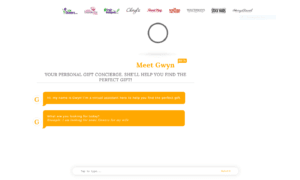
Consider how 1-800-Flowers is using AI to power their GWYN (Gifts When You Need) service. Acting like the shopper’s own personal assistant, GWYN asks the shopper a series of questions in order to learn and predict the product that would be most appropriate. If a user types “I’m looking for a gift for my mother,” GWYN will use natural language processing abilities to interpret the search phrase, ask qualifying questions about the occasion, and make smart product recommendations.

With intelligent machine engines running behind the scenes, retailers will be able to deliver to their customers the highest degree of adaptive personalization possible, helping them feel increasingly understood, catered to, and apt to buy. Retailers who ignore this fast-moving trend will be left playing catch up.

Same-Day Shipping & Free Returns

Flexible delivery and return options will be required of online retailers in 2017 and beyond. Services like Amazon Prime’s free two-day and expanded same-day shipping options have shifted customer expectations toward rapid, cheap, or free shipping. Retailers need to be ready to meet these expectations in order to expand and retain their customer base.

Customers also want a painless returns system. Free returns mitigate the risk of online shopping and encourage customer loyalty. Online retailers such as Zappos have been offering free returns with no questions asked, and consumers have begun to expect that service on other sites.

Customer Engagement: Focus on Social Media

Providing seamless customer service across social media platforms will continue to be a big trend in e-commerce. Retailers who engage with customers on diverse social media platforms enhance the user experience, and give their customer multiple venues through which they can directly speak with customer service representatives.

The delocalization of customer service will allow retailers to reach their customer base across a broad network of platforms. At the same time, responsive customer service across social networks helps convert one-time purchasers into return shoppers. Not to mention the fact that this type of customer service drives increased traffic to your site by demonstrating to first-time shoppers that their questions won’t fall through the cracks.

These six e-commerce trends for 2017 demonstrate the need for online retailers to accurately predict their consumers’ needs, while expanding the base with which they engage with customers and potential customers alike. Capitalizing on these trends will require online retailers to expand their e-commerce deployment to include robust systems that offer real-time analytics, intelligent predictive product placement, and a customized user experience, regardless of whether consumers are on a desktop or mobile platform.

To learn how to capitalize on e-commerce trends with predictive search, download this e-book: The Big Book of Site Search Tips.

Read More

How to Win Over Mobile Shoppers in 2017

Posted by Kim Presser, Director of SalesJanuary 13, 2017Uncategorized

There are very few technologies that have impacted commerce as deeply as mobile. In fact, the adoption rate of mobile is twice that of the Internet, three times the rate of social media, and 10 times the rate of PCs.

In 2011, mobile commerce made up only 11.6 percent of the total $303 billion in U.S. e-commerce business. However, this percentage is forecasted to reach 45 percent by 2020. Trends clearly illustrate that mobile commerce is at the forefront of some amazing growth, so how can companies more effectively win over more mobile shoppers in the coming year?

Many customers rely on mobile to shop, but not all customers are having a great experience. Identify the trouble spots, deploy strategies to fix those areas, and serve up experiences that delight customers – and you will create unshakable customer loyalty. But where should you start? Here are some common problem areas to target.

Payment: Create Trust and Simplicity

One of the top reasons that mobile shoppers abandon their carts is concern over payment security. In fact, a survey conducted by eConsultancy discovered that 58 percent of respondents left the checkout page due to concerns about security.

As a customer, when you shop major retailers such as Amazon.com, you already have a relationship established, and your payment details are safely stored online. When shopping with a new retailer, however, you may wonder if your payment is truly safe.

As a retailer, you will capture more shoppers and sales by handling this objection upfront. Start by offering a variety of payment options, including some that are alternative forms of payment, such as PayPal, ApplePay, or Google Wallet.

Forty-three percent of commerce companies already offer these payment alternatives. Using them allows customers to complete the transaction on your site, but payment details are handled through the customer’s favorite alternative payment provider, which offers the shopper additional peace of mind. Here are a few tips to simplify the mobile shopping experience and capture more sales:

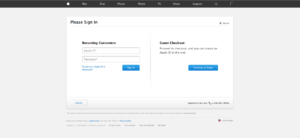
  • Don’t require account sign-up. Mobile users complete transactions on the go. They are waiting for coffee, riding the train to work, or waiting at the airport. They don’t always have time to create an account. So let users decide whether they want to create an account or “check out as a guest.” Check out this example from Apple, which provides customers with both options:

apple-screen-shot

  • Require the fewest steps possible to check out. Look at your existing form. Does it include anything that is unnecessary or that could be streamlined? When it comes to checkout, the fewer steps, the better. Sometimes this involves deleting steps entirely or consolidating steps to provide fewer screens overall. Carefully securitize everything that you require, and ask, “Do we truly need to ask customers for this information?”
  • Anticipate customers’ questions. What types of questions does the customer service team commonly receive about the mobile ordering process? Capture this data. Then use it to create a more seamless and intuitive experience for customers.
  • Make payment errors easy to fix. Did the user forget to enter something or miss a few digits? If so, make correcting those errors fast and easy. Eliminate potential frustration by ensuring that the customer does not need to re-enter data.
  • Ask for only essential information. Customers already feel uneasy about providing payment information to a new retailer. In fact, 11 percent of U.S. adults abandon an online purchase because the site requests too much information, so ask for only the bare minimum.

Key takeaway: Mobile customers move at a much faster pace than desktop users. As a result, commerce companies must continually work to match the rapidly changing needs of these customers. They must continually ask, “How can we simplify the shopping process for the customer?” and “How can we require less from people to complete their transactions?” Asking these questions often enough will help remove potential roadblocks between you and the sale.

Create a Seamless Design

First, it’s important to understand which pages mobile visitors use the most (more on this in a minute). Don’t rely on assumptions, because understanding which pages they use most is one of the most powerful ways to improve the customer experience and capture more sales.  

Once you collect this data, apply the insights directly to the navigation menu. For example, if users visit pages X, Y and Z most frequently, those pages should be the easiest to locate from the home page. Here are a few tips for prioritizing navigation:

  • Identify exactly which pages mobile viewers use the most.
  • Group these pages by commonalities. If you sell cloud services, for instance, group the most commonly viewed pages related to the cloud in a single category.
  • Place the categories (which are driven by the most commonly visited pages) on your mobile navigation menu.

As with any strategy, you’ll want to revisit navigation frequently. The pages that are most popular today may change 12 months from now, and if they do, navigation should be adjusted as well.

When you make a change, measure the results. Are visitors staying on the site longer, and are more of these visitors converting to sales? Understanding this information will assist with driving greater success. Here are a few more tips:

  • Delete large graphics and photos to cut back on the time it takes for mobile pages to load.
  • Increase the size of call-to-action buttons so they are easier to tap.
  • Evaluate existing text. All text should be as concise as possible.

Key takeaway: Provide a great mobile commerce experience with strategies that are fluid. The needs of mobile users change fast, so when you implement a change, measure it. Then continue to track progress and be willing to quickly adapt if those changes shift in the future.

Focus on Speed and Performance

Mobile users expect a fast online experience. Check out these statistics:

  • Forty-seven percent of consumers expect a web page to load in two seconds or faster.
  • Pages that don’t load fast enough are abandoned. In fact, 40 percent of people abandon a website that takes more than three seconds to load.
  • A one-second delay in page-loading time results in a 7 percent reduction in conversions.

These statistics highlight why the mobile commerce experience needs to be fast. But also consider this: 70 percent of mobile searches lead to action within a single hour. So if pages don’t load quickly enough, the impact on revenue could be significant.  

For example, if your e-commerce site earns an average of $50,000 each day, but a technical issue results in pages that load one second slower, your company could lose over $1.2 million each year – all because of a one-second delay in loading time. So what can you do to speed up performance?

Part of the answer is design. For example, removing clunky graphics that take too long to load is a good start. But often the problem is the actual technology that delivers the mobile experience. Test your site and set a timer. How long are pages taking to load? If there’s a problem, dive into the potential causes to get it resolved quickly.

Key takeaway: The key to capturing and converting more mobile customers is speed. Pages must load fast. What strategies can you use to help pages load more quickly? Generate and deploy these strategies to maximize results in 2017.

Leverage Location-Based Services

Location-based services help shoppers use mobile devices as they shop at brick-and-mortar retailers. This typically works by delivering targeted data to the user’s mobile device when the device travels into a location with an enabled app.

Apple introduced “iBeacons” to its retail locations in recent years. When customers enter the store, they are greeted via their mobile device. The mobile devices then show visitors relevant product information and related promotions as they walk through the store. Visitors even have the ability to pay without getting into a traditional line.

Macy’s recently tried this mobile technology as well. This video shows how it works:

As the customer enters the store, the beacon technology reminds her to open the appropriate mobile application. As she moves through the store, it provides information about specific offers and deals based on the customer’s movements. The device also helps track any products the customer likes and may want to purchase in the future.

Key takeaway: One major advantage of mobile commerce is that companies can finally understand customers in context. Timing is everything, especially when customers are busy and using mobile devices. Location-based technology helps commerce companies get the timing right.

Understand Mobile Customers Better Through Analytics

Mobile analytics is the key to truly understanding your customers, providing insight into such customer behavior as total visits, usage, location, types of devices being used, and any errors that are interrupting the mobile experience. But using analytics starts with asking the right questions. Here are a few suggestions:

  • What trends are evident in this segment of mobile commerce customers?
  • What pages and features do mobile customers engage with the most?
  • What are customers doing (or not doing) through mobile?
  • What actions would you like customers to take through mobile? And how can you change the experience to influence those behaviors?
  • Are there ways that you can provide more personalized messages or experiences?
  • What role could geolocation play in creating better and more engaging mobile commerce experiences?

Once you start asking these questions, you can truly understand existing customer behavior and tailor the mobile experience to better fit customer demands and needs.

Key takeaway: Commerce companies have no shortage of data. But mobile analytics is about taking that data and turning it into actionable insights to elevate the customer experience.

Deliver More Relevant Search Results

When customers arrive at your site through mobile, they are likely searching for something specific. Search plays a critical role in converting these customers into buyers. If they come up empty-handed after searching, revenue takes a hit.

Examine your existing platform and look for errors in search capabilities. What happens when you search for a specific product by name and product number? Does it come up? What happens if you use a different name, such as “blow dryer” instead of “hair dryer”? Or, equally important, what happens when you misspell the product? Can customers still find what they want, or do they hit a dead end?

Key takeaway: Mobile search must be just as good, if not better, than searching on a desktop. With the growth of mobile commerce, increasing numbers of customers are doing searches through mobile. Seek out potential flaws, and develop strategies to fix them.

At the end of the day, it’s all about the customer. How can you provide a mobile commerce experience that won’t disappoint the customer and won’t just make them happy, but will truly delight them? Identify critical weak spots, such as the ones listed above, and create strategies to proactively resolve any issues.

Bounce rates will decrease, more shoppers will convert and your number of repeat customers will increase. It all starts with faster, more authentic and more engaging mobile commerce experiences.

To learn more about creating a seamless mobile experience, download our e-book Site Search and the Mobile Experience.

Read More

Can We Guess Your E-Commerce Conversion Rate? [QUIZ]

Posted by Amy LindseyJanuary 11, 2017Uncategorized

When you measure the success of your e-commerce site, one KPI stands out above the rest: conversion rate. Conversion rate is the percentage of your site visitors who take some sort of desired action, such as make a purchase.

Your e-commerce conversion rate depends on a variety of factors, including whether your site:

  • Is optimized for mobile
  • Uses advanced site search
  • Offers product recommendations
  • Has a quick and easy checkout process

…among others.

Are you doing everything you can to maximize your conversion rate through an unforgettable online shopping experience? Take this short quiz, and let us take a guess!

Read More

Posts pagination

< 1 2 3 4 5 6 7 … 64 >

Stay up to date with SLI

Featured Posts

  • Maximize Revenue with Enhanced Product Impact Testing
  • Top Five Ways to Prepare for Peak Season
  • Facets, Facets, Who’s Got the Facets?
  • Personalization: It’s Kind of a Big Deal
  • M is the New E: Mobile Commerce Trends and Predictions

Categories

About SLI Systems

  • What We Do
  • Who We Are
  • Why SLI

Learn

  • Webinars
  • News Room
  • Events

Connect

© Copyright SLI Systems, 2018. All Rights Reserved | US: (866) 240-2812 | Legal