SLI home
User login

A BLOG FOR E-COMMERCE LEADERS

  • Blog
  • Resources
  • Webinars
  • Customer Experience Scorecard

SLI Blog

Infographic: Why Site Search Matters

Posted by Dawn MortensenJune 30, 2016eCommerce, Infographic, Site Search, Site Search Tips, Success Stories

If you find yourself wondering what you can do to increase traffic, revenue and cart sizes for your online retail business, there’s plenty of research to show that the search box is the right place to start.

The below infographic is based on the new report: “How 40 Retailers Transformed Their Businesses Using SLI Systems,” which tells the stories of retailers like Everlast, Boden, Paul Smith and e.l.f. cosmetics. These retailers have implemented advanced site search and other e-commerce acceleration solutions from SLI and have shared their results with us.

As you read the infographic and report, start imagining what’s possible for your commerce site!
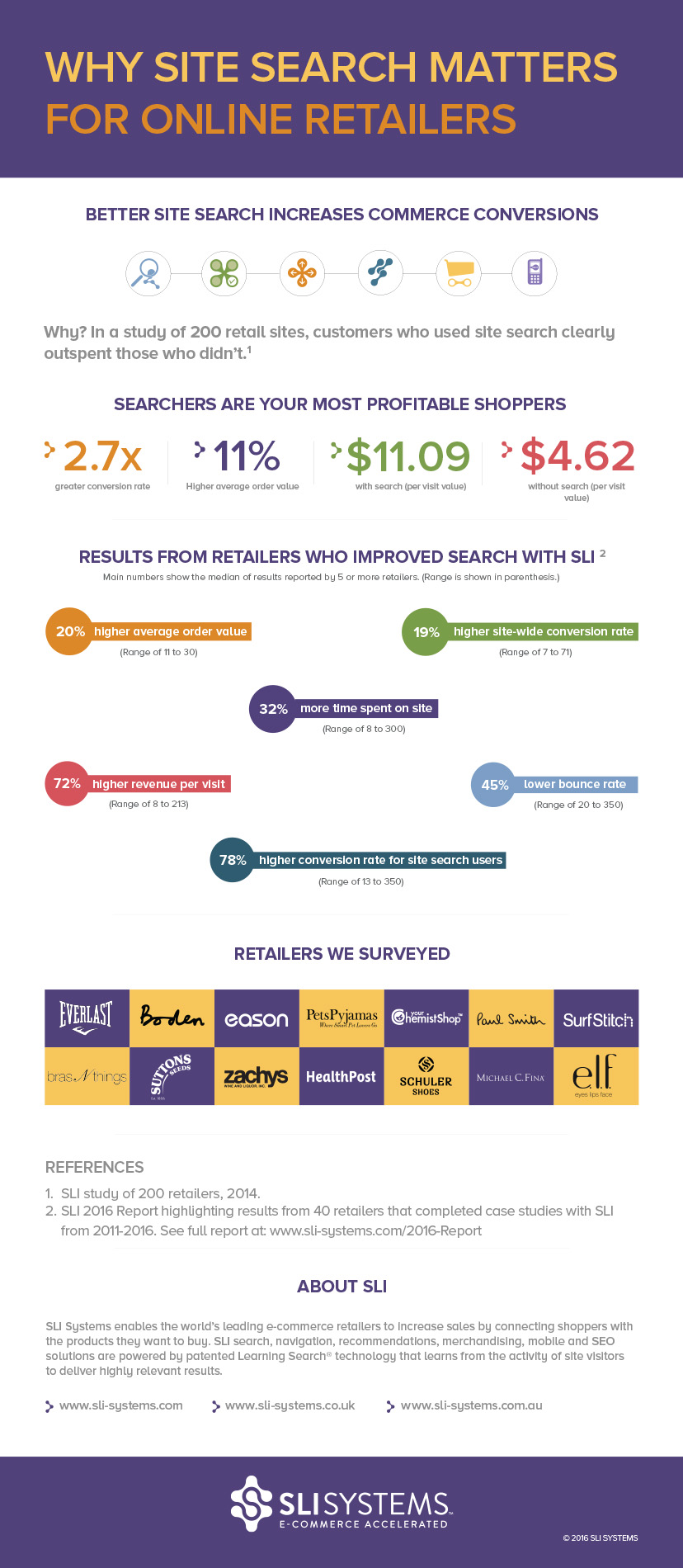
Infographic - Site Search for Online Retail

Infographic: Why Site Search Matters for Online Retailers

Read More

Seamless Search Drives High Growth for Superette

Posted by Aparna GrayJune 23, 2016eCommerce, Site Search, Success Stories

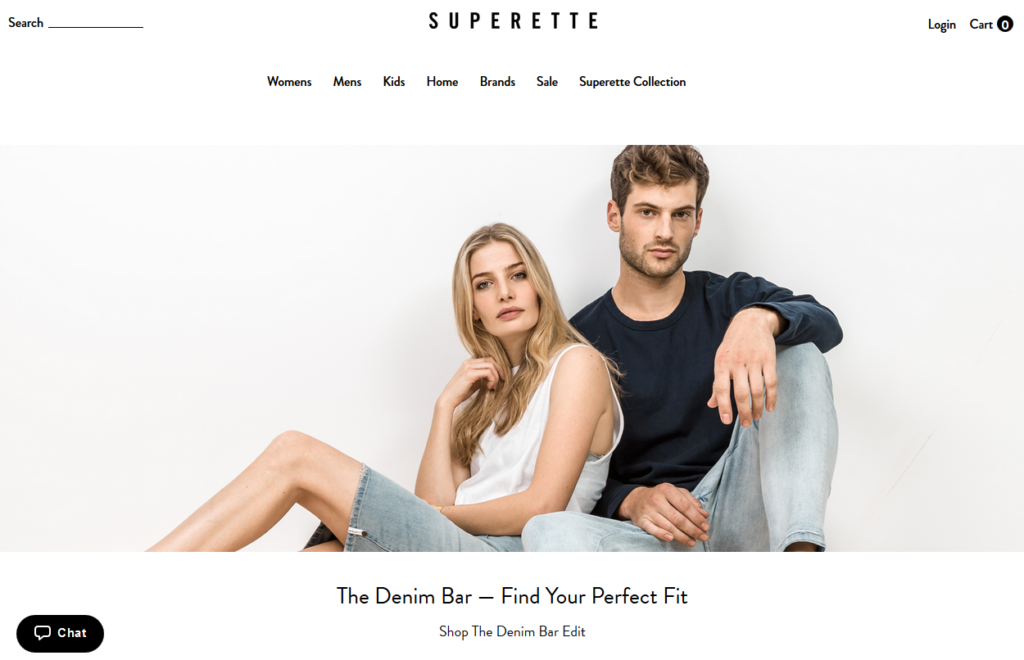
Superette image2When fashion brand Superette launched in 2002, it was purely a brick-and-mortar store. Almost 15 years on and the brand has cemented itself as one of Australasia’s leading online style destinations. On the road to success, Superette sought out the technology, expertise and support of SLI Systems to establish an outstanding online customer experience through advanced site search technology. They weren’t disappointed. With thanks to SLI Systems, Superette’s expansive e-commerce store now seamlessly guides customers through more than 5,000 products. And the results speak for themselves – with online sales rising 57 percent year on year.

Entering the world of e-commerce

Keen to tap into a rapidly expanding online retail market, Superette launched its first e-commerce site back in 2010. Initially, the company used its e-commerce platform’s default site search function, which required that each product be configured for search. But with 3,500-5,000 products offered online at any given time, the task quickly became daunting for the resource-strapped team. More importantly, the default search function was delivering irrelevant results and low conversions.

Superette image3Delivering fashion at your fingertips

Superette E-commerce Director James Rigden quickly recognised that if the business was to grow, it needed to improve its online experience and help customers find what they wanted with ease. In 2013, James set about exploring more advanced site search options and SLI Systems came out on top.

“After speaking with SLI Systems about their capabilities and resources, it was clear that they were the professionals and knew what they were doing. They were also here in New Zealand, offered one-on-one expert service and were doing some great things in the market, so we jumped on board,” said Rigden.

SLI Systems implemented SLI Learning Search®, which learns from visitors’ site search activity and clickthroughs to deliver the most relevant results. The move had a rapid business impact, resulting in an average of 3x higher per-session value for those using site search. In tandem, Superette deployed SLI Site Champion® and gained high-quality organic search traffic by dynamically creating SEO-optimised landing pages that are indexed by Google and other Internet search engines.

The solution has extended Superette’s SEO footprint and made more content findable. Today, Superette has nearly 2,000 site pages indexed in Google, comprising approximately 10 percent of the brand’s entire search engine footprint.

Results that stand out

Superette has seen significant growth as a result of employing SLI Systems technology. The company has been able to identify customer trends and deliver highly relevant results, lowering bounce rates by nearly 50 percent and increasing per-session value. This change in its e-commerce strategy has meant Superette has been able to grow its business by an impressive 57 percent year on year.

To learn how your company could benefit from improved site search, set up a site search analysis with our team.

Read More

Strategies to Drive Online Revenue (Part 2)

Posted by Matt SparrowJune 15, 2016eCommerce, Merchandising

MerchandisingAs we discussed last time, data mined from site search activity can be used to improve your merchandising in a number of ways. Use the following merchandising practices to help deliver a stand out shopping experience to your customers.

Offer More Products to Your Visitors

Often shoppers will enter your site through a product link from a search on Google or Bing rather than directly from your home page. When visitors land on a single product page, you run the risk of showing them an item that’s not the most relevant to their search, and you may miss out on letting them know you offer other products they might like.

You can solve this problem by presenting a merchandising banner that shows products relevant to their original search term. These merchandised landing pages can keep customers engaged and drive more page views and conversions.

Use Synonyms for Global Reach

Using synonyms is a great way to improve the relevance of your search results and avoid pitfalls like “no results” dead ends. Synonym groups are usually created by gathering words together that are correlated. The result is that a search for any of the words in that group will also trigger a search for the corresponding synonyms.

Synonyms allow you to adapt to the different words that people use to search, and keep your search results relevant. Even when different countries speak common languages, not everyone uses the same words to refer to the same products.

Make Search Results Highly Visual

When it comes to presenting search results in a simple and engaging manner, product images are indeed worth a thousand words. Displaying one search result image that’s significantly larger than the other thumbnail images is a merchandising practice that improves conversion and boosts sales. Larger product images that convert well include results from top searches, highest-rated products, best sellers and high-margin products.

Showcase Your Products’ Social Status

Today’s shoppers respond well to social validation from others. You can provide this support by showcasing social approvals, ratings, reviews and recommendations. Encourage your customers to share the best products from your site across their social networks by integrating social media buttons onto your pages.

Additionally, showing the recommendations of other influencers (e.g. top editors, celebrity curators, popular or emerging stylists) within search results is another merchandising practice that taps popular opinion to build community and grow sales.

For more tips, download our popular e-book Use Site Search Data to Improve Merchandising.

Read More

Strategies to Drive Online Revenue (Part 1)

Posted by Matt SparrowJune 9, 2016eCommerce, Merchandising

MerchandisingOne of the keys to e-commerce success is to be relevant. Deliver the products and information customers seek and you’ll thrive. But remaining relevant in today’s ever-evolving e-commerce world isn’t easy. It requires the right tools to quickly present the most valuable information for an engaging and consistent shopping experience, and it entails listening to shoppers and testing to understand what works and what doesn’t.

When site visitors search for a product, they are telling you what they want in their own words. This direct understanding of customers’ intent enables you to deliver compelling merchandising messages, provide relevant information and offer the right products to your shoppers all while enhancing the user experience.

Data mined from site search activity allows you to anticipate market changes and trends, so you can align your merchandising practices accordingly. The proper merchandising controls let you easily and quickly test and refine product assortments, promotional messages and the placement and presentation of non-product content on your search and navigation pages.

In this post, I’ll share tips from our popular e-book Use Site Search Data to Improve Merchandising.

Drive Impulse Buying with Ribbon Overlays

Ribbon overlays are digital stickers you can apply to individual search results to visually accentuate something special about the product, such as best-seller status, out of stock, free shipping, top-rated products, limited availability, newly added products or videos.

Online videos are a popular way to boost site conversions. You can use ribbon overlays to highlight when product videos are available. These overlays offer an additional incentive for customers to click the product because seeing the product in action may convey tangible information such as fit and size faster than reading product specifications. Managing ribbon overlays should be straightforward. For example, once the ribbon is designed, your merchandising tool should allow you to flag the applicable products in the data feed with the specific information you want to display, such as sale, free shipping or video.

Tune Results for Perfect Promotion

There are times you want to promote certain products to your customers on a search results page. Conversely, there may be results you wish to push to the bottom or hide for that particular search string. Tools to create tuning rules should be easily accessible in a merchandising console so you have complete ability to promote or demote particular products based on your desired outcomes. While tuning is an important component of merchandising, it can interfere with the placement of learning-based results and push relevant results below the fold.

Curate a Custom Experience with Landing Pages

You can also use merchandising tuning rules to create curated landing pages. If you would like to promote a series of special holiday products, for example, you can create a landing page that loads when the word “holiday” is searched. At the same time, you can create a dedicated PPC link that directs users to that page. When you use the same PPC link in email marketing campaigns, you can track the success of your campaign in Google Analytics.

For more tips, read our popular e-book Use Site Search Data to Improve Merchandising.

Read More

Help DIY-ers Get Things Done this Summer

Posted by Christina StublerMay 25, 2016eCommerce, Site Search Tips

DIY photoThe weather’s warm. The days are long. Some call it summer. For others, it’s do-it-yourself season – and it officially kicks off with the upcoming Memorial Day weekend.

Online sales for hardware and home improvement retailers continue to grow, and it’s no wonder.

The Internet boasts an endless supply of project ideas, before-and-after galleries and video tutorials. Most recently, Nifty’s “stuffed animal zoo” video made the rounds on my Facebook feed, and it was enough to make me want to try my hand at building something. (I didn’t but I still might.)

Customers with varying levels of expertise (me versus a professional) is one of the challenges retailers in this space face. Another issue is that certain products – appliances versus building materials, for example – are searched for in different ways. Appliance or décor purchases may be driven by price, brand or appearance, whereas those looking for a tool or part need to match a particular specification, such as gauge, thread size or dimension.

However, the right e-commerce solutions can help you overcome these hurdles and deliver an exceptional shopping experience.

Provide Highly Relevant Search

If shoppers can’t find what they want in the first page of results, they are likely to believe you don’t carry the item and abandon your site. Show customers the most relevant items first and you’ll increase the likelihood that they’ll make a purchase. Automatically present relevant products, images and other information as soon as visitors start typing letters into the search box.

Search by Various Measurement Units

Are your products specified by measurement in fractions or decimals? Site visitors don’t always search for products using the same unit names or symbols. Whether they search “8.5 x 12.375” or “8 ½ x 12 3/8,” your site search should accommodate searches with standard or metric units so customers are always presented with the right products.

Match Full or Partial SKUs or Part Numbers

Many tools and building materials are referenced by a SKU instead of a product name. Additionally, customers visiting your site may only have a manufacturer’s part number as a reference for what they need. Make sure your search can match full or partial SKUs, making it easy for customers or customer service teams to find a product quickly.

Target Your Customers by Location

Your customers’ needs and your ability to deliver might be different based on geography. Make sure your site search can integrate geolocation services to allow deeper segmentation of products by location. This allows you greater control over regional variations in price, function or other attributes. Additionally, you can point them to the closest store.

Index Educational Information & Specs

Whether you target B2B or B2C customers, education is an important factor in your e-commerce site. New homeowners may want basic information on how to make repairs, while contractors or architects may need technical specifications. Keep all of your documents, online articles, video tutorials, reviews and other non-product content easily searchable, so customers always find what they need.

For more tips, check out the SLI industry brief Do It Yourself: Hardware, Appliances and Tools.

Read More

Fighting for Better E-commerce, Everlast Finds Its “Big Win” in SLI

Posted by Dawn MortensenMay 11, 2016eCommerce, Site Search, Success Stories

Everlast Image for Blog 10May16

Each time I interview an SLI customer for a case study, it’s a privilege to hear firsthand how our solutions make a significant impact on retailers’ growth. One of my most recent interviews was with Everlast E-commerce Director Mike Ebert, who told me that site search was one of the first things he looked at when he joined Everlast in mid-2014, and that implementing SLI was one of the biggest “wins” he’s had in the changes made since.

“I’ve known about SLI forever and wanted to work with you guys since I was on the agency side,” Ebert said.

“At Everlast, one of the first things I looked at was how easy it was for people to find things on the site. I typed in red boxing gloves and didn’t get any boxing gloves, which was a problem! Only 1% of traffic was engaging with search and only 0.15% of that traffic was converting. It was a blip in what it contributed to Everlast’s revenue,” he said.

Everlast, whose brand is older than the zipper (the company was founded in 1910), controls about 85% of the boxing products market, according to SportsOneSource LLC. Mike knew it was time Everlast.com became a larger revenue-contributing part of the global business, and he set out on a number of new projects to make that happen.

Search First

First, Mike worked with SLI to implement SLI Learning Search®, SLI Rich Auto Complete™ and SLI Learning Navigation®. Moving from Yahoo site search to SLI, Everlast immediately resolved the problem of customers not being able to find the products they were looking for. The results were clear: with SLI, conversions for site search increased 6x.

“I knew I could get SLI up and running quickly and deliver benefits right away,” Ebert said. “It didn’t take much and it produces results.”

Everlast’s success is showcased in an SLI case study.

Replatforming Second

After solving the problem of product findability, Ebert next tackled the job of looking for a new platform and a design agency to create a modern, mobile-friendly site.

Ebert chose the Magento platform, then worked with e-commerce site development specialists Blue Acorn to create a sleek new fitness-inspired site, based on Magento Edition 1.14’s native responsive functionality. The new design makes use of Everlast’s stunning product photography, creates a better user experience and makes administrative management much easier. Read more about this process in Blue Acorn’s case study with Everlast.

Merchandising Third

Everlast also solved its need to showcase products in unique ways with the SLI Merchandising Console. With the ability to create banners on results pages and promote specific products, Everlast is now able to merchandize to two separate customer groups – its longtime customer base of boxing enthusiasts, and a new group of customers looking to add boxing to an overall fitness routine.

For additional promotional efforts, Everlast began working with Bronto to improve its email communication. Now when new customers come to the Everlast site and sign up for emails, they receive a “Welcome” series of emails – these drive 38% of total email revenue, while accounting for only 2.3% of email sends.

“SLI is our big win,” Ebert said, “Now revenue from search represents 10% of Everlast’s revenue.”

He added: “You guys and Bronto are the best tech implementations we have.”

We’re glad to hear it, Mike. Keep fighting for better e-commerce!

Read More

Infographic: How We Shop for the Love of Mom

Posted by Christina StublerMay 3, 2016eCommerce, Infographic

Mother's-Day-Infographic2may2016_blog

Read More

Hook “Spearfisher” Shoppers for E-commerce Success

Posted by Shaun RyanApril 20, 2016Mobile, Site Search Tips

spearfisherAt SLI, we’ve always known that shoppers who search are the most valuable. Why? Because these shoppers tell you what they want to buy which gives you a fantastic opportunity.

According to the recent Forrester Research report “Must-Have eCommerce Features,” it’s critical that retailers support “spearfishers” – or shoppers who already have a specific product or brand in mind (versus those aimlessly browsing).

To achieve this, Forrester suggests casting one’s hook with easy-to-use site search, including autocomplete, and clear categories to support spearfishers who want to find, buy and move on. Additional research upholds Forrester’s findings as:

  • 8 seconds is the average time visitors spend before deciding whether or not to remain on a site (MarketingSherpa)
  • 43 percent of visitors immediately go to the search box (MarketingSherpa) and searchers are 2-3x more likely to convert than non-searchers
  • 50 percent of users prefer to use a site’s internal search engine, as opposed to navigating the site (E-Commerce Times)

It’s clear that many online shoppers are spearfishers, which is why it is important for retailers to quickly serve up the products they are looking for.

Top Tips to Hook Spearfishers with Smart Site Search

Here are our top tips to help you provide your most focused shoppers with a satisfying search experience that leads to improved conversions and sales:

Autocomplete with Graphics – Type Less, Buy More

WineA critical feature for speed in site search is the ability to show product results with images from the first letter a searcher types. It gives shoppers one-click access to products they want to buy, reducing the number of clicks from search to purchase.

For even better guidance, also show search suggestions based on category, brand or department to let shoppers quickly jump to the right section of results. For example, a search for wine at Fortnum & Mason immediately shows popular choices and categories for wine gifts, wine glasses, wine and cheese, etc.

Moreover, allow users to preview products of interest right within the autocomplete box. For instance, update products displayed when users hover over search suggestions to give them more choices and increase engagement.

Jump Directly to a Results Page When You Know the Answer

Use redirects when you want to take visitors to a particular page on your site, rather than showing search results for a query or class of queries. For example, if there is only one result, it may make sense to take the visitor directly there, rather than showing them the search results page. When visitors type in a specific product or SKU numbers, take them directly to the product page.

Create Landing Pages Related to Specific Keywords

Sports UnlimitedFor some popular search terms, you may want to redirect users to a specific site search page tailored to that search keyword. For example, you may already have landing pages dedicated to particular brands. When visitors search for specific brands, you can send them to the related brand page instead of a generic search results page.

For example, Sports Unlimited serves up a landing page for any Under Armour brand searches. We recommend examining your site search reports to identify the most popular searches. Then consider whether you can provide a better experience by having dedicated landing pages for some searches.

Optimize the Mobile Experience

Speed and ease are especially critical for mobile “spearfisher” shoppers. Ensure your autocomplete helps you capture sales from your small-screen shoppers with dedicated mobile and tablet designs that automatically display options correctly regardless of device size and orientation.

As John Tomich stated in a recent article for Multichannel Merchant, “A successful mobile interaction with your customer is one in which everything is obvious, easy and fast.” He cites that mobile shoppers overwhelmingly prefer social logins for ease of use. Express checkout and easy payment options are as critical here as with any shopping site.

Learn more about supporting “spearfishers” to accelerate your e-commerce sales by reading our Quick Guide to Better Site Search and Rich Auto Complete solution brief.

Read More

Aussie Retailers Imagine the Future of E-commerce at Annual Summit

Posted by Aparna GrayApril 12, 2016eCommerce, Search Conferences

SLI Connect AU photo 2SLI Systems welcomed leading retailers and e-commerce experts from across Australia to the second SLI Connect Sydney summit last week. Hosted at the iconic Sydney Opera House, the event featured a strong lineup of top brands, including Krispy Kreme, Nisbets, Shopbot, eStar, Braintree, Temando, ChannelAdvisor and Bronto Software. Throughout the day, speakers and guests alike discussed the future of e-commerce and how retailers need to evolve in a fast-changing world.

Change is constant in the e-commerce industry

Consumer purchasing habits are changing. Smartphones and tablets now account for 55 percent of time spent shopping online. And we no longer make purchases through one channel alone.

As Tim Davies, known in the industry as “Mr. eBay” explained, “sometimes we begin buying on one device and then move onto another before making a purchase. Brands need to respond with an omnichannel approach.”

Importantly, it’s no longer just millennials who are digitally savvy. The older generation, those known as digital dinosaurs, are now taking their shopping habits online. And with more disposable income, they offer a new opportunity for e-commerce retailers.

SLI Connect AU photoRetailers embrace new technology to remain competitive

Despite acknowledged challenges from international competitors, there was a real sense of optimism in the room. Retailers are taking steps to remain competitive, with nine out of 10 having updated their e-commerce strategies in the last year and adopting new technologies, such as optimising for mobile.

One of our keynote speakers, Krispy Kreme’s Digital Business Manager, Richard Schulman, emphasised the role of e-commerce tools in providing a high-quality customer experience and, ultimately, driving sales.

“It’s no secret that e-commerce retailers need to streamline their websites and make sure that they are easy to use for the average punter, but the secret is how,” he said. “Most businesses don’t realise how easy it is, or how important it is.”

It’s time to go mobile

The importance of mobile was a key theme throughout the day. Mobile commerce now accounts for 11% of e-commerce sales – and this figure is set to rise.

The growth in mobile has huge implications for e-commerce. No retailer wants to provide a poor mobile user experience as it creates friction for shoppers in finding and buying.

More than half of the retailers at SLI Connect had optimised their website for mobile and tablet – and those who hadn’t, have made it a priority for 2016.

No “silver bullet” for long-term success

Looking to the future, Blair Cassidy, VP of product management at SLI Systems, painted a compelling vision for the role of virtual reality in the future of e-commerce. He challenged innovative retailers to take the lead in implementing this promising technology.

But while virtual reality and other online retail technologies have much to offer e-commerce in the future, a key takeaway from the event was that no single approach or tool holds the key to success.

“There is no ‘silver bullet’ for success,” said panel member, John Menagh, director of sales at eStar. “Retailers must ensure their online and offline strategies are in harmony, so that consumers receive a consistent, high-quality experience of your brand, where ever they are.”

So that’s it for this year’s SLI Connect Sydney! A big thank you to all who attended, guests, speakers and sponsors, and for making our second SLI Connect such a success. The next SLI Connect event is planned for September 15, 2016 in New York City at the magnificent Carnegie Hall! Save the date and stay tuned – registration will open soon. Click here to view survey results from SLI Connect UK, which was held in March.

Read More

Spring Clean Your E-commerce Site

Posted by Jennifer Hadley, Customer Success ManagerApril 7, 2016Mobile/Tablets, Site Search

PetFoodDirectEven those who aren’t in the e-commerce space know that the holiday season is the most profitable time of the year. But that doesn’t mean the other three seasons can’t be revenue-generating.

While you’re prepping for Holiday 2016, you can still please plenty of shoppers (and boost your business’ bottom line).

Spring is the perfect time to refresh your site. It is the season of spring cleaning and tax refunds, both of which can motivate consumers to treat themselves. Speaking of, I think I have some space for a new pair of shoes. …

So how can you attract and convert these shoppers?

Curate aesthetically pleasing landing pages

First impressions are everything. Impress and attract shoppers by curating unique landing pages for specific audiences. For instance, create pages that showcase your new spring inventory of sunglasses or patio furniture. Include links to these pages in your email marketing campaigns. (You can send me the one with the spring sandals.)

Use high-quality product photos and lots of them so shoppers really get a sense of your items. Seeing products from all angles, or clothing on a real person, will make shoppers feel more confident about adding items to their carts and checking out.

Lure shoppers deeper into your site with eye-catching banners that boast relevant content. After shopping for sandals, I will want to look for a new spring bag too.

Optimize for different devices (if you haven’t already)

Don’t be that online retailer that shows shoppers desktop results on mobile. Nobody has time for that! There is nothing more annoying for shoppers than having to zoom into desktop results on their mobile devices. In fact, they probably won’t bother and will instead move on to a site easier to use.

Shoppers are coming out of hibernation and no longer sitting at desktop computers or curling up with their laptops in bed. Make sure they can still enjoy a seamless shopping experience on your e-commerce site when they are out and about using mobile or tablet devices.

Set up your site search for seasonality

If I search for “sunnies,” I expect search results that contain (hot) sunglasses. Set up your site search to handle seasonal synonyms like “sunnies” and “sunglasses” so that shoppers don’t instead run into pesky no-results pages.

It should go without saying that your search should return relevant and popular items based on the search term. Consider conducting a site search audit and make sure the items that you would expect to be returned are coming up in search.

While you’re getting your site ready for winter code freeze, make sure you aren’t ignoring eager spring shoppers and spring clean your site.

For more recommendations on how you can improve your site, set up a site search analysis with our team.

Read More

Posts pagination

< 1 … 4 5 6 7 8 9 10 … 64 >

Stay up to date with SLI

Featured Posts

  • Maximize Revenue with Enhanced Product Impact Testing
  • Top Five Ways to Prepare for Peak Season
  • Facets, Facets, Who’s Got the Facets?
  • Personalization: It’s Kind of a Big Deal
  • M is the New E: Mobile Commerce Trends and Predictions

Categories

About SLI Systems

  • What We Do
  • Who We Are
  • Why SLI

Learn

  • Webinars
  • News Room
  • Events

Connect

© Copyright SLI Systems, 2018. All Rights Reserved | US: (866) 240-2812 | Legal