
SLI home
User login

A BLOG FOR E-COMMERCE LEADERS

  • Blog
  • Resources
  • Webinars
  • Customer Experience Scorecard

SLI Blog

Posts with eCommerce Tag

SLI CEO Confident of Long-Term Growth Prospects

Posted by SLI SystemsDecember 9, 2014Newsletter, Site Search

Shaun Ryan, CEO of SLI SystemsWelcome to the first edition of our new bi-annual investor newsletter. In this newsletter we plan to provide updates on the company and its customers along with the deeper information you need to fully understand SLI’s market. This time I’ll kick it off with an overview of the e-commerce market and where we believe it’s going.

Our Market

When SLI started business in 2001, the e-commerce industry was in its infancy and the market opportunity for our site search solutions was relatively small. Today that market has matured, vastly expanding the opportunity for our services to improve the bottom line for online retailers around the globe.

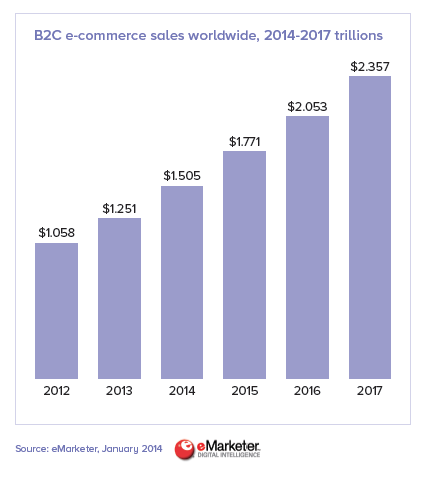
Worldwide business-to-consumer e-commerce sales are expected to increase 20% this year to reach US$1.5 trillion, according to eMarketer, with a compound annual growth rate of 17% between 2012 and 2017. RJ Metrics projects that 110,000 English-language e-commerce sites do business today. We believe that only a small portion of these sites have sophisticated site search capabilities in place. SLI is well positioned to capitalize on this global e-commerce growth. We have the people, processes and technologies to service a large number of retailers globally.
With this continued growth the online retail market is moving toward more personalized experiences for individual shoppers. By providing each individual shopper with a specific, tailored experience, websites are able to further improve the customer experience and ultimately sales. SLI is well positioned to be a leader in this personalization trend. Our products are all built on patented technology that allows the website to “learn” from each individual shopping trip and to use the discovered information to present shoppers with an online experience that results in higher sales for the retailer.

Our Offerings

SLI offers Software-as-a-Service (SaaS) solutions to provide websites with site search, navigation, product recommendations, and user-generated Search Engine Optimization (SEO). SLI solutions increase the top line for e-commerce sites by making it easier for their customers to find what they are looking for and therefore easier to purchase. And this year our opportunity to help retailers improve business has just increased with the introduction of our two newest products – SLI Learning Recommendations™ and SLI Dynamic Product Banners™.

Learning Recommendations, an extension of the company’s foundational product SLI Learning Search™, displays highly relevant product recommendations in different areas of websites. Because the product automatically learns based on previous shoppers’ behaviour, Learning Recommendations can display the products that are likely to succeed in driving incremental sales for the retailer.

Dynamic Product Banners reduce bounce rates by showing related products to visitors arriving on product pages from Internet searches. By presenting shoppers with alternatives that are proven relevant to the products they have chosen to view, Dynamic Product Banners increases conversion rates and hence revenue from those people coming from search engines such as Google.

And we have the results to prove it. For example, U.S. educational products retailer Lakeshore Learning saw a 30% increase in revenue on its e-commerce site after implementing SLI solutions. Chemist Direct, the UK’s leading online pharmacy, experienced a conversion rate improvement of 175% and a search average order value increase of 196%.
PressRelease-ARROur Progress

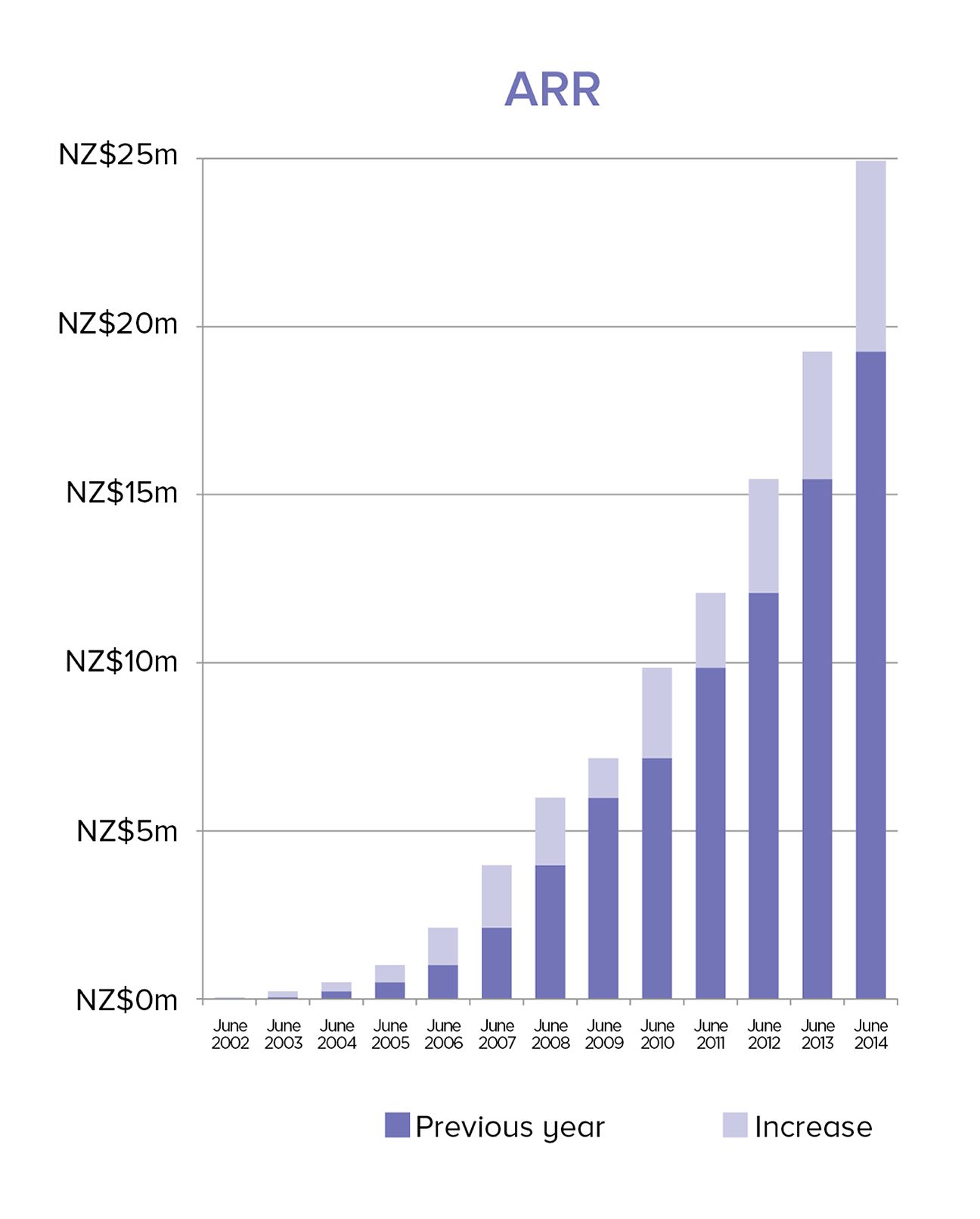
We passed a significant milestone of a year and a half as a publicly-listed company and we are proud of our achievements during that time. Over this period we continued to build on our strong record of sequential growth. Annualised recurring revenue (ARR1) – our key measure of financial performance – rose 29.4% in the year to 30 June 2014.

We have expanded our client portfolio with some exciting names this year including Battery Mart, LakeShore Learning, Exclusively Wedding in the U.S.; Brazilian pharmacy store Ultrafarma; Bathstore, Paul Smith, Jigsaw, Claire’s Accessories and Eason in the UK; and Kathmandu in Australia. These customers join names such as Fabergé, Sports Authority, World Soccer Shop, Harrods, plus many others.

We are excited about having Neil Thomas join SLI as Chief Revenue Officer and President of North America. Make sure you read our article on Neil in this edition.

We are also enthusiastic about the holiday season and the role SLI solutions will play in this critical time for retail. Our focus in the coming year is to ensure that the significant investments we have made in the business continue to deliver long-term value. We remain confident we can achieve these goals.


1Annualised Recurring Revenue (ARR) is calculated based on the subscription revenue generated from the existing customer base in the reference month and then annualised. ARR is calculated based on the exchange rates at that time. When ARR is presented for a historical time series all points are calculated on a constant currency basis.

Subscribe_button


Appliances Online and SurfStitch Win Online Retail Industry Awards

Posted by SLI SystemsAugust 5, 2014Conferences, eCommerce, SEO, Site Search, Success Stories
urfStitch SLI's Learning Search

SurfStitch Showcases SLI Learning Search

Aussie retailers Appliances Online and SurfStitch have been picked as equal winners for ‘Best Pureplay Online Retailer’ at the Online Retail Industry Awards (ORIA).

The annual awards, which recognize the pinnacle of excellence in digital retailing, handed out the top accolade to the joint winners. Both online retailers use SLI Systems’ Learning Search solution that ‘learns’ from past site search activity. It does this by tracking visitors’ search behavior, and then uses that data to deliver the most relevant results. The technology also brings clients’ non-product information (such as user ratings, reviews, social content, blogs and videos) into search to deliver an impressive user experience that compels shoppers to buy.

“It’s a great achievement to win the top award at the ORIAs,” said CEO John Winning for Appliances Online. Since implementing SLI Learning Search, Appliances Online noticed that people who use site search spend twice as much time on site as visitors who don’t use site search. The appliances retailer also witnessed a 20% increase in site revenue.

As well as using SLI Learning Search, SurfStitch also uses SLI Site Champion, which builds upon SLI Learning Search technology to deliver high-quality organic search traffic to sites. It learns from site visitors and dynamically creates SEO-optimized landing pages that are indexed by Google and other Internet search engines, extending the site’s SEO footprint and making more content findable.

Since  inception in 2008, SurfStitch has recognized that investing in its e-commerce platform, customer service and engagement is key to offering customers an optimal online shopping experience.  Learning Search and Site Champion have eliminated dead-ends for SurfStitch’s customers, as site visitors no longer find themselves lost or stuck looking at products they don’t want. In addition to experiencing a 90% reduction on ‘no results’ pages, average sales are up 15% for SurfStitch and site visitors spend 25% more time browsing. Appliance Online has seen a 20% increase in revenue.

“SLI is committed to offering the world’s leading e-commerce acceleration solutions such as Learning Search and Site Champion. I congratulate our customers Appliances Online and SurfStitch on their achievement in winning this award,” said Shaun Ryan, CEO, SLI Systems. “We are excited to see these two important customers increase customer conversions through the use of our solutions, and to have them recognized for their successes.”

Technology Makes Back-to-School Shopping Elementary

Posted by Dawn MortensenJuly 17, 2014eCommerce, Navigation, Site Search, User Experience

Though many of us are barely settling into summer, retailers are already touting back-to-school clothes and supplies. This year, the role of e-commerce in back-to-school shopping is bigger than ever. According to a June report by eMarketer, online back-to-school purchases in 2014 will increase 16% over 2013 – a growth rate that’s nearly triple the 5.85% growth rate in overall retail sales.

Smart retailers are optimizing their mobile sites and using more advanced search and navigation technology to capture the growing audience of online back-to-school shoppers.

Mobile-Optimized Sites

In mobile shopping experiences of years past, many site visitors would give up out of frustration with the cumbersome navigation. Today, retailers with good mobile-specific sites make it exceptionally easy for customers to shop using smartphones or tablets. These retailers will gain loyalty and carry an advantage into back-to-school shopping and beyond.

tea collection 15July14Tea Collection is a great example of a mobile site done right. My eight-year-old’s one desire for new clothing is a maxi dress (the kind that “are swirly and go to the floor,” in case you didn’t know). On Tea Collection’s mobile site, I search “Girls 8 maxi dress” and three great options come up – all in the right size. Easy peasy, as a third grader might say.

Advanced Site Search & Navigation

Just as with mobile search, online retailers will win shopper loyalty when they make it easy for visitors to find and buy what they’re looking for. Just as great search is critical to help shoppers find exactly what they want, great navigation is essential to help them browse or narrow down items in a broad category.

I went to Lakeshore Learning’s site knowing that I wanted some type of learning game. I typed “learning game” in the search box, then with 529 search results I was able to narrow down to a few great options by clicking the refinements “mathematics,” “puzzles & games,” “3rd grade” and “top rated.” Yes, The Allowance Game looks like a great way to ease my third grader back into math practice.

Next, visiting Gymboree, I searched for some clothing basics for my 12-year-old, entering “girls uniform navy.” Up popped navy blue cardigans, skirts, pants and hair accessories – I picked what I needed and was on my way through checkout. Done.

It’s Not Always So Easy

Unfortunately, not all e-commerce sites make it so simple for visitors. It’s hard to know the immense value of good search technology until you encounter a site that does it poorly. I thought I might stock up on notebooks, folders and other basic staples at DollarTree.com. But when I searched “notebooks,” the results just showed me filler paper, legal pads and journals. I had to scroll beyond the first 12 results before I saw composition notebooks and spiral bound notebooks. Annoyed with the less streamlined experience, I left the site and decided to pick up these items another time.

Make Sure Shoppers Don’t Lose Patience

As more stores learn how to do search and navigation right, consumers lose patience with retailers who make it more work than fun to do their shopping. Retailers who want to compete effectively need to keep up, and that means looking for the best technology possible for site features like search, navigation, product recommendations and merchandising. Retailers who go with a cheap, basic search function just to check that item off their list are missing the opportunity to delight and retain the customers who are used to better relevancy and a better, faster, more fun shopping experience.

Survey Reveals eCommerce Marketers are Leaving Money on the Table. Are You?

Posted by geoffbNovember 20, 2013eCommerce, Newsletter, Site Search

The results from our annual eCommerce survey are in. Unfortunately, what our latest survey revealed is that a majority of marketers are not taking advantage of the extra “punch” that site search can give their marketing programs. This represents a huge missed opportunity for eCommerce brands to improve ROI of their marketing campaigns and increase sales.

According to our recent survey of 160 global eCommerce professionals, the majority (57%) indicated that they don’t tap into the wealth of customer information in their site search systems. The reason? Half (50%) said it was because of limited resources. Others (30%) simply don’t know how to use site search data effectively. And 10% said their existing site search solution doesn’t allow for integration with marketing programs.

While I don’t doubt that some site search solutions have limited capabilities in this area, my guess is that most people aren’t using site search to its full advantage because they simply don’t know how, or they think it’s more effort than it really is.

Savvy eCommerce marketers use site search data to deliver more customized offers in their email marketing campaigns. Jelly Belly increased their email open rate by 85%. PartySuppliesDelivered uses site search data to guide its Google AdWords campaigns. Motorcycle Superstore and others use SLI to create special site search and natural search landing pages that generate higher click-throughs and conversions, and even fuel their advertising initiatives.

Looking to 2014, survey respondents clearly identified site search, SEO and eCommerce platform as the top three priorities for the coming year. Mobile initiatives and customer-focused analytics ranked next in priority.

It’s great to see that site search remains a top area of focus in the coming year for retail brands, as it has in years past. Of course this is not surprising to me, as I’ve seen how even small improvements with site search can directly improve a business’ usability and profitability, making it one of the most valuable parts of any eCommerce website. My hope is that with this continued focus on search, marketers will take a closer look at the ways in which their site search activity and reports can improve the effectiveness and increase ROI of their marketing efforts.

With the holidays fast approaching, now is the time to “think outside the search box” and use your site search to drive greater brand visibility and loyalty. If you need help putting some of these ideas into action, ask us how SLI can work with you to get them implemented quickly.

For more insight into the thoughts and practices of eCommerce retailers, download our full survey report and analysis. Also view the survey results infographic.

In eCommerce, Be Really, Really Redundant

Posted by Dawn MortensenJune 24, 2013eCommerce, Navigation, Site Search1 comment

In many situations in life, redundancy is undesirable. Our language and writing teachers told us to avoid use of redundant phrases – totally destroyed, armed gunman, exact same, merge together… you get the idea. In business, a company merger creates redundancies in job positions, which can mean layoffs. In many situations where efficiency is prized, redundancy almost seems to be its antonym – unless you work in high tech, especially cloud computing, where redundancy of servers and data centers is preventing the major inefficiency of downtime.

In the world of SaaS, redundancy is a competitive advantage. Software as a Service companies with redundant data centers are hosting client sites and customer data on multiple servers in multiple locations – each mirroring the other so that any of them can keep the customer site going if there’s a problem with the others. This redundancy allows the SaaS company to keep its customers’ sites running during spikes in traffic or unexpected outages.

Downtime is especially detrimental in eCommerce; online buyers can be ruthless when they encounter it. Surveys by Akamai and Gomez.com show that among shoppers who have trouble with a web site’s performance, 79% will never return to buy from that site again. Plus, 44% say they would tell a friend about their poor experience. Even a few minutes of downtime can result in dozens of lost customers on an ordinary day. Imagine the effect of downtime during a peak shopping day like Cyber Monday!

How can eCommerce businesses manage this risk and stay up and running in a way that’s affordable? In the blog Built-In Redundancy to Prepare for Natural Disasters, SLI Systems CEO Shaun Ryan explains how, as a SaaS-based provider of advanced site search and navigation, SLI processes billions of queries and serves up search results for its customers via multiple servers in each of eight data centers in locations around the world. SLI servers are filled to just a fraction of their capacity to allow for spikes in customers’ site traffic. Simply by contracting with SLI to get better results and more conversions from site searches, an eTailer has the added protection of redundancy.

During Hurricane Sandy, for example, not one of our customers saw a break in service. Though headquartered in California, SLI was founded in Christchurch, New Zealand, which was hit by two major earthquakes in the past three years. By personal experience, we’ve learned how important it is to be prepared for natural disasters. And we want our customers to be prepared, as well. That’s why we offer redundancy at no added cost to our clients.

This year, a stronger-than-normal Atlantic hurricane season is predicted through the end of November. Especially with back-to-school and even holiday shopping spikes on the horizon, now is the time to move to a full-service site search provider that can help you handle the load.

We don’t get uptime perfect – no one does. We had an unusual three-minute outage one night about a month ago. Our redundant architecture quickly kicked-in, resulting in no downtime for our customers. We found that the outage was due to human error, from a break in our process, and we made the necessary changes to ensure it wouldn’t happen again. Although none of our customers were affected, we still sent out email notifications outlining what had happened. One of our customers, Ian MacDonald of PartySuppliesDelivered.com, wrote a nice email to express his appreciation for our honest communication about the event.


Thanks, Ian. We’re honest and transparent because we know it builds customer trust (plus it’s just who we are). We appreciate you, too.

The Growing Global Need for Great Site Search

Posted by Shaun RyanJune 19, 2013Mobile, Navigation, Newsletter, Site Search

Every day we see how introducing great site search is one of the easiest and quickest ways to turn more visitors into buyers. Earlier this month our customers were telling their stories at IRCE 2013 in Chicago. These are businesses like Samuels Jewelers, which doubled the per-visit value of their site search users after implementing changes that make search results more relevant. And Party Supplies Delivered, which increased their conversions by 203% after switching from their platform’s default search to advanced search.

Al Gore’s keynote address was about the international opportunities that abound for eCommerce – an industry that is growing 15 percent each year, even during a period of global economic stress. “You need to think global,” he said, pointing out that the number of Apple iOS and Android devices activated in the U.S. was surpassed in January by those activated in China. The economic balance is shifting and we need to accept, and anticipate, change.

We spoke with many online retailers who haven’t yet optimized their site’s search and navigation, and his keynote hit home. As eCommerce grows internationally, SLI plays a pivotal role in providing the tools that enable the best shopping experiences for customers around the world. Whether for large online retailers with multiple international sites or family-owned businesses, we work to provide the best products, resources and customer service, so that all of our customers can focus on what matters most to them – their business.

Seizing the Opportunity with IPO, Expansion

As a company that has an established customer base spanning five continents, we understand the global opportunity. Brazil is one of our most recent, and fastest-growing markets, adding to our strong presence in the United States, the UK and Australia. We are working with some of the top Brazilian online retailers to improve their search and navigation, both on web and mobile sites. We are also starting to work with our first Japanese partners and customers.

The vast opportunity for further international expansion is one of the reasons SLI Systems decided to raise capital through its IPO on the New Zealand Exchange on May 31, 2013. It has been an exciting time for SLI’s founders and investors as we’ve watched shares rise since the original offer of NZ$1.50. You can hear more about our story in this June 4 interview.

We’ll use the investment to fuel sales, marketing and customer support as well as innovation, as we grow our engineering and product development teams. This will build on our tradition of bringing our customers the ongoing feature and product developments they need to make their eCommerce sites the most successful in an increasingly competitive marketplace. We believe that innovation and measured growth are the secrets of global success.

Today’s online shoppers are starting to see gorgeous magazine-like sites tailored for mobile browsing, interactive tools that aid decision making, and the convergence of social and editorial to create highly-personalized shopping experiences. More and more of our customers are eager to work with us to integrate these features into their site search and navigation. As technology advances and global opportunities continue to expand, we anticipate and remain at the leading edge of the many innovations in eCommerce yet to come.

5 Big Mistakes to Avoid in Mobile eCommerce

Posted by Sasha ButkovichJune 11, 2013eCommerce, Merchandising, Mobile/Tablets5 comments

Guest blog post by Sasha Butkovich from Ecommerce Outtakes

eCommerce is going mobile in a big way, and many studies show the trend in mobile shopping just keeps rising. In the past two years alone, the percentage of eCommerce sales on mobile devices rose from 2% to 8% in the U.S., according to research from comScore, Forrester and eMarketer (check out this infographic for more cool stats on this).

Many retailers are getting on the m-commerce bandwagon, and those who haven’t already are working on their mobile strategy. It’s so important to have that mobile site optimized for when shoppers arrive, ready to purchase! However, this isn’t always easy. As an eCommerce retailer, there are some big considerations to take into account before taking the mobile plunge. What follows are five common mistakes to avoid with your own mobile site.

Mistake #1: Not recognizing your users

When designing your mobile strategy, functionality is only half the battle. Sure, you want a site that works well and renders properly on a smartphone or a tablet. But the more important considerations include knowing who your customers are and how they’re going to be using this site. Determine the main profiles of your mobile customers – what they’re shopping for, where they’re accessing the mobile site from, which devices they’re using, and what they want from the site. Once you have an idea of this, you can design the best mobile eCommerce experience for your users that caters to their specific needs.

Mistake #2: Having the same design for smartphones & tablets

Whether a brand chooses to go with responsive design or a native app, one thing is very important to remember: smartphones and tablets are not the same. Using a smartphone to shop is different from using a tablet to shop, and as a retailer, you should tailor those experiences accordingly. Tablets offer the potential for more rich media experiences, so you can have a little more fun with the bells and whistles. Adding video to your tablet site is a great start, because tablets are perfect for viewing videos, and tablet users are more likely to watch them. Smartphones, on the other hand, are being used by shoppers on the go. This shopping experience should be simple and direct.

Mistake #3: Overcomplicating the shopping experience

Any eCommerce site should be simple to navigate and use, but this becomes even more important to the mobile shopping experience. The layout should be simple, the buttons should be large and fields should be easy to type into. Don’t clutter the pages with too many links or categories, like this example from the ASOS mobile shop. When people are shopping from a mobile device, they’re generally out and about, and don’t have time to waste sifting through the features of an overly complicated website. And make sure that checkout process is quick and easy, too. Don’t lose the shopper at the very last step in the process!

Mistake #4: Neglecting security

It might seem obvious, but security is hugely important in mobile eCommerce. I recently began the checkout process on a mobile site, only to realize the http in the url was broken. See the screen shot below for what happened in this example from the Sears site. When that little lock icon is broken, I’m definitely not entering any credit card information! I’m one customer this particular site lost. Don’t lose the sale because of a lack of security on your site. For a mobile shopper on the go, it’s pretty frustrating to have to abandon your cart because it’s not secure.

Mistake #5: Forgetting about the marketing emails

Hey, remember all those marketing emails you send out to get those customers to your eCommerce site? You’ll want to make sure those are optimized for mobile, too. If people can’t read your emails on their phones or tablets, they definitely won’t be visiting your site from their phones or tablets either. Don’t miss all those opportunities to generate traffic and conversions. And of course, direct them to the mobile site itself, not just the desktop version!

Know your users, know their devices, and keep things simple and secure. These are the keys to starting your mobile strategy on the right foot. Once you’ve got these things down, you’ll be on your way to success in the growing world of mobile commerce!

A Beary Good Success Story: Vermont Teddy Bear

Posted by Dawn MortensenMay 28, 2013Conferences, eCommerce, Navigation, Site Search, Success Stories

This is second in a series of success stories on eCommerce sites that are growing their business with advanced site search. See live presentations of these stories at the SLI Theater at IRCE June 3-6.

Ever heard of a Bear-Gram®? How about a Pajama-Gram®? The same company that sends both types of cuddly gifts to more than 150,000 customers each year is Vermont Teddy Bear. As an 11-time Platinum Honoree in BizRate.com’s Circle of Excellence awards, Vermont Teddy Bear is among the world’s best online stores in Ease of Ordering, On-Time Delivery, Product Selection, Customer Support, Repurchase Intent and Overall Satisfaction, according to millions of BizRate customers.

Since 1981, Vermont Teddy Bear has offered high-quality, U.S.-made bears in the style of the original Teddy Roosevelt Bear from 1902. The bears can be personalized and are delivered overnight in a special box complete with air hole, game and candy treat (in case the bear gets bored or hungry on the way to its new owner, says the company).

As the word about Vermont Teddy Bear’s BearGrams first spread through radio ads in the ‘80s, the company expanded to include PajamaGram, which delivers gifts of cozy, quality pajamas, as well as CalyxFlowers, which delivers bouquets and other floral gifts from growers around the world. The sister companies have operated successful online retail operations for well over a decade.

Partnering to Increase Online Sales

Vermont Teddy Bear has its own team of eCommerce experts who work with partners to optimize their online reach. Since early 2008, Vermont Teddy Bear has used SLI Systems to improve the brand’s site search, navigation, mobile commerce and search engine rankings. At PajamaGram.com, SLI Learning Search ensures that the most popular products – as well as those the company specifically wants to promote, like their family set pajamas – are those first displayed in relevant search results. SLI Learning Navigation pages also make it easy for visitors to shop for pajama gifts by size. The result? More families and gift-givers finding matching pajama sets in the right size.

Vermont Teddy Bear’s Director of eCommerce Operations, Victor Castro, will showcase the business’ online successes at the SLI Theater, booth #501, during the Internet Retailer Conference and Exhibition (IRCE) in Chicago June 3-6, 2013. See our full lineup of scheduled feature presentations, or just stop by at 3:30 on June 5 or 6 to see Victor. Wearing your pajamas is optional!

Reason to Party: 203% More Conversions

Posted by Dawn MortensenMay 20, 2013Conferences, eCommerce, Navigation, Search Conferences, SEO, Site Search

This is first in a series of success stories on eCommerce sites that are growing their business with advanced site search. See live presentations of these stories at the SLI Theater at IRCE June 4-6.

Every eTailer knows this: You can’t get people to buy what they can’t find.

In the online party supply world, for example, a consumer has dozens of choices for where to buy a $250 life-sized Dr. Who TARDIS. If your site doesn’t appear high in Google results for this item – or if your customers can’t find the science fiction party supplies on your site – then your conversion rates will be as unpredictable as is the TARDIS’ ability for accurate time travel.

PartySuppliesDelivered.com is one among dozens of online party supply stores. With more than 4,000 products and the backing of parent company Mattress USA, PartySuppliesDelivered.com had a couple great things going for it. But there was one major problem: Customers could not find what they were looking for.

The party supplier’s original site search technology was the default search included with its eCommerce platform. It ranked search results only by the number of times the search term was found in the description, instead of ranking search results by relevance. This limited approach led to skewed results and frustrated potential customers.

To solve this problem, Party Supplies Delivered put its search function and site navigation into the full-service care of SLI Systems. As customers began to find more relevant results for their searches, the business improvements were remarkable; the bounce rate dropped 40 percent, page views increased by 132 percent and conversions went up by 203 percent. Key features like focused category pages, rich auto-complete and user-generated SEO are among the changes that are turning the business around.

“Now when customers drill into a subcategory, they really browse around; pages per visit are up 111 percent. This increases their average order too,” said Ian MacDonald, VP of eCommerce & Marketing for Party Supplies Delivered.

To learn more about how advanced site search and navigation technology helps Party Supplies Delivered, read their case study. If you’re coming to IRCE, stop by the SLI Theater at booth #501, where you can see a live demo from our customers including Ian from Party Supplies Delivered – plus get a free site critique. We look forward to seeing you there!

Site Search in Different Languages

Posted by Shaun RyanDecember 3, 2012Newsletter, Site Search

With the way technology has hastened globalization, it’s less easy to qualify languages other than English as “foreign.” It’s easy for us in English-speaking parts of the world to forget that English is not the dominant language – it’s actually the third most popular language spoken globally, behind Mandarin and Spanish.

We work with eCommerce companies in a lot of different countries. We also see many of our existing customers are selling beyond the borders of their native country and often creating websites tailored to the markets they’re selling to. That means we’re working with more and more languages and need to make sure our site search and navigation features work just as well in every language. To do that, we’ve licensed technology to enable us to index all the major languages and we’ve integrated that into our platform.

For example we recently integrated our site search onto HealthPost’s Japanese site, which contains a mixture of English and Japanese. Japanese has to be one of the hardest languages in the world for text processing. Like Chinese, there are no spaces, so you need to break a continuous stream of characters into words. Also, Japanese uses many different character sets – kanji (Chinese characters), Hiragana, Katakana, and Latin characters. Some people write and search using Kanji, while others use one of the two phonetic scripts.

A search on HealthPost’s Japanese site in either language will return results. Though the Japanese language is written in a very different series of characters than an English-language alphabet, users will still see the same learning-based results. Our learning algorithms operate on top of the index, improving the relevance based on how people interact with the results, generating related searches in either language and automatically creating pages optimized for popular keywords with good results.

Our analytics engine has been designed with different character sets in mind – so the reports will show popular searches, searches with poor results, facet labels, etc. correctly, regardless of the language used. In addition the console has been designed so we can easily add instructions and help in different languages, so non-English speakers can use it easily. As businesses all over the world move squarely into online commerce, we see the continued importance of offering a set of tools that can be used across languages. For the business tracking the most popular site search terms in a different language or for the customer searching for a product in their native language, a tailored experience is becoming the new norm.

With the indexing, learning and back-end console all working in multiple languages we can build you a relevant search that follows the industry best practices regardless of the languages. There are enough challenges building multi-lingual sites, without the need to worry about the complexities of site search.

As eCommerce becomes truly global, it’s absolutely necessary to cater to all clients, and making products easier to find and searchable in local native languages is one of the most important steps to do that.

Load More

Stay up to date with SLI

Featured Posts

  • Maximize Revenue with Enhanced Product Impact Testing
  • Top Five Ways to Prepare for Peak Season
  • Facets, Facets, Who’s Got the Facets?
  • Personalization: It’s Kind of a Big Deal
  • M is the New E: Mobile Commerce Trends and Predictions

Categories

About SLI Systems

  • What We Do
  • Who We Are
  • Why SLI

Learn

  • Webinars
  • News Room
  • Events

Connect

© Copyright SLI Systems, 2018. All Rights Reserved | US: (866) 240-2812 | Legal