SLI home
User login

A BLOG FOR E-COMMERCE LEADERS

  • Blog
  • Resources
  • Webinars
  • Customer Experience Scorecard

SLI Blog

Maximize Revenue with Enhanced Product Impact Testing

Posted by Doug McLeanNovember 1, 2018Uncategorized

Conventional wisdom (and Google data[1]) says that content that appears “above-the-fold” on a web page is almost twice as likely to be seen than content that the user must scroll to see. Experienced online retailers well understand the importance of a product being placed above-the-fold and its impact on business results. The question for merchandisers is how to best use those valuable above-the-fold pixels to maximize conversion rate and cart value. This question is particularly hard to answer for new products with which a retailer has no sales history.

In order to make this question easier to answer, SLI Systems has recently launched new Enhanced Product Impact Testing functionality that allows merchandisers to quickly assess how new products will affect sales. To do this the SLI Product Discovery Platform allows merchandisers to artificially “boost” new products on a search results page to a position that they wouldn’t normally achieve to see how shoppers react to them. Historically, Product Impact Testing has looked at the “age” of products and moved recently added products further up towards the top of the results. The position of new products is determined by a combination of the boost and learning score, but the exact placement of any given new product or group of products could not be determined in advance.

Enhanced Product Impact Testing Boosting is a smarter way to define a product as “new” and provides more control over the position in the result set of where the new products will appear.

  • Defining new products: A product is determined to be new based on the number of times it has been seen by shoppers. Once it reaches a certain threshold, it will no longer be considered as new and Product Impact Testing boosting will no longer be applied. The learning score (or other ranking criteria) will determine its position from then on.
  • Position: Enhanced Product Impact Testing Boosting offers more control over the positioning of new products and defines available location blocks that products can occupy within the result set above the fold. The actual position of new products can change over time.  If more new products exist than available slots, a random selection of new products is shown within the slots available for new products.

The image below shows how this functionality might work on a sample product results page:
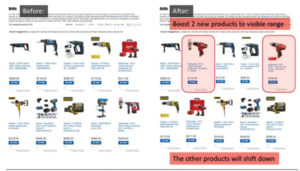
While Enhanced Impact Testing is most frequently used by apparel retailers when they post new seasonal collections, it also has great applicability to specialty retailers that depend upon repeat purchases from their most loyal customers. As long-term customers frequently already own a broad selection of a retailer’s standard merchandise, the very best way to get them to convert again is to make sure they have visibility on new items or categories of items as they appear in a store. Thus, if you’re selling archery equipment to past customers that already have a half dozen bows, lots of arrows, and a selection of targets, a retailer would want to boost new accessories, seasonal clothing items, or new technology upgrades.

[1]https://think.storage.googleapis.com/docs/the-importance-of-being-seen_study.pdf

Read More

Top Five Ways to Prepare for Peak Season

Posted by Amanda Rivera, Director of Marketing at American MeadowsOctober 25, 2018Uncategorized

American Meadows uses product discovery solutions from SLI Systems to deliver an exceptional customer experience to its shoppers.

Getting ready for your company’s busiest shopping season is a challenge no matter the market. From predicting sales to organizing ad campaigns, every department is involved. It’s a lot to balance and keeping track of what needs to be done to make your peak season great can be tricky.

That’s where preparation comes in.   

Recently, I joined Carter Perez, CRO of SLI Systems, in a webinar, “Your Guide to Being Peak-Season Ready.” In it, I shared how we at American Meadows, one of the most respected online retailers of seeds, bulbs, and perennials, prepare for our peak season. Since we’re a garden retailer, our busiest season is spring. But the same ideas apply to any retailer prepping for the peak-season rush. Today, I’ll share the top five ways to get your e-commerce site peak-season ready.

Top Five Ways to Get Peak-Season Ready

1. Fine-tune product names and images

Before your company’s peak season arrives, review product names and images. At American Meadows, we use different buyer personas to consider the different wants and needs of our different types of visitors. Matching product names to the language your shoppers use creates a better search experience and better navigation for your shoppers. Fine-tuning product names leads to a more enjoyable shopping experience. And a more enjoyable shopping experience leads to better sales. It’s the same when it comes to product images. Shoppers want to picture how products will work for them in their space. So before peak season begins, A/B test images to see which deliver the best results. Then update before the busy shopping season begins to maximize returns and optimize the customer experience (CX).

2. Review and refresh product descriptions

Product descriptions help people decide what to buy, especially when they are deciding between products. So as part of your peak-season prep, review descriptions of your top-selling products. Calibrate descriptions to match your customers’ needs and wants – focus on features and benefits for each persona – not only the product. At American Meadows, we do this by tuning descriptions to buyer personas and top keyword searches on our site. By reviewing and updating product descriptions as part of your preparation, you’ll help shoppers make better decisions faster during peak season.

3. Nail down “no results” pages

From glasses to keys to products online, nothing is more frustrating than not being able to find what you’re looking for. This is especially true during peak season when shoppers want to find the perfect product quickly. For example, at American Meadows customers need to find and receive items during the limited planting and growing season. Unhelpful “no results” pages mean shoppers will bounce to the competition. As you prepare for the busy season, pay attention to your “no results” pages. Where you can, add keywords, synonyms, and persona/customer language to search. This reduces the risk of landing on a “no results” page. Many times, “no results” happen when an item has been mistyped. Your “no results” pages should include possible spelling corrections for items you carry. And when a “no results” page is unavoidable, check to see if it ends the shopping journey. If it does, make changes to redirect shoppers to other relevant or best-selling products. Making fixes now means less lost customers during peak season.

4. Make search easy and productive for shoppers

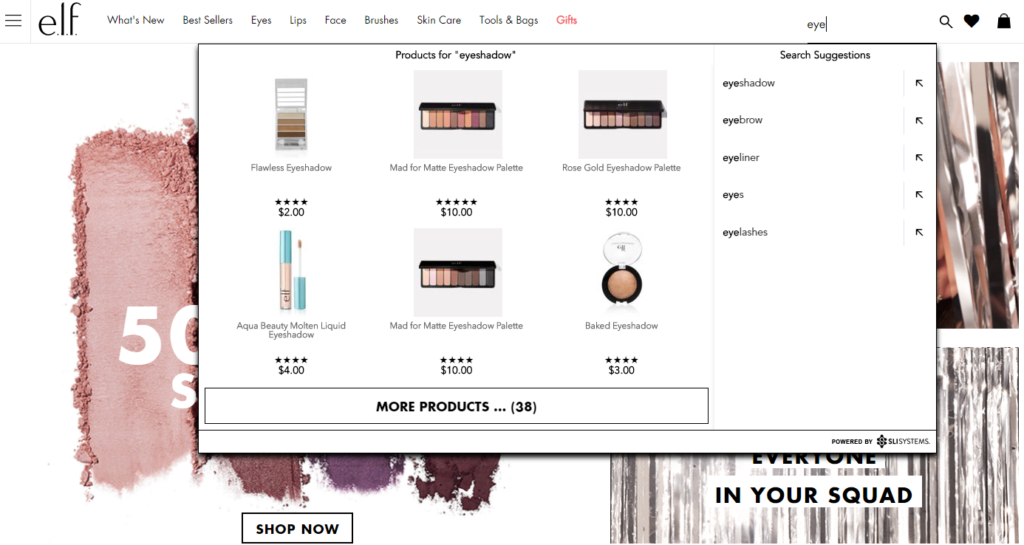
People enjoy a smooth and simple shopping experience – especially during the busy season! Your search box is key in making this a reality. So before peak season, check your search functionality. At American Meadows, we make search easy and productive by helping shoppers with dynamic autocomplete. If you don’t already offer it, think about adding rich autocomplete before peak season begins. Rich autocomplete will offer relevant terms from your company’s most popular search terms. You’ll want to make sure specific products are displayed, not simply product categories. Lessen the risk of sending shoppers to a “no results” page by giving suggestions for misspellings and common synonyms. Make search even better by adding pictures with the text. Pictures help shoppers visualize how the product will fit their needs. This makes it easier for your customers to find the right product. When you make search easy and productive for visitors, you’re creating a better shopping experience. And better shopping experiences mean increased conversion rates, especially during the peak season.

5. Offer relevant recommendations in the right locations

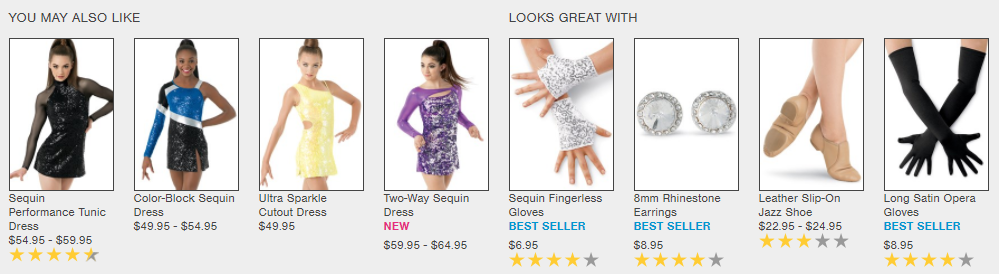
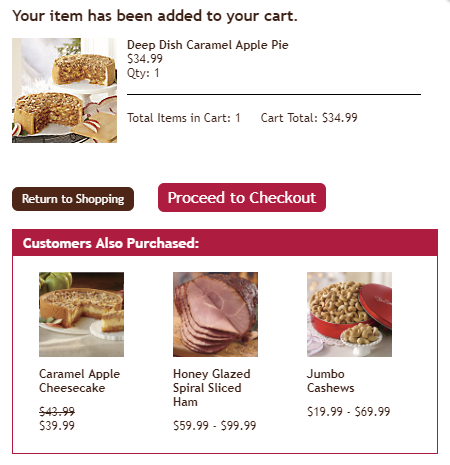
At American Meadows, we understand our shoppers may not always know exactly what they need – or want. Before our busy season we review and identify whether we are offering relevant product recommendations in the right locations. As part of your peak-season prep, review your recommendations strategies to ensure an optimal customer experience. You may find that you can improve conversion rates with recommendations in place on both product pages and the shopping cart. In addition, recommending products based on similar shoppers’ behavior leads to more conversions and better CX. For example, we offer “Customers also bought” from the shopping cart. This helps shoppers see what other products they might want or need to get the most of out what they’re already buying. Reviewing or adding relevant recommendations will help make this peak season your best yet.

Click here to watch the webinar for more peak-season planning tips and strategies, and download your Peak-Season Prep Checklist here. 

Read More

Facets, Facets, Who’s Got the Facets?

Posted by Doug McLeanOctober 18, 2018Uncategorized

Product filters or “facets” are one of the most commonly used tools that online shoppers use to find specific products or discover products they might want based on product attributes such as color, brand, size, etc. Effectively managing facets to accelerate the path to purchase, however, is something of an art. Getting it right can have a dramatic impact on conversion and cart value. Getting it wrong can literally drive shoppers away in frustration. Consequently, care is required in deciding which facet options to show to which shoppers and how to manage those options during any given shopping session.

SLI now offers two complimentary approaches to managing facets to maximize conversion rates and average order values. The first approach completely automates the process of managing how facets are presented and prioritized while the second offers merchandising teams the ability to hand tune their facet presentation based upon their unique knowledge of their product catalog and target customers. This blended automated/manual approach provides merchandisers the “best-of-both worlds” by leveraging automated machine learning while also providing very granular control of search and navigation pages.

As an example of the kind of issues SLI facet management tools address, consider the page on the right. This (artificially generated) page shows all 21 of the facet categories in use by a UK based seller of light fixtures, bulbs, switches, and accessories.

Obviously if they presented all 21 with each product search results page they would overwhelm their shoppers and probably drive many away. The question is which facets should they present on which pages and in what order should they appear?  At SLI we know from long experience that answering these questions correctly can have a dramatic impact on the results achieved by online retailers.

The easiest and most automated approach to answering these questions is to leverage the recently announced Smarter Facet functionality included in the SLI Product Discovery Suite. Smarter Facets automatically calculates optimum facet presentation based upon the behavior of previous shoppers on a store and which facets historically have the most impact on purchase behavior.

For online retailers with larger merchandising teams, SLI also offers Facet Merchandising Controls to allow retailers to boost, suppress, or even hide various product attributes (aka facet topics) based on shopper behavior. These new facet control features allow merchandisers to manually tune filters based upon their business objectives and unique shopper behavior patterns.

Thus, if a shopper searches for “fixtures” on our example lighting site, the results page (left) displayed only shows 6 of the 21 facets we know have historically impacted purchases based on that search term. SLI automatically displays 6-8 of the most relevant facets allowing the shopper to select the refinements that make the most sense to them.

Manual facet control is executed with a modern graphical drag’n’drop console shown below. When used in conjunction with the Results Tuning Console, it gives merchandisers very granular control of how and when facets affect product presentation to shoppers.

So, which of these two facet control tools should a thoughtful merchandiser use and when? The table below provides guidance on this question and if you have further questions, please do reach out to your SLI Customer Success Manager.

Smarter Facets Manual Facet Control
Controlled Facets All facets that are configured to be “smart”. Standard facets are shown first. All facets may be controlled.
Setup Required Yes. Facets to be automatically managed must be identified and marked as such. No. Merchandisers can directly manage all facets from their existing Commerce Console.
Triggered by A set of configurable thresholds related to facet membership for the results on the page A tuning condition similar to the ones available for results tunings or banners


Based Upon Extensions to learning Extensions to merchandising
Manual Facet Control
Controlled Facets All facets may be controlled.
Setup Required No. Merchandisers can directly manage all facets from their existing Commerce Console.
Triggered by A tuning condition similar to the ones available for results tunings or banners


Based Upon Extensions to merchandising
Read More

Personalization: It’s Kind of a Big Deal

Posted by Cheri WinterbergOctober 15, 2018E-commerce Research, EPIC, Personalization, Uncategorized

Imagine entering a store customized for you. The sales staff anticipates your unique needs, knows your sizes and tastes, and offers discounts on products you actually want. They make relevant suggestions so you don’t miss out, pointing to things you’re sure to like but may not have otherwise noticed. And they remember your previous purchases, recall what worked and what didn’t, and strive to make this visit even better than the last.

It’s every shopper’s dream come true.

In the not-so-distant past, highly-personalized retail experiences like this existed only for elite consumers. Upscale retailers vying for wealthy customers used personal shoppers and concierge services to ensure select clientele were shown products perfectly suited for them. But in the digital age, what was once an exception for the rich and famous is now within the reach of every shopper. And today’s consumers aren’t merely accepting personalization – they demand it.

Why the demand for personalization?

With so many product options, it’s easy for online shoppers to get overwhelmed and become dissatisfied. And when shoppers become dissatisfied, they abandon carts and brands. Personalization delivers a solution. High-functioning personalization strategies enhance a shopper’s journey and mitigate these frustrations. The result? Most consumers today (91%) opt for retailers who offer a personalized experience over those who don’t.    

Just how deep does the desire for personalization run?

Deep. Consider this – a survey by Salesforce revealed a whopping “82% of customers will share relevant information about themselves in exchange for connections between their digital and in-person experiences” and “85% of customers will share relevant information about themselves in exchange for proactive customer service.”

With numbers like this, it’s clear that growing personalization is imperative for retailers interested in getting – and keeping – customers.

And savvy online retailers haven’t failed to notice the increased demand. According to SLI System’s H1 2018 E-commerce Performance Indicators and Confidence (EPIC) Report, one-third (33%) of retailers across the globe say their companies are already giving their customers a personalized online experience and almost half (49%) plan to add it in the next year. In fact, only 7% of retailers worldwide say they are not adding some form of personalization to their e-commerce strategy.

As e-commerce professionals know, Customer Experience can either entice customers to return or drive them to the nearest competitor. And it’s clear personalization is a must in order to deliver a strong customer experience. But personalization isn’t a single-faceted entity. What’s more? Choosing the correct personalization strategies can make or break a shopper’s online experience – and the bottom line.

So how are e-commerce businesses personalizing and how do they plan to expand?

SLI’s EPIC Report indicates that with 57% of those surveyed saying it’s already in use, Emails Triggered by Online Behavior is the top way retailers currently personalize for their online shoppers. And it’s no surprise. MarketingDive explains that personalized email subject lines “can increase open rates by 50% and lead to 58% higher click-to-open rates.” The second most common way to personalize is Recommendations Based on Online Behavior (55%) followed by Segmentation Based on Demographic Data and Offers Triggered by Online Behavior, which tied for third (34%).

Underutilized strategies offer unique pathways to personalization.

Less used forms of personalization reveal opportunities to improve customized shopping experiences through a variety of alternative strategies. But which strategies can retailers use to take advantage of these opportunities? SLI uncovered that Persistent Profiling through a Data Management Platform (DMP) is the least utilized method of personalization with only 6% of those surveyed reporting it is currently in use. DMP is closely followed by Offers Triggered by Offline Behavior (7%) and Recommendations Based on Offline Behavior (9%).

To be successful, personalization must actually be personal.

Conversant found irrelevant content is the number one way to frustrate shoppers and lose sales. So how do retailers ensure their customers’ personalized experiences are, in fact, personal? Tracking and utilizing online behavior in the right ways. And e-commerce strategists are taking advantage of expanding technology in this arena. SLI discovered the top ways retailers plan to expand personalization all center on online behavior.

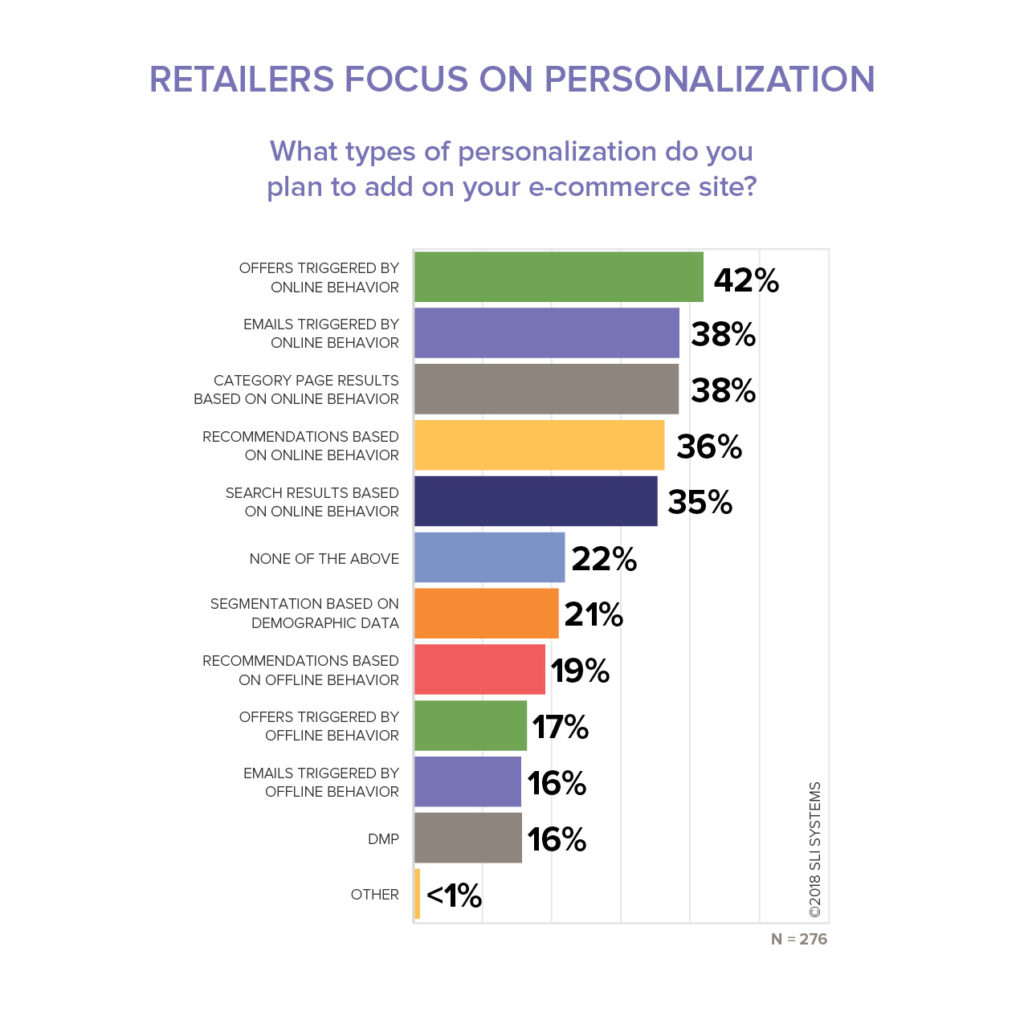
"Offers Triggered by Online Behavior" is the number one way retailers plan to add personalization to their e-commerce site. The top approach selected for implementation this year by 42% of retailers is Offers Triggered by Online Behavior. It was followed by Emails Triggered by Online Behavior and Category Page Results Based on Online Behavior 38% each in second place. Recommendations Based on Online Behavior took third place with 36%.

The Bottom Line

Finding out what your customers want and helping them get it through a personalized e-commerce experience isn’t just good for shoppers, it’s good for business. Sixty percent of those surveyed by SLI believe personalization will increase conversion rates. As technologies to improve personalization expand, retailers must take advantage or risk losing consumers to those who’ve embraced the growing demand for personalization.   

For more on the latest trends in e-commerce personalization, click here to download the H1 2018 EPIC Report.

Read More

M is the New E: Mobile Commerce Trends and Predictions

Posted by Carter PerezSeptember 26, 2018Uncategorized

Most of us can’t imagine life without our mobile phones. From a podcast on our daily commute to seeing who’s at the door when we’re not at home to last-minute holiday shopping, smartphones touch almost every aspect of daily life. Including how we go online. Since 2015, more people access the internet via mobile as compared to desktop or tablet, and in some locations use mobile at four times the rate of fixed access.

Yet many e-commerce companies still don’t give mobile equal treatment.   

Not for long. As consumer trust in mobile shopping rises, faster checkout and payment options become available, and optimization increases, mobile commerce is poised to take center stage. In fact, a recent study by Business Insider Intelligence reports that by 2021, mobile commerce will catch up to e-commerce, accounting for about 45% of sales.

It’s time to give mobile commerce a seat at the table.

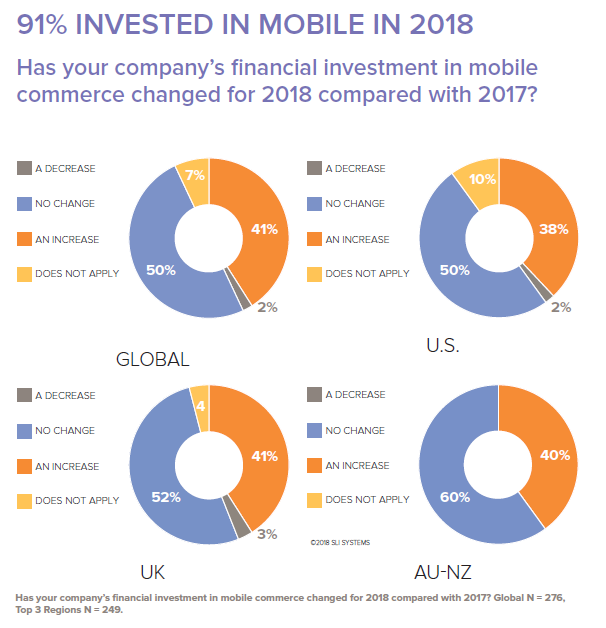
So how are e-commerce professionals preparing for increased mobile commerce? SLI Systems asked qualified retailers about it for our H1 2018 E-commerce Performance Indicators and Confidence (EPIC) Report. The results reveal considerable investment in mobile and high expectations for mobile-related revenue. Ninety-one percent of those surveyed report either maintaining (50%) their 2017 financial commitment or increasing (41%) their monetary investment this year, and almost all expect maintained or increased revenue.

It’s clear that when it comes to small-screen transactions, digital retailers are optimistic.

With only 1% of those surveyed foreseeing a drop in mobile revenue, e-commerce retailers are upbeat about growing consumer confidence in mobile site and app transactions. Eighty-one percent of retailers queried expect overall revenue increases from mobile sites and apps. And more retailers are expecting growth over 21% in the first quarter of 2018 compared to Q3 2017.

91% of retailers surveyed in the EPIC H1 2018 report said they were either maintaining or increasing their company's investment in mobile.

Investment in mobile is happening worldwide.

A look at the three most-represented regions in SLI’s EPIC Report shows close alignment in increased investments: 38% for the U.S., 41% for the UK, and 40% for the Australia-New Zealand region. And worldwide, more than half of those surveyed (54%) report an increase in the number of mobile initiatives and projects for 2018 compared with 2017, indicating retailers continue to anticipate consumer confidence in mobile site and app transactions will grow.

But regions vary in how they expect small-screen revenue growth to occur.

While globally retailers agree mobile is set to grow, there are geographic differences in predicted rates of growth. For example, when it comes to larger scale growth (over 21%), retailers from Australia and New Zealand are the most aggressive with 32% predicting larger revenue jumps for mobile site and app transactions. By contrast, 55% of U.S. respondents predict modest growth of 1-10% while that number remains closer to one-third in the UK and AU-NZ regions (35% and 32%, respectively).

Some industries are more focused on mobile than others.

SLI cross tabulated by industry to find out where retailers expect mobile to boom and where it will grow at a slower pace. Housewares / Home Furnishings leads the way in mobile investment with 65% reporting an increase related to mobile. Only 22% from Sporting Goods, by contrast, make similar plans. Representatives from Food and Beverage expect the biggest jump in small-screen revenue with 95% of respondents predicting an increase, while retailers from Sporting Goods and Media / Publishing were the least optimistic of the top five industries, with 78% and 63%, respectively, predicting an overall mobile site and app revenue increase.   

Digital retailers can’t afford to ignore mobile commerce.

It’s clear that mobile will play a large role in the future of digital commerce. What was once e-commerce’s biggest challenge is quickly becoming it’s largest asset. And the rapid growth predicted for mobile commerce means retailers need to prepare now or face getting left behind.   

For more on the latest trends in mobile commerce initiatives and revenue, click here to download the H1 2018 EPIC Report.

Read More

New and Improved Analytics and Reporting

Posted by Rachel UpsonSeptember 17, 2018Uncategorized

The SLI Reporting Console provides merchandisers with more than 100 metrics, pre-built reports, and an easy-to-use drag and drop interface to create custom reports. These analytics provide the detailed activity and revenue metrics required to understand customer behavior and take action to improve the site search experience. Analytics also provide visibility into the metrics used to calculate billing and assist in budgeting and assess return on investment. Earlier this month SLI Systems announced a suite of new analytics and reporting features that give our customers even more visibility of their shopper’s behavior. The newly launched functionality includes:

New Phrase Metrics

A new suite of top search phrase metrics and updates to our metrics give merchandisers more useful, actionable analytics including:
• Search phrase metrics for device types (mobile and desktop)
• Metrics that focus on search visitors
• Consistency in the way activity is counted across all metrics
• Metrics that report how many shoppers follow which redirects
Impact: The new metrics help merchandisers to understand more about how shoppers engage with their online stores. They can access data about product searches, search terms with poor results and high exit rates, and search performance and trends over time for any phrase. Merchandisers can also see the differences between how mobile and desktop users engage with a site. This information can be used to modify the shopping and mobile device experience, assess the impacts of merchandising activity, or identify opportunities to better meet shoppers’ needs.

Spider Free Metrics

Spider and bot activity can now be removed from the SLI Commerce Console reports using a combination of the International IAB/ABC Spiders & Bots List and user behavior analytics.
Impact: This new functionality will allow your merchandising team to focus their analysis and make decisions based on real user behaviour not malicious bot activity.

New Metrics for Learning Navigation, Site Champion, Learning Search and Log Data

New metrics are available and pre-existing metrics and reports have been enhanced.
Impact: New metrics increase the reporting coverage and level of detail available about how visitors engage with Learning Navigation and Learning Search. Merchandisers can also assess overall traffic with new details about which search engines crawl the site and which produce the most referrals.

Read More

New Merchandising and Analytics Capabilities

Posted by Doug McLeanSeptember 5, 2018Uncategorized

This morning, we announced several enhancements to our SLI Product Discovery SuiteTM – all designed to help retailers drive greater online success. Which retailers are looking to drive more online revenue this year? According to a survey of almost 300 e-commerce professionals – and as reported in Inside Retail— 91% are. Read more about ecommerce growth trends in SLI’s just-published E-commerce Performance Indicators & Confidence Report.

Therefore, if you are in the 91% – or if you’re not, but would like to be – today’s product update is relevant for you. We’ve focused on enhancing the analytics, metrics and merchandising tools retailers need to improve both conversion rates and average order value. New elements include:

  • Improved Product Filtering that allows retailers to boost, suppress, or even hide various product attribute variables based on shopper behavior. These new facet control features allow merchandisers to set up automated filtering rules based on SLI’s industry-leading machine learning and/or to manually tune filters based upon their business objectives and unique shopper behavior patterns. This blended automated/manual approach provides merchandisers with the “best-of-both worlds” by leveraging automated machine learning while also providing very granular control of search and navigation pages.
  • Upgraded Metrics and Analytics that includes new reports on top trending search phrases, desktop vs. mobile search trends, and the dreaded no-results phrases. The new metrics and analytics focus on insights and actionable information to help retailers increase revenue and average order value. The new reports also filter out spider/bot-generated searches. We also now provide global reporting and merchandising functionality for online retailers running multiple sites. New global reporting provides separate, as well as aggregate, reports on all key operating metrics. New merchandising functionality enables shopper behavior learned across individual stores to be applied to multiple sites.
  • Merchandising Tools that include Product Impact Testing and Analytics allow retailers to place new or potentially high-impact products “above the fold” to promote visibility and accelerate learning of shopper reaction to them. Included in this update is support for SLI Enhanced Search PersonalizationTM (ESP) for our customers integrated using the SLI API. There are also new shopper segmentation tools that allow promotions and search results to be segmented based on geography, shopper attributes, and/or device.

On average SLI customers see 70% better shopper conversion and almost double the average order value compared with industry averages. With these new product enhancements, we expect that advantage to continue to grow. These new features are, however, just the tip of the iceberg of the new features we’ll be adding to the SLI Product Discovery Suite over the course of the next year.

For more information on these product enhancements, please visit our Merchandising and Analytics web pages. If you’d like to be notified of the upcoming announcements or learn more about how SLI Systems can improve online retail business results, please get in touch.

Read More

5 Key Differences Between Mobile and Desktop Shopping

Posted by Lucy TahtAugust 20, 2018Mobile/Tablets, Rich Auto Complete, User Experience

It’s critical to optimize your e-commerce site for both mobile and desktop users in order to maintain a strong online presence. The goal is to create a seamless shopping experience for your customers regardless of the device they use to access your site. 

In this article, we’ll highlight the five top differences in desktop and mobile shopping. This should shed some light on how to best create an enjoyable customer shopping experience.  

1. Autocomplete is key for mobile users

Mobile shoppers don’t want to type out long search queries on small, touch screen keyboards. Online shoppers expect a robust autocomplete system that anticipates the products they’re looking for as they type in their search query.   

Implementing an intelligent auto-prediction search function on your site will quickly guide your mobile shoppers to the products they wish to see. Your desktop shoppers will appreciate this function as well, and will come to expect it if they have previously shopped on a mobile device on your site.   

Autocomplete creates a seamless shopping experience across devices, while driving customers to the products they are most likely to purchase. 

2. Mobile shoppers want advanced filtering options

Mobile shoppers want the ability to quickly jump not only to specific products, but also to brand or item-type product levels. Ensure that your site’s search functionality can incorporate smart filtering into results. This allows your mobile shoppers to efficiently navigate your site, whether they want to view a specific product or scroll through many similar products.   

For mobile shoppers operating on small screens, not having to go to multiple menus to navigate to product type or brand pages creates a more pleasant overall shopping experience that they are more likely to repeat. 

3. Mobile screen sizes are significantly smaller, and vary between devices and brands

One of the biggest differences between mobile and desktop shoppers is the difference in hardware and capabilities. Ensure your site functions similarly across devices, regardless of screen size.   

This means paying attention to whether site functionality is maintained across different brands and models of mobile devices, which can include tablets with 13-inch screens, and phones with 4-inch screens. Customers should have an optimized shopping experience on every device. 

4. Mobile wireless connections are slower than desktop broadband

Part of maintaining a seamless shopping experience is accounting for differences in loading times between mobile and desktop devices. In general, desktop devices have more robust hardware and broadband connections capable of loading image or flash-heavy sites much more quickly than their mobile counterparts.   

Mobile devices access your site from a variety of connections, including 3G, 4G LTE, and wireless broadband. Verify that your site design allows mobile devices to load your website’s pages with as little delay as possible. There is nothing more frustrating for mobile shoppers than clicking on the item they want and being greeted by a lengthy loading screen.   

Mobile customers won’t wait for slow sites. This affects customer retention and conversion rates. If your site isn’t optimally configured for a variety of connection speeds and hardware configurations, you risk losing customers and sales. 

5. Payment options

Mobile shoppers are less likely than ever to pull out their credit or debit card and type in all of their information. Incorporate a variety of different payment options on your site. Verify that your site has the ability to accept client-based payment storage options, like ApplePay and Google Pay, as well as more established alternative payment methods like PayPal.  

It’s important to determine if your checkout process is streamlined for mobile shoppers. One-click checkout has become more commonplace and allows both mobile and desktop customers to quickly complete the checkout process using existing payment, billing, and shipping information.  

For more strategies to improve your mobile e-commerce experience, download the white paper: Site Search and the Mobile Experience.  

Read More

Analyzing Trends: 3 Ways to Prepare for Black Friday

Posted by Doug McLeanAugust 16, 2018Mobile/Tablets, Uncategorized

To be ready for Black Friday Cyber Monday this year, you need to optimize for your mobile shoppers.For retailers, holiday season preparations are in full swing, making now the time to look back at what happened last year and what it taught us. The top three key trends reported in the wake of Black Friday Cyber Monday (BFCM) 2017 include:

  • Mobile devices accounted for 50% or more of transactions for the first time. These numbers varied depending on the source, but highlighted a statistical trend toward mobile.
  • The value of transactions during the BFCM period last year amounted to $13b – almost a 15% increase year-over-year. This is a hot market for retailers nimble enough to identify and meet consumer needs quickly.
  • For online retailers, there’s no longer two separate dates. BFCM is a four-day festival of shopping.

So, what are the implications of this as we all make inventory and promotion plans for 2018?

The first and perhaps the most actionable trend is the move to mobile devices by online shoppers. Retailers must have a mobile strategy that moves beyond just a responsive site. Retailers must optimize experiences for mobile shoppers using a mobile-first website or custom app. This may mean we’ll see more retailers move to Progressive Web Apps prior to BFCM. Yes, optimizing for mobile may make the PC-browser shopping experiences something of an afterthought. But, shoppers won’t be coming back to PCs, and there are now tools that minimize the development differences between the mobile and PC platforms.

To further endorse investing in mobile, remember that Google started moving to mobile-first indexing in March. So, from a pure SEO perspective, optimizing your sites for mobile users is just sensible.

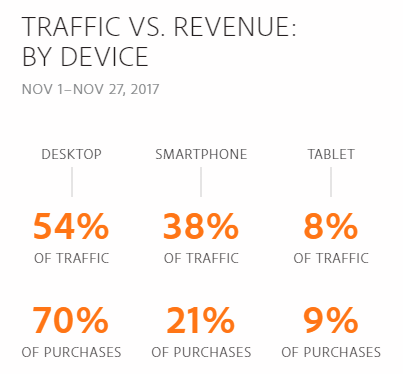
The second issue that needs to be addressed is the gap between the growth in mobile shoppers and actual mobile transactions. Adobe reported that mobile devices made up 47% of online shopping visits but only 27% of purchases during the 2017 holiday shopping period.

The browser/buyer gap highlighted by Adobe indicates we still have a lot to learn about converting mobile shoppers, but there are some lessons from the desktop world that apply, just more so because of the screen-real-estate challenge. Getting your mobile search functionality right for the 2018 BFCM shopping season really matters.

With these trends in mind, how should a thoughtful practitioner prepare for Black Friday Cyber Monday 2018? SLI Systems’ Customer Success Managers spend every day looking at retail sites and have developed the following three recommendations for 2018.

  1. Omnichannel Retailers Should Optimize Local Search Behavior: Google reports 50% of consumers will visit a store within a day of doing a local search. The implications go beyond SEO strategy. You’ll want your search box to lead shoppers to compelling products and help them purchase either online or in store as quickly as possible. That means you want a search functionality that not only considers the shoppers’ search terms, but also their geo-location, season, and any other behavioral data available. Search results should include not only product options but store locations and local inventory availability when possible.
  2. Personalize Product Recommendations Based on User Device: Historical data indicates that iPhone users tend to spend an estimated 30% more than Android users per transaction. This allows merchandisers to set recommendation rules that either present higher priced (and more profitable) products OR present Android users with promotional discount options tuned to their likely purchase behavior.
  3. Split Your Shopper Analytics into Desktop and Mobile: Desktop/mobile aggregate analytics likely lead to merchandising decisions that serve neither audience very well. Much of the current behavioral data indicates that users (even the same users) do different things on their mobile and desktop devices. So, a mobile savvy merchandiser will evaluate the two audiences separately and look at how search terms, bounce rate, cart abandons and other key metrics affect conversion and average order value. If your current analytics tools aren’t capable of providing this degree of granularity, it’s time to look for new tools.

One final point on the trends we saw last year. Because the BFCM shopping season is no longer two discrete shopping days but a four-day window in which promotions will either succeed or fail, world-class merchandisers are placing more emphasis on monitoring shopper behavior as it happens and adapting pricing and promotions as necessary.

Without extremely robust reporting and merchandising tools, you may find yourself in a position of not “seeing” what’s happening on your store until it’s too late to respond in any meaningful way.

For more on how to be ready for BFCM, check out our e-book E-commerce Merchandising: The Ultimate Guide to the Newest Techniques.

Read More

Strategies for Comprehensive E-commerce Merchandising

Posted by Carter PerezAugust 6, 2018Uncategorized

Learn how to leverage e-commerce merchandising solutions to accelerate your e-commerce and delight your customers with a customized shopping experience.

In today’s e-commerce landscape, setting your products apart from the competition is vital to creating brand awareness and loyalty. Using a platform that your e-commerce merchandising team can leverage to spread product awareness will ultimately increase your sales and bottom line.

E-commerce merchandising today is about more than simply showcasing specific items. It should incorporate a broad social media campaign to access larger pools of prospective buyers. Additionally, it requires having the right tools to turn prospective buyers into customers, and customers into loyal, repeat shoppers.

This article will examine how merchandising has evolved and give you the information you need to effectively merchandise your products in the digital age.

Leverage Social Media to Create Awareness and Drive Traffic

The social selling of goods and services continues to be a growing trend that you need to capitalize on. Using social media to showcase your products is becoming one of the dominant methods through which your products can be marketed to potential customers.

The vast reach of social media allows you to showcase your products to more customers than ever before. Savvy e-commerce companies use social media to generate buzz around their products drive traffic to their sites. Social media allows you to generate brand awareness and reach untapped markets and cross-generational divides with your products.

Through effective social selling, your merchandising team can turn that awareness into increased traffic, higher sales, and greater brand loyalty. Ensure your merchandising team has the tools they need to create a strong social media presence. Doing so will lay the groundwork for continued growth in social selling, and allow you to adapt to changes in how social media is used by future generations.

Curate Your Products and Your Brand

E-commerce merchandising today is more far-reaching than simply placing popular items above-the-fold on your homepage or emails. Merchandising today must provide context for those products through intelligent curation.

Today’s best curating decisions are based on your unique site visitors’ behavior. But most merchandising teams don’t have the bandwidth to consistently pull customer data and manually curate item by item. That’s where automated merchandising solutions are changing the playing field. AI-powered product discovery solutions learn from customer behavior to automatically order search and navigation results based on popularity and even seasonality. Yet they won’t remove the power of the merchandiser, who can still easily curate, promote and move products with drag-and-drop merchandising controls and SEO-friendly URLs.

Curation is about more than showcasing a specific product. It is also an avenue through which you can, over time, define and sell the uniqueness of your brand. Cultivating brand loyalty will ensure a greater success rate in converting one-time purchasers to repeat customers. Think about what makes your company unique, and leverage those ideas as the framework through which you curate your specific products.

Harness the Power of User-Generated Content

User-generated content, such as ratings, reviews and customer images or videos increase sales by increasing engagement and shopper confidence.

Beyond merchandising onsite, user-generated content can also deliver powerful SEO benefits to increase your traffic from search engines. As users provide unique content for your product detail pages, their unique terms boost your rankings and provide social proof for other shoppers, making them more likely to convert.

Market to the Individual

Customers today expect a customized online shopping experience. E-commerce merchandising is an often overlooked, yet crucial, aspect of creating a personalized shopping experience for your customers. Use intelligent product recommendations to drive sales by relying on information about specific customers and their preferences.

Individualized merchandising requires a platform that can filter through shopping patterns, search history, and past purchases in real-time to generate product recommendations. In the past, your merchandising team had to do this by hand. Now, with a machine-driven e-commerce solutions, customizing your customer’s experience can be accomplished quickly and accurately.

Meeting your customer’s desire for a personalized shopping experience will ultimately result in higher AOV and a notable increase to your bottom line.

Incorporate Merchandising into your Site Design

Every aspect of your site design should be designed to maximize your merchandising. This ensures the products that you want to sell, and that customers want to buy, are always easy to find. Use a platform that allows your merchandising team to create bespoke landing pages to drive sales to promoted products.

Banners that incorporate customers’ past search queries or product views can also be used by your marketing team to further customize an individual’s shopping experience. Remember that merchandising is as much about the customer as it is about the products you are promoting.  Customers today expect to have a personalized, aesthetically pleasing user experience. Meeting these expectations is critical to your success.

Improve your e-commerce merchandising by downloading our white paper 16 Merchandising Strategies to Drive Online Revenue.


Read More

Three crucial elements to a great e-commerce customer experience

Posted by Bob AngusJuly 5, 2018Customer Experience, Resources, User Experience

Missing the basics on your e-commerce site can cause more than two-thirds of shoppers to flee, according to Retail Dive.

As a result, many shoppers could be leaving before they even hit the “Add to Cart” button. Fortunately, there’s good news.

We have identified three fundamental elements to a great e-commerce customer experience:

  1. Performance
  2. Aesthetics
  3. Relevance

We even created a checklist!

We call it the P.A.R. Checklist. Our e-commerce customer experience checklist identifies the functionality your e-commerce site offers and provides simple suggestions on what you can do to improve.

Let’s break down each of those key performance, aesthetics, and relevance elements.

  1. Performance – The Need for Speed

Performance is the top priority. If your site isn’t fast, your aesthetic and relevance efforts won’t have much impact at all. According the E-commerce Benchmark KPI Study, “reducing the average load time by 1.6 seconds would increase annual revenue growth by 10%.”

A delay in product page load or a search query may result in a lost customer. Forever.

Famously, back in 2006, Amazon presented one of the first studies linking a clear causation between page load time and online customer revenue. Through A/B testing, they showed every 100 millisecond delay in page rendering time resulted in a 1% loss of sales.

More recently, Intuit increased conversion rates 24% when they cut load speed from 15 seconds to 7 seconds. And they gained an additional 8% conversion boost when load time went from 7 seconds down to 2 seconds.

If that wasn’t enough pressure, Google now analyzes page speed as a key factor for its organic search-ranking algorithm.

Bottom line: You need to be fast.

Three Ways to Increase Performance of Your Site

The biggest performance killers are often the same things that make your site such a rich engaging experience. Your website is full of product images, content, Javascript, and CSS page elements. That bloats every page.

Fortunately, you have several ways you can increase site speed while keeping your online store appealing to customers.

  1. Your best first step is to reduce your page size. For e-commerce sites, the best way to do this is to optimize the size of the product images you show.
  2. Reduce the number of requests. Many browser requests are fired off every time a visitor hits any page on your site. Many requests ask for the same elements for each page. Speed things up by caching the elements that are repeatedly downloaded.
  3. Shorten the distance to your customers by using a Content Delivery Network (CDN). The closer your data centers are to your customers, the faster your website loads. CDN services give you a global network of servers. That shortens the distance to your customers, which your website host alone cannot provide.

Google offers even more recommendations to minimize unnecessary bloat on your website.

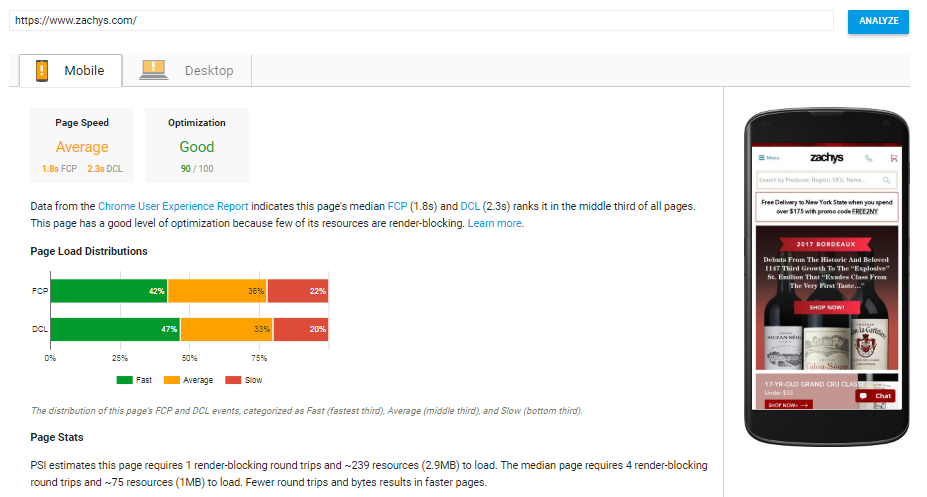
Your Action Item: Visit Google PageSpeed Insights. Enter your website URL. See how Google rates your performance. Follow Google’s optimization suggestions to get your site up to speed.

Google will give your site's speed a clear rating and insight on how to improve.Now that you’re up to speed, let’s boost sales with top e-commerce aesthetic best practices.
  1. Aesthetics Are More than Beauty Alone

Online businesses all want beautiful websites. You want your products to appeal to shoppers. But a beautiful website doesn’t mean it’s tuned to sell.

Your top priority is to drive transactions. Your key pages need to be focused on sales and appearance. Otherwise, those shoppers are “just looking” at your beautiful website. And you’re dramatically less likely to make a sale.

The Best Place to Start Online Merchandising

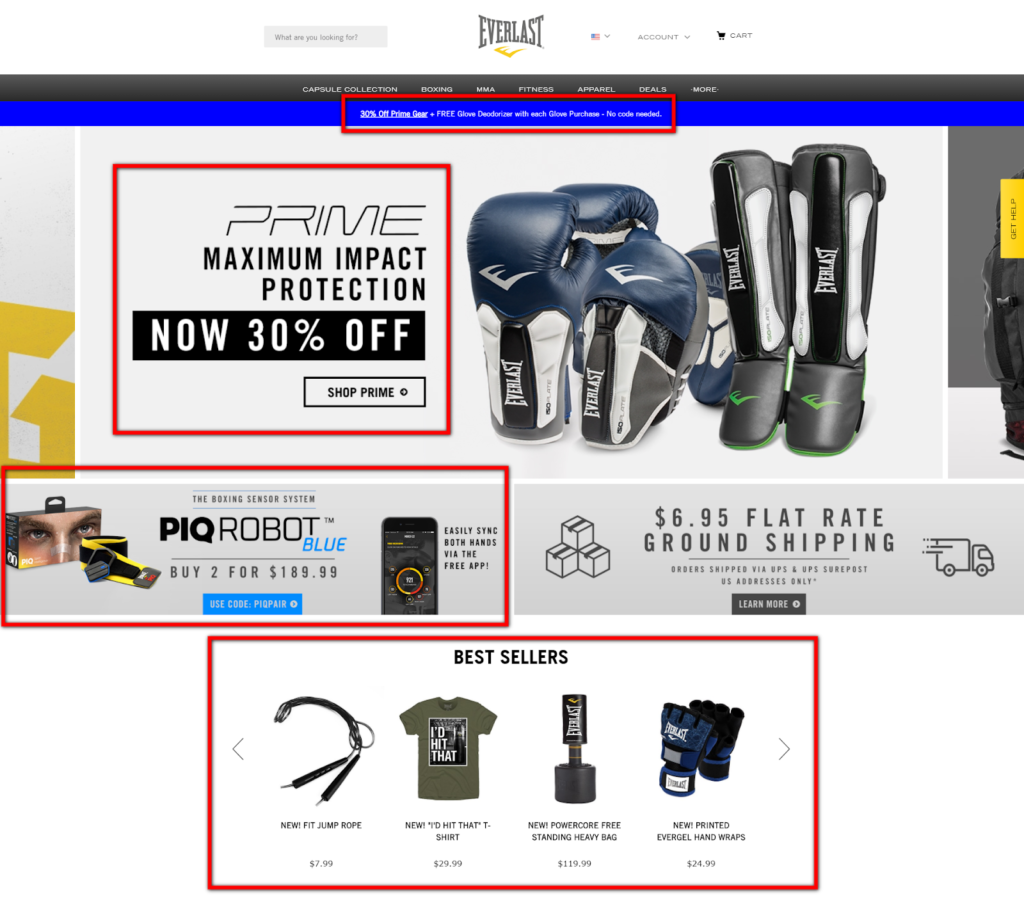
Do you merchandise specific products on your homepage? If not, you need to. You want to get your visitors directly to a product page where they can purchase.

Yet, many e-commerce sites use valuable homepage real estate to promote general categories and shopping ideas, not specific products. Or online stores display big, beautiful “brand experience” images that push anything sales-related down below the fold.

As a result, visitors are just browsing. They might find the site attractive. But they typically won’t move forward toward purchase. They meander. And pretty quickly they are off your site. Nothing in their cart. Or best case, an ineffective homepage simply means shoppers need to make more clicks to maybe find what they want. That’s not good either.

Your Action: Merchandise specific products that visitors are likely to add to their shopping carts right away. Better yet, use AI to determine which products to feature.

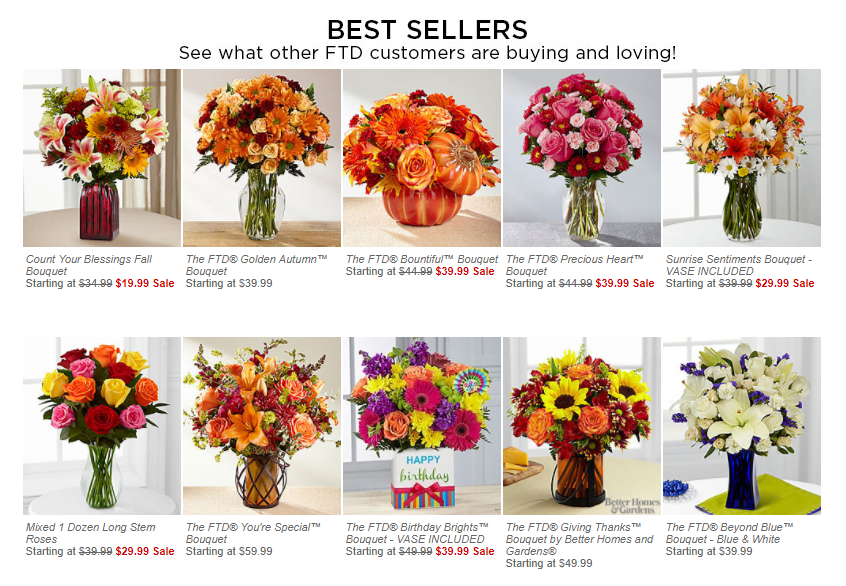
Get shoppers in a buying mindset with product recommendations like “Top Sellers” and “What’s Hot” on your homepage.

Your homepage should get shoppers in the buying mindset with "Best Sellers" and other promotions.You can apply this same beautiful, yet impactful merchandising approach to other critical shopping elements, like your navigation, category pages, product pages, and your shopping cart.
The P.A.R. Checklist gives you even more concrete actions you can take to boost sales with a better, more aesthetic shopping journey.

So you know how to increase your site speed. And you’re tuning your site to be beautiful and effective at selling.

Now let’s address the critical e-commerce factor that helps you go from great to world-class.

  1. Relevance – The Secret Weapon to a Higher Conversion Rate

Fast product discovery is critical to sales. Shoppers can’t buy what they can’t find.

Your customer experience needs to be tuned to answer one question: “What is my visitor most likely to buy right now?”

That’s relevance.

Relevant product discovery is proven to increase site-wide conversion rates 19% and average revenue per visit 72%, according to sales analysis of 40 top retailers.

So you need to merchandise hyper-relevant products throughout the shopping journey.

Your Search Box Is Your Revenue Box

SLI studies have found that visitors who use search buy at a 2.7x greater rate than visitors who just browse.

Search users show a higher buying intent by indicating exactly what they want, often including the brands, specifications, materials, and colors they are looking for.

Your search results need to offer more than simple keyword matching from product feed data. You also need to factor in behavioral data from previous visitors.

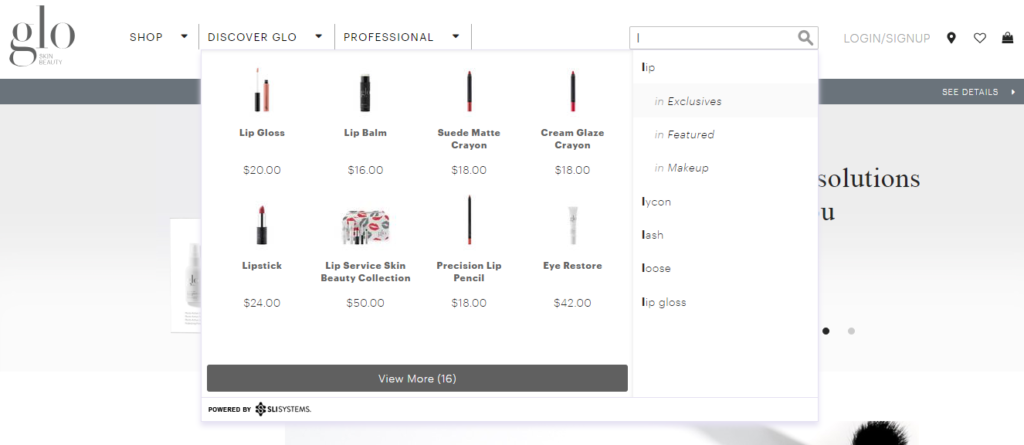
The most effective e-commerce sites display hyper-relevant search results with the products shoppers are most likely to buy. You can further accelerate the path to purchase with autocomplete functionality in your search box.

Display relevant suggestions as soon as shoppers begin to type. Make sure to order those suggestions based on popularity to further speed up the purchase path.

Your Action: Turn your autocomplete into rich autocomplete. Expand the suggested terms to merchandise specific products with images. Eliminate extra browsing and make your suggestions visual to enhance conversion rates.

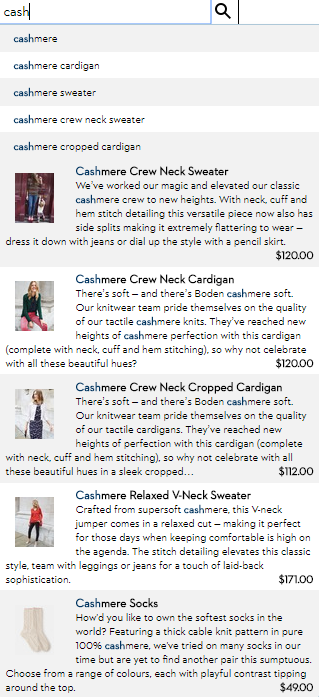
SLI Rich Auto Complete visually displays the most relevant product names, categories and images as users type into the search box, reducing the number of clicks from search to purchase.

In fact, relevancy is crucial to optimizing many online merchandising functions. Your product recommendations engine, personalization features, and even your SEO efforts can be dramatically improved with greater relevance.

Is Your E-commerce Website Up to P.A.R.?

You understand why Performance, Aesthetics, and Relevance can have a big impact on your online sales. Now it’s time to evaluate your e-commerce website.

You’ve got a prioritized to-do list instantly ready for you. The P.A.R. Checklist provides easily actionable recommendations for each element. And each best practice is ranked in priority order.

Read More

Putting AI to Work for E-Commerce

Posted by Christina StublerMarch 2, 2018Artificial Intelligence, E-commerce Research

So if you watched our recent webcast you know that Artificial Intelligence has gone mainstream, accompanied by more than a little hype and big promises. But this 3rd generation of AI is also providing some amazing value – much of it behind the scenes – powered by intelligent, predictive algorithms embedded in all types of software and devices, doing practical things.

Businesses who approach AI with clear goals have an opportunity to use the technology to transform the way they do business. Especially if they are aware of not falling into the “big AI” trap, and start by focusing on everyday problems, simplifying the customer experience, and looking for ways to use data along the buyers journey.

For e-commerce businesses, the machine-learning (ML) branch of AI has particular promise, especially with all the digital breadcrumbs and transaction data swirling around the typical omni-channel consumer relationship. Merchandisers have the potential to harness both big and small data to better understand their future buyers, and more effectively attract, engage and convert them.

Here are 4 takeaways from our session and my consulting days that can help online businesses put AI to work in the near term, even as they look forward to the next big thing.

Automate the big stuff, so you can focus on the details

You know your customers and which product features fit which needs, but how do you optimize online merchandising for hundreds of SKUs and thousands of buyers, and even millions of online posts or tweets, ideally in real-time? This is where AI comes in: sorting, matching, and generating insights that connect the dots between buyer profiles, product attributes, and the perfect online experience.

In my experience, “classic AI” is really good at chunking through data where there are established rules. And the softer, ML-based approaches are good at dealing with exceptions and discovering new relationships. Between the two, turning big (and small) data into these types of actionable insights is a proven use case that offers to free up merchandisers to focus on the art of selling and human-scale brand building.

Build around search and making it better

Consumers have been conditioned to search first (thanks Google!) so focusing on making products easier to find, and serving up the most relevant results is super-important. But unfortunately traditional search results are often long on results and short on answers. And those of us who have played around with search algorithms (and even programmed then in the past) know that search is the ultimate interface between man and machine, and thus require equal parts science and art, and a complete understanding of context.

Fortunately intelligent search features like predictive search and autocomplete (and soon visual and voice search) are some of the most established areas within AI and have reached a point where they are now available via add-ons to popular e-commerce platforms. MUCH easier than programming them yourselves!

Follow the data trail – especially the small data that reflects unmet needs

It’s always a good idea to observe your users, and look for bottlenecks in their buying process, whether you are running a corner store or a multinational etailer. See what they are buying and what they say about what they like by tracking social posts and reviews. Look at embracing agile merchandising on all your channels to streamline data collection and organizational learning.

More broadly, realize that while big data is about machines, small data is about people, as I’ve evangelized for the past 5 years! Plus as brand maven Martin Lindstrom has noted, these “seemingly insignificant behavioral observations” can in fact contain specific insights that expose an unmet customer need. Operationalizing these insights through a product recommendation engine for your website (or retail execution system in your stores) can turn insight into action.

Limit choices to drive conversions

At the end of the journey, you want to steer buyers to the right option – for you and them, while minimizing distractions. Real-time personalization powered by emerging patterns in transactional and behavioral data (such as the small data that represents the past week’s orders by location or social chatter from a certain customer group) can narrow the set of options while making each shopping experience appear “on trend.”

This is why next-gen recommendation engines, bots and other AI-powered “helper apps” are front-and-center on many online retailer’s shopping lists – and why Forrester predicts that in 2018 intelligent agents will directly influence 10% of purchase decisions.

—

Read More

Magento Extensions – The 13 Best Magento Plugins to Increase Sales

Posted by Bob AngusJanuary 24, 2018Customer Experience, eCommerce, Resources, SEO, Site Search, Social Media, Testing, User Experience

Best Magento Extensions - Magento Marketplace

You’ve got the core functionality in place on your Magento store. Now you need to enhance your site to increase sales and optimize your customer experience. That’s where Magento extensions help.

But there are thousands of Magento extensions to choose from in the Magento Marketplace. You can easily spend too much time figuring out what’s the right extension across different business needs.

Here’s a helpful guide that gets you right to the best Magento extensions designed specifically to drive more online sales.

How to Find the Best Magento Extension for You

The Magento Marketplace makes it easy to browse and filter the many extensions. However, evaluating which extension is right for you can still be daunting.

It’s not as simple as looking at ratings. Even the most popular plugins typically only have a few reviews.

And just going with free extensions may not be the best way to save money.

Here are few criteria you can consider when choosing a Magento extension.

Free Extensions vs. Paid Extensions

It’s easy to jump toward a free extension. But most free extensions also require a subscription to that service. Calculate your total cost before choosing a solution, including the expense for the time it takes your developer to integrate and maintain that extension. Sometimes the higher priced solution up front is actually less expensive in the long run.

Look for Great Support

Help save your development time by choosing extensions that have excellent installation documentation and user guides. Better yet, check out their support information on the vendor’s website. Evaluate how responsive and helpful they are before making the purchase. That extra contact can help you avoid getting stuck later on.

Recent and Regular Updates

Magento is constantly improving as e-commerce continues to evolve. Your extension provider should be too. Partner with vendors that are committed to the Magento community. Look for extensions with recent or regular updates for new Magento releases and for additional features and bug fixes.

Now let’s look at the detailed list of Magento extensions that can help increase your sales.

Best Magento Extensions – The 2018 List

Winning more sales requires enhancements to each step of the customer experience:

  • Drive more traffic to your store
  • Increase conversion rates
  • Accelerate purchase with fast and easy checkout

We’ve curated a list of 13 top Magento extensions that can help you increase sales in 2018.

Let’s get started with the critical need to bring shoppers to your e-commerce site.

Drive More Traffic

More traffic means more shoppers. More shoppers lead to more sales. It’s that simple.

The challenge is winning shoppers who are ready to buy against competitors hungry for the same customers.

The following Magento extensions give you an edge and help drive more and better traffic to your store.

MageWorx SEO Suite UltimateSEO magento extension - mageworx seo suite ultimate

Magento helps your search engine optimization techniques with core functionality that Google and other search engines want.

The platform gives you the basics, like clean HTML, meta tags, simple URL structure, and automatic XML sitemap generator. These capabilities make your website easy to crawl. However, you’ll need to do more and at scale to win hyper-competitive search ranking.

Many extensions address a single element of good SEO. We recommend a single extension containing an entire SEO suite to really increase your organic search traffic.

MageWorx SEO Suite Ultimate is an all-in-one SEO toolkit that manages a wide array of onpage SEO features that includes:

  • identifying duplicate content
  • enhanced site indexing
  • canonical URLs
  • optimized meta data
  • auto-generated XML sitemaps
  • cross linking
  • SEO redirects
  • advanced rich snippets

Price: $299 for Community edition, $599 for Enterprise edition

Learn more about MageWorx SEO Suite Ultimate

Remarketing with adaploremarketing magento extension - adaplo

Remarketing is a proven advertising tactic to increase sales by bringing previous visitors back to your store. Product remarketing ads are displayed on Facebook and Google Display Network (GDN) that match what your shoppers have already viewed.

The challenge is automating your remarketing ads across all your visitors and for all your product SKUs. adaplo makes automated retargeting easier.

adaplo creates the retargeting campaigns on Facebook and GDN by launching dynamic product history. It can also expand your ads to more audiences and different ad types.

Price: Free, requires an adaplo subscription

Learn more about adaplo

Wyomind Simple Google ShoppingGoogle Shopping Magento Extension - wyomind simple google shopping

This extension is the M2 version of Wyomind’s highly rated Simple Google Shopping. You can easily sync your Magento store’s product feed with Google Shopping.

What sets Simple Google Shopping apart are features that help you synchronize accurately without spending a lot of time, including:

  • Map your product categories to Google categories
  • Schedule tasks to generate your data feed
  • Check that your data feed was generated error free
  • Verify your data feed generation stats (number of items, time and resource)

Price: $80 for Community edition, $120 for Enterprise edition

Learn more about Wyomind Simple Google Shopping

Email Marketing with Brontoemail marketing magento extension - Bronto

Email marketing remains a dominant marketing channel that drives more traffic and sales. Your e-commerce email marketing should be more than broadcasting your sales and discount offers.

That’s why Bronto is the perfect email platform for your Magento store. You can send targeted and personalized emails to your customers and newsletter list.

The Bronto Connector for Magento easily imports purchase information from the Magento platform into Bronto campaign manager. Using that full order history you can curate personalized email and cross-channel marketing campaigns at scale.

Price: Free, requires a Bronto subscription

Learn more about Bronto

AddThis Social Media SharingAddThis social media magento extension

Let your customers spread the word about your products. You get more already-enthusiastic visitors when your current shoppers share on social media.

AddThis is the easiest way to add sidebar share buttons to your Magento store. This social media extension can connect you with over 200 social networks for easy sharing … for free.

Plus, you have control of the style to match your store in both desktop and mobile browsers. And you can pre-populate the message being shared. As a result, your shoppers are more likely to share.

Price: Free

Learn more about AddThis

Increase Conversion Rates with Better Customer Experience

Now that you have help driving more shoppers to your online store, it’s time to turn those shoppers into buyers.

The best way to increase conversion rates is to provide your visitors with a great customer experience.

Customer experience trends show the most successful retailers are executing well at every step in the buying journey.

Here are some Magento extensions that can help you do the same.

Smart Site Search with Learning Search

Visual Merchandising Autocomplete E-commerce Site Search - e.l.f. Screenshot

Customers who search for products have higher purchase intent than shoppers who are “just browsing.” You need to make sure you are delivering the search results that those must-win customers are most likely to buy right then. 

Go beyond simple keyword matching from your product feed. With SLI Learning Search, your e-commerce search box becomes an AI-powered tool designed to continuously improve query results and generate more revenue.

Further boost conversion rates with rich autocomplete functionality. Less clicks and browsing is what you want. Display specific product results while adding visual merchandising with appealing product images.

Better yet, you can leverage the same behavioral data to add AI-powered product recommendations to product pages, in your shopping cart, or anywhere on your site. Getting personalized recommendations along with higher converting search results can give you a big advantage over using separate plugins for recommendations and site search.

Price: Free, requires an SLI Systems subscription

Learn more about SLI Learning Search

Social Media Content with Pixlee social media magento extension - Pixlee

Social media content posted by you and shoppers on Instagram, Pinterest, Facebook, and other social channels can really improve engagement. In turn, that more personal social proof increases conversion rates.

Pixlee helps you identify and curate user-generated content so that you can display beautiful look books and social image galleries throughout your site. And those images are shoppable to make it easy to click “buy now.”

Pixlee also delivers the advanced social campaign features you’ll want in a single solution, including the ability to:

  • Launch social contests and promote engagement campaigns
  • Publish visual reviews and social posts on product and category pages
  • Personalize emails with relevant social proof
  • Track your social content’s conversion rate and engagement metrics

Price: Free, requires a Pixlee subscription

Learn more about Pixlee

Special Promotions Propromotions magento extension - amasty special promotions pro

Discount offers and promotions are proven to increase transactions. But managing all the different types of offers across all your SKUs can be incredibly time-consuming. Not to mention, ensuring you don’t kill your profits by discounting the wrong products or by displaying expired sales.

Amasty’s Special Promotions Pro extension reduces your headaches with a powerful promotion manager. The extension gives you access to 22 discount and offer rules for cost-effective promotions building in bulk or for individual products.

Additionally, you can automatically create personalized promotions using customer data. The extension builds one-to-one, hyper relevant deals for you using data like order history and birthdays. That level of personalization can really help drive repeat sales from loyal customers.

Price: $129

Learn more about Special Promotions Pro

Amasty A/B Testinga/b testing magento extension - amasty a/b testing

You should always be running experiments to discover the major and minor updates to your Magento store that can maximize sales. Amasty also provides a helpful A/B Testing extension that gives you everything you need.

You can run A/B split test and multivariate tests for particular products or product groups directly from your Magento admin panel. You can customize one or multiple tests at a time based on different goal metrics, products, and “winner” criteria.

What makes this testing extension even nicer for you is that you aren’t required to develop duplicate product pages with each test variation. No extra development time and site bloat helps you focus on improving your customer experience, not coordinating the tests.

Price: $179

Learn more about Amasty A/B Testing

Full Page Cache Warmer by Magewarespage cache magento extension - magewares full page cache warmer

Front-end site elements and promotions get a lot of attention when improving customer experience. But site speed and page performance is also a must-have consideration.

Page caching extensions like Full Page Cache Warmer are the simplest ways and most effective ways to make sure your Magento store loads fast for your visitors. Full Page Cache Warmer automatically crawls your store to find any uncached pages or newer versions of already cached pages.

Then the “warmer” part of this extension kicks in. This extension uses a special technique warms each page as if a real visitor is hitting on that page. The result is faster page deliver when a shopper does actually does land on your site. Pretty slick.

Price: $129 for Community edition, $379 for Enterprise edition

Learn more about Full Page Cache Warmer

Win More Sales with Frictionless Shopping Cart

So far we’ve covered Magento extensions that increase traffic and then help you improve your conversion rates. Now it’s time to focus on the most critical step – ensure your customer completes their purchase with a fast and easy checkout experience.

Smart One Step Checkoutecommerce shopping cart magento extension - aheadworks smart one step checkout

You’ve optimized your online store so that a customer clicks the “Add to Cart” button on your product. Don’t lose the sale by adding extra steps to completing the purchase after they’ve decided to buy.

Customers now expect a single page checkout process that they are familiar with from shopping on other online stores. Give it to them with Smart One Step Checkout.

Smart One Step Checkout offers all the functionality you need in a single extension, including:

  • Mobile responsive design
  • Customer login for one step purchase or guest checkout
  • Edit items in the cart
  • Apply discount codes and gift cards
  • Checkout behavior and abandonment reporting

Price: $299 for Community edition, $1,499 for Enterprise edition

Learn more about Smart One Step Checkout

Subscription And Recurring Paymentecommerce subscription magento extension - magenest subscriptions recurring payments

Subscription models have become a popular way for e-commerce businesses to sell their products. Keeping customers buying from you month-after-month can be incredibly profitable. However, subscription purchases require a different checkout and payment infrastructure.

Aheadwork’s extension adds subscription and recurring payment functionality you need. It can become your primary checkout experience for pure subscription businesses. Or you can create trial subscriptions or automatic product re-order options.

The recurring payments integrate with your merchant services provider. This makes regular billing easy for you and your customer. Plus, it helps reduce payment failures due to credit card expirations or cancellations.

Price: $249

Learn more about Aheadworks Subscription And Recurring Payment

SimiCart Mobile App Buildermobile app magento extension - simicart mobile app builder ios android

Most Magento themes already support mobile responsive design. So shoppers using a mobile browser usually have a good experience. But you may be missing a segment of customers who prefer to shop in your own branded app.

SimiCart helps you build your own iOS and Android mobile app to boost up your business through the Apple App Store or Google Play. SimiCart integrates directly with your Magento store infrastructure so that product feeds, ordering, and fulfillment are all synchronized.

You can then customize your mobile app’s design and features as you wish. Make it look like an app version of your mobile website. Or create a custom app experience with shopping features. You choose.

Price: Free, with SimiCart subscription starting at $49/month

Learn more about SimiCart Mobile App Builder

Magento Extensions that Improve Your Sales

These 13 Magento extensions are designed to increase your sales in different ways – driving more site traffic, improving conversion rates, and accelerating customers through checkout. Make sure to check out these extensions and see how you can take your sales to the next level.

MageWorx SEO Suite Ultimate

adaplo Remarketing

Wyomind Simple Google Shopping

Bronto Email Marketing

AddThis Social Media Sharing

SLI Learning Search

Pixlee Social Media Content

Amasty Special Promotions Pro

Amasty A/B Testing

Magewares Full Page Cache Warmer

Aheadworks Smart One Step Checkout

Magenest Subscription And Recurring Payment

SimiCart Mobile App Builder

Read More

Improve E-commerce Conversion Rate with 5 Critical Enhancements

Posted by Bob AngusDecember 13, 2017Customer Experience, eCommerce, Merchandising, Navigation Tips, Personalization, Recommendations, Rich Auto Complete, Site Search Tips, User Experience

Your e-commerce business is full speed ahead. But that’s not good enough. You’ve been tasked with higher and higher growth expectations.

ecommerce sales buy button

And now you have even more at stake. You are likely spending more and more to drive traffic to your site. You can’t let that big investment in advertising fizzle with diminishing ROI.

Good news. You have a high-impact driver you can execute against right now.

Improvement to your conversion rate is the greatest lever at your disposal. Even a small conversion rate increase can generate big revenue gains.

This comprehensive guide to e-commerce conversion rates helps you build a winning game plan for your online store, including:

  • What e-commerce conversion benchmarks to use
  • How to analyze your conversion rate
  • How to optimize 7 critical conversion rate drivers

Let’s start by understanding how you can best measure conversion rate.

What is a good e-commerce conversion rate?

Online retailers track many conversions throughout their customer experience. Any action goal can be considered a conversion. A click on your email, a click on an advertisement, or a newsletter signup are considered conversions.

The conversion metric you really want to focus on is a purchase. Your sale conversion rate is calculated by simply taking the number of purchase transactions and dividing that by the total unique visitors to your online store during a time period.

That’s pretty straightforward. But what is a good conversion rate to set as your target goal?

This 2017 holiday shopping to date, average e-commerce conversion rates are showing growth: desktop 4.5% (up 10.6% YoY), smartphone 2% (up 12.3% YoY), tablet 4.3% (up 9.3% YoY), according to Adobe Digital Insights.

And Amazon boasts an amazing 74% conversion rate for its Prime members and 13% for non-Prime visitors back in 2015, based on a Millward Brown Digital study. In comparison, the same study showed the average conversion rate for Top 500 merchants is 3.32%.

Are those the right conversion rate benchmarks for you? Probably not.

It is interesting to set an aspirational goal against Amazon or other leaders that compete in your industry. However, you are best served by benchmarking where your own store is now. Then set a course for continual improvement to drive conversion optimization goals and strategies.

Measure your overall sales conversion rate for your entire website the past year. That’s your starting point. That’s the number you want to beat in 2018.

Then the key is to drill down into your sales-rate performance for different contributing factors and customer segments. That’s where your actionable insights really happen.

Now let’s explore the best way to analyze your conversions to enlighten your growth plans.

How You Can Analyze Your Conversion Rate

Conversion rate is a very useful metric to track. But the real impact to your e-commerce business is analyzing and understanding what is driving your performance and why.

That deeper conversion analysis helps you:

  • Determine what segments are contributing to your overall conversion rate
  • Identify the root causes
  • Prioritize and track success of your optimization game plan

The first step is to build a dashboard that tracks and trends your conversion rate. Google Analytics and many e-commerce platforms provide a dashboard that lets you see your conversion rate over different periods of time.

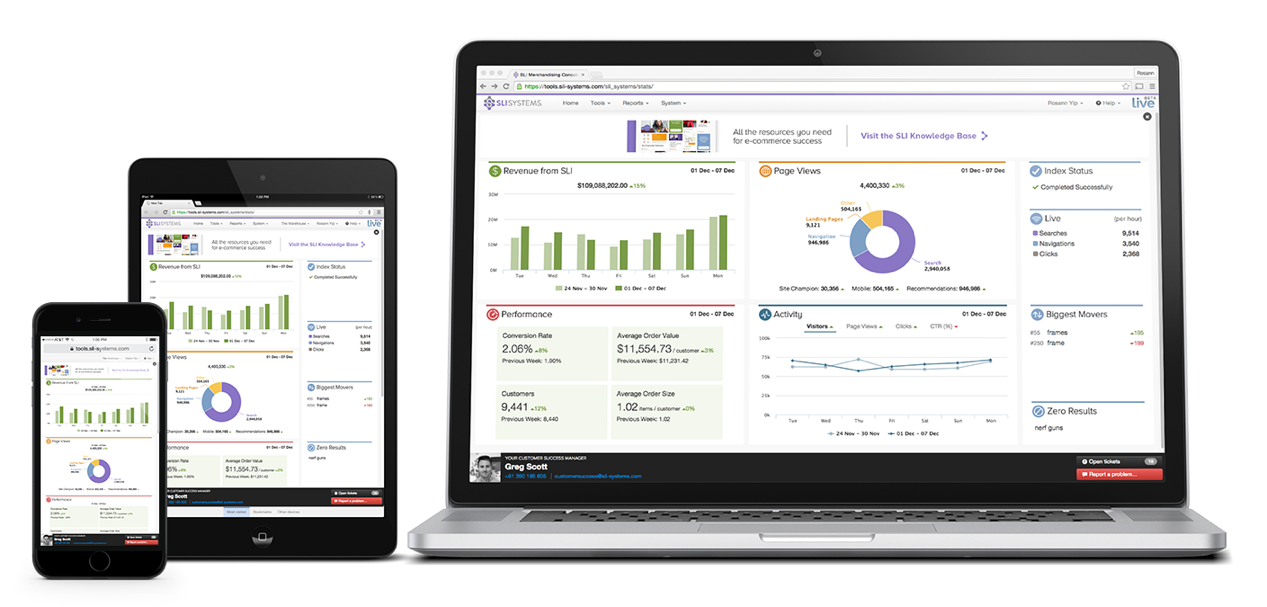
SLI Systems also has a very powerful dashboard built into the Commerce Console. You get an helpful view of your shoppers’ activities and conversion rate through their shopping journey.

Ecommerce conversion rate dashboard - SLI Systems Commerce Console

Or you can simply use a spreadsheet. Capture your monthly unique visitor metrics and plug in your corresponding sales transaction data to calculate your conversion rates. Again, simply divide transactions by unique visitors to get the conversion rate percentage.

Next you’ll start the drill down analysis.

What Is Driving to Your Conversion Rate?

Your overall conversion rate calculation is an average. Many different factors drive that single number. Some factors contribute significantly more than others. It’s your job to break down those key drivers to find growth opportunities.

Start by segmenting your conversion rate data into categories.

The most common way to split up your data is by different customer audiences. Different types of customers have a different relationship with your e-commerce business. They may also have different purchase intent, which directly impacts your conversion rate.

Your analysis can uncover those segments that likely have differing intent to purchase. Then you can calculate the conversion rate for each segment. And you’ll see which audiences have the greatest influence on your overall conversion rate.

Here are several helpful ways to segment your audience.

  • First-time visitors vs. returning visitors – First-time visitors often make up a big majority of online traffic. But it stands to reason that those first-time visitors who may be unfamiliar with your brand are less likely to purchase than returning visitors.
  • Acquisition channel – Where visitors come from can help tell you how likely they are to buy. Segment by channels like organic search, paid search, social media, advertising, and affiliates.
  • Device – The device visitors use may indicate different intent as shown in the Adobe data insights mentioned earlier.
  • Location – Are you a global brand or do you sell domestically? Traffic coming from different international locations may be browsers, not buyers.
  • Other demographics – Google Analytics can help you analyze other demographics like gender, age, or interest affinity groups.

Other popular segmentation you can use to uncover key conversion rate drivers include:

  • Product category – Conversion rates may be higher for different products based on the volume sold, price range, or deliverability. For example, you would expect the online conversion rate to be lower for expensive furniture than easily shipped lower-priced home decor.
  • Promotions and seasons – Different discounting periods or traditional shopping seasons may affect conversion rates.
  • Website elements – You can track conversion rates by different elements of your customer experience.

Make sure you look at your conversion rate over time. Don’t just take a single snapshot in time to make your decisions. A single data point or particular shopping season can skew what you see and may lead you to incorrect decisions.

Calculate your segmented conversion rates into monthly or weekly increments. Go back in time as far as you can. Then you can chart trends and make year-over-year and month-over-month comparisons.

Starting with one segmentation method is also recommended. Add that to your dashboard. Keep tracking that segmented data to see how you are performing. Then expand your analysis to other segment categories.

Your conversion rate analysis helps you find your growth opportunities. But it doesn’t tell you exactly why those different segments are performing the way they are.

Why Is Your Conversion Rate Increasing (or Decreasing)?

Now you can dig a little deeper to understand why your conversion rate is increasing or decreasing. Find the root cause by adding a second dimension to your analysis of a particular segment category.

What is the behavior or characteristic about a given segment that is likely causing sales to go up or down?

The best way to do this is to add one of the other segment categories as that additional dimension. For example, if your primary segmentation is based on acquisition channel, then you can drill down using product category purchased or device used or location demographics.

Analyze that data. Look for trends. Make comparisons.

Maybe your conversion rate was 6% coming from Google Adwords. But the Adwords conversion rate for desktop users was 8% versus 2% for smartphones and 4% for tablets. Now you have an understanding of how the device contributes to that channel’s conversion rate, taking the volume into consideration.

And how did that paid search channel breakdown compare to your other channels? For example, smartphone conversion rate maybe 4% from your emails and 1% from social media.

Identify big shifts and changes. Discover anomalies.

Using the Google Adwords example again, maybe starting in July you see an increase from 5% to 7%. And that higher rate seems to have continued for several months.

Then hypothesize. Ask “why?”

That increase in July may have corresponded with an increase in your PPC bids or budget. Or maybe you launched a new set of keywords for a hot brand. You could hypothesize why the increase happened and continued.

This additional lens into your primary segmentation can uncover the root cause. You are now ready to take action with that data-based knowledge in hand.

How to Prioritize Your Optimization Plan

You are armed with lots of data and valuable analysis. You can now more easily prioritize the action you want to take and build an optimization game plan.

Typically you’ll want to pick one to run every quarter. That single-focus test approach helps you isolate the incremental sales and conversion rate you’ve achieved. You also give enough time to achieve improvements, validate the results with enough traffic, and eliminate most anomalies by running the test for a longer period of time like two or three months.

Which tests should you run first?

It’s always good to start with the test you feel can have the biggest financial impact. Estimate the revenue impacts for all the top activity ideas you have identified. How much would sales increase by each incremental tenth of a percent increase in conversion rate?

Then look at the level of effort and investment cost of running the test. If an activity may have a high-revenue upside while requiring little extra work, then you’ve found a great place to start.

Let’s look at some of the highest conversion boosting opportunities you have.

5 Critical Enhancements for Bigger E-commerce Conversion Rate Optimization

The best conversion rate optimization tests consider the customer experience journey. Understand the different interactions from the first moment a shopper lands on your website, through finding and choosing a product, and all the way to checkout and completing the purchase.

You make many different enhancements to your online customer experience. Here are five design improvements proven to increase conversion rates:

autocomplete site search to increase ecommerce conversion rate

1. Win More High-Purchase Intent Shoppers

Arguably one of the best ways to increase your conversion rate is to win more sales from visitors who already have a high intent to purchase. So how do you know that someone comes to your site with the intention of buying?

Shoppers signal their intent when they use your site search.

SLI studies have found visitors that use search buy at a 2.7x greater rate than visitors who just browse.

Make the act of searching even easier by enticing those visitors who have a specific purchase in mind.

Position your search box in the header and in the center of every page. Provide an engaging prompt to search in the search field. And make the box large and distinctive from other forms. Don’t tuck the search box into the corner or hide it behind a magnifying glass icon that searchers have to click.

Speed up the search by suggesting possible terms as visitors start typing the first letters of a keyword. This autocomplete functionality draws from your product feed to indicate that productive search results are available. Better yet, you can rank the autocomplete terms by the most popular keywords by clickthrough and purchase data, not just keyword matching.

Pro Tip: Enhance your autocomplete feature by presenting specific products in the search suggestions. Display the product name, image, and price for the most relevant products. Boden speeds up the purchase process doing just that.

This enhanced functionality helps your visitors identify products they are looking for even more quickly. Then send them directly to the product page. Skip the extra category page browsing. Bypass the search results page. Get high-purchase intent shoppers directly to a product.

2. Wow Visitors with Visual Merchandising

The key elements of a product landing page are designed to showcase the product so that customers can easily make a purchase decision – product title, descriptions, specs, purchase options, ratings, reviews, and, of course, pricing and discounts.

This product feed information gives shopper the facts. However, we humans actually make purchase decisions emotionally much of the time. Shoppers love the wow factor. That’s where online visual merchandising excels.

e.l.f Cosmetics shows off their eye shadow products with beautiful images and attractive videos from Instagram. These social media images inspire shoppers. Better yet, many of the pictures are user-generated content from customers.

ecommerce visual merchandising with instagram - e.l.f. Cosmetics

Similarly, fashion sites often display extra images since shoppers can’t actually hold the item in their hands. Visual merchandising best practices, like model videos, product pictures from many angles, and custom images that change with color selection, can help drive more sales.

Pro-Tip: Help customers visualize what their experience will be after they make the purchase. Show action shots and product videos that depict how the product is used, what the buyer gets in the box, or how to install it.

3. Merchandising that “You May Also Like”

The top job of merchandising is to promote the products a visitor is most likely to buy. One of the best online merchandising techniques is to use a “You May Also Like” product recommendation strategy on the product page.

Showing alternative products that are similar to the product being viewed is proven to increase conversion rates.

Unfortunately, many e-commerce sites determine the recommended products using simple category and keyword matching. This approach focuses on the product feed data only.

Fortunately, online stores have massive amounts of behavioral and transactional data in addition to product feed data. “You May Also Like” product recommendations that include actual customer behavior are more likely to convert.

For example, Dancewear Solutions recommends several contemporary dance dresses on a product page. It also merchandises complementary products that go with the dresses based on what customers had made purchases in the past.

ecommerce product recommendations engine - Dancewear Solutions

Pro Tip: Customers love a personalized shopping experience. In-store salespeople give a personal touch to help customers get exactly what they want. Now artificial intelligence is helping online stores create a similar personal customer experience.

E-commerce personalization uses machine learning to sift through massive amounts of behavioral data to quickly provide smart product recommendations. Contextual personalization can display products that customers are even more likely to buy based on gender, size, brand preference, or the shopper’s location.

4. Help Shoppers Get What They Want Faster

ecommerce merchandising category page buy now button - Allen's Boots

Smart e-commerce companies create as few steps as possible to get to checkout. Customers are more likely to complete their purchase when you allow visitors to add products to shopping carts or go to checkout directly wherever they are on your site.

Don’t limit the use of “Add to Cart” or “Buy Now” buttons to your product pages. Anywhere you merchandise products, even your homepage, is an opportunity for customers to commit to purchasing without an extra click to the product page.

Pro Tip: Include “Add to Cart” button directly in the your category pages and search results pages. That’s what Allens Boots did. This quick enhancement helps speed the conversion, particularly if your customer knows exactly what they want.

5. Eliminate Rational Roadblocks with Content

Don’t rely solely on the product description provided by the manufacturer to influence a buyer. Inform your customers about what a product can do. Offer how-to articles, demo videos, and comparisons against other similar products.

Content has a strong influence on e-commerce conversions both rationally and emotionally. How-to content helps remove rational doubts or questions that make shoppers hesitate. Video content in particular also has an emotional trigger for sales as customers can visualize themselves using the product.

Dollar Tree uses videos to show shoppers curated product ideas and demo top-rated customer favorites.

video merchandising for ecommerce - Dollar Tree

Pro-Tip: Include a set of Frequently Asked Questions (FAQs) on the product product. Ask your customer service team for questions that they get about the product. Review common reasons for returns. Think of questions you would have if you were going to pay your own hard-earned money. Then create a strong set of FAQs written in the language that customers use.

There are hundreds more conversion-rate tips that you can test. Make sure to download these best practice e-books to find new ways you can improve your conversion rates:

  • Get the SEO-Driven Revenue You’re Missing

  • The Big Book of Site Search Tips

  • Use Creative Content to Convince Online Shoppers to Buy

  • The Big Book of Navigation Tips

Image Credit: Wikimedia Commons


Read More

Retail Executive Brief: Customer Experience Trends for 2018

Posted by Bob AngusNovember 30, 2017Analytics, Artificial Intelligence, Customer Experience, E-commerce Research, eCommerce, Merchandising, Mobile, Mobile/Tablets, Personalization, Reporting and Analytics, User Experience

Customer Experience - Convert Buyers with a Great Customer Experience

The pressure is on for retail businesses to deliver on big sales growth expectations. That’s in the face of slow consumer spending growth combined with the tectonic shift in traditional retail channels.

You need to turn more shoppers into buyers. You can’t afford for your investment to bring more shoppers in the door or onto your e-commerce store that leave with an empty cart.

That’s why optimizing your customer experience is more important than ever.

This retail executive brief helps you better understand:

  • How customer experience strategies are evolving
  • What customer experience metrics to track and analyze
  • How to improve your customer experience using top trends in 2018

Let’s first dig into how customer experience is changing.

What is Customer Experience Today?

In the past, customer experience strategies focused on the discrete interactions shoppers had in the sales process. These touchpoints took on even greater importance with online retail channels simply because it was easier to track and optimize each webpage leading up to a sale.

However, this touchpoint-focused approach to improving customer experience can easily miss one critical element… the customer journey.

The journey is the customer experience.

The overall journey can still disappoint customers, even if your online store design, in-store layout and staffing are executed well on individual touchpoints.

Understand the customer journey in your shoppers’ terms. Customer journeys include many things that happen before, during, and after the actual purchase experience.

The journeys can be quite long, though the purchase decision can be extremely fast. Consider the multiple channels, devices, and, yes, direct interactions that may occur over days or even weeks.

Put yourself in their shoes. You buy products for yourself all the time. Think about your entire experience and why you made a purchase or didn’t.

Ask questions like:

  • Where and when did you first learn about a store?
  • What was your first impression of the brand?
  • What triggered you going in the store or to the website?
  • How easy was it to find what you wanted?
  • How did you feel about the product price and value? Product quality? Selection for you?
  • How did you feel about the shopping environment in-store or online?
  • What sales help, customer service or employee interactions did you have?
  • How did the purchase transaction go? Was it fast and easy?
  • How did you get your product? Was shipping fast? Did you need to exchange or return?

Always be asking how you can improve that journey.

Next you need to figure out if you’re on the right path to improvement.

Customer Experience Measurements for Success

How do you know you are improving your customer experience? You’ll want to look at the numbers.

It’s very tempting to dive right into the weeds. Retailers now have so many powerful analytics tools. And data collection is getting easier.

However, direct contribution to macro financial metrics and sales trends can be difficult. Remember, your customer experience is a holistic journey. So your best customer experience metrics are more macro. They are not necessarily analyzing and optimizing discrete touchpoints.

Start by measuring key customer experience outcomes, customer feedback, and employee feedback.

Financial Metrics

The most common outcome metrics are financial. Let’s assume you are already tracking total revenue, profit, and transaction volume. Great financial indicators of your customer experience is Revenue per Customer and Average Transaction Value.

Make sure to also track Revenue per Visit (RPV) for your online channel or if you are a pure e-commerce business. This metric estimates the incremental value of each visitor to your online store. Simply divide your total online revenue by the total number of unique visitors to your website.

Customer Satisfaction

You also need to measure your Net Promoter Score (NPS) to capture how customers feel about you. NPS is a fantastic customer satisfaction metric to track over time. Customer experience and customer satisfaction are closely correlated.

But the most actionable customer experience metric in your NPS comes from the answer to the follow-up question – “Why did you give that rating?”

Categorizing the results of this open-ended “Why” question helps you measure the impact on different factors in the customer journey in your customers’ terms. For example, you may group results by broad areas like customer service, products, or pricing. Or you can go more granular into the touchpoints like checkout experience, shipping, or return policies.

Learn more by further breaking down your NPS by customer segments. You can segment by geography, gender or age demographics, order revenue, or purchase frequency or recency.

Employee Satisfaction

Lastly, you should also measure your Employee NPS. Employee satisfaction is also highly correlated with customer experience. Happier employees lead to better customer experiences.

After all, your employees are most responsible for delivering a great customer experience. All your employees contribute. Even someone behind the scenes in HR, the warehouse, or web development have an impact that trickles into the experience.

Here again, look closely at the “why” to measure and track the drivers that influence your employees’ feelings. Those feelings result in behaviors and actions that directly and indirectly impact your customer experience. Listen to what they say and recommend.

Track these financial and satisfaction metrics consistently. That’s how you will know your customer experience is on the right path.They are your “North Star” numbers.

Once you’ve established those customer experience measurements, you can then go deeper into specific success metrics for operational improvement initiatives. Use Google Analytics and e-commerce platform results for your online channel.

Now let’s look at the latest trends you can leverage to boost your customer experience metrics and sales.

3 Technology Trends that Help You Improve Your Customer Experience in 2018

Retailers continue to leverage technology to improve customer experiences. Much of the change comes from consumer technology use as a pulling factor. For the first time ever, more people say they plan to shop online (59%) than in big box stores during the 2017 holiday season, according to the NRF.

Here are three technology trends that help brands connect better with customers and improve their overall customer experience.

1. Rapid Growth of Mobile Shopping

Mobile Traffic and Sales Statistics - Black Friday 2017 Cyber Monday 2017

The continued rapid growth of smartphone use is undeniably impacting retail sales. Similar to how e-commerce is the growth engine of overall retail, mobile sales are powering e-commerce.

The rising tide is driving much of that growth. Mobile traffic from smartphones and tablets peaked on Black Friday and Small Business Saturday (56% of traffic). Then leveled out to 46% of traffic, almost equivalent to desktop traffic (54%), through Cyber Monday 2017, according to Adobe Digital Insights.

However, the mobile shopping experience is a challenge for retailers. Smartphones and tablets earned a lower percentage of overall sales (30% versus 70% for desktop) and lower conversion rates through Cyber Monday.

Retailers can close more sales with mobile shoppers by continuing to improve their mobile customer experience. Shoppers now find mobile as an easy way to check emails (hopefully your emails), find store locations and hours, get product information, snap and share photos, and compare prices.

Optimizing mobile product discovery and mobile payments are the biggest opportunities for retailers to improve the mobile customer experience.

2. Personalized Merchandising with Artificial Intelligence

Customers want a personalized shopping experience. Sales people help shoppers in the store. Now application of artificial intelligence are helping online stores create a similar personal customer experience.

Online stores have massive amounts of behavioral and transactional data now. The challenge is to harness that data to power real-time merchandising decisions.

That’s where artificial intelligence excels.

Fifty-four percent of e-commerce sites have already implemented or plan to add AI in the future, according research from the Q3 2017 E-commerce Performance Indicators and Confidence Report. And 20% expect to add AI within the next 12 months.

The top application is personalized product recommendations. Eighteen percent of online retailers report they are already using artificial intelligence in their product recommendations strategies. But that number will swell dramatically in 2018 with 38% planning to implement within the next 12 months.

Personalized Product Recommendations Engine - King Arthur Flour

Artificial intelligence can parse user activity, preferences, and sales trends. The result is smart and timely product recommendations that are personal. For example, this type of contextual personalization can be tuned to gender, clothing size, brand preference, or shopper’s location.

Even better for online retailers, this personalization can be experienced by first-time visitors just as well as returning shoppers. So the shopper does not have to take any additional actions to receive the customer experience benefits.

3. Always on Customer Service with Chatbots

Chatbots were introduced as a new technology on the horizon for retailers in our 2017 e-commerce trend webinar. In 2018, chatbots are a must-have element of your online customer experience.

Ecommerce Chatbots - Retail live chat is always on

Think of chatbots like your online version of a sales associate or employee. Except they are always on 24/7/365.

A chatbot is an enhancement from the online chat communication channel. The old chat program still required a human sitting there typing in replies. Those employees had regular shifts. So sometimes customers weren’t getting their questions answered.

Now a chatbot is an always-on program that simulates the conversations your customers have with you. It answers questions, handles specific requests, helps shoppers choose the right product, and executes customer service procedures.

Your customer experience impact is shoppers have better and faster access to what they want when they want it. That’s a huge win. And you win more sales.

Customer adoption, and the resulting better experience and sales, is the biggest reason why chatbots are growing in e-commerce. Additionally two technology drivers are accelerating the deployment of chatbots – smartphones (again) and artificial intelligence (again).

Smartphone use is leading to speaking with a chatbot. Talking is easier than typing. Just say what you need and the chatbot tells you back. Siri, Alexa, and Google Assistant are all voice-enabled chatbots that are quickly growing is use.

Artificial intelligence is helping chatbots be more effective. The chatbot can repeat existing information easily and can be taught to mimic decision-making patterns. But artificial intelligence makes a difference by helping chatbots to actually learn. So your customer experience is continuously improving.

Design Your Customer Experience to Win More Sales

Planning and executing your customer experience strategies is a process of continuous improvement. Deeply understanding your customer’s journey sets you on the right path.

Take advantage of the key trends and technologies. Then test your innovations, measure, and optimize for the satisfaction of your customers and for the results that matter to you.

Ultimately, you can achieve what creative executive Loie Maxwell calls “designed serendipity”. Orchestrate the experiences that produce a customer journey that gives them a winning feeling. Your customers will love it. And you will win more sales.

Is Your Customer Experience Leaking Sales?

Most businesses are leaking online sales in at least 7 critical elements of their customer experience.

The Customer Experience Scorecard grades your e-commerce site using a 42-point checklist proven to increase sales, including:

  • Quickly finding products shoppers are most likely to buy
  • Personalized product recommendations
  • Mobile path to purchase

Want to find your leaks? Find out your quick-win opportunities to take your conversion rates to the next level.

Read More

AI in E-commerce: Boon or Bust?

Posted by Kim Presser, Director of SalesNovember 22, 2017Artificial Intelligence, E-commerce Research, Uncategorized

Advancements in artificial intelligence (AI) in e-commerce made headlines everywhere this last year:

  • 1-800-Flowers.com launched Gwyn (a.k.a. Gifts When You Need Them). Within two months, 70% of online orders were completed through GWYN. See learnings.
  • North Face’s conversational engine has the potential to run tens of thousands of consumers through its Q-and-A interface.
  • A Boch Toyota dealership attributed a 60-sale increase per month to the authentic-sounding messages of Conversica “sales reps.”

But what does the future look like for AI in e-commerce?

SLI set out to answer this question by asking more than 200 e-commerce professionals in its third quarterly 2017 E-commerce Performance Indicators and Confidence Report. The responses were revealing. While more than half (54%) have already implemented or plan to add AI in the future – including 20% who expect to add AI within the next 12 months – there remain substantial opportunities for growth and education in AI.

About a quarter (24%) reported not understanding how AI can be applied to e-commerce at all, and more than one-third (39%) said that while they understand AI’s e-commerce applications, they weren’t sure how it applied to their specific business. These responses reveal a huge opportunity for online retailers to learn about emerging and existing AI applications that improve CX and the bottom line.

The Most Popular AI App in E-commerce

When asked how they’re using or planning to use AI, retailers reported the most-popular applications slated for implementation within the next 12 months were Personalized Product Recommendations (57%), Customer Service Requests (40%) and Chatbots (35%).

However, not all AI apps are popular on the e-commerce front – Virtual Reality and Voice-Activated Apps (90% each), Augmented Reality (85%) and Virtual Buying Assistants (79%) all had large percentages of respondents expressing no plans to use them in their businesses, now or in the future. Not surprisingly, VR and AR headset shipments are also experiencing slower growth than expected.Ecommerce Artificial Intelligence Applications Research Chart - EPIC Report Q3 2017

Cross analysis by geographical region exposes where AI is hot and where it’s been placed on the back burner. In the top three regions surveyed, current AI use is most prevalent in the U.S, with 17% of U.S-based respondents reporting it is already in use. This is closely followed by the the AU-NZ region (15%) and the UK (14%). However, retailers in the UK report the most aggressive plans for implementing AI with one-third (33%) expecting to leverage it within the next year, followed by the U.S. (17%) and the AU-NZ regions (15%).

In line with the cases and findings above, McKinsey uncovered that companies invested $26B to $39B in AI in 2016 and PwC found 72% of business decision makers believe AI will be the business advantage of the future. Without a doubt, the AI revolution is poised to be a boon for retailers.

Read More

E-commerce Merchandising: The Ultimate Guide to the Newest Techniques

Posted by Bob AngusNovember 16, 2017Analytics, Artificial Intelligence, Customer Experience, E-commerce Research, eCommerce, Merchandising, Navigation, Navigation Tips, Personalization, Recommendations, Refinements, Resources, Rich Auto Complete, Site Search, Site Search Tips, Testing, User Experience

E-commerce merchandising has one goal in mind – connect shoppers with the right product so that they “Add to Cart” fast. Merchandise well and you’ll increase conversion rates and boost your average order values.

But execution is always incredibly difficult.

You have different visitors with different mindsets toward actually buying. Those shoppers are engaging with different parts of your website through their shopping journey.

On top of that, you have to wrangle massive SKU quantities, constant product and pricing changes, and frequent promotions.

E-commerce merchandising is complex.

It is no longer as simple as choosing the products you want to move, setting an attractive discount, and plastering the offer all over your valuable real-estate.

You need to figure out what each shopper is most likely to buy right then.

The leading retail brands are employing the newest e-commerce merchandising techniques to successfully unlock the complex code to winning more sales. They approach effective merchandising along three dimensions:

  • Understanding different customers need different merchandising strategies
  • Deploying the right techniques along the shopping journey
  • Delivering the right product that is most likely to be purchased

Plus, they’re using data to drive that complex decision at scale. And you can too.

Let’s breakdown what you can do to optimize these three elements… and dramatically increase your sales.

Customer-Focused E-commerce Merchandising Strategies

“Traditional” merchandisers that worked for brick-and-mortar retail stores often had a pure product buying background. They would master the data. But that mastery focused inward to the business for the purpose of increasing unit volumes, maximizing margins, and avoiding too much unsold inventory.

Yes. You still need to successfully manage your product buying to be profitable through your online channel. But you also need to understand what’s pulling through those sales and why.

Today, world-class merchandisers start from a different perspective. They think about the customer first. Then they apply their product expertise and merchandising skills to fit what their customer segments want.

You will want to incorporate specific merchandising strategies to help win these different types of customers – from visitors “just browsing” to your most valuable returning buyers.

Earn loyalty with returning visitors and customers

The first segment of shoppers you should consider are your return visitors and previous buyers. Why? Your conversion rates should be significantly higher than first-time visitors.

Better yet, you have some easily executed tactics available to boost extra sales.

Ecommerce Merchandising Strategy Product Recommendations - Crate and Barrel Home Page Screenshot

Crate and Barrel promotes “Recently Viewed” items on every product page. This makes it super easy for a returning visitor to jump right back to what they were interested in, without having to browse around your site.

This product recommendation strategy also works great on major entry points into your site like the home page or in your shopping cart.

Another source of product data to use for “personalized” products recommendations is your customers’ wish list shopping cart history. These customers have already clearly indicated exactly what they want. So you should boldly give it to them.

Other uses of your visitors’ shopping history include:

  • Highlight a special promotion for wish list items
  • Recommend complementary products that go great with a recent purchase
  • Show a reminder for abandoned cart items
  • Add an easy “Order Again” button
  • Create custom product landing pages for shoppers who clicked your retargeting ads

All of these online merchandising strategies can help grow loyal, repeat buyers and encourage returning visitors to buy more.

But what if someone is a first time visitor? Fortunately, there is another segment of high-value shoppers that you can convert with powerful merchandising.

Win high-purchase intent shoppers

Certain customers come to your site ready to buy. The question is: Are they going to buy from you or go to your competitor?

Who are these high-purchase intent shoppers? They are the visitors that use your site search functionality. SLI studies have found that visitors that use search buy at a 2.7x greater rate than visitors who just browse.

Search users have indicated exactly what they want. They often include a specific product option like a color, size, or material in their query. So you need to quickly get them to the product page for the best selling match.

Don’t make these folks navigate their way to what they want. No extra clicks. You’ll likely lose them even if you have a great price and an amazing free shipping offer.

In fact, there is one merchandising technology that dramatically helps you convert these must-win buyers – autocomplete.

Visual Merchandising Autocomplete E-commerce Site Search - e.l.f. Screenshot

A great autocomplete example is e.l.f Cosmetics. They go beyond simply displaying matching text keywords as the searcher types. They display specific product results while adding visual merchandising with appealing product images.

You are more likely to convert these shoppers by showing a product, not a category. Again, less clicks and browsing is what you want.

That’s just the start. Lock in more sales from high-purchase intent shoppers with other tactics that use search data to improve merchandising.

Now let’s turn our attention to another customer segment, who likely make up the majority of your traffic.

Convert browsers into buyers

Some customers have an idea in mind but may not be ready to buy. In a brick-and-mortar retail analogy, these folks are the “No thanks. Just browsing” shoppers.

They may be “looky loos.” However, your merchandising can effectively nudge these visitors toward a purchase.

Classically online retailers attempt to attract these browsing shoppers by promoting categories or themed product groups like seasonal or clearance categories. However, this approach just keeps them clicking through your site and you hoping they stumble on something that sparks a sale.

And that’s one of the big reasons why many visitors leave an online store with an empty cart. The merchandising kept them in a browsing mindset, not a buying one.

Do not be afraid to promote specific products. Smart online merchandisers are now curating and promoting sets of individual products, not general categories, on their highest traffic pages.

Product Recommendations Strategy - FTD Best Sellers Screenshot

FTD.com gives a big portion of their home page to promote their Best Seller products. What those product recommendations do is switch the shopper to an active “Oh. I need that too.” mindframe. And out of a passive “just looking” mode.

Tap into your massive SKU list to find the top sellers, new products arrivals, seasonal products, or specific sale items. Use your merchandising data analysis expertise.

Then continually test which products are getting the most clicks and conversions.

Simply promoting specific products can help increase the possibility of an impulse purchase, or more likely, can create a desire to come back to your site when they are ready to buy.

Now that you’re thinking from a customer perspective, let’s take your merchandising strategies to the next level. You can optimize the customer experience by where those visitors are on your site.

Merchandising Best Practices For E-commerce Websites

There is a flow to how people shop.

A brick-and-mortar retail store starts merchandising right up front as you walk in the door. Then throughout all the aisles, displays, and checkout counters. The whole store experience is intentionally designed to drive more sales.

An online customer experience also has its flow. Your e-commerce shopping journey can be designed to maximize sales too.

Every part on your site is a merchandising opportunity – the home page, navigation menus, category pages, product pages and your checkout pages.

Hundreds of online site search tips and navigation best practices have been published that can have a big impact on your sales.

Here are the top online merchandising tactics for your e-commerce website that are red hot right now.

Visual Merchandising on Product Pages

Let’s start where customers most often click “Add to Cart” – the product page.

Many elements of the product page help merchandisers showcase that that this is the right product at the right price – product title, descriptions, specs, purchase options, ratings, reviews, and, of course, pricing and discounts.

This information appeals to the rational part of your shopper’s brain.

The part that usually makes the ultimate buying decision is the emotional part of the human brain. That’s where online visual merchandising excels.

Ecommerce Visual Merchandising - Boden Product Page Screenshot

You also want to show off your products. Boden uses model videos, shows products from many angles, and switches custom images by color selection. These extra images give shoppers context when they can’t actually hold the item in their hands. You want them to easily envision what their experience will be after the purchase.

To help shoppers visualize, update product pictures instantly when they select different options like color and allow shoppers to zoom in to the smallest details.

Also, show action shots and product videos that depict how the product is used, what the buyer gets in the box, or how to install it.

Now augmented reality applications are being tested too. From arranging virtual furniture in a picture of your home to trying on different outfits in selfie mode on your smartphone, this next generation of visualization is an e-commerce merchandising innovation you will want to explore.

Personalized Product Recommendations

Product recommendations have long been a valuable online merchandising tool. You can tune your recommendations strategies using best practices for each different page on your site. Now recommendations technology is getting even smarter.

Smart product recommendations are personalized to the individual shopper in real-time. The products displayed adjust automatically based on user activity, preferences, and sales trends.

E-commerce Personalization - Footwear Etc Screenshot

Footwear etc. adds a level of personalization based on gender. Product recommendations, search results and category pages use the products or pages previously viewed by the shopper. If a shopper starts out browsing women’s sandals, then recommended product results would boost women’s shoes or accessories on subsequent pages. The screenshot above shows before and after results when a shopper searches for “leather boots”.

This type of contextual personalization can be tuned for many different facets, including gender, size, brand preference, or location.

Not only are these higher-converting recommendations displayed in real-time, but this personalization works for first-time visitors just as well as returning shoppers.

Complementary Sales in the Shopping Cart

You also want to extend those product recommendations to your shopping cart and checkout experience. Just like your grocery store places a rack of candy and magazines in the checkout line, online stores have a great opportunity to capture extra sales right at the point of purchase.

Only for online stores, this upsell merchandising strategy can be even more profitable.

Again, you can personalize the products you merchandise based on real-time data. You know what products they have added to their cart. You know the other products they have viewed.

And most importantly, you know what other products complement those items.

Online Merchandising Product Recommendations in Shopping Cart - Swiss Colony Screenshot

Swiss Colony promotes “Customers Also Purchased” at the beginning of their shopping cart experience.

Other popular recommendation strategies in the checkout experience are “You may also like” and “Complete the set.”

Just be careful to use complementary products. Do not necessarily use the exact same product recommendation logic as your product page. You don’t want to accidently promote an alternative to the product your customer has already decided to buy.

At best, that mistaken recommendation is ignored, meaning a wasted upsell opportunity. At worst, your customer stops and doesn’t complete their order because now they’re not sure if they’re buying what they really want.

So make sure that you are tuning the product recommendations in your shopping cart to complementary products that add to your sales, not disrupt them.

Now let’s use powerful data analytics and technology to deliver the best results without extra work.

Merchandise the Right Product to Win the Sale

You understand the customer. You know how to merchandise for each step of the online customer experience.

Now we can put it all together with great data and your product expertise to personalize the shopping experience… and get the sale.

Data Mining for E-commerce Merchandising

Your website analytics, your product systems, and your e-commerce platform transaction system combine to provide an astonishing array of data. That data can be mined and used to fuel your merchandising decisions.

You just need to look at what you have.

Data you know about your customer:

Your website analytics software offers useful demographic information about your customers and deep insights into what they are doing on your site.

Here are some of the most useful data types that can help your e-commerce merchandising strategy:

  • Traffic Channel: Where did your visitor come from?
  • History: Are they a first-time visitor or returning shopper?
  • Behavior: Where did they go on your site and what did they do there?
  • Gender: Are they female or male?
  • Age: How old are they?
  • Device: Are they on a mobile device, tablet or traditional computer?
  • Geography: Where in the world are they?

Now pair that up with what you know about transactions stored in your e-commerce platform.

E-commerce Platform Data:

Every past purchase provides information that helps you understand what customers are likely to buy in the future.

  • Product Sold: What product exactly is purchased?
  • Options: What sizes, colors, styles, and other product options are purchased?
  • Price: How much did it cost and what was the discount?
  • Order quantity: How many did customers buy per purchase?
  • Time/Date: When did the purchase occur?
  • Payment Method: How did they pay – credit card type, PayPal, on credit/layaway?
  • Shipping: How did the customer want this delivered?
  • Abandoned Carts: What products are selected but never actually purchased?

Best selling products should always be at the top of your merchandising list. But there is even more product data available to you. And that’s your merchandising experience.

Data from your experience:

Lastly, your own experience and intuition adds the special sauce to your merchandising data recipe.

  • Social trends:What’s hot right now with your customers?
  • Brand trends: What product brands can help pull in buyers?
  • Seasonality: What holiday or seasonality drives purchases?
  • Inventory: How much is in stock?

Compile all of this data, analyze it, and determine what products your customers are most likely to buy right now.

However, the challenge with the plethora of available data is… there’s so much data. It’s incredibly difficult and time consuming to effectively wrangle all the valuable data to merchandise to every single visitor on every single webpage for all your products.

That’s where new artificial intelligence technology helps.

Artificial Intelligence Fuels E-commerce Automation

Automating your data processing to power real-time merchandising decisions is quickly becoming a must-have for online retailers.

Fifty-four percent of e-commerce sites have already implemented or plan to add AI in the future, according research from the Q3 2017 E-commerce Performance Indicators and Confidence Report. And 20% expect to add AI within the next 12 months.

So what is the most popular applications for AI right now?

Not surprisingly, merchandising techniques are at the top. Personalized product recommendations is number one. Fifty-six percent of online retailers report that they are already using artificial intelligence in their product recommendations strategies (18%) or plan to implement within the next 12 months (38%).

Other merchandising solutions and visual merchandising technologies are also being accelerated thanks to AI. Virtual buying assistants, chatbots, visual search, augmented reality (AR), and virtual reality (VR) are all designed to help shoppers purchase the right product fast.

Ecommerce Artificial Intelligence Applications Research Chart - EPIC Report Q3 2017

More automation definitely helps maximize results in less time. And in new ways.

But is artificial intelligence going to take your merchandising job away? Absolutely not.

You won’t hand over the keys entirely to your automation systems. You need to maintain a mix of merchandising techniques and always be testing to get the maximum results.

Testing Your Merchandising Strategy Mix

“Always be testing” is more than just a matra. It’s a requirement to truly maximizing your conversion rates and your total online sales.

Most every online retailer tests performance of different on-page merchandising elements. That helps determine your optimal page design. For example, a simple A/B test of your search box location can pay off big by converting high purchase-intent shoppers.

Or determine how many products should be displayed in your product recommendations. Pro tip: SLI Systems’ merchandising best practices show that 4 or 5 products are ideal. And that scrolling carousel presentation of more products doesn’t generate significantly more incremental sales.

Another high-impact test determines the best rules for your site search and product recommendation results. Keyword matching algorithms alone likely do not give your shoppers the most relevant product results, which lowers your conversion rates.

Merchandising-savvy online retailers use a prioritized mix of multiple rules to drive the most sales. They combine artificial intelligence results with pre-defined tuning rules, product and category keyword matching, and sales leader products to generate the maximum online revenues.

More E-commerce Merchandising Tips

The key to your online merchandising success is to figure out what each visitor is most likely to buy.

It’s not easy. But you can drive many more sales leveraging a deep understanding of your customers, the latest technology, and the leading edge online merchandising strategies.

We’ve shared the newest merchandising techniques here. And you have many more proven strategies and tactics available to you. Make sure to grab the hundreds of site search best practices, e-commerce navigation tips, and watch what leading retail brands are doing in these online merchandising webinars.

Read More

How Connection Links to Conversion: Converting the Shoppers of Today Into the Buyers of the Future Requires a New Twist

Posted by Loie MaxwellNovember 7, 2017Artificial Intelligence, Customer Experience, Uncategorized, User Experience

Artificial intelligence was once an aberration found in the most sinister of sci-fi novels and cinema – how could you ever forget Hal? Today, AI is a part of our everyday lives and even invisible to most of us. There is big business in what many believe is predictive selling, targeting of buyers vs. shoppers, and the elevation of customer service. The ultimate in service is knowing what your customer needs before they do. Being at the forefront of this technology is the core principal of designed serendipity. Orchestrating experiences for your customer that predicts their wants and needs not only relieves stress and effort, but can give them a sense of good fortune. That winning feeling and rush consumers feel with a bargain or added perk is very sticky.
Sure this technology can almost seem spooky to some people, but the ubiquitous evolution of customer experience will nullify the fear and highlight the benefits. Already a generation of millennial consumers expect the ‘magic’ facet of designed serendipity to occur day to day. Why wouldn’t an e-tailer know exactly what I need when I need it? Predictive selling and service has become the absolute norm, what will be next to surprise and delight?

Planning for the future of consumer expectations requires innovative thought and above and beyond creativity.

Where will your shoppers be next? What will be driving their conversion? How will you capture their hearts and wallets? In the coming 2-5 years you will be challenged to read the crystal ball in an ever changing convergence of commerce, technology and entertainment. So what next? Invest and deploy the facets of designed serendipity where you can win. Applying the framework (a new twist, shared connection, magic, jackpot and give/get love) will help bring focus and heighten creativity. Shared connection through unique experiences and high perceived value is critical.

Get to know your audience not only as consumers of goods but as consumers of media.

An authentic ability to connect requires robust knowledge of the psyche of your most valuable consumers. What are their fundamental needs and how can you help them find solutions not only through product offerings but through original content that they value, share and anticipate. How can they get the maximum benefit from their purchase? Provide continuous learning and the latest advancements in your category. Educate them on trends and where to find them. Offer complementary lifestyle experiences in travel, beauty, fashion, cuisine, wine, decor. Even if your product is a finite tool or service, build confidence in their buying decision by sharing your brand story and why you make the difference in the causes you support, the labor you use, fair trade sourcing and new advancements in technology.

Investing in the development of a media pipeline and how to maintain one is key.

You cannot feed the content beast enough. Only a few years ago social media was taking hold. The employers I witnessed who jumped in, redirected their budgets and invested in the necessary talent to execute on this growing need are winning today. They took the risk and learned quickly. They are now the leaders in the social space. Today, the opportunity is for companies to employ content creators and strategist who can shape the conversation about the brand with your customers. Producers, writers, directors will be common place in organizations and may not report into marketing. They may be an entity unto themselves as this won’t be marketing, this will be growing connection and conversion. You must “give love to get love” and customers who are in love with your brand is good for business. There may be a “Chief Content and Conversion Officer” in the future.

In light of all the change, the focus on messaging value and deals won’t quietly go away. Loyalty programs and value propositions will be more robust and engaging through original content and advancements in technology. Your most valuable customers will be stickier if you know how to connect the dots between value, connection and service. While every brand has varying needs, the “jackpot, magic and connection” ecosystem must be built or you may be caught off-guard. Investing now in technology and talent should be on the agenda of every 2018 planning meeting and by 2019 you will either see the glowing results or be prepared to know exactly how to pivot. Exciting times require courageous actions.

For more from Loie Maxwell on how to create magic for your customers, check out the on-demand webinar, Designed Serendipity: Win Over Your Customers With a Little Luck.

Read More

Amazon: Friend, Foe or Frenemy?

Posted by Christina StublerAugust 14, 2017Uncategorized

q2_amazon

Retail analysts and industry experts have debated for years now: Is Amazon a friend or foe to e-commerce merchants? It’s not so black and white, according to our data.

Back in April in our Q1 EPIC Report, we learned only 6% felt Amazon posed less of a competitive threat to their online businesses compared to the same quarter the year before. The data revealed merchants leaned toward viewing the e-commerce giant as more foe than friend.

We took a different look for the Q2 EPIC Report, asking those who sell via Amazon why they do so. The reasons pointing more toward friend than foe are many:

  • 65% added Amazon as a channel to increase sales
  • 47% did so to acquire new customers, which was tied with gaining visibility from a high traffic channel (also 47%)
  • 33% added Amazon as a channel for fulfillment by Amazon

What’s more, Amazon Prime Day’s Christmas-in-July effect had far-reaching implications even for non-Amazon retailers. Salesforce analyzed activity from 500 million online shoppers and found online sales for other retailers grew 44% on Prime Day 2017 compared with last year’s event. The same report also found non-Amazon retailers benefited from a 34% higher conversion rate compared with the day before Prime Day.

Prime week also spiked mobile purchases for other retailers. Analyses done by Liftoff looked at mobile app activity during Prime week compared to the six weeks prior. According to Liftoff, “the percentage of users who installed a non-Amazon shopping app and made a purchase in the app increased by a whopping 46.76%”.

It would seem Amazon is clearly friend material. But then again, maybe not.

The perks of leveraging the giant come with some concern. The Q2 EPIC Report also found nearly 70% of those that sell on Amazon are somewhat or very worried Amazon will use their sales data to compete with them, further highlighting this complex relationship.

Recently, Amazon informed sellers of a new policy for refunds. According to CNBC, the rules for items shipped by merchants are now the same as those fulfilled by Amazon. This “will totally crush small businesses that fulfill their own orders,” a third-party seller told the major news outlet.

While Amazon sellers can boost sales thanks to Amazon’s massive consumer volume, the price they pay for this access is loss of control. Amazon owns the customer. And the shopping experience is tuned to drive the most sales regardless of who the seller is.

Internet Retailer recently shared this example: Rain Design has sold an aluminum laptop stand on Amazon for more than a decade. The best-selling product is about $43 and has thousands of 5-star reviews. According to Internet Retailer, “last year, AmazonBasics started selling a similar product at half the price, and sales of the Rain Design original have slipped.”

So, is Amazon a threat? Yes. 

Can Amazon also help you succeed? Yes.

Amazon is your frenemy.

Pat Petriello, senior strategist for CPC Strategy, said it best to The Washington Post last month: “Large, household brands that had previously viewed Amazon as a fierce competitor that was eating everyone alive, are now viewing them as a necessary partner. They’re saying, ‘Our customers are there, our competitors are there, so we need to have a presence there.’”

Whether you’re an Amazon friend, foe, or frenemy, the key is to develop a direct relationship with your Amazon customers so that you continue building your brand and loyal fan base.

Findings in the SLI Systems EPIC Report for Q2 2017 are based on a survey conducted between May 4 – June 2, 2017. For a copy of the full chart-packed report, visit:  http://sitesearch.sli-systems.com/epic-report-q2-2017.

Read More

5 Steps to Creating an Excellent E-commerce User Experience

Posted by Kim Presser, Director of SalesJuly 25, 2017Customer Experience, User Experience

e-commerce_platform

Creating an excellent e-commerce user experience can seem daunting, but it doesn’t have to be. In this article we’ll outline an evaluation and review process that highlights some of the most important and effective ways to create a unique user experience.

These five tips will push you to rethink your site design and navigation with a focus on efficiency and user experience, while also prioritizing merchandising efforts, speed, and customer outreach and support. The end result will be a user experience that places the customer at the center of every aspect of your e-commerce platform. Creating a customized, unique and seamless shopping experience will set you apart from your competition.

Evaluate your site design with fresh eyes

The first step to an excellent user experience is to look at your site through the eyes of your customers. Complete a thorough “walk through” of your site exactly as your customers would. Enter your site, search for products, add them to the cart and complete a transaction.

While doing this, take notes at each stage. You want to create the most seamless and aesthetic design possible.  Once you’re done, have others do the same thing.  Get their feedback on what they did and didn’t like. Customers want a clean, well-designed site that naturally flows throughout the shopping experience. Your design should be clean and uncluttered, and highlight rather than distract from the products.

Streamline navigation

An intuitive and streamlined navigation system is one of the most important aspects of an excellent user experience. Your site navigation should be accessible during all points of the shopping process. Your search engine should be fast and responsive. It should also incorporate autocomplete and accurate product recommendations.

Verify that your product refinements work and makes sense. Your goal is for your customers to successfully complete a transaction with the fewest amount of clicks.

Place value on merchandising

Work with your merchandising team to ensure your product splash pages are unique, engaging and dynamic. Merchandising is often overlooked when tuning your user experience. Make sure your product pages are uncluttered and highlight the key features of your products, while also allowing customers to view product features in greater detail.

Product pages should be aesthetically appealing and intuitively designed. Properly merchandising your products is a critical factor in creating a curated customer experience that feels unique.

Check your speed

Stress test your site to make sure it loads quickly and feels responsive. Speed is king in e-commerce and has a direct impact on sales. Your site should load quickly on different devices and connection types.

This means you’ll need to thoroughly test on desktop, tablet and mobile devices from wired, wireless, and 3G/4G connections. Slow loading speeds or “failure to load” page warnings, particularly on wireless or cellular connections, are a strong indicator that you need to redesign the backbone of your data delivery system. Work toward a fast, seamless shopping experience on as many devices as possible.

Integrate customer outreach during and after checkout

Customer outreach is an excellent way to create a unique shopping experience in which the customer feels prioritized and valued. Outreach should take a number of different forms, including the option to chat with staff on your site, a follow-up email after a transaction and social media outreach.

E-commerce customers today want multiple ways to contact customer service. Meeting this desire is relatively easy, but requires an engaged customer service team with the tools to do the job. Empower your customer service team to be proactive in addressing customers’ questions and complaints. Lastly, incorporate customer feedback into design changes, product descriptions and business practices. This tells your customers you care and value their feedback.

Read More

To Combat Retail Disruption, Win the Micro-Moments in a Search-Driven World

Posted by Bob AngusJuly 25, 2017Mobile/Tablets, Uncategorized

mobile

In a recent Forbes article, Retail Strategy and Innovation Consultant Steve Dennis provides a very compelling reason for brick-and-mortar retailers’ recent misfortunes. While he acknowledges the rapid and transformative impact of e-commerce, he believes those who blame e-commerce for the record number of store closings are wrong. Instead, he says:

“A far more profound dynamic is at play, namely what some have termed ‘digital-first retail.’ Digital-first retail is the growing tendency of consumers’ shopping journeys to be influenced by digital channels, regardless of where the ultimate transaction takes place… [and] when it comes to how traditional retailers need to reinvent themselves, several factors related to this phenomenon need to be better understood and, most importantly, acted upon.”

One crucial factor? “It’s a search driven world,” says Dennis.

“Sometimes consumers turn to the web for rather mundane tasks: confirming store hours or looking up the address of a retailer’s location. Other times they are engaged in a more robust discovery process, seeking to find the best item, the best price, or the best overall experience.

Retailers need to position themselves to win these moments that matter – what Google calls micro-moments.”

What’s more, research shows that shoppers that use site search have the highest intent to purchase, significantly outspending those who simply browse. In fact, searchers have 2.7x greater conversion rate, 11% higher average order values, and higher revenue per visit.

To hook these must-win shoppers and clinch the micro-moments in our search-driven world, here are five top best practices:

  1. Use machine learning to power product discovery for big results.

It’s critical that retailers support shoppers conducting searches with the most relevant product results to quickly help them discover, buy, and move on. Search powered by machine learning “learns” from visitors’ behavior and activity to deliver busy shoppers the most relevant results quickly, resulting in a search function that becomes more intuitive and relevant the more it’s used.

  1. Ensure searchers can find what they’re looking for with just one word.

Research shows more and more shoppers choose to conduct site searches with just a single word. In fact, a recent study of more than 1.5 billion search queries found more than half of searchers only use one word, and over 80% of site searches used two words or less. Machine learning is driving more personalized shopping experiences where just one word should be all a shopper needs to find what he’s looking for. Combining machine learning with real-time contextual personalization can identify what that particular person means in one word and deliver what they are most likely to buy in that moment.
  1. Implement a search system containing rich autocomplete with graphics.

By combining intelligent phrase suggestions and product images into its autocomplete feature, Zachy’s Wine and Liquor increased conversion rate by 10x for shoppers using site search, and average order values by 2x for those same shoppers. Using a robust site search system with autocomplete has been recognized as one of the key steps in generating higher revenue.

This is especially true today with more people shopping from mobile devices. Shoppers on mobile devices expect a powerful autocomplete function so that they can easily go directly to the products they want with the convenience of not having to type out complete product names or descriptions on a small screen keyboard. Accommodating this will result in higher revenue per visit and greater customer retention.

  1. Arm your e-commerce site (and site search) with creative content.

Your online presence needs to be about much more than the products you sell. A website or mobile site should be an educational resource for consumers, offering unique photos, videos, tools, blog posts, reviews and more, which amplify your brand and convince shoppers to buy. 100M+ hours of “how to” content have been watched on YouTube so far this year! To make finding valuable content seamless, include it in search results — somewhere below best-selling products or in a tab above the fold.

  1. Marry site search results with paid and organic traffic sources.

If you know how people search on your site, this gives you insights into very likely search terms that people are using in search engines as well. Marry this super high-intent search behavior with your product catalog to automatically create customized landing pages that are very attractive to search engines. For retailers with tens of thousands of SKUs that could never all be manually optimized for SEO, this strategy can be very powerful, as it generates a lot of valuable traffic off of long-tail keywords. According to Jerome’s Furniture, in 2017 alone, capturing these high-converting long-tail SEO targets in an automated way has already brought in thousands of clicks and tens of thousands of dollars in sales.

To learn more about winning the search-driven micro-moments that matter, check out our e-book The Quick Guide to Better Site Search.

Bob Angus, Strategic E-commerce Consultant

Bob is a strategic e-commerce consultant and regular contributor to SLI Systems’ webinars and product marketing. He has helped merchants grow sales in his marketing roles at PayPal, Symantec, and Commission Junction. Bob has been a contributing editor at Practical Ecommerce and provides free marketing templates on his website.

Read More

The One Word That Can Boost E-Commerce Sales

Posted by Bob AngusMay 31, 2017Uncategorized

search-length-in-2017Research shows more and more shoppers choose to conduct site searches with just a single word.

For its recent E-commerce Performance Indicators and Confidence Report (a.k.a. EPIC Report), SLI recently analyzed a global sample of more than 1.5 billion search queries during the last 4 years and found more than half of searchers only use one word. What’s more, over 80% of site searches were two words or less.

In fact, site searches are actually getting shorter over time. Year-over-year, the number of searches with three or more words is decreasing while the number of one-word searches is increasing. In 2013, 24% of searches included three or more words. This year, only 18% have three or more words.

searches-with-3-or-more-wordsSLI’s EPIC Report supports recent trends indicating shoppers expect relevant results immediately. In other words, if relevancy and personalization are not part of your e-commerce search strategy (and searchers can’t find what they’re looking for with one word), then shoppers will simply move on.
This is why machine learning is absolutely critical in search and where the magic happens. E-commerce search powered by machine learning “learns” from visitors’ search activity to deliver busy shoppers the most relevant results quickly.

The result is a search function that becomes more intuitive and relevant the more it’s used.

Machine learning is driving more personalized shopping experiences where just one word should be all a shopper needs to find what he’s looking for; without it, you risk losing shoppers to another site with a better, faster experience.

For more personalization tips, check out our webinar Predict More Sales with Personalization. The complimentary EPIC Report is available for download.

Read More

Survey Says . . . Amazon More E-commerce Foe Than Friend

Posted by Christina StublerApril 27, 2017Amazon, E-commerce Research, EPIC, Uncategorized

epic-competive-threats-chartWhether friend or foe to your online business, Amazon marketplaces are shaking up retail norms globally – from personalization to fulfillment. Even with Walmart and Jet.com encroaching on Amazon’s discount market share, the online mega mall added “tens of millions” of new Prime subscribers in 2016, reports investor site Motley Fool.

Add consumer expectations for relevance, price and fulfillment speed, and retailers face notable challenges in attracting, converting and keeping customers online as they seek to nab their share of retail e-commerce sales that eMarketer forecasts will top $27 trillion in 2020.

Findings in SLI Systems E-commerce Performance Indicators and Confidence (EPIC) Report illustrate the level of concern about various marketplaces among global online and multichannel merchants. The report provides insight from more than 200 e-commerce professionals — nearly 40% of whom sell on at least one Amazon marketplace, with 42% selling on additional marketplaces.

The key takeaway? Only 6% say Amazon is less of a threat.

“The Amazon Factor”

The e-commerce giant continues to challenge online businesses worldwide, with 11 Amazon marketplaces across North America, Europe and Asia.

Only 6% of the SLI study respondents feel Amazon poses less of a competitive threat. Thirty-two percent of U.S. respondents and 38% of those in the UK report that Amazon is more of a competitive threat compared to the same quarter last year.

And in Australia, where Amazon reportedly plans to open a new marketplace, 47% of respondents viewed the e-commerce giant as an increased threat.

Interestingly, Australian merchants chose “Advertising or Paid Search” as their top online retail initiative for the quarter, potentially indicating that the region’s merchants are gearing up for heightened online competition.

Other Mega Competitors

When it comes to Walmart and Alibaba, the “threat level” depends much more on region. Eighteen percent of the study’s U.S. respondents view Walmart/Jet.com as more of a threat. However, a majority of respondents in the UK (67%), Australia (60%) and New Zealand (62%) said the mega retailer was not a threat to their particular online businesses.

Looking at sentiment about Alibaba, the marketplace is a notable contender for APAC, where 20% of Australia-based and 31% of New Zealand-based merchants view Alibaba as more of competitive threat to their online business in Q1 2017 compared to the same quarter last year.

Whether selling on Amazon (friend) and/or competing with Amazon (foe), online retailers are having to keep pace with the giant as it sets the bar for the front office as well as the back office. When asked to select the single most important initiative for their online retail business, Customer Experience earned the top spot from 26% of all respondents, followed by Inventory, Logistics and Fulfillment, which earned 14% of the “votes.”

To learn about practical ways to combat Amazon, read the The Ecommerce Secret Weapon You Haven’t Heard Of on MediaPost’s SearchMarketingDaily.

Findings in the SLI Systems EPIC Report for Q1 2017 are based on a survey conducted between February 6, 2017 to March 6, 2017. For a copy of the full chart-packed report, visit: http://sitesearch.sli-systems.com/Epic-Report.html

Read More

New SLI Report Finds E-commerce Confidence Strong Globally

Posted by Chris Brubaker, Chief Marketing OfficerApril 7, 2017Customer Experience, E-commerce Research, EPIC, Uncategorized
epic-reprt-cover2-3d

The Q1 2017 EPIC Report found widespread confidence among online retailers with 94% of respondents selecting at least one area of planned growth during the first quarter of 2017.

I am excited to share SLI Systems’ debut E-commerce Performance Indicators and Confidence (EPIC) Report with you. The Q1 2017 EPIC Report includes findings and analyses from an in-depth survey of retail professionals worldwide and a look at consumer behavior trends based on more than 1.5 billion site search queries.

Survey findings in the first-quarter report represent a mix of retail business models, including pure e-commerce, as well as omnichannel merchants. In addition, 87% of the 200+ respondents work in a manager position or above – with 20% holding VP- or C-level positions. The responses, collected between Feb 6-March 6, 2017, come from a qualified cross-section of retailers around the world, offering a solid benchmark for us to compare retailer confidence and shopping behavior regularly.

We have included dozens of colorful charts in the 13-page report to illustrate the Respondent Overview, Confidence and Performance Indicators, Top of Mind (anticipated business impact of the new U.S. presidential administration) survey findings, as well as Search Trend Analysis, which looks at the average number of words in a site search query.

The best news? Ninety-four percent of retail professionals surveyed expected to expand their businesses during the first quarter.

Here are some other highlights:

Confidence – Eighty percent of respondents expect an increase in online revenues and profits, and 46% expect an increase in in-store revenues and profits.

Key Performance Metrics – Comparing Q1 2017 to Q1 2016, metrics include, among others, that 71% expect increased site conversion (CVR) and 76% expect a decrease or no change in their fulfillment costs per order.

Top Q1 Initiative – With 26% of the “Vote” Customer Experience earned the top spot among priorities. Inventory, Logistics & Fulfillment was second (14%), followed by Mobile Site (12%).

Mobile – An impressive 73% of respondents expect an increase in mobile transactions. Among those who cited mobile as their top initiative, the group selected “Mobile Site” six times more than “Mobile App.”

Amazon – Thirty-two percent of U.S. respondents, 38% of those in the UK, and 47% in Australia, see Amazon as more of a competitive threat compared to the same quarter last year.

Trump – U.S. retailers generally anticipate the new U.S. administration will have a positive impact on corporate taxes, a negative impact on selling internationally, and no impact on online sales taxes. Twenty-three percent of UK respondents expect it will have a somewhat or very negative impact on their online business.

As a global provider of cloud-based e-commerce solutions and services, SLI is in a unique position to analyze retailer confidence and online shopping trends. We hope that EPIC quickly becomes a useful resource for you to check the “pulse” of the e-commerce sector globally.

The complimentary report is available for download. Let us know what you think at research@sli-systems.com, and be on the lookout for future EPIC surveys. We’ll send you the resulting report once it’s published.

Read More

Tips for Creating a Personalized Home Furnishings Shopping Experience Online

Posted by Murray Brook, Senior Sales DirectorMarch 22, 2017Uncategorized

E-commerce is rapidly growing, with double-digital growth expected to continue through 2020, and sales reaching an impressive $4 trillion. As this growth continues, so does an increased interest in purchasing home furnishings online, from throw pillows to blankets to a variety of larger furniture offerings.

In fact, by 2019, the global market for furniture and floor coverings is forecasted to reach $695 billion. As interest heats up, so does the competition as more retailers enter this online marketplace. Customers are harder to attract and retain with competitors always just one click away.

Savvy home furnishings companies are deploying a highly effective strategy — one that keeps competition at bay while building greater engagement and stronger relationships with each customer. But how? The answer is simple: greater website personalization.

Personalization significantly increases customer engagement with your brand on your e-commerce site – with forty percent of customers preferring to purchase from retailers that cater to their preferences. These statistics tell an interesting story, yet many home furnishings companies are still reluctant to adopt personalization, oftentimes because they aren’t sure where to start. Here are six tips to inspire greater personalization and higher revenue in the coming year.

Everything starts with a strong customer profile

When shopping for your birthday gift, a close friend has a profile of you in their mind — even if they don’t know it. They say: “Jane loves the color blue and she recently told me the pillows on the couch are wearing out. She needs new ones; in fact, I just saw her looking at some really great pillows at Crate & Barrel last week.” The friend remembers all these small pieces of data, and from this data, she comes up with the perfect birthday gift.

Creating a profile for each customer works in a similar fashion. The very first moment that you interact with the customer, you start collecting data points. But how do you capture this data? A great way is to provide a relevant offer during the first interaction.

crate-and-barrel-pop-up

For example, when a new person visits Crate & Barrel’s website, a pop-up offers a special coupon in exchange for an email address. The message says “Save 10% today when you sign up for up-to-the-minute offers, sales, and news.” Once you enter your email address, the retail company starts gathering various pieces of information about your search history, purchases and preferences. As a result, relevant offers can be sent via email, presented on the website and offered up with more precise timing.

However, even if your company doesn’t capture a visitor’s email address, you can still customize their experience. This is an important piece of information to consider since anonymous customers make up to 95 percent of website traffic. Personal data points, such as name, address and email address, aren’t collected, but what you can track is behavioral details, usually through cookies and other resources. As a result, customers can save items in their carts and you can customize recommendations during future visits.

Key takeaway: Track visitor data points from the very first visit, even if you don’t have personal identifying information yet. Doing this will help drive greater conversions through a personalized, more relevant online experience.

Understand customers in context

Building a customer profile for each visitor is a great start for creating more personalized experiences, but it’s also critical to put behavior in context.

For example, why is the customer interacting with your company at this exact moment? Factors constantly change based on a variety of contextual variables, such as seasonality. Home furnishings retailer Wayfair understands that as the holidays inch closer, customers expect a deal. For example, the week prior to Presidents’ Day, the company promoted a clearance sale, which featured discounts of up to 70 percent off retail prices.

wayfair-clearance

While this offer is certainly appealing, it’s not personal. When clicking on the deal, you view icons, such as “Bedroom Furniture up to 65% OFF” and “Bedding up to 70% OFF.”

wayfair-clearance-2

The offers are clearly a good value, but what if the customer isn’t in the market for new bedroom furniture — or any of the highlighted items? The potential sale is quickly lost. Instead of displaying the various icons above, this retailer could instead list deals specific to the exact customer based on recent search history.

For example, let’s say a visitor recently viewed a specific vase for their dining room table. They didn’t make the purchase, but during an upcoming sale that vase will be on sale. The retailer can then highlight items the customer recently viewed, such as the vase, that are now priced lower during the sale, as well as complementary items the customer may enjoy.

Key Takeaway: Personalization is about more than collecting pieces of information about each customer. It’s about understanding each customer in context. When you combine these two elements — personalization and relevant contextual information — you get much closer to unlocking a greater understanding of your customers and earning long-term loyalty.

Curate product picks

When visiting a mall, you may immediately walk up to the directory to locate retail stores that sell home furnishings. You then identify a few potential stores on the map, visit each store, find the appropriate department and sort through numerous products — until hopefully you find the desired item. Most shoppers know this process lacks efficiency and ultimately leads to shopping fatigue, especially if the customer is not successful in finding the desired product.

Online shopping is more streamlined than a traditional shopping experience; however, it still has inefficiencies. Curating product picks is an effective strategy that retailers can use to improve shopper satisfaction. Relevant items are displayed right off the bat — instead of forcing the customer to wade through numerous options until becoming fatigued and ultimately closing the browser.

Check out this example from Rug Studio. When displaying rugs, the home furnishings site provides additional customized recommendations based on viewing history. The “Coordinating Options” section ties in related products that complement the purchase. For example, you may see a complementary miniature rug that pairs nicely with your area rug.

rug-studio

rug-studio-2

Key takeaway: High-end stores have used the curated shopping experience for years. They get to know customers by name, learning their preferences and selecting items they’ll love. Curating online works in a similar way but allows retailers to personalize experiences at scale.

Personalize order shipping

Shipping can make or break the ability to convert a sale. This is why many online retailers offer free shipping. For example:

  • Red Door found that adding a free shipping threshold increased orders by 90 percent.
  • 2 Big Feet used a similar strategy and increased orders by 50 percent.
  • ComScore found that having a free shipping day increased orders by 16 percent.

The powerful lure of free shipping is likely why programs such as Amazon Prime have become so popular. But surprisingly, the cost of shipping isn’t the only element that matters. Customers also want options for quicker delivery. These two items — free shipping and accurate and fast arrival options — are key elements to greater personalization. But why?

Shipping is an underused opportunity to personalize the buying experience. For example, your site might have a pop-up that says “Hey, Jane, it looks like you’re ordering holiday items. Do you want them to arrive faster?” At this moment, the customer feels a connection with a brand. The customer gets the sense that the retailer “gets” her pain point and has offered up a solution in the exact moment of relevance. What’s more, that faster shipping option may not be free, but that’s likely alright with Jane because she has a holiday party scheduled and getting items faster is more important than free.

This interaction can be further personalized by creating a customized “thank you” message that might read “Thanks for your order. We know you need these items fast, so rest assured they will arrive by December 15th, per your request.”

Key takeaway: Take advantage of this underutilized opportunity to personalize and forge greater loyalty with customers. As you deliver on your promises, customers will continually return to your brand to make purchases.

Create adaptive calls to action

Some home furnishings companies design one-size-fits all calls to action. For example, they may offer free shipping on orders of $50 or more. And while it often makes sense to provide free shipping, a call to action that is personalized generates greater long-term results.

For example, imagine that you’re a totally new customer of an online home furnishings store. You’re looking for decorative pillows for a new couch that you just purchased. When arriving to the online store, a “new customer” coupon appears. You think, “Wow, they understand I’m a new customer and this retailer is motivated to get my business — I’ll take a look at what they offer.” After viewing a few options, you make a selection and complete the purchase.

For example, Linen Chest offers a 15 percent off purchase coupon exclusively for new customers. After joining the email list and receiving the coupon, the offer no longer appears.

linen-chest

Let’s say you use the coupon, as highlighted in the example above, and a few weeks later you need to purchase an accent chair. Remembering the great deal you received prior, you visit the website again. But this time, the website offers another personalized coupon, saying “We’re thrilled that you’re back! Use this coupon as a token of our appreciation.”

Key takeaway: Personalized calls to action are an effective strategy for generating greater online conversions and moving customers through the sales cycle with less resistance. Test different offers and content to better understand what works best with your audience.

Personalize emails

How many emails do you receive each day? If you’re like most people, you receive dozens, if not hundreds, daily. This amount of email is simply impossible to open and read carefully, so a prioritization process begins, which involves skimming headlines and “bulk deleting” the majority of the emails.

Personalizing email campaigns increases open and click-thru rates significantly. In fact, according to Experian Marketing Services, personalization emails generate up to 6 times higher revenue per email than do non-personalized emails.

Marketers use personalized email for a variety of purchase situations, from enticing customers to return to abandoned carts to reminding them about items they previously viewed. For example, Amazon sends customers personalized emails that feature a recent product category in which the customer has searched. It might say something like “Customers who have shown an interest in ‘XYZ’ product might also like to know about these products” and highlight a few more options of interest.

Key takeaway: Don’t let personalization stop at the website. Integrate personalization strategies into email campaigns to ensure that customers feel known while maximizing your opportunity to cross-sell, upsell and close deals that would otherwise be lost.

Personalization: The key to greater results

Customers’ needs are changing. It’s true that people are buying more home furnishings online than ever before, but if you want to avoid becoming a commodity — easily interchangeable with your largest competitors — you need to adopt a new, more effective strategy.

Many website visitors shop several retailers at the same time, yet it’s still not only about price: Personalization is moving to center stage. Who understands the customer’s needs best? Who can offer the right product, at the right price — and at the precise moment of relevance? When your home furnishings company cracks this code, you gain an instant point of differentiation that can be leveraged against the competition.

What Is SLI?

At SLI, our machine-learning platform offers the most advanced technology available to accelerate your e-commerce and continuously delight customers at every click.

For more tips, check out our webinar: Predict More Sales with Personalization.


Read More

Jerome’s Furniture Wins eTail Best-in-Class Award with SLI

Posted by Chris Brubaker, Chief Marketing OfficerMarch 21, 2017Uncategorized


jeromes-etailEvery year eTail honors the best of the best retailers with eTail Best-in-Class Awards, recognizing extraordinary achievements in omnichannel, search, email, social media and mobile commerce. This year SLI customer Jerome’s Furniture took home the Best-in-Class Omnichannel Retailer Award for reinventing the furniture-buying experience and offering its shoppers a seamless omnichannel experience with two new apps: a new Augmented Reality App (to use on mobile/at home) and a new Smart Shopper App (to use in store).

While the Augmented Reality App brings the store’s furniture into the shopper’s home virtually, the Smart Shopper App brings the website’s robust content and machine-learning search to shoppers’ fingertips in the store. According to Perry, “It’s the 1-2 punch our customers are loving. The feedback is amazing!”

Congratulations to Jerome’s for winning the most-deserved distinction of eTail’s Best-in-Class Omni-Retailer!

Augmented Reality (AR) App Brings Store Furniture into Shopper’s Home Virtually

With more than 60 years in the home furniture business, Jerome’s understands buying new furniture can be time-consuming and overwhelming. Even when shoppers had measurements, imagining how their new sofa looked in their home was not easy. Until now. The new Augmented Reality App easily allows shoppers to see how an item looks in their home before buying it. The AR app takes out all the guesswork, helping shoppers avoid mistakes and making furniture buying easier than ever – from the comfort of their homes.

And the results are staggering. The Augmented Reality App’s conversion rate is 73% higher than site average, and time on site is 226% higher (more than 14 minutes).

Smart Shopper App Brings Website Content, Reviews, Videos, Search Into the Store

The Smart Shopper App includes a convenient QR Code scanner that allows shoppers to easily scan any tag throughout the brick-and-mortar showroom. Once a furniture item is scanned, the app brings up a library of online product reviews and product videos. The shopper now has a wealth of information, reviews to read, and videos to watch all at their fingertips while in store.

jeromes-etail-2The Smart Shopper App also uses The SLI Buyer Engine™, a machine-learning platform that power its search technology. The Buyer Engine learns from visitors’ search activity to deliver busy Jerome’s customers the most relevant results quickly – both in store or on the go. The result is a search function that becomes more intuitive the more it’s used, driving more personalized shopping experiences within the app.

The Smart Shopper App has proven so useful, Jerome’s is seeing 100-200 downloads a day. What’s more, by using machine-learning to power its search technology with SLI Systems, Jerome’s increased conversion rate 71%.

The new Augmented Reality App and Smart Shopper App enable Jerome’s Furniture to deliver its customers a seamless omnichannel experience with the highest degree of contextual personalization at home, in the store, or on the go – helping them feel increasingly understood, catered to, and apt to buy – and driving remarkable business results.

Read More

Do’s and Don’ts of E-commerce Personalization for Home Furnishings

Posted by Amrita Sohal, Sales Director at SLI SystemsMarch 21, 2017Uncategorized

dos-and-donts-blogThe e-commerce industry today is at a critical point of transition. Consumers are demanding unique, customizable online shopping experiences. At present many online retailers are struggling to capitalize on this desire.

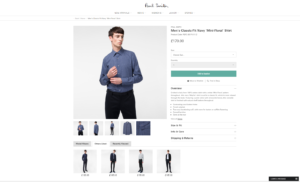
This is particularly true in the home furnishings sector, which has a number of unique challenges catering to online customers. In the past, home furnishings retailers have done most of their sales through brick and mortar storefronts. Customers prefer to see the specific items they are going to purchase. As such, home furnishing online portals have lagged behind other industries in providing personalized shopping experiences.

Yet in almost no other industry is it as important to create a personalized shopping experience in order to transition browsers into shoppers, and one time shoppers into repeat customers. In this article we’ll discuss some of the ways that home furnishing retailers can accomplish effective e-commerce personalization, while highlighting a few of the common pitfalls that can be seen across the industry.

Implement an intelligent search system with rich autocomplete and filtering options

Legacy searching systems that rely on simple text search terms fail to deliver accurate results in the home furnishing market. When using these types of systems, your customers are more likely to end up with a long list of products that they weren’t looking for. This is a particularly common problem in the home furnishing industry, where customers are more likely to have long and very specific search queries.

With the huge amount of product diversity that exists within the home furnishings market, having a personalization system that utilizes a robust search engine will allow your customers to more quickly and efficiently find the products that they are looking for.

For example, if a customer is searching for a yellow sofa, legacy systems will just pull products where the specific item description has a fabric labeled as yellow.  They could then miss out on products described by the manufacturer as marigold. An intelligent search system would pull this result and others that qualified as yellow, but were not inherently labeled as such.

Don’t ignore the transition from online to storefront shoppers

 While many of your customers may conduct searches on your website to gain some sense of product familiarity, once they narrow down which specific products they are interested in, they will most likely visit your storefront to see the product in person. It is important to cater to these types of customers by creating a multichannel shopping experience. This is a shopping experience that allows for the seamless transition between online and offline shopping.

Accomplishing this requires maintaining consistency between products, brands, and pricing both on- and offline. Commonly in the home furnishing industry, customers will also search for your products on their phones while in your store.

Some home furnishing stores have taken the step to have tablets placed throughout their storefront to serve as points of access for their customers, further collapsing the boundaries between online and in store shopping. As such, having a robust mobile site is essential to the success of your e-commerce personalization deployment.

Rely on a system that provides targeted product recommendations

Your e-commerce personalization software should be able to provide targeted, specific product recommendations. This is the backbone of any e-commerce personalization software. Intuitive product and search systems learn as your customers utilize them.  If a customer places a product in their shopping cart, your software system should be able to use that information to provide more accurate product recommendations.

The same is true for their search history.  With an intelligent, machine-driven product recommendation system in place, your customers are more likely to find relevant products and experience higher conversion rates. Additionally, your system should be able to promote certain products, or suggest related items that you carry that have the highest conversion rate from shoppers to buyers.

Successfully revamping your home furnishing website to provide a personalized shopping experience doesn’t need to be a daunting or painful experience. Utilizing these personalization tips can help you find an e-commerce personalization platform that will meet your needs.

Ultimately, the success of your efforts comes down to having the right tools for the job. Having a platform that integrates comprehensive search functionality, intelligent and machine-driven product recommendations, and allows you to seamlessly transition shoppers from online to in-store shopping will give your company the ability to provide a superior customer experience throughout.

Learn more about SLI’s Personalization technology by reading Announcing SLI ESP: Take Mind Reading to the Next Level.

Read More

Why Website Personalization Is Key to Apparel E-Commerce Success

Posted by Kim Presser, Director of SalesMarch 16, 2017Uncategorized

apparel-e-commerce


Imagine that you walk into a store looking for a new shirt. You scan the clothing racks and start your search, sorting through dozens of items. “Wrong style, wrong color – hmmm, these might work.” Then you proceed to the dressing room to narrow your options even further.

After an hour, you’re exhausted but have finally found a shirt that works. Yet sometimes you come up empty-handed, leaving the store with nothing but a whole lot of frustration. Regardless, the process includes a waste of time and energy.

At its core, this is a highly impersonal experience. The store hasn’t done anything to help personalize your shopping experience, and you – the customer – are charged with narrowing down hundreds of items and creating your own personalized experience. Website personalization, on the other hand, does the exact opposite, taking much of the work off the customers’ plates by learning their patterns, likes and dislikes – and eliminating much of the waste. How can this best be accomplished in the apparel e-commerce market?

Web Personalization: A Quick Primer

Website personalization delivers a customized experience to prospective and current customers based on who they are and what they do. That visitor can be brand new or a frequent visitor to the site.

For example, think about a website that requires you to navigate and search through many pages prior to finding the item you desire. This experience is time-consuming and a far cry from delightful. Web personalization is the exact opposite, allowing you to:

  • Identify specific attributes of a website visitor. For example, buying intent, location, and other important pieces of data can be isolated and captured.
  • Present relevant and timely offers. Once you have behavioral data, you can present the visitor with relevant and timely offers. For example, does he or she love shopping for sandals in the spring? If so, you can display those items during the specific relevant periods.

Saving customers time and energy, however, is not the only reason to incorporate web personalization into your apparel strategy – there is another compelling reason: higher revenue. In fact, 40 percent of consumers report purchasing more from retailers who personalize their shopping experience across channels.

Personalization is no longer a “nice to have” for customers; customers demand it. A Marketo study found that over 78 percent of those surveyed said they would engage with a brand’s offer only if it were related to how they previously interacted with that brand. Which brings us to the next point – the consequences of being impersonal.

The Consequences of Being Impersonal

Not sure whether personalization is worth the rewards? If so, here is another factor to consider. Failing to personalize website content may carry serious risks, such as creating a critical divide between you and your customers.

Retail options that aren’t tailored to customers not only feel impersonal, but they also create disconnection, dissatisfaction and less engagement. In fact, 75 percent of online customers report feeling frustrated with websites when the content doesn’t have anything to do with their interests.

For example, imagine that you meet a new person at a company event. You have a detailed conversion, which includes providing this person with information about where you live, your interests and what’s going on in your life. A couple of weeks later, you meet the same person. Upon meeting again, you reintroduce yourselves. Then you realize the person doesn’t remember you. How do you feel? Probably not great.

This is the equivalent of what happens when apparel brands fail to provide in-depth, personalized experiences. In an instant, the customer feels disconnected from the company. Previously you were engaged, feeling loyal and great about a company; then in a second, all that hard work vanishes.

Many apparel companies are realizing the increasing importance of personalization, yet 95 percent of marketers are stuck in “analysis paralysis,” unsure of the next best move. Or they think that personalized strategies are for larger companies with big teams and high budgets, so they get stuck. The right strategies and tools, however, can quickly help apparel companies of all sizes get “unstuck” as they steadily grow customer loyalty and revenue. But where should you start?

4 Steps to Greater Web Personalization

With so many options for creating greater web personalization, some apparel companies aren’t sure where to start. Which step comes first, and what areas should you focus on when creating these strategies? Here are four e-commerce personalization tactics that will help you get on track!

  1. Acquisition

Locating the right customers is a challenge that most companies face. When you invest valuable dollars to attract and capture the interest of potential customers, it’s critical to maximize that ROI. Web personalization ensures that you present the right message at the right time to your buyer. It’s also important to test your strategy so you can determine what works – and what doesn’t.

For example, one way that apparel companies can accomplish this is by pulling together a welcome message for the first-time website visitor. You don’t know anything about that customer – no geographical information, previous buying patterns or preferences. But what you do know is that it’s the customer’s first visit to your website. As a result, you can create a welcome message based on where the customer originated. For example, one company experienced three times the revenue and a six fold boost in leads after launching a welcome message for visitors who came from Pinterest.

The welcome message can also provide an incentive for providing an email address. Instead of a “subscribe message,” the retailer could provide a “welcome message” along with a coupon offer once it has identified the person as new to the site. For example, two minutes into the shopping session, high-end retailer Superette pops up an offer for new site visitors to receive $10 off when they provide their email to sign up for the Superette newsletter.

Once the customer inputs his or her email address, Superette starts sending personalized content and offers to create greater engagement.

  1. Engagement

Personalization is the cornerstone of effective engagement. Providing true personalization, however, requires you to capture relevant information and details from your customers. For example, consider the media company Netflix. From the moment you subscribe, they start collecting details about your preferences. After you have watched a movie or television episode, they ask you to rate it. When you do so, they start to truly understand your likes and dislikes and can make more accurate recommendations and boost engagement. Plus, the media provider allows you to create profiles that distinguish your preferences from those of other members of your family, such as your spouse or children.

Distinguishing the various likes of all family members is something that apparel companies can fine-tune in the future if they don’t serve just one demographic but several. For example, go back to the Chef Works example. This retailer sells clothing for men and women. Greater personalization could help determine whom a customer is shopping for so they can serve up relevant offers. Not sure what data to collect? Here are a few items to consider.

  • Search terms used. What search terms is the prospect using to arrive at your site? Cataloging these terms will help you understand the types of products and services the person is seeking.
  • Referral source. In the example above, a welcome page was developed for those new prospects arriving from Pinterest. Understanding the referral source will help you view customers in context. For example, maybe they arrived from Facebook. If so, that may be how they prefer to receive coupons and offers from your apparel company.
  • Number of visits. How many times has the customer visited your website? When arriving at the website, what does he or she do? Perhaps the person adds several items to their cart, then leaves to comparison shop before returning (or not returning if he or she finds something better). All of this data is valuable in understanding customers’ behaviors in context and their buying journeys.
  • Pages viewed. Pages viewed provide valuable information about the types of clothing that interest the prospective customer most. For example, do they always search dresses? If so, you can send email alerts when new dress inventory is added, creating higher engagement and personalization.
  • Location. Even for online retailers, geolocation data is very useful. For example, let’s say that 50 percent of your customers reside in California, and those customers also include a highly profitable segment. If so, you can offer free shipping to customers by geographic location.

Web personalization allows you to tell your customers “We know you and care about your preferences.” As a result, these customers become more informed about and engaged with your apparel products and offerings.

  1. Conversion

Web personalization is a critical stepping stone to closing the deal. When you attract and start engaging with your customers, you’re training them to recognize your apparel brand, feel more loyal and move toward action. And remember, conversions don’t always have to be sales. It can be a customer signing up for your email list or using a website coupon provided as a special offer.

For example, perhaps you created an offer for a specific demographic based on a variety of factors, such as number of purchases, value of purchases and shopping frequency. Maybe it’s a segment of customers who made one large purchase in the past but haven’t shopped since. When they visit your website, you present them with a compelling offer: 50 percent off one apparel item when it is purchased in the next 24 hours.

These types of offers can drive greater conversions and sales through subtle but impactful website personalization.

  1. Retention and Cross- or Upselling

Online retailer Amazon is perhaps one of the most well-known examples of retention and cross- and upselling. First of all, the website includes a plethora of personalized cross- and upsells.

Amazon remembers your interests and includes related items in “Inspired by your shopping trends.”

But the site does not stop there. It includes other items, such as:

  • More top picks for you
  • Items inspired by your shopping trends
  • New items for you
  • Items recommended for you in specific departments

Plus, they allow you to scroll back in time and check out items you recently viewed. Apparel companies can take a page from Amazon’s playbook and use the above categories to create more in-depth shopping experiences for their customers. For example, even if customers don’t purchase, they can keep track of recently viewed items or view related suggestions in the future.

When you accomplish this, you instantly create a one-on-one conversation with the shopper. You can ask him or her to rate products and then provide even greater personalization in the future based on those details.

Personalization Creates Advocacy

Web personalization puts apparel companies in the perfect position to create long-term loyalty and advocacy. Engaging with customers from the very moment they learn about your company, and throughout the sales cycle, helps you speak to them in a way totally different from ever before. The conversation is no longer one-sided, and customers feel “talked with” rather than “talked at” by the brand. Instead, they’re having a two-way conversation, where the customer is truly heard and understood.

The divide between company and customer is greatly reduced, as the apparel company transforms into a “trusted advisor” that shoppers rely on to make their shopping experience more efficient and delightful. As a result, the “mediocre” shopping experience of the past gives way to experiences where the customer truly feels known by the brand.

What Is SLI?

At SLI, our machine-learning platform offers the most advanced technology available to accelerate your e-commerce and continuously delight customers at every click.

For more tips, check out our platform guide, “SLI Advanced Technology and Infrastructure Overview.”

Read More

Website Personalization Best Practices in the Apparel Industry

Posted by Murray Brook, Senior Sales DirectorMarch 10, 2017Uncategorized

paul-smithOne of the most effective ways to set your company and brand apart from the competition while increasing your bottom line is by creating a personalized, unique shopping experience.  This fact is especially salient in the current e-commerce apparel industry, where a glut of competition and fast moving companies require concerted and ongoing efforts to create distinction, whilst also prioritizing customer experience.

In this article I’ll outline a few of the best practices for website personalization in the apparel industry. In particular, I’ll highlight some of the top features of website personalization software, and how you can leverage those features to create a dynamic, engaging shopping experience.

Dynamic product recommendations

Providing a personalized shopping experience for your customers is largely centered around one thing: accurate product recommendations at the right times. To accomplish this, relying on an e-commerce personalization software program that is automated with machine learning is the only true viable option dynamically merchandising as your customers shop.

Consider using merchandising banners to provide targeted product recommendations to your customers throughout their shopping journey. Based on what they are viewing, what’s in their cart, and past search queries and purchases, your software can generate tailored product recommendations.

Product recommendations generated in this fashion have a higher conversion rate from browsers to buyers, lead to larger purchases per visit, and increase transitions from one-time shoppers to repeat customers.

Brand continuity

One critical, but sometimes overlooked aspect of creating a custom, unique shopping experience is maintaining brand continuity throughout your site. From search result to landing page to product page, your site should have a consistent look and feel throughout.

This approach is more aesthetically pleasing while giving your customers seamless transitions between pages. Prioritizing brand continuity throughout your personalization implementation is an important step in cultivating both brand awareness, and ultimately increased brand loyalty.

 Intelligent search functionality

Merely placing a search box with a magnifying glass on it in the corner of your site is no longer adequate for e-commerce markets. Users require an intuitive, self-correcting product discovery layer which begins as the first few characters are entered.

Automatically incorporate trending and seasonal products into search results, then configure your search to act as a personal shopper for your visitors by curating a relevant selection in real-time based on their activity.

Lastly, your search engine should include navigation assistance such as product filtering by brand or type, so that users can quickly and easily navigate to broad or specific categories.  Each of these features is critical to transforming your customer’s shopping experience from bland to unique.

Geolocation for products

In the apparel industry, geographic differences in fashion trends can have a measurable impact on your bottom line. Customers in the Northeastern United States during December may want significantly different products than their counterparts in the Southwest.

Ensuring that your personalized shopping experience accounts for these differences in location requires enabling geolocation for your products. Geolocation can also take into account regional differences in price, style, or preference.

With geolocation enabled, your intelligent searching system will recommend products based on where the customer is conducting the search from. This will allow you to always provide the most relevant search results, and more accurately predict the products that customers are searching for.

Bespoke landing pages

Creating unique and engaging landing pages for your products is not only a personalization best practice in the apparel industry, it is also an important aspect of Search Engine Optimization. With the right website personalization software in place, creating dynamic, unique landing pages for products can be accomplished easily and effectively.

Customized landing pages offer a cost-effective way to create a unique, personalized shopping experience that will help your apparel company stand out from the competition. Further, by using this technique you can integrate your merchandising team into your website personalization efforts. The result is a more aesthetically pleasing, customized shopping experience.

Download the SLI ESP™ product brief to learn more about how website personalization can help grow your e-commerce business.

Read More

Factors to Consider When Choosing E-Commerce Personalization Software

Posted by Katherine Belshae, Sales Director at SLI SystemsMarch 10, 2017Uncategorized

factors-to-consider-when-choosing-personalization-softwareWebsite personalization software can transform a stagnate shopping experience into one that is dynamic and unique. Online shoppers today expect a personalized shopping experience on every visit.

In the online retail environment, delivering on this expectation can mean the difference between success and failure. But choosing the right e-commerce personalization software for your company can be a daunting process. With so many options on the market that offer varying degrees of features and support, it’s worth taking a hard look at what you need, and what you’ll get out of personalization software.

In this article we’ll discuss some of the key features you should consider when choosing e-commerce personalization software. While this list will by no means be exhaustive, it will help you zero in on critical features that your personalization software package should include, and hopefully lead you to make a more informed, intelligent decision.

 Robust, machine-driven learning

Is the foundation of your potential e-commerce personalization software based on an intelligent, machine-driven learning system? If not, it won’t be able to deliver search results and product recommendations tailored to your shopper and that continually improve without your intervention.

Machine-driven personalization software can more quickly and accurately assess your customer’s needs and provide dynamic search and navigation results, as well as product recommendations based on past shopping history, search history, and seasonal trends.

Machine-driven analytics are necessary to provide the unique shopping experience your customers’ desire in real-time.

Customizable for your needs

Your website personalization software should be customizable for your specific industry and needs. One-size-fits-all software packages fail to deliver the customizability that allows consistent application in different markets.

A customizable software package allows you to tune your personalization software in the ways that best serve you. The result is a sleeker, more tailored software package that offers better support for your products and brand.

Powerful navigation options

Simply having a search function on your site is no longer adequate for providing the customized shopping experience your customers demand. Seek out e-commerce personalization software that includes smart site navigation tools to help your customers quickly and efficiently find the products they want. Intelligent search functionality that provides targeted, personalized product recommendations is a key feature that will allow you to step past the stale search functionality of your competitors.

Additionally, website personalization software that offers smart filtering options will increase ease of site navigation, both for desktop and mobile users. Filtering options should not only include filtering by product, but also filtering by brand or similar products, which will result in larger transactions per visit and higher customer retention.

Desktop and mobile support

It is critical that your e-commerce personalization software includes support for both desktop and mobile shoppers. With more shopping being done on mobile or handheld devices than ever before, it is imperative that your E-Commerce platform taps into these markets.

Having one personalization software provider for both also creates greater continuity between shopping experiences on both types of devices. This allows your customers to have a consistent, customized shopping experience regardless of the device they are accessing your content from.

Ensure that your personalization software platform includes navigation tools that aid both users. Autocomplete is especially important, as screen sizes and on-screen keyboards become smaller and smaller, and shoppers are less likely to type out lengthy search terms to find the products they want.

Cloud-based systems

Seek out an e-commerce personalization platform that relies on cloud-based infrastructure.  Cloud-based software analytics and hardware provides additional redundancy in case of hardware failures or system outages. This ensures that your e-commerce site will have greater depth and breadth of coverage, and that you are less likely to be affected by local issues such as a power outage or ISP failure.

Secondly, cloud-based systems give your personalization software the ability to easily expand with your company’s needs.  If you experience a pre-holiday rush of sales, cloud-based systems can meet the demand for short-term expansion. If you are experiencing rapid growth as an e-commerce site, you will be secure in knowing that your personalization software will be able to keep up with your growth over time.

Both of these factors combined result in a greater continuity of service for your customers, both on a day-to-day basis and in the years to come.

As you search for the e-commerce personalization software that is right for your business, look for one that provides robust site search based on machine learning. For help, read our white paper, 10 Top Considerations for Choosing a Site Search Provider.

Read More

Posts pagination

1 2 3 4 … 22 >
Facebook
Twitter
LinkedIn
YouTube
Flickr

Stay up to date with SLI

Featured Posts

  • Maximize Revenue with Enhanced Product Impact Testing
  • Top Five Ways to Prepare for Peak Season
  • Facets, Facets, Who’s Got the Facets?
  • Personalization: It’s Kind of a Big Deal
  • M is the New E: Mobile Commerce Trends and Predictions

Categories

About SLI Systems

  • What We Do
  • Who We Are
  • Why SLI

Learn

  • Webinars
  • News Room
  • Events

Connect

© Copyright SLI Systems, 2018. All Rights Reserved | US: (866) 240-2812 | Legal