




Putting AI to Work for E-Commerce

So if you watched our recent webcast you know that Artificial Intelligence has gone mainstream, accompanied by more than a little hype and big promises. But this 3rd generation of AI is also providing some amazing value – much of it behind the scenes – powered by intelligent, predictive algorithms embedded in all types of software and devices, doing practical things.
Businesses who approach AI with clear goals have an opportunity to use the technology to transform the way they do business. Especially if they are aware of not falling into the “big AI” trap, and start by focusing on everyday problems, simplifying the customer experience, and looking for ways to use data along the buyers journey.
For e-commerce businesses, the machine-learning (ML) branch of AI has particular promise, especially with all the digital breadcrumbs and transaction data swirling around the typical omni-channel consumer relationship. Merchandisers have the potential to harness both big and small data to better understand their future buyers, and more effectively attract, engage and convert them.
Here are 4 takeaways from our session and my consulting days that can help online businesses put AI to work in the near term, even as they look forward to the next big thing.
Automate the big stuff, so you can focus on the details
You know your customers and which product features fit which needs, but how do you optimize online merchandising for hundreds of SKUs and thousands of buyers, and even millions of online posts or tweets, ideally in real-time? This is where AI comes in: sorting, matching, and generating insights that connect the dots between buyer profiles, product attributes, and the perfect online experience.
In my experience, “classic AI” is really good at chunking through data where there are established rules. And the softer, ML-based approaches are good at dealing with exceptions and discovering new relationships. Between the two, turning big (and small) data into these types of actionable insights is a proven use case that offers to free up merchandisers to focus on the art of selling and human-scale brand building.
Build around search and making it better
Consumers have been conditioned to search first (thanks Google!) so focusing on making products easier to find, and serving up the most relevant results is super-important. But unfortunately traditional search results are often long on results and short on answers. And those of us who have played around with search algorithms (and even programmed then in the past) know that search is the ultimate interface between man and machine, and thus require equal parts science and art, and a complete understanding of context.
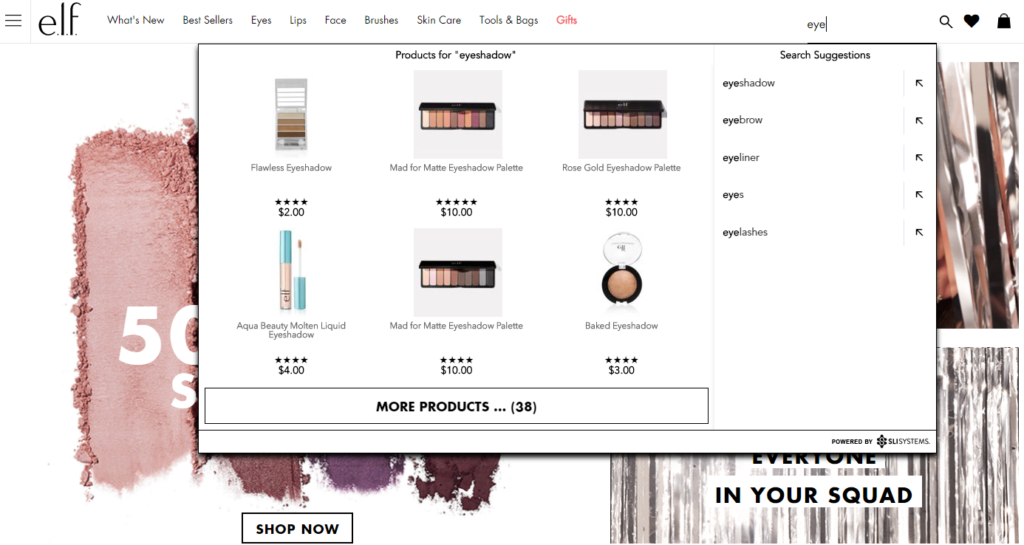
Fortunately intelligent search features like predictive search and autocomplete (and soon visual and voice search) are some of the most established areas within AI and have reached a point where they are now available via add-ons to popular e-commerce platforms. MUCH easier than programming them yourselves!
Follow the data trail – especially the small data that reflects unmet needs
It’s always a good idea to observe your users, and look for bottlenecks in their buying process, whether you are running a corner store or a multinational etailer. See what they are buying and what they say about what they like by tracking social posts and reviews. Look at embracing agile merchandising on all your channels to streamline data collection and organizational learning.
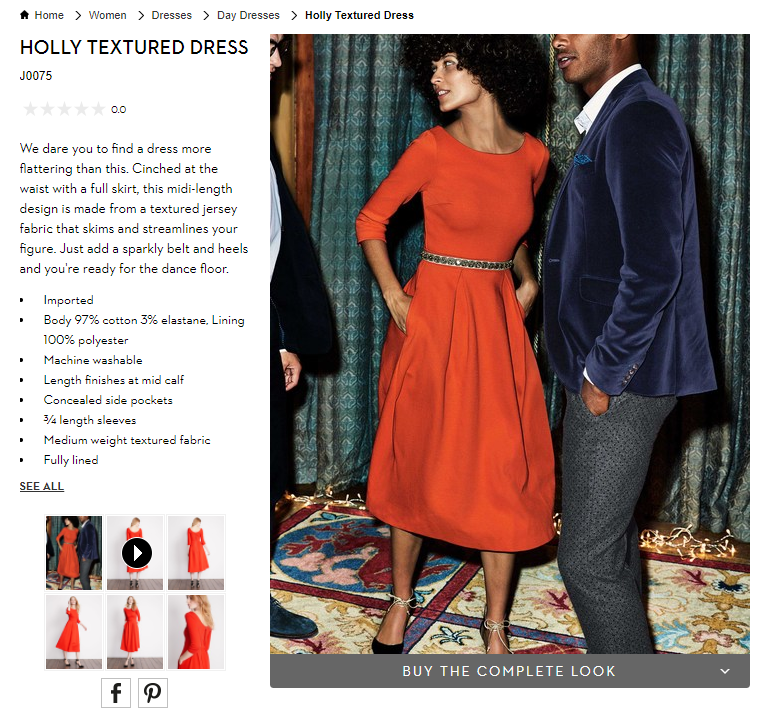
More broadly, realize that while big data is about machines, small data is about people, as I’ve evangelized for the past 5 years! Plus as brand maven Martin Lindstrom has noted, these “seemingly insignificant behavioral observations” can in fact contain specific insights that expose an unmet customer need. Operationalizing these insights through a product recommendation engine for your website (or retail execution system in your stores) can turn insight into action.
Limit choices to drive conversions
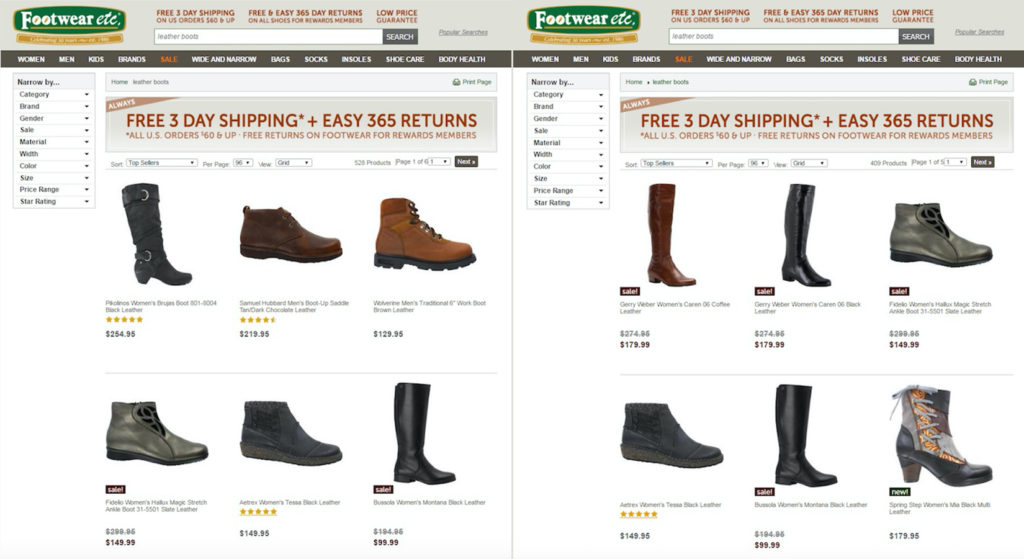
At the end of the journey, you want to steer buyers to the right option – for you and them, while minimizing distractions. Real-time personalization powered by emerging patterns in transactional and behavioral data (such as the small data that represents the past week’s orders by location or social chatter from a certain customer group) can narrow the set of options while making each shopping experience appear “on trend.”
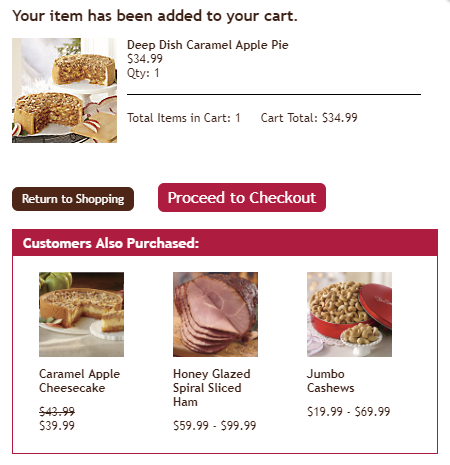
This is why next-gen recommendation engines, bots and other AI-powered “helper apps” are front-and-center on many online retailer’s shopping lists – and why Forrester predicts that in 2018 intelligent agents will directly influence 10% of purchase decisions.
—


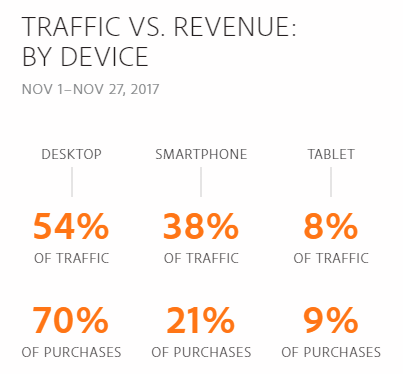
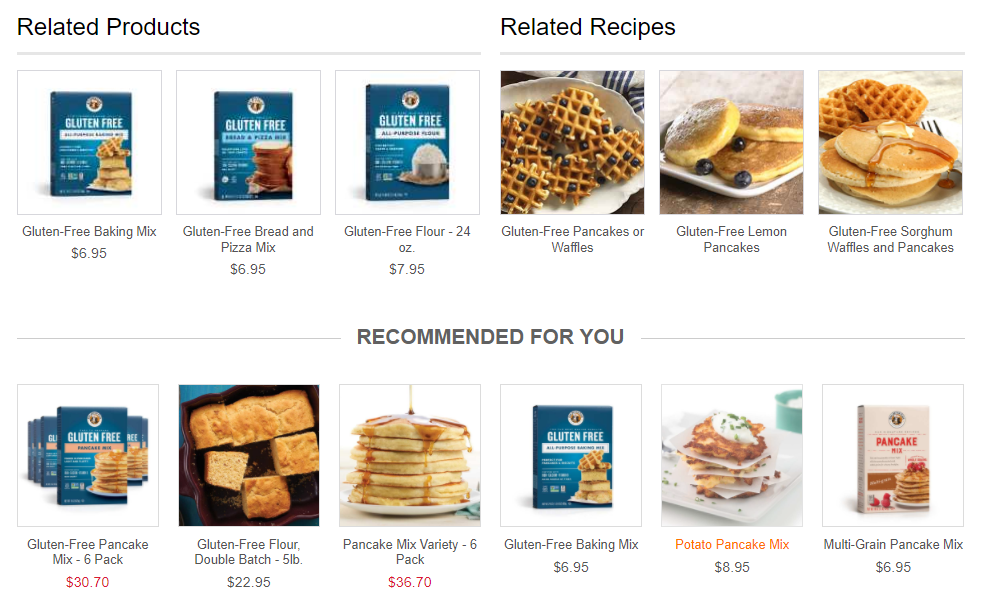


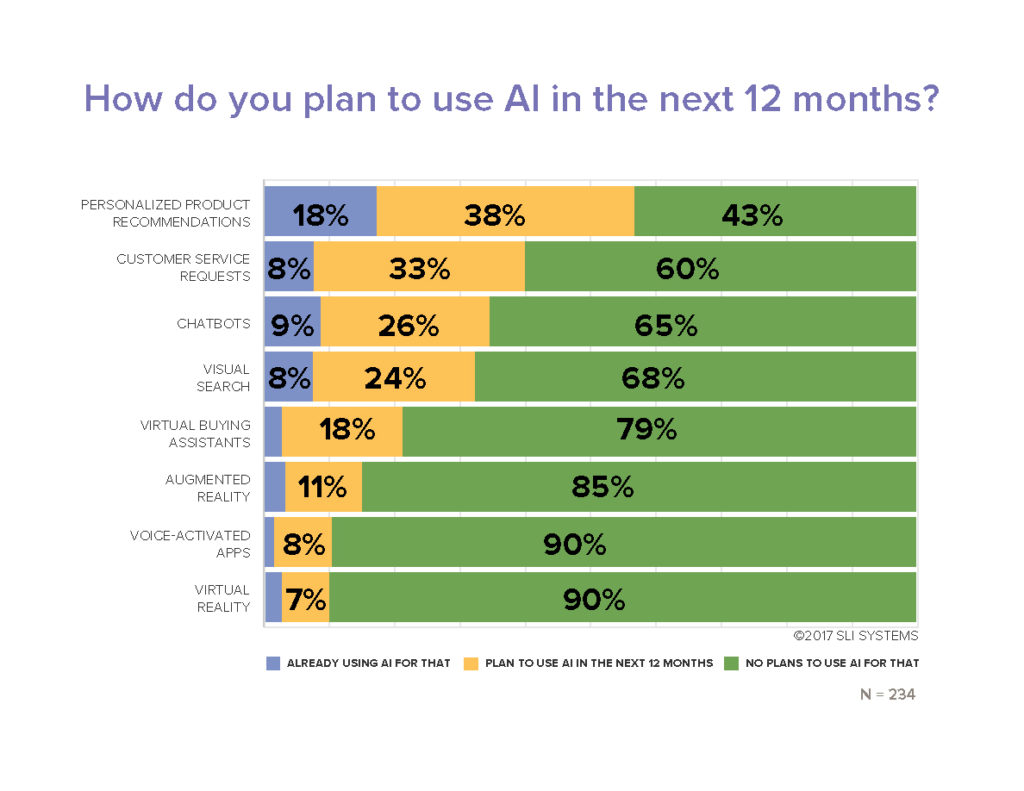
 Advancements in artificial intelligence (AI) in e-commerce made headlines everywhere this last year:
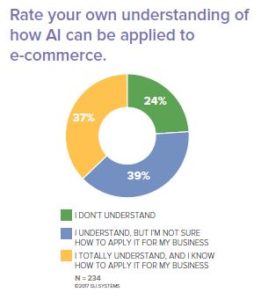 SLI set out to answer this question by asking more than 200 e-commerce professionals in its third quarterly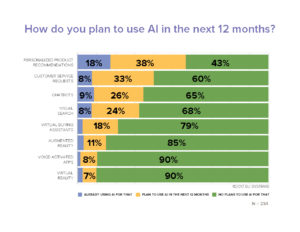



 Artificial intelligence was once an aberration found in the most sinister of sci-fi novels and cinema – how could you ever forget Hal? Today, AI is a part of our everyday lives and even invisible to most of us. There is big business in what many believe is predictive selling, targeting of buyers vs. shoppers, and the elevation of customer service. The ultimate in service is knowing what your customer needs before they do. Being at the forefront of this technology is the core principal of