SLI home
User login

A BLOG FOR E-COMMERCE LEADERS

  • Blog
  • Resources
  • Webinars
  • Customer Experience Scorecard

SLI Blog

Posts in Personalization Category

Personalization: It’s Kind of a Big Deal

Posted by Cheri WinterbergOctober 15, 2018E-commerce Research, EPIC, Personalization, Uncategorized

Imagine entering a store customized for you. The sales staff anticipates your unique needs, knows your sizes and tastes, and offers discounts on products you actually want. They make relevant suggestions so you don’t miss out, pointing to things you’re sure to like but may not have otherwise noticed. And they remember your previous purchases, recall what worked and what didn’t, and strive to make this visit even better than the last.

It’s every shopper’s dream come true.

In the not-so-distant past, highly-personalized retail experiences like this existed only for elite consumers. Upscale retailers vying for wealthy customers used personal shoppers and concierge services to ensure select clientele were shown products perfectly suited for them. But in the digital age, what was once an exception for the rich and famous is now within the reach of every shopper. And today’s consumers aren’t merely accepting personalization – they demand it.

Why the demand for personalization?

With so many product options, it’s easy for online shoppers to get overwhelmed and become dissatisfied. And when shoppers become dissatisfied, they abandon carts and brands. Personalization delivers a solution. High-functioning personalization strategies enhance a shopper’s journey and mitigate these frustrations. The result? Most consumers today (91%) opt for retailers who offer a personalized experience over those who don’t.    

Just how deep does the desire for personalization run?

Deep. Consider this – a survey by Salesforce revealed a whopping “82% of customers will share relevant information about themselves in exchange for connections between their digital and in-person experiences” and “85% of customers will share relevant information about themselves in exchange for proactive customer service.”

With numbers like this, it’s clear that growing personalization is imperative for retailers interested in getting – and keeping – customers.

And savvy online retailers haven’t failed to notice the increased demand. According to SLI System’s H1 2018 E-commerce Performance Indicators and Confidence (EPIC) Report, one-third (33%) of retailers across the globe say their companies are already giving their customers a personalized online experience and almost half (49%) plan to add it in the next year. In fact, only 7% of retailers worldwide say they are not adding some form of personalization to their e-commerce strategy.

As e-commerce professionals know, Customer Experience can either entice customers to return or drive them to the nearest competitor. And it’s clear personalization is a must in order to deliver a strong customer experience. But personalization isn’t a single-faceted entity. What’s more? Choosing the correct personalization strategies can make or break a shopper’s online experience – and the bottom line.

So how are e-commerce businesses personalizing and how do they plan to expand?

SLI’s EPIC Report indicates that with 57% of those surveyed saying it’s already in use, Emails Triggered by Online Behavior is the top way retailers currently personalize for their online shoppers. And it’s no surprise. MarketingDive explains that personalized email subject lines “can increase open rates by 50% and lead to 58% higher click-to-open rates.” The second most common way to personalize is Recommendations Based on Online Behavior (55%) followed by Segmentation Based on Demographic Data and Offers Triggered by Online Behavior, which tied for third (34%).

Underutilized strategies offer unique pathways to personalization.

Less used forms of personalization reveal opportunities to improve customized shopping experiences through a variety of alternative strategies. But which strategies can retailers use to take advantage of these opportunities? SLI uncovered that Persistent Profiling through a Data Management Platform (DMP) is the least utilized method of personalization with only 6% of those surveyed reporting it is currently in use. DMP is closely followed by Offers Triggered by Offline Behavior (7%) and Recommendations Based on Offline Behavior (9%).

To be successful, personalization must actually be personal.

Conversant found irrelevant content is the number one way to frustrate shoppers and lose sales. So how do retailers ensure their customers’ personalized experiences are, in fact, personal? Tracking and utilizing online behavior in the right ways. And e-commerce strategists are taking advantage of expanding technology in this arena. SLI discovered the top ways retailers plan to expand personalization all center on online behavior.
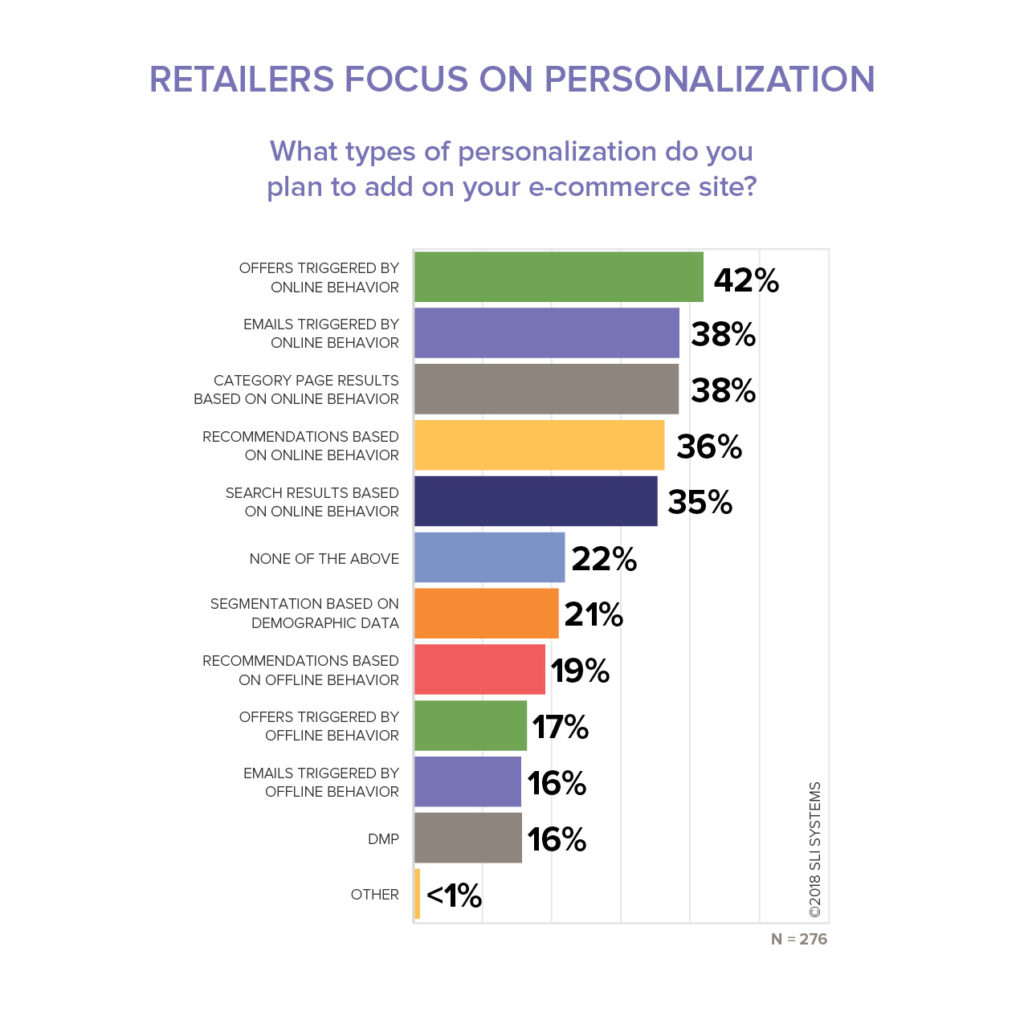
"Offers Triggered by Online Behavior" is the number one way retailers plan to add personalization to their e-commerce site. The top approach selected for implementation this year by 42% of retailers is Offers Triggered by Online Behavior. It was followed by Emails Triggered by Online Behavior and Category Page Results Based on Online Behavior 38% each in second place. Recommendations Based on Online Behavior took third place with 36%.

The Bottom Line

Finding out what your customers want and helping them get it through a personalized e-commerce experience isn’t just good for shoppers, it’s good for business. Sixty percent of those surveyed by SLI believe personalization will increase conversion rates. As technologies to improve personalization expand, retailers must take advantage or risk losing consumers to those who’ve embraced the growing demand for personalization.   

For more on the latest trends in e-commerce personalization, click here to download the H1 2018 EPIC Report.


Improve E-commerce Conversion Rate with 5 Critical Enhancements

Posted by Bob AngusDecember 13, 2017Customer Experience, eCommerce, Merchandising, Navigation Tips, Personalization, Recommendations, Rich Auto Complete, Site Search Tips, User Experience

Your e-commerce business is full speed ahead. But that’s not good enough. You’ve been tasked with higher and higher growth expectations.

ecommerce sales buy button

And now you have even more at stake. You are likely spending more and more to drive traffic to your site. You can’t let that big investment in advertising fizzle with diminishing ROI.

Good news. You have a high-impact driver you can execute against right now.

Improvement to your conversion rate is the greatest lever at your disposal. Even a small conversion rate increase can generate big revenue gains.

This comprehensive guide to e-commerce conversion rates helps you build a winning game plan for your online store, including:

  • What e-commerce conversion benchmarks to use
  • How to analyze your conversion rate
  • How to optimize 7 critical conversion rate drivers

Let’s start by understanding how you can best measure conversion rate.

What is a good e-commerce conversion rate?

Online retailers track many conversions throughout their customer experience. Any action goal can be considered a conversion. A click on your email, a click on an advertisement, or a newsletter signup are considered conversions.

The conversion metric you really want to focus on is a purchase. Your sale conversion rate is calculated by simply taking the number of purchase transactions and dividing that by the total unique visitors to your online store during a time period.

That’s pretty straightforward. But what is a good conversion rate to set as your target goal?

This 2017 holiday shopping to date, average e-commerce conversion rates are showing growth: desktop 4.5% (up 10.6% YoY), smartphone 2% (up 12.3% YoY), tablet 4.3% (up 9.3% YoY), according to Adobe Digital Insights.

And Amazon boasts an amazing 74% conversion rate for its Prime members and 13% for non-Prime visitors back in 2015, based on a Millward Brown Digital study. In comparison, the same study showed the average conversion rate for Top 500 merchants is 3.32%.

Are those the right conversion rate benchmarks for you? Probably not.

It is interesting to set an aspirational goal against Amazon or other leaders that compete in your industry. However, you are best served by benchmarking where your own store is now. Then set a course for continual improvement to drive conversion optimization goals and strategies.

Measure your overall sales conversion rate for your entire website the past year. That’s your starting point. That’s the number you want to beat in 2018.

Then the key is to drill down into your sales-rate performance for different contributing factors and customer segments. That’s where your actionable insights really happen.

Now let’s explore the best way to analyze your conversions to enlighten your growth plans.

How You Can Analyze Your Conversion Rate

Conversion rate is a very useful metric to track. But the real impact to your e-commerce business is analyzing and understanding what is driving your performance and why.

That deeper conversion analysis helps you:

  • Determine what segments are contributing to your overall conversion rate
  • Identify the root causes
  • Prioritize and track success of your optimization game plan

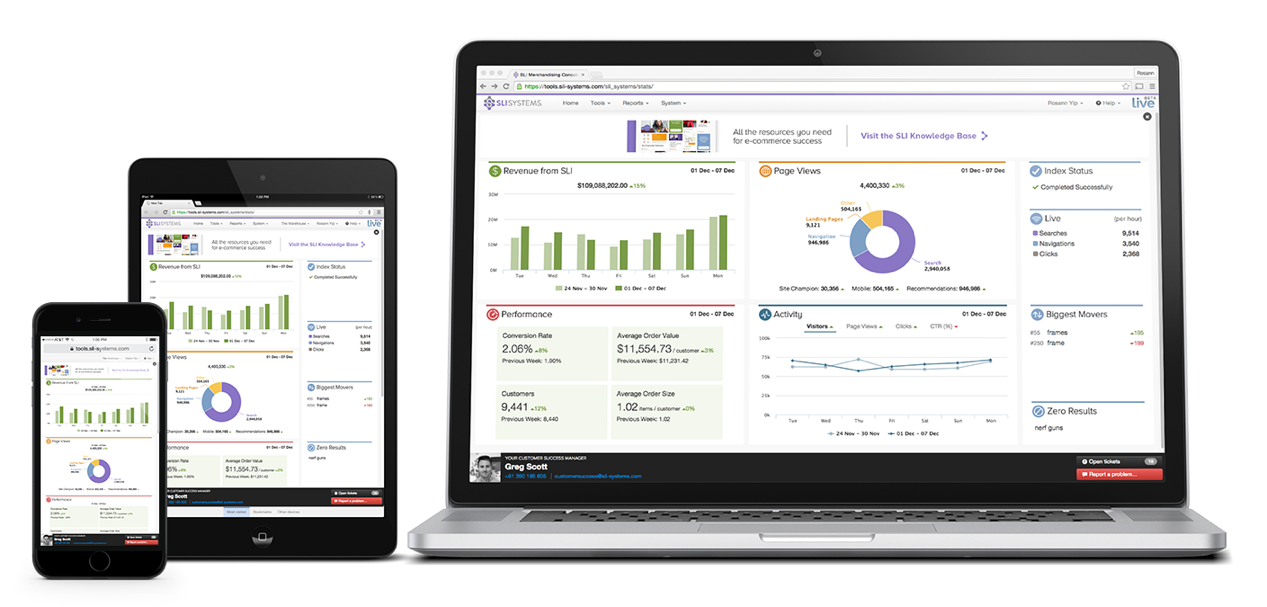
The first step is to build a dashboard that tracks and trends your conversion rate. Google Analytics and many e-commerce platforms provide a dashboard that lets you see your conversion rate over different periods of time.

SLI Systems also has a very powerful dashboard built into the Commerce Console. You get an helpful view of your shoppers’ activities and conversion rate through their shopping journey.

Ecommerce conversion rate dashboard - SLI Systems Commerce Console

Or you can simply use a spreadsheet. Capture your monthly unique visitor metrics and plug in your corresponding sales transaction data to calculate your conversion rates. Again, simply divide transactions by unique visitors to get the conversion rate percentage.

Next you’ll start the drill down analysis.

What Is Driving to Your Conversion Rate?

Your overall conversion rate calculation is an average. Many different factors drive that single number. Some factors contribute significantly more than others. It’s your job to break down those key drivers to find growth opportunities.

Start by segmenting your conversion rate data into categories.

The most common way to split up your data is by different customer audiences. Different types of customers have a different relationship with your e-commerce business. They may also have different purchase intent, which directly impacts your conversion rate.

Your analysis can uncover those segments that likely have differing intent to purchase. Then you can calculate the conversion rate for each segment. And you’ll see which audiences have the greatest influence on your overall conversion rate.

Here are several helpful ways to segment your audience.

  • First-time visitors vs. returning visitors – First-time visitors often make up a big majority of online traffic. But it stands to reason that those first-time visitors who may be unfamiliar with your brand are less likely to purchase than returning visitors.
  • Acquisition channel – Where visitors come from can help tell you how likely they are to buy. Segment by channels like organic search, paid search, social media, advertising, and affiliates.
  • Device – The device visitors use may indicate different intent as shown in the Adobe data insights mentioned earlier.
  • Location – Are you a global brand or do you sell domestically? Traffic coming from different international locations may be browsers, not buyers.
  • Other demographics – Google Analytics can help you analyze other demographics like gender, age, or interest affinity groups.

Other popular segmentation you can use to uncover key conversion rate drivers include:

  • Product category – Conversion rates may be higher for different products based on the volume sold, price range, or deliverability. For example, you would expect the online conversion rate to be lower for expensive furniture than easily shipped lower-priced home decor.
  • Promotions and seasons – Different discounting periods or traditional shopping seasons may affect conversion rates.
  • Website elements – You can track conversion rates by different elements of your customer experience.

Make sure you look at your conversion rate over time. Don’t just take a single snapshot in time to make your decisions. A single data point or particular shopping season can skew what you see and may lead you to incorrect decisions.

Calculate your segmented conversion rates into monthly or weekly increments. Go back in time as far as you can. Then you can chart trends and make year-over-year and month-over-month comparisons.

Starting with one segmentation method is also recommended. Add that to your dashboard. Keep tracking that segmented data to see how you are performing. Then expand your analysis to other segment categories.

Your conversion rate analysis helps you find your growth opportunities. But it doesn’t tell you exactly why those different segments are performing the way they are.

Why Is Your Conversion Rate Increasing (or Decreasing)?

Now you can dig a little deeper to understand why your conversion rate is increasing or decreasing. Find the root cause by adding a second dimension to your analysis of a particular segment category.

What is the behavior or characteristic about a given segment that is likely causing sales to go up or down?

The best way to do this is to add one of the other segment categories as that additional dimension. For example, if your primary segmentation is based on acquisition channel, then you can drill down using product category purchased or device used or location demographics.

Analyze that data. Look for trends. Make comparisons.

Maybe your conversion rate was 6% coming from Google Adwords. But the Adwords conversion rate for desktop users was 8% versus 2% for smartphones and 4% for tablets. Now you have an understanding of how the device contributes to that channel’s conversion rate, taking the volume into consideration.

And how did that paid search channel breakdown compare to your other channels? For example, smartphone conversion rate maybe 4% from your emails and 1% from social media.

Identify big shifts and changes. Discover anomalies.

Using the Google Adwords example again, maybe starting in July you see an increase from 5% to 7%. And that higher rate seems to have continued for several months.

Then hypothesize. Ask “why?”

That increase in July may have corresponded with an increase in your PPC bids or budget. Or maybe you launched a new set of keywords for a hot brand. You could hypothesize why the increase happened and continued.

This additional lens into your primary segmentation can uncover the root cause. You are now ready to take action with that data-based knowledge in hand.

How to Prioritize Your Optimization Plan

You are armed with lots of data and valuable analysis. You can now more easily prioritize the action you want to take and build an optimization game plan.

Typically you’ll want to pick one to run every quarter. That single-focus test approach helps you isolate the incremental sales and conversion rate you’ve achieved. You also give enough time to achieve improvements, validate the results with enough traffic, and eliminate most anomalies by running the test for a longer period of time like two or three months.

Which tests should you run first?

It’s always good to start with the test you feel can have the biggest financial impact. Estimate the revenue impacts for all the top activity ideas you have identified. How much would sales increase by each incremental tenth of a percent increase in conversion rate?

Then look at the level of effort and investment cost of running the test. If an activity may have a high-revenue upside while requiring little extra work, then you’ve found a great place to start.

Let’s look at some of the highest conversion boosting opportunities you have.

5 Critical Enhancements for Bigger E-commerce Conversion Rate Optimization

The best conversion rate optimization tests consider the customer experience journey. Understand the different interactions from the first moment a shopper lands on your website, through finding and choosing a product, and all the way to checkout and completing the purchase.

You make many different enhancements to your online customer experience. Here are five design improvements proven to increase conversion rates:

autocomplete site search to increase ecommerce conversion rate

1. Win More High-Purchase Intent Shoppers

Arguably one of the best ways to increase your conversion rate is to win more sales from visitors who already have a high intent to purchase. So how do you know that someone comes to your site with the intention of buying?

Shoppers signal their intent when they use your site search.

SLI studies have found visitors that use search buy at a 2.7x greater rate than visitors who just browse.

Make the act of searching even easier by enticing those visitors who have a specific purchase in mind.

Position your search box in the header and in the center of every page. Provide an engaging prompt to search in the search field. And make the box large and distinctive from other forms. Don’t tuck the search box into the corner or hide it behind a magnifying glass icon that searchers have to click.

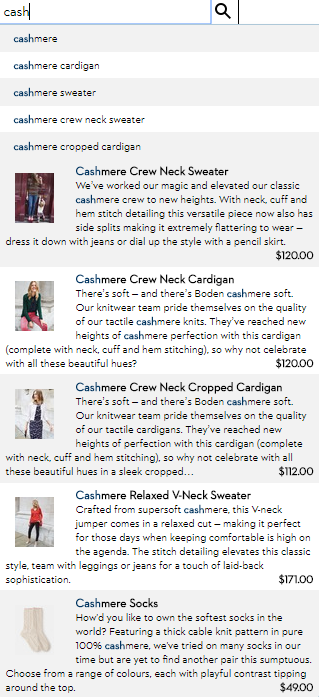
Speed up the search by suggesting possible terms as visitors start typing the first letters of a keyword. This autocomplete functionality draws from your product feed to indicate that productive search results are available. Better yet, you can rank the autocomplete terms by the most popular keywords by clickthrough and purchase data, not just keyword matching.

Pro Tip: Enhance your autocomplete feature by presenting specific products in the search suggestions. Display the product name, image, and price for the most relevant products. Boden speeds up the purchase process doing just that.

This enhanced functionality helps your visitors identify products they are looking for even more quickly. Then send them directly to the product page. Skip the extra category page browsing. Bypass the search results page. Get high-purchase intent shoppers directly to a product.

2. Wow Visitors with Visual Merchandising

The key elements of a product landing page are designed to showcase the product so that customers can easily make a purchase decision – product title, descriptions, specs, purchase options, ratings, reviews, and, of course, pricing and discounts.

This product feed information gives shopper the facts. However, we humans actually make purchase decisions emotionally much of the time. Shoppers love the wow factor. That’s where online visual merchandising excels.

e.l.f Cosmetics shows off their eye shadow products with beautiful images and attractive videos from Instagram. These social media images inspire shoppers. Better yet, many of the pictures are user-generated content from customers.

ecommerce visual merchandising with instagram - e.l.f. Cosmetics

Similarly, fashion sites often display extra images since shoppers can’t actually hold the item in their hands. Visual merchandising best practices, like model videos, product pictures from many angles, and custom images that change with color selection, can help drive more sales.

Pro-Tip: Help customers visualize what their experience will be after they make the purchase. Show action shots and product videos that depict how the product is used, what the buyer gets in the box, or how to install it.

3. Merchandising that “You May Also Like”

The top job of merchandising is to promote the products a visitor is most likely to buy. One of the best online merchandising techniques is to use a “You May Also Like” product recommendation strategy on the product page.

Showing alternative products that are similar to the product being viewed is proven to increase conversion rates.

Unfortunately, many e-commerce sites determine the recommended products using simple category and keyword matching. This approach focuses on the product feed data only.

Fortunately, online stores have massive amounts of behavioral and transactional data in addition to product feed data. “You May Also Like” product recommendations that include actual customer behavior are more likely to convert.

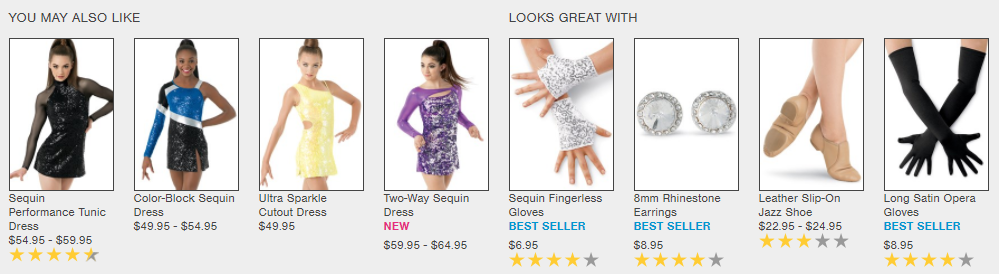
For example, Dancewear Solutions recommends several contemporary dance dresses on a product page. It also merchandises complementary products that go with the dresses based on what customers had made purchases in the past.

ecommerce product recommendations engine - Dancewear Solutions

Pro Tip: Customers love a personalized shopping experience. In-store salespeople give a personal touch to help customers get exactly what they want. Now artificial intelligence is helping online stores create a similar personal customer experience.

E-commerce personalization uses machine learning to sift through massive amounts of behavioral data to quickly provide smart product recommendations. Contextual personalization can display products that customers are even more likely to buy based on gender, size, brand preference, or the shopper’s location.

4. Help Shoppers Get What They Want Faster

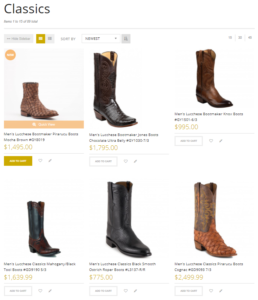
ecommerce merchandising category page buy now button - Allen's Boots

Smart e-commerce companies create as few steps as possible to get to checkout. Customers are more likely to complete their purchase when you allow visitors to add products to shopping carts or go to checkout directly wherever they are on your site.

Don’t limit the use of “Add to Cart” or “Buy Now” buttons to your product pages. Anywhere you merchandise products, even your homepage, is an opportunity for customers to commit to purchasing without an extra click to the product page.

Pro Tip: Include “Add to Cart” button directly in the your category pages and search results pages. That’s what Allens Boots did. This quick enhancement helps speed the conversion, particularly if your customer knows exactly what they want.

5. Eliminate Rational Roadblocks with Content

Don’t rely solely on the product description provided by the manufacturer to influence a buyer. Inform your customers about what a product can do. Offer how-to articles, demo videos, and comparisons against other similar products.

Content has a strong influence on e-commerce conversions both rationally and emotionally. How-to content helps remove rational doubts or questions that make shoppers hesitate. Video content in particular also has an emotional trigger for sales as customers can visualize themselves using the product.

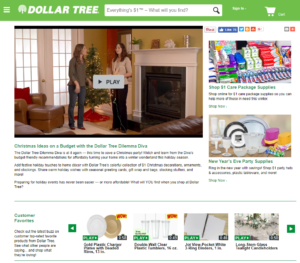
Dollar Tree uses videos to show shoppers curated product ideas and demo top-rated customer favorites.

video merchandising for ecommerce - Dollar Tree

Pro-Tip: Include a set of Frequently Asked Questions (FAQs) on the product product. Ask your customer service team for questions that they get about the product. Review common reasons for returns. Think of questions you would have if you were going to pay your own hard-earned money. Then create a strong set of FAQs written in the language that customers use.

There are hundreds more conversion-rate tips that you can test. Make sure to download these best practice e-books to find new ways you can improve your conversion rates:

  • Get the SEO-Driven Revenue You’re Missing

  • The Big Book of Site Search Tips

  • Use Creative Content to Convince Online Shoppers to Buy

  • The Big Book of Navigation Tips

Image Credit: Wikimedia Commons


Retail Executive Brief: Customer Experience Trends for 2018

Posted by Bob AngusNovember 30, 2017Analytics, Artificial Intelligence, Customer Experience, E-commerce Research, eCommerce, Merchandising, Mobile, Mobile/Tablets, Personalization, Reporting and Analytics, User Experience

Customer Experience - Convert Buyers with a Great Customer Experience

The pressure is on for retail businesses to deliver on big sales growth expectations. That’s in the face of slow consumer spending growth combined with the tectonic shift in traditional retail channels.

You need to turn more shoppers into buyers. You can’t afford for your investment to bring more shoppers in the door or onto your e-commerce store that leave with an empty cart.

That’s why optimizing your customer experience is more important than ever.

This retail executive brief helps you better understand:

  • How customer experience strategies are evolving
  • What customer experience metrics to track and analyze
  • How to improve your customer experience using top trends in 2018

Let’s first dig into how customer experience is changing.

What is Customer Experience Today?

In the past, customer experience strategies focused on the discrete interactions shoppers had in the sales process. These touchpoints took on even greater importance with online retail channels simply because it was easier to track and optimize each webpage leading up to a sale.

However, this touchpoint-focused approach to improving customer experience can easily miss one critical element… the customer journey.

The journey is the customer experience.

The overall journey can still disappoint customers, even if your online store design, in-store layout and staffing are executed well on individual touchpoints.

Understand the customer journey in your shoppers’ terms. Customer journeys include many things that happen before, during, and after the actual purchase experience.

The journeys can be quite long, though the purchase decision can be extremely fast. Consider the multiple channels, devices, and, yes, direct interactions that may occur over days or even weeks.

Put yourself in their shoes. You buy products for yourself all the time. Think about your entire experience and why you made a purchase or didn’t.

Ask questions like:

  • Where and when did you first learn about a store?
  • What was your first impression of the brand?
  • What triggered you going in the store or to the website?
  • How easy was it to find what you wanted?
  • How did you feel about the product price and value? Product quality? Selection for you?
  • How did you feel about the shopping environment in-store or online?
  • What sales help, customer service or employee interactions did you have?
  • How did the purchase transaction go? Was it fast and easy?
  • How did you get your product? Was shipping fast? Did you need to exchange or return?

Always be asking how you can improve that journey.

Next you need to figure out if you’re on the right path to improvement.

Customer Experience Measurements for Success

How do you know you are improving your customer experience? You’ll want to look at the numbers.

It’s very tempting to dive right into the weeds. Retailers now have so many powerful analytics tools. And data collection is getting easier.

However, direct contribution to macro financial metrics and sales trends can be difficult. Remember, your customer experience is a holistic journey. So your best customer experience metrics are more macro. They are not necessarily analyzing and optimizing discrete touchpoints.

Start by measuring key customer experience outcomes, customer feedback, and employee feedback.

Financial Metrics

The most common outcome metrics are financial. Let’s assume you are already tracking total revenue, profit, and transaction volume. Great financial indicators of your customer experience is Revenue per Customer and Average Transaction Value.

Make sure to also track Revenue per Visit (RPV) for your online channel or if you are a pure e-commerce business. This metric estimates the incremental value of each visitor to your online store. Simply divide your total online revenue by the total number of unique visitors to your website.

Customer Satisfaction

You also need to measure your Net Promoter Score (NPS) to capture how customers feel about you. NPS is a fantastic customer satisfaction metric to track over time. Customer experience and customer satisfaction are closely correlated.

But the most actionable customer experience metric in your NPS comes from the answer to the follow-up question – “Why did you give that rating?”

Categorizing the results of this open-ended “Why” question helps you measure the impact on different factors in the customer journey in your customers’ terms. For example, you may group results by broad areas like customer service, products, or pricing. Or you can go more granular into the touchpoints like checkout experience, shipping, or return policies.

Learn more by further breaking down your NPS by customer segments. You can segment by geography, gender or age demographics, order revenue, or purchase frequency or recency.

Employee Satisfaction

Lastly, you should also measure your Employee NPS. Employee satisfaction is also highly correlated with customer experience. Happier employees lead to better customer experiences.

After all, your employees are most responsible for delivering a great customer experience. All your employees contribute. Even someone behind the scenes in HR, the warehouse, or web development have an impact that trickles into the experience.

Here again, look closely at the “why” to measure and track the drivers that influence your employees’ feelings. Those feelings result in behaviors and actions that directly and indirectly impact your customer experience. Listen to what they say and recommend.

Track these financial and satisfaction metrics consistently. That’s how you will know your customer experience is on the right path.They are your “North Star” numbers.

Once you’ve established those customer experience measurements, you can then go deeper into specific success metrics for operational improvement initiatives. Use Google Analytics and e-commerce platform results for your online channel.

Now let’s look at the latest trends you can leverage to boost your customer experience metrics and sales.

3 Technology Trends that Help You Improve Your Customer Experience in 2018

Retailers continue to leverage technology to improve customer experiences. Much of the change comes from consumer technology use as a pulling factor. For the first time ever, more people say they plan to shop online (59%) than in big box stores during the 2017 holiday season, according to the NRF.

Here are three technology trends that help brands connect better with customers and improve their overall customer experience.

1. Rapid Growth of Mobile Shopping

Mobile Traffic and Sales Statistics - Black Friday 2017 Cyber Monday 2017

The continued rapid growth of smartphone use is undeniably impacting retail sales. Similar to how e-commerce is the growth engine of overall retail, mobile sales are powering e-commerce.

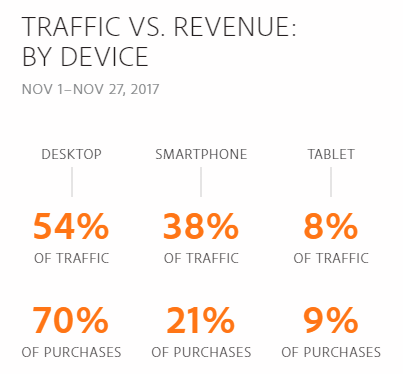
The rising tide is driving much of that growth. Mobile traffic from smartphones and tablets peaked on Black Friday and Small Business Saturday (56% of traffic). Then leveled out to 46% of traffic, almost equivalent to desktop traffic (54%), through Cyber Monday 2017, according to Adobe Digital Insights.

However, the mobile shopping experience is a challenge for retailers. Smartphones and tablets earned a lower percentage of overall sales (30% versus 70% for desktop) and lower conversion rates through Cyber Monday.

Retailers can close more sales with mobile shoppers by continuing to improve their mobile customer experience. Shoppers now find mobile as an easy way to check emails (hopefully your emails), find store locations and hours, get product information, snap and share photos, and compare prices.

Optimizing mobile product discovery and mobile payments are the biggest opportunities for retailers to improve the mobile customer experience.

2. Personalized Merchandising with Artificial Intelligence

Customers want a personalized shopping experience. Sales people help shoppers in the store. Now application of artificial intelligence are helping online stores create a similar personal customer experience.

Online stores have massive amounts of behavioral and transactional data now. The challenge is to harness that data to power real-time merchandising decisions.

That’s where artificial intelligence excels.

Fifty-four percent of e-commerce sites have already implemented or plan to add AI in the future, according research from the Q3 2017 E-commerce Performance Indicators and Confidence Report. And 20% expect to add AI within the next 12 months.

The top application is personalized product recommendations. Eighteen percent of online retailers report they are already using artificial intelligence in their product recommendations strategies. But that number will swell dramatically in 2018 with 38% planning to implement within the next 12 months.

Personalized Product Recommendations Engine - King Arthur Flour

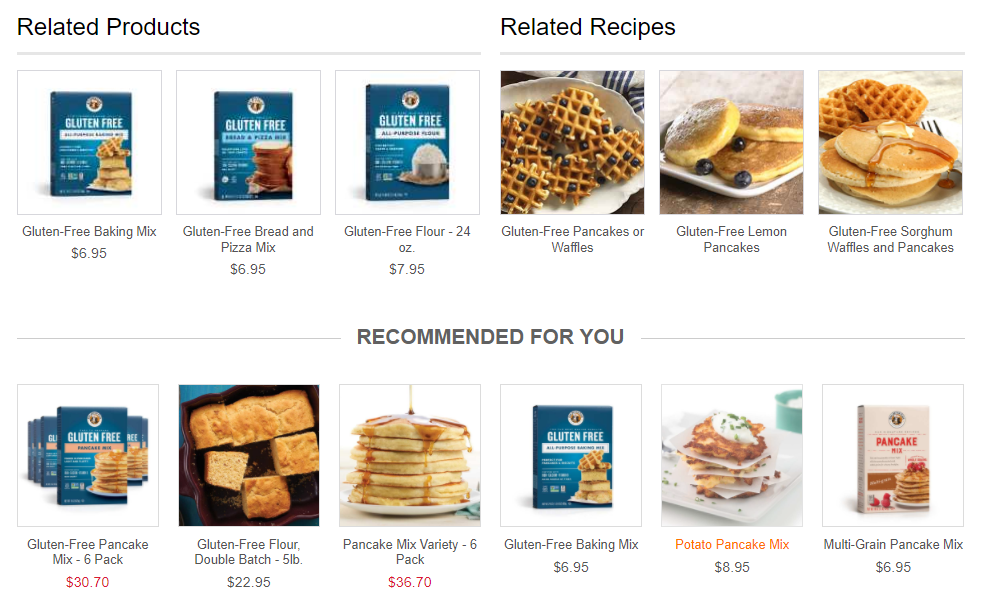
Artificial intelligence can parse user activity, preferences, and sales trends. The result is smart and timely product recommendations that are personal. For example, this type of contextual personalization can be tuned to gender, clothing size, brand preference, or shopper’s location.

Even better for online retailers, this personalization can be experienced by first-time visitors just as well as returning shoppers. So the shopper does not have to take any additional actions to receive the customer experience benefits.

3. Always on Customer Service with Chatbots

Chatbots were introduced as a new technology on the horizon for retailers in our 2017 e-commerce trend webinar. In 2018, chatbots are a must-have element of your online customer experience.

Ecommerce Chatbots - Retail live chat is always on

Think of chatbots like your online version of a sales associate or employee. Except they are always on 24/7/365.

A chatbot is an enhancement from the online chat communication channel. The old chat program still required a human sitting there typing in replies. Those employees had regular shifts. So sometimes customers weren’t getting their questions answered.

Now a chatbot is an always-on program that simulates the conversations your customers have with you. It answers questions, handles specific requests, helps shoppers choose the right product, and executes customer service procedures.

Your customer experience impact is shoppers have better and faster access to what they want when they want it. That’s a huge win. And you win more sales.

Customer adoption, and the resulting better experience and sales, is the biggest reason why chatbots are growing in e-commerce. Additionally two technology drivers are accelerating the deployment of chatbots – smartphones (again) and artificial intelligence (again).

Smartphone use is leading to speaking with a chatbot. Talking is easier than typing. Just say what you need and the chatbot tells you back. Siri, Alexa, and Google Assistant are all voice-enabled chatbots that are quickly growing is use.

Artificial intelligence is helping chatbots be more effective. The chatbot can repeat existing information easily and can be taught to mimic decision-making patterns. But artificial intelligence makes a difference by helping chatbots to actually learn. So your customer experience is continuously improving.

Design Your Customer Experience to Win More Sales

Planning and executing your customer experience strategies is a process of continuous improvement. Deeply understanding your customer’s journey sets you on the right path.

Take advantage of the key trends and technologies. Then test your innovations, measure, and optimize for the satisfaction of your customers and for the results that matter to you.

Ultimately, you can achieve what creative executive Loie Maxwell calls “designed serendipity”. Orchestrate the experiences that produce a customer journey that gives them a winning feeling. Your customers will love it. And you will win more sales.

Is Your Customer Experience Leaking Sales?

Most businesses are leaking online sales in at least 7 critical elements of their customer experience.

The Customer Experience Scorecard grades your e-commerce site using a 42-point checklist proven to increase sales, including:

  • Quickly finding products shoppers are most likely to buy
  • Personalized product recommendations
  • Mobile path to purchase

Want to find your leaks? Find out your quick-win opportunities to take your conversion rates to the next level.

E-commerce Merchandising: The Ultimate Guide to the Newest Techniques

Posted by Bob AngusNovember 16, 2017Analytics, Artificial Intelligence, Customer Experience, E-commerce Research, eCommerce, Merchandising, Navigation, Navigation Tips, Personalization, Recommendations, Refinements, Resources, Rich Auto Complete, Site Search, Site Search Tips, Testing, User Experience

E-commerce merchandising has one goal in mind – connect shoppers with the right product so that they “Add to Cart” fast. Merchandise well and you’ll increase conversion rates and boost your average order values.

But execution is always incredibly difficult.

You have different visitors with different mindsets toward actually buying. Those shoppers are engaging with different parts of your website through their shopping journey.

On top of that, you have to wrangle massive SKU quantities, constant product and pricing changes, and frequent promotions.

E-commerce merchandising is complex.

It is no longer as simple as choosing the products you want to move, setting an attractive discount, and plastering the offer all over your valuable real-estate.

You need to figure out what each shopper is most likely to buy right then.

The leading retail brands are employing the newest e-commerce merchandising techniques to successfully unlock the complex code to winning more sales. They approach effective merchandising along three dimensions:

  • Understanding different customers need different merchandising strategies
  • Deploying the right techniques along the shopping journey
  • Delivering the right product that is most likely to be purchased

Plus, they’re using data to drive that complex decision at scale. And you can too.

Let’s breakdown what you can do to optimize these three elements… and dramatically increase your sales.

Customer-Focused E-commerce Merchandising Strategies

“Traditional” merchandisers that worked for brick-and-mortar retail stores often had a pure product buying background. They would master the data. But that mastery focused inward to the business for the purpose of increasing unit volumes, maximizing margins, and avoiding too much unsold inventory.

Yes. You still need to successfully manage your product buying to be profitable through your online channel. But you also need to understand what’s pulling through those sales and why.

Today, world-class merchandisers start from a different perspective. They think about the customer first. Then they apply their product expertise and merchandising skills to fit what their customer segments want.

You will want to incorporate specific merchandising strategies to help win these different types of customers – from visitors “just browsing” to your most valuable returning buyers.

Earn loyalty with returning visitors and customers

The first segment of shoppers you should consider are your return visitors and previous buyers. Why? Your conversion rates should be significantly higher than first-time visitors.

Better yet, you have some easily executed tactics available to boost extra sales.

Ecommerce Merchandising Strategy Product Recommendations - Crate and Barrel Home Page Screenshot

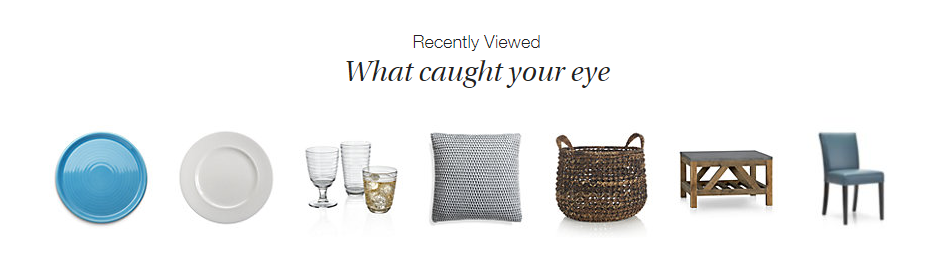
Crate and Barrel promotes “Recently Viewed” items on every product page. This makes it super easy for a returning visitor to jump right back to what they were interested in, without having to browse around your site.

This product recommendation strategy also works great on major entry points into your site like the home page or in your shopping cart.

Another source of product data to use for “personalized” products recommendations is your customers’ wish list shopping cart history. These customers have already clearly indicated exactly what they want. So you should boldly give it to them.

Other uses of your visitors’ shopping history include:

  • Highlight a special promotion for wish list items
  • Recommend complementary products that go great with a recent purchase
  • Show a reminder for abandoned cart items
  • Add an easy “Order Again” button
  • Create custom product landing pages for shoppers who clicked your retargeting ads

All of these online merchandising strategies can help grow loyal, repeat buyers and encourage returning visitors to buy more.

But what if someone is a first time visitor? Fortunately, there is another segment of high-value shoppers that you can convert with powerful merchandising.

Win high-purchase intent shoppers

Certain customers come to your site ready to buy. The question is: Are they going to buy from you or go to your competitor?

Who are these high-purchase intent shoppers? They are the visitors that use your site search functionality. SLI studies have found that visitors that use search buy at a 2.7x greater rate than visitors who just browse.

Search users have indicated exactly what they want. They often include a specific product option like a color, size, or material in their query. So you need to quickly get them to the product page for the best selling match.

Don’t make these folks navigate their way to what they want. No extra clicks. You’ll likely lose them even if you have a great price and an amazing free shipping offer.

In fact, there is one merchandising technology that dramatically helps you convert these must-win buyers – autocomplete.

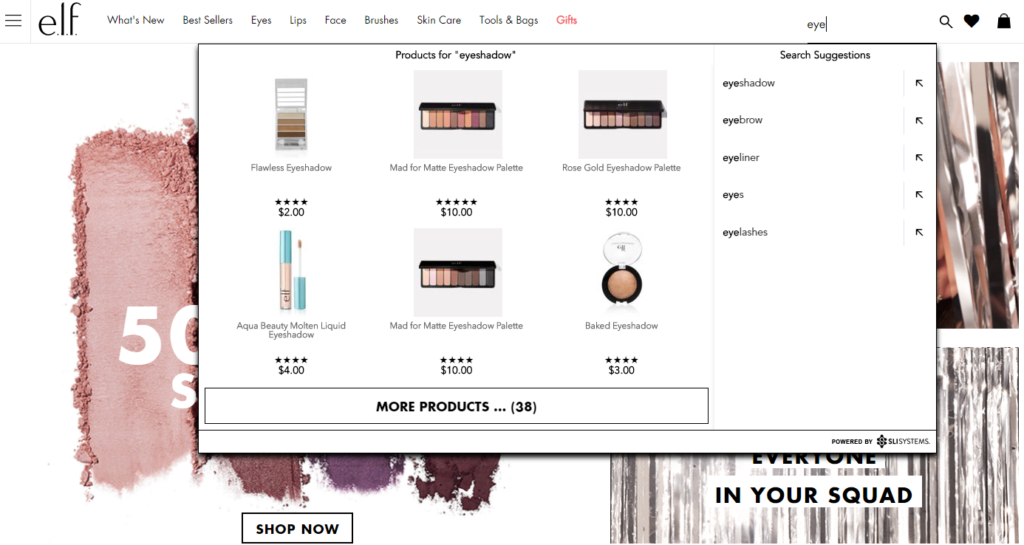
Visual Merchandising Autocomplete E-commerce Site Search - e.l.f. Screenshot

A great autocomplete example is e.l.f Cosmetics. They go beyond simply displaying matching text keywords as the searcher types. They display specific product results while adding visual merchandising with appealing product images.

You are more likely to convert these shoppers by showing a product, not a category. Again, less clicks and browsing is what you want.

That’s just the start. Lock in more sales from high-purchase intent shoppers with other tactics that use search data to improve merchandising.

Now let’s turn our attention to another customer segment, who likely make up the majority of your traffic.

Convert browsers into buyers

Some customers have an idea in mind but may not be ready to buy. In a brick-and-mortar retail analogy, these folks are the “No thanks. Just browsing” shoppers.

They may be “looky loos.” However, your merchandising can effectively nudge these visitors toward a purchase.

Classically online retailers attempt to attract these browsing shoppers by promoting categories or themed product groups like seasonal or clearance categories. However, this approach just keeps them clicking through your site and you hoping they stumble on something that sparks a sale.

And that’s one of the big reasons why many visitors leave an online store with an empty cart. The merchandising kept them in a browsing mindset, not a buying one.

Do not be afraid to promote specific products. Smart online merchandisers are now curating and promoting sets of individual products, not general categories, on their highest traffic pages.

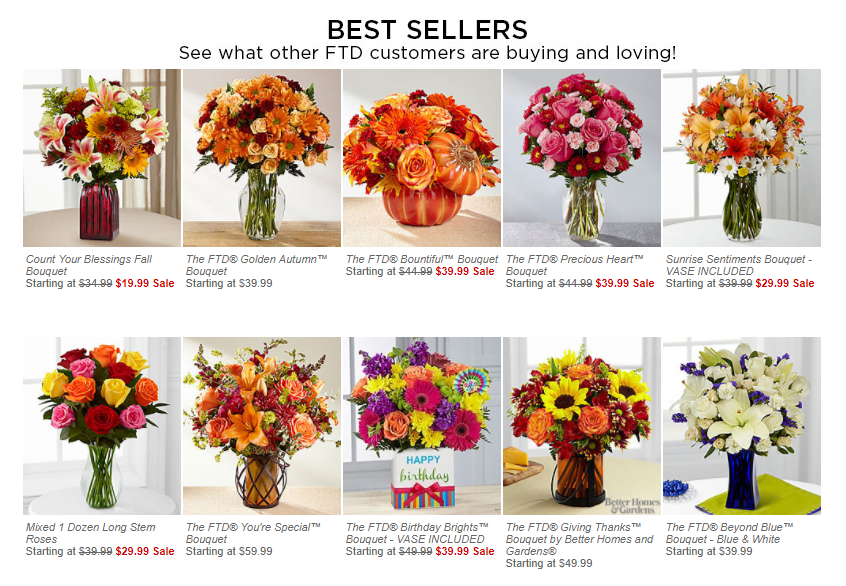
Product Recommendations Strategy - FTD Best Sellers Screenshot

FTD.com gives a big portion of their home page to promote their Best Seller products. What those product recommendations do is switch the shopper to an active “Oh. I need that too.” mindframe. And out of a passive “just looking” mode.

Tap into your massive SKU list to find the top sellers, new products arrivals, seasonal products, or specific sale items. Use your merchandising data analysis expertise.

Then continually test which products are getting the most clicks and conversions.

Simply promoting specific products can help increase the possibility of an impulse purchase, or more likely, can create a desire to come back to your site when they are ready to buy.

Now that you’re thinking from a customer perspective, let’s take your merchandising strategies to the next level. You can optimize the customer experience by where those visitors are on your site.

Merchandising Best Practices For E-commerce Websites

There is a flow to how people shop.

A brick-and-mortar retail store starts merchandising right up front as you walk in the door. Then throughout all the aisles, displays, and checkout counters. The whole store experience is intentionally designed to drive more sales.

An online customer experience also has its flow. Your e-commerce shopping journey can be designed to maximize sales too.

Every part on your site is a merchandising opportunity – the home page, navigation menus, category pages, product pages and your checkout pages.

Hundreds of online site search tips and navigation best practices have been published that can have a big impact on your sales.

Here are the top online merchandising tactics for your e-commerce website that are red hot right now.

Visual Merchandising on Product Pages

Let’s start where customers most often click “Add to Cart” – the product page.

Many elements of the product page help merchandisers showcase that that this is the right product at the right price – product title, descriptions, specs, purchase options, ratings, reviews, and, of course, pricing and discounts.

This information appeals to the rational part of your shopper’s brain.

The part that usually makes the ultimate buying decision is the emotional part of the human brain. That’s where online visual merchandising excels.

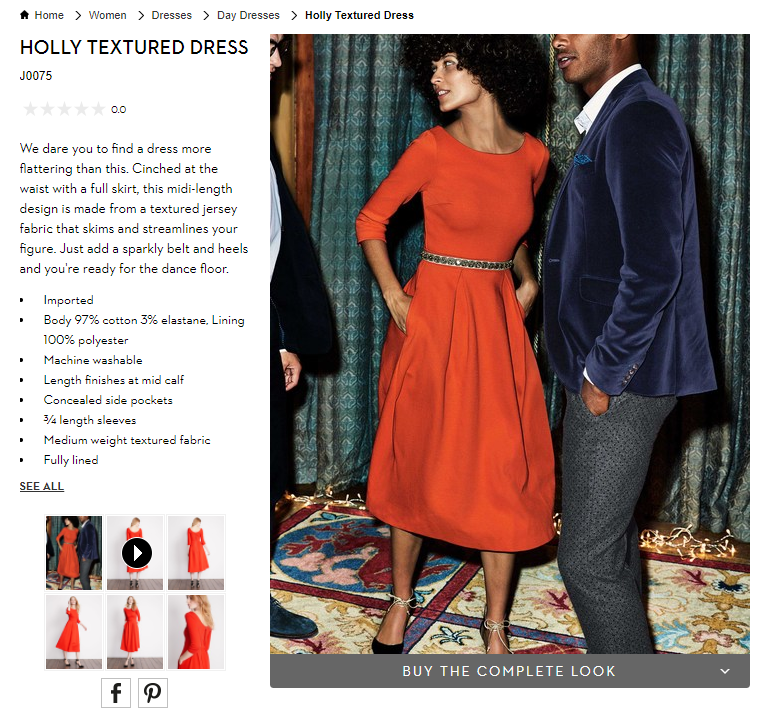
Ecommerce Visual Merchandising - Boden Product Page Screenshot

You also want to show off your products. Boden uses model videos, shows products from many angles, and switches custom images by color selection. These extra images give shoppers context when they can’t actually hold the item in their hands. You want them to easily envision what their experience will be after the purchase.

To help shoppers visualize, update product pictures instantly when they select different options like color and allow shoppers to zoom in to the smallest details.

Also, show action shots and product videos that depict how the product is used, what the buyer gets in the box, or how to install it.

Now augmented reality applications are being tested too. From arranging virtual furniture in a picture of your home to trying on different outfits in selfie mode on your smartphone, this next generation of visualization is an e-commerce merchandising innovation you will want to explore.

Personalized Product Recommendations

Product recommendations have long been a valuable online merchandising tool. You can tune your recommendations strategies using best practices for each different page on your site. Now recommendations technology is getting even smarter.

Smart product recommendations are personalized to the individual shopper in real-time. The products displayed adjust automatically based on user activity, preferences, and sales trends.

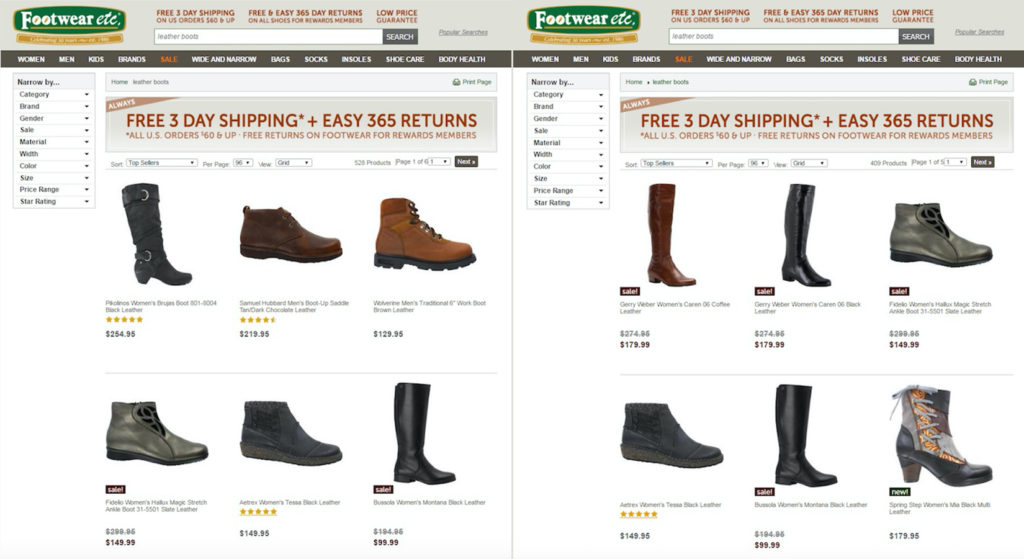
E-commerce Personalization - Footwear Etc Screenshot

Footwear etc. adds a level of personalization based on gender. Product recommendations, search results and category pages use the products or pages previously viewed by the shopper. If a shopper starts out browsing women’s sandals, then recommended product results would boost women’s shoes or accessories on subsequent pages. The screenshot above shows before and after results when a shopper searches for “leather boots”.

This type of contextual personalization can be tuned for many different facets, including gender, size, brand preference, or location.

Not only are these higher-converting recommendations displayed in real-time, but this personalization works for first-time visitors just as well as returning shoppers.

Complementary Sales in the Shopping Cart

You also want to extend those product recommendations to your shopping cart and checkout experience. Just like your grocery store places a rack of candy and magazines in the checkout line, online stores have a great opportunity to capture extra sales right at the point of purchase.

Only for online stores, this upsell merchandising strategy can be even more profitable.

Again, you can personalize the products you merchandise based on real-time data. You know what products they have added to their cart. You know the other products they have viewed.

And most importantly, you know what other products complement those items.

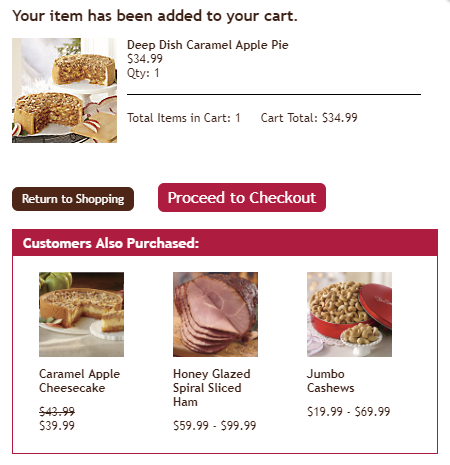
Online Merchandising Product Recommendations in Shopping Cart - Swiss Colony Screenshot

Swiss Colony promotes “Customers Also Purchased” at the beginning of their shopping cart experience.

Other popular recommendation strategies in the checkout experience are “You may also like” and “Complete the set.”

Just be careful to use complementary products. Do not necessarily use the exact same product recommendation logic as your product page. You don’t want to accidently promote an alternative to the product your customer has already decided to buy.

At best, that mistaken recommendation is ignored, meaning a wasted upsell opportunity. At worst, your customer stops and doesn’t complete their order because now they’re not sure if they’re buying what they really want.

So make sure that you are tuning the product recommendations in your shopping cart to complementary products that add to your sales, not disrupt them.

Now let’s use powerful data analytics and technology to deliver the best results without extra work.

Merchandise the Right Product to Win the Sale

You understand the customer. You know how to merchandise for each step of the online customer experience.

Now we can put it all together with great data and your product expertise to personalize the shopping experience… and get the sale.

Data Mining for E-commerce Merchandising

Your website analytics, your product systems, and your e-commerce platform transaction system combine to provide an astonishing array of data. That data can be mined and used to fuel your merchandising decisions.

You just need to look at what you have.

Data you know about your customer:

Your website analytics software offers useful demographic information about your customers and deep insights into what they are doing on your site.

Here are some of the most useful data types that can help your e-commerce merchandising strategy:

  • Traffic Channel: Where did your visitor come from?
  • History: Are they a first-time visitor or returning shopper?
  • Behavior: Where did they go on your site and what did they do there?
  • Gender: Are they female or male?
  • Age: How old are they?
  • Device: Are they on a mobile device, tablet or traditional computer?
  • Geography: Where in the world are they?

Now pair that up with what you know about transactions stored in your e-commerce platform.

E-commerce Platform Data:

Every past purchase provides information that helps you understand what customers are likely to buy in the future.

  • Product Sold: What product exactly is purchased?
  • Options: What sizes, colors, styles, and other product options are purchased?
  • Price: How much did it cost and what was the discount?
  • Order quantity: How many did customers buy per purchase?
  • Time/Date: When did the purchase occur?
  • Payment Method: How did they pay – credit card type, PayPal, on credit/layaway?
  • Shipping: How did the customer want this delivered?
  • Abandoned Carts: What products are selected but never actually purchased?

Best selling products should always be at the top of your merchandising list. But there is even more product data available to you. And that’s your merchandising experience.

Data from your experience:

Lastly, your own experience and intuition adds the special sauce to your merchandising data recipe.

  • Social trends:What’s hot right now with your customers?
  • Brand trends: What product brands can help pull in buyers?
  • Seasonality: What holiday or seasonality drives purchases?
  • Inventory: How much is in stock?

Compile all of this data, analyze it, and determine what products your customers are most likely to buy right now.

However, the challenge with the plethora of available data is… there’s so much data. It’s incredibly difficult and time consuming to effectively wrangle all the valuable data to merchandise to every single visitor on every single webpage for all your products.

That’s where new artificial intelligence technology helps.

Artificial Intelligence Fuels E-commerce Automation

Automating your data processing to power real-time merchandising decisions is quickly becoming a must-have for online retailers.

Fifty-four percent of e-commerce sites have already implemented or plan to add AI in the future, according research from the Q3 2017 E-commerce Performance Indicators and Confidence Report. And 20% expect to add AI within the next 12 months.

So what is the most popular applications for AI right now?

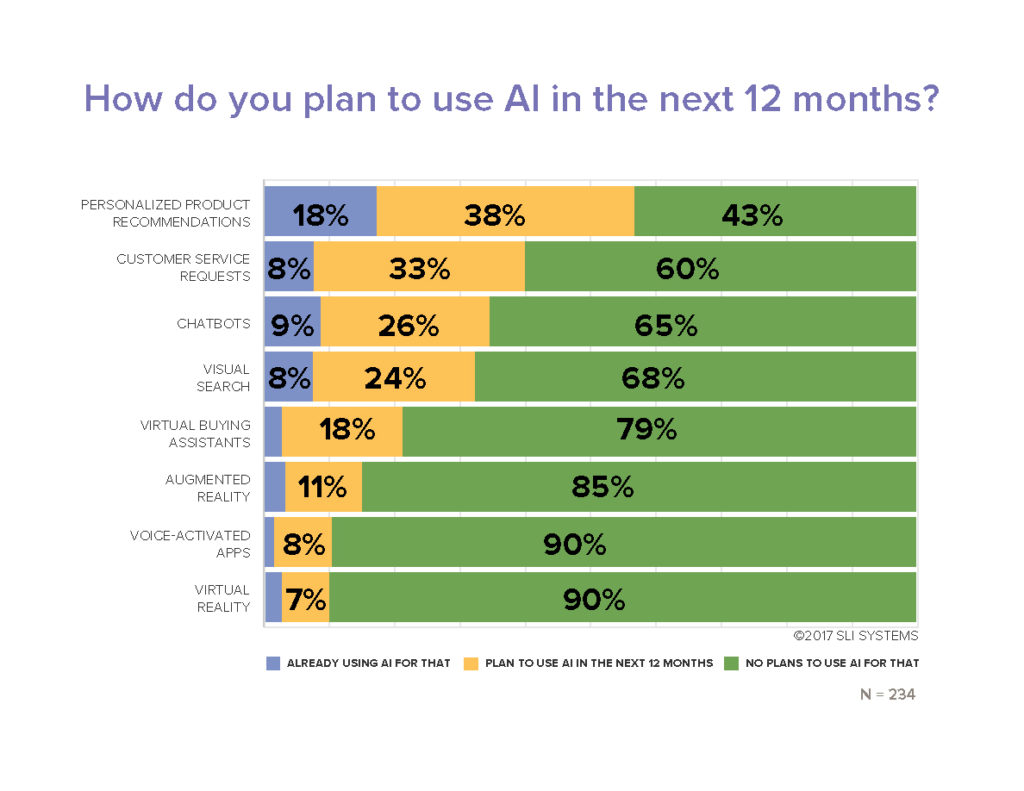
Not surprisingly, merchandising techniques are at the top. Personalized product recommendations is number one. Fifty-six percent of online retailers report that they are already using artificial intelligence in their product recommendations strategies (18%) or plan to implement within the next 12 months (38%).

Other merchandising solutions and visual merchandising technologies are also being accelerated thanks to AI. Virtual buying assistants, chatbots, visual search, augmented reality (AR), and virtual reality (VR) are all designed to help shoppers purchase the right product fast.

Ecommerce Artificial Intelligence Applications Research Chart - EPIC Report Q3 2017

More automation definitely helps maximize results in less time. And in new ways.

But is artificial intelligence going to take your merchandising job away? Absolutely not.

You won’t hand over the keys entirely to your automation systems. You need to maintain a mix of merchandising techniques and always be testing to get the maximum results.

Testing Your Merchandising Strategy Mix

“Always be testing” is more than just a matra. It’s a requirement to truly maximizing your conversion rates and your total online sales.

Most every online retailer tests performance of different on-page merchandising elements. That helps determine your optimal page design. For example, a simple A/B test of your search box location can pay off big by converting high purchase-intent shoppers.

Or determine how many products should be displayed in your product recommendations. Pro tip: SLI Systems’ merchandising best practices show that 4 or 5 products are ideal. And that scrolling carousel presentation of more products doesn’t generate significantly more incremental sales.

Another high-impact test determines the best rules for your site search and product recommendation results. Keyword matching algorithms alone likely do not give your shoppers the most relevant product results, which lowers your conversion rates.

Merchandising-savvy online retailers use a prioritized mix of multiple rules to drive the most sales. They combine artificial intelligence results with pre-defined tuning rules, product and category keyword matching, and sales leader products to generate the maximum online revenues.

More E-commerce Merchandising Tips

The key to your online merchandising success is to figure out what each visitor is most likely to buy.

It’s not easy. But you can drive many more sales leveraging a deep understanding of your customers, the latest technology, and the leading edge online merchandising strategies.

We’ve shared the newest merchandising techniques here. And you have many more proven strategies and tactics available to you. Make sure to grab the hundreds of site search best practices, e-commerce navigation tips, and watch what leading retail brands are doing in these online merchandising webinars.

All Things Amazon and Personalization Prevail at SLI Connect NYC

Posted by Chris Brubaker, Chief Marketing OfficerNovember 9, 2016Conferences, eCommerce, Personalization, Search Conferences, Site Search, SLI Buyer Engine, Uncategorized

sli-connect-2016-top-image

Dozens of e-commerce companies, thought leaders and SLI partners convened this fall at Carnegie Hall in New York City for our third annual SLI Connect event. During packed presentations and breakout sessions the group tackled many issues and opportunities for online retailers today. Among the over-arching themes were strategies to compete with Amazon, ways to offer a personalized experience, and best practices in quickly connecting buyers with the products they are most likely to buy.  Here are some highlights.


Many Ways to Compete with Amazon

 E-commerce is growing 12%, offering many opportunities to grow sales. As SLI Systems CMO, I shared ways that online merchants can seize the greatest share of sales, particularly when competing with Amazon, which is “ruthlessly efficient in selling online.” SLI’s goal is to give everyone else the tools that the big players have, so that they can increase traffic, turn shoppers into buyers, and sell more to each buyer. SLI enables a virtuous cycle of predictive product discovery: increased site traffic powers the SLI Buyer Engine to improve user experience; this converts more shoppers into buyers and increases AOVs; then, analysis of user behavior drives new site traffic. It’s the beauty of processing data streams in real time.

eShopportunity Founder Fahim Naim offered methods for retailers to expand sales, using examples from e-commerce trailblazers Jet.com, Boxed.com and Enjoy.com. Offer membership and subscription options to drive engagement, use sample boxes for trials and awareness, and add marketplaces to expand the share of wallet. He also explained key trends to watch, such as:

  • Showcasing video on mobile; customers are 64% more likely to buy after watching a video
  • Increasing personalization via emails; Jupiter said relevant emails drive 18x more revenue
  • Personalizing the site experience, including search, recommendations and displays
  • Ensuring site search considers out of stocks, smart autocomplete, trending items, location
  • Making use of augmented/virtual reality, like apps from IKEA and Converse

 Jeff Fox with SLI partner Feefo shared how customer reviews and ratings provide invaluable business insights for teams, service and products functions across industries. He net out best practices in capturing the customer experience to drive sales, including engaging genuine customers, evaluating feedback and responding, expanding content reach, driving traffic to the website, sharing reviews across social platforms and generating Gold stars to increase Google QS. In fact, Google rewards you for having an improved quality score by lowering your Adword spend – and in some instances, good ratings can cover your ad spend.


From Site to Paid, #SearchIsSexy

 SLI Chief Innovation Officer Shaun Ryan recapped the evolution of e-commerce and site search, beginning in 2001, covering the rise of user-generated content, social media – from Myspace to Pinterest, e-mail marketing, SEO and paid Search/Google Shopping, mobile, personalization, video, and marketplaces. He explained that the future of site search is about perfecting cross-channel selling, buying for profiles (implicitly OR explicitly letting users specify who they are buying for), and for non-Amazon merchants, exploring the (controversial) opportunity to collectively use preferences to offer a better experience for the shopper.

 Panel session moderator Melissa Campanelli, with Total Retail publishing, who earlier spoke on the state of retail amidst digital disrupters (notably the presidential election) (watch video here), asked the panel whether search has lost its edge, like email, the group agreed that search remains important given the strong value/intent to buy when someone uses a site search box. One panelist explained “Amazon is great if you know what you want but it sucks if you just want to browse. Think about how can people browse and find things easily. Not many sites do this well.” Another panelist added, “Search is sexy” – and a new hash tag was born: #searchissexy.

Greg Bauman of e-commerce paid search management firm ROI Revolution shared Google Shopping strategies, including tracking keywords, spending where the cost for CVR is less (such as with umbrellas in AZ vs. OR), and not using up your daily budget before peak hours. It’s important to leverage the data Google gives you when defining your strategy. Optimize your titles with the most impactful keywords at the front of a description (using brand or manufacturer; not company) and descriptions using the fewest number of keywords that will increase views. And, use Custom Labels to make use of best sellers or clearance based on seasonality, price, profitability, and stock location.


Make it Easy and Personalized

SLI customer Everlast teamed with SLI partner Bronto to share a results-packed case study about their use of Bronto’s software for email management. The duo provided a detailed playbook with strategies for list growth and customer segmentation, as well as how lifecycle messaging drives revenue. By executing on a series of well-timed – yet unpredictable – personalized email messages, Everlast has seen 13% list growth in less than one year.

On the future of e-commerce, panelist Marc Lippmann, Managing partner with Debra Lippmann cosmetics, stressed the value of providing shoppable content. That is, enabling shoppers to buy an item, in the moment, while they are looking at commerce content and video. Delivering frictionless mobile checkout is also critical for future success. Marc explained that Apple Pay is revolutionizing mobile commerce, with users calling the feature “delightful!”


To learn more about e-commerce personalization, read how SLI Enhanced Search Personalization™ instantly and dynamically personalizes the shopping experience for both first-time visitors and loyal customers in real time.

Harness the Power of Mobile for Higher Holiday Sales

Posted by Amy LindseyNovember 1, 2016eCommerce, Merchandising, Mobile, Mobile/Tablets, Navigation, Personalization, Recommendations, Uncategorized

Portrait of a girl shopping online.

Evidence from 2015 suggests that record-breaking numbers of holiday shoppers will make their 2016 purchases online. (Click here to Master 2015 Holiday Trends to Clinch 2016 Holiday Sales.)

Trends show a steady shift from the majority of online purchases being made from a desktop to more purchases being made on mobile devices. While computers still brought the highest average transaction size at $114 (over $89 for tablet and $70 for smartphone), for six of the days leading up to Christmas last year, traffic from smartphones surpassed that of desktops.

Savvy online retailers are preparing to harness the “runaway power of mobile” (NRF) to close more sales than ever during the holiday 2016 buying season.

Here are four strategies to optimize the mobile experience and drive higher sales this holiday and beyond.

Drive Conversions with Interactive Content

Four times as many consumers would now rather watch a video about a product than read about it (NRF). Further, one in four consumers will lose interest in a company if it doesn’t have video. This is great news for retailers who want to capitalize on the rise of mobile for holiday shoppers. Since mobile users are turned off by lengthy text, videos create a clean and attractive design that enhances the user experience. Videos and other interactive content, such as blogs and reviews, can be embedded right into the search results to increase the likelihood that busy holiday shoppers will convert.

Create a Personalized Search and Navigation Experience

Personalization is the next big thing. Customers are increasingly coming to expect a personalized online shopping experience. Nowhere is personalization more important than mobile sites. With long lists of family and friends to buy for and limited time to do it, mobile shoppers this season will want relevant products served up fast, which is a challenge for retailers, given the limited real estate of small screens.

Mobile search and navigation results will win higher conversions when they are automatically fine-tuned on critical facets personal to each shopper, such as gender or size. (See how SLI Systems is personalizing the entire shopping experience.)

Help Searchers Find Your Site

While mobile has yet to surpass desktop for actual purchases, the majority of search is now mobile. Fifty-six percent of searches that resulted in a click to a top retail site during November and December 2015 were conducted on either a smartphone or tablet (NRF).

Mobile users, even more than desktop users, are unlikely to scroll through the first couple of results. While you may not be able to compete with Amazon or other giant online retailers’ rankings for the most commonly used search terms, you can win by capturing long-tail search terms from your shoppers and using them to create dedicated landing pages that are crawlable by search engines. Then, when searchers type those long-tail terms into Google, your landing page will pop right up where mobile shoppers are likely to click.

Use Creative Omnichannel Strategies:

The retail store is not dead. It remains a mecca of holiday spending. Innovative retailers are using the capabilities of mobile to enhance the in-store experience, and vice versa.

To be successful, go beyond what shoppers expect (such as seeing in-store availability for products they see online) and delight them with the unexpected. Offer Wi-Fi during the holidays to make it easier for shoppers to make comparisons and read ratings and reviews on their smartphones. Allow mobile shoppers to set up in-store appointments for services (great for busy holiday shoppers). Or take it another leap forward to create a virtual shopping experience as described in the Forbes article: Virtual Reality Coming Soon to a Clothing Store Near You.

Harnessing the power of mobile for higher holiday sales is all about tailoring the entire shopping experience, from search to purchase, to the wishes of your shoppers. After all, happy holiday shoppers purchase more, and that will make your days merry and bright!


Announcing SLI ESP: Take Mind Reading to the Next Level

Posted by Chris Brubaker, Chief Marketing OfficerOctober 18, 2016Personalization, Success Stories, Uncategorized, User Experience1 comment

There’s no contest: 2017 will be “The Year of Personalization,” and now we have some direct insight to back up this claim. A recent survey distributed to all retailers attending SLI Connect NYC revealed all but one retailer at the show chose “personalization and relevance” as the top trend impacting e-commerce in the next year. What’s more, when asked about 2017 business priorities, all but one retailer chose “personalizing content and recommendations for the customer.” It’s time to make advances in personalization a priority.

Enter SLI ESP

In supporting more than 17.5 billion search queries this year (a 12% lift over last year), SLI has a wealth of insight into delivering a personalized experience for shoppers around the globe. The new SLI ESP instantly and dynamically personalizes the shopping experience – for both first-time visitors and loyal customers – providing results that match shoppers’ needs in real time.

Powered by the patented SLI Buyer Engine, SLI ESP adds contextual personalization to the industry-leading relevancy SLI is known for. We understand the same search term means different things for different people, which is why SLI ESP delivers different results to each shopper in real time. By continuously learning from user behavior and accurately predicting which products to present shoppers through their buying journey, SLI ESP acts as a personal shopper for your visitors, shortening the path to purchase, delighting customers and increasing revenues.

When personalized by gender, SLI ESP beta customer Footwear etc. saw a 10% increase in revenue per visitor to personalized search and navigation pages. They also saw a 5% increase in conversion rate and average order value (AOV).

footwear-before-after

The image on the left shows highly relevant results for “leather boots” based on SLI Learning Search. The image on the right shows how SLI ESP personalizes the results for “leather boots” in real-time based on the customer’s preference for women’s shoes.

Redefine Personalization as Relevance

Shop.org Summit Chief Artemis Berry sums it up well: “There’s not much better than a friend who ‘gets’ you. An e-commerce retailer that does can be a close second. You know the type: Anticipating your needs. Knowing your style. Giving you what you want, before you even know what it is (Medium article).

Berry wisely reminds retailers that while the task may seem daunting, it doesn’t have to be. Her suggestion? Redefine “personalization” as “relevance.”

This concept is more powerful than you might think. Rather than being overwhelmed by the personalization hype, it means you can start making it a reality right NOW.

Talbots executive Rob Schmults says, “If the value of personalization is achieved by relevance, that means personalization is a range rather than an absolute. So rather that being some binary state where either you are or you aren’t, we quickly got to a place where movement across a range was how you made progress… Personalization is not out of reach (NRF Think Tank).”

At SLI, we could not agree more. Not all shoppers are the same and neither are personalization solutions. It is time to delight your customers and keep them returning with the shopping experience that’s as unique as they are.

Stay up to date with SLI

Featured Posts

  • Maximize Revenue with Enhanced Product Impact Testing
  • Top Five Ways to Prepare for Peak Season
  • Facets, Facets, Who’s Got the Facets?
  • Personalization: It’s Kind of a Big Deal
  • M is the New E: Mobile Commerce Trends and Predictions

Categories

About SLI Systems

  • What We Do
  • Who We Are
  • Why SLI

Learn

  • Webinars
  • News Room
  • Events

Connect

© Copyright SLI Systems, 2018. All Rights Reserved | US: (866) 240-2812 | Legal