SLI home
User login

A BLOG FOR E-COMMERCE LEADERS

  • Blog
  • Resources
  • Webinars
  • Customer Experience Scorecard

SLI Blog

Posts in Rich Auto Complete Category

5 Key Differences Between Mobile and Desktop Shopping

Posted by Lucy TahtAugust 20, 2018Mobile/Tablets, Rich Auto Complete, User Experience

It’s critical to optimize your e-commerce site for both mobile and desktop users in order to maintain a strong online presence. The goal is to create a seamless shopping experience for your customers regardless of the device they use to access your site. 

In this article, we’ll highlight the five top differences in desktop and mobile shopping. This should shed some light on how to best create an enjoyable customer shopping experience.  

1. Autocomplete is key for mobile users

Mobile shoppers don’t want to type out long search queries on small, touch screen keyboards. Online shoppers expect a robust autocomplete system that anticipates the products they’re looking for as they type in their search query.   

Implementing an intelligent auto-prediction search function on your site will quickly guide your mobile shoppers to the products they wish to see. Your desktop shoppers will appreciate this function as well, and will come to expect it if they have previously shopped on a mobile device on your site.   

Autocomplete creates a seamless shopping experience across devices, while driving customers to the products they are most likely to purchase. 

2. Mobile shoppers want advanced filtering options

Mobile shoppers want the ability to quickly jump not only to specific products, but also to brand or item-type product levels. Ensure that your site’s search functionality can incorporate smart filtering into results. This allows your mobile shoppers to efficiently navigate your site, whether they want to view a specific product or scroll through many similar products.   

For mobile shoppers operating on small screens, not having to go to multiple menus to navigate to product type or brand pages creates a more pleasant overall shopping experience that they are more likely to repeat. 

3. Mobile screen sizes are significantly smaller, and vary between devices and brands

One of the biggest differences between mobile and desktop shoppers is the difference in hardware and capabilities. Ensure your site functions similarly across devices, regardless of screen size.   

This means paying attention to whether site functionality is maintained across different brands and models of mobile devices, which can include tablets with 13-inch screens, and phones with 4-inch screens. Customers should have an optimized shopping experience on every device. 

4. Mobile wireless connections are slower than desktop broadband

Part of maintaining a seamless shopping experience is accounting for differences in loading times between mobile and desktop devices. In general, desktop devices have more robust hardware and broadband connections capable of loading image or flash-heavy sites much more quickly than their mobile counterparts.   

Mobile devices access your site from a variety of connections, including 3G, 4G LTE, and wireless broadband. Verify that your site design allows mobile devices to load your website’s pages with as little delay as possible. There is nothing more frustrating for mobile shoppers than clicking on the item they want and being greeted by a lengthy loading screen.   

Mobile customers won’t wait for slow sites. This affects customer retention and conversion rates. If your site isn’t optimally configured for a variety of connection speeds and hardware configurations, you risk losing customers and sales. 

5. Payment options

Mobile shoppers are less likely than ever to pull out their credit or debit card and type in all of their information. Incorporate a variety of different payment options on your site. Verify that your site has the ability to accept client-based payment storage options, like ApplePay and Google Pay, as well as more established alternative payment methods like PayPal.  

It’s important to determine if your checkout process is streamlined for mobile shoppers. One-click checkout has become more commonplace and allows both mobile and desktop customers to quickly complete the checkout process using existing payment, billing, and shipping information.  

For more strategies to improve your mobile e-commerce experience, download the white paper: Site Search and the Mobile Experience.  

Improve E-commerce Conversion Rate with 5 Critical Enhancements

Posted by Bob AngusDecember 13, 2017Customer Experience, eCommerce, Merchandising, Navigation Tips, Personalization, Recommendations, Rich Auto Complete, Site Search Tips, User Experience

Your e-commerce business is full speed ahead. But that’s not good enough. You’ve been tasked with higher and higher growth expectations.

ecommerce sales buy button

And now you have even more at stake. You are likely spending more and more to drive traffic to your site. You can’t let that big investment in advertising fizzle with diminishing ROI.

Good news. You have a high-impact driver you can execute against right now.

Improvement to your conversion rate is the greatest lever at your disposal. Even a small conversion rate increase can generate big revenue gains.

This comprehensive guide to e-commerce conversion rates helps you build a winning game plan for your online store, including:

  • What e-commerce conversion benchmarks to use
  • How to analyze your conversion rate
  • How to optimize 7 critical conversion rate drivers

Let’s start by understanding how you can best measure conversion rate.

What is a good e-commerce conversion rate?

Online retailers track many conversions throughout their customer experience. Any action goal can be considered a conversion. A click on your email, a click on an advertisement, or a newsletter signup are considered conversions.

The conversion metric you really want to focus on is a purchase. Your sale conversion rate is calculated by simply taking the number of purchase transactions and dividing that by the total unique visitors to your online store during a time period.

That’s pretty straightforward. But what is a good conversion rate to set as your target goal?

This 2017 holiday shopping to date, average e-commerce conversion rates are showing growth: desktop 4.5% (up 10.6% YoY), smartphone 2% (up 12.3% YoY), tablet 4.3% (up 9.3% YoY), according to Adobe Digital Insights.

And Amazon boasts an amazing 74% conversion rate for its Prime members and 13% for non-Prime visitors back in 2015, based on a Millward Brown Digital study. In comparison, the same study showed the average conversion rate for Top 500 merchants is 3.32%.

Are those the right conversion rate benchmarks for you? Probably not.

It is interesting to set an aspirational goal against Amazon or other leaders that compete in your industry. However, you are best served by benchmarking where your own store is now. Then set a course for continual improvement to drive conversion optimization goals and strategies.

Measure your overall sales conversion rate for your entire website the past year. That’s your starting point. That’s the number you want to beat in 2018.

Then the key is to drill down into your sales-rate performance for different contributing factors and customer segments. That’s where your actionable insights really happen.

Now let’s explore the best way to analyze your conversions to enlighten your growth plans.

How You Can Analyze Your Conversion Rate

Conversion rate is a very useful metric to track. But the real impact to your e-commerce business is analyzing and understanding what is driving your performance and why.

That deeper conversion analysis helps you:

  • Determine what segments are contributing to your overall conversion rate
  • Identify the root causes
  • Prioritize and track success of your optimization game plan

The first step is to build a dashboard that tracks and trends your conversion rate. Google Analytics and many e-commerce platforms provide a dashboard that lets you see your conversion rate over different periods of time.

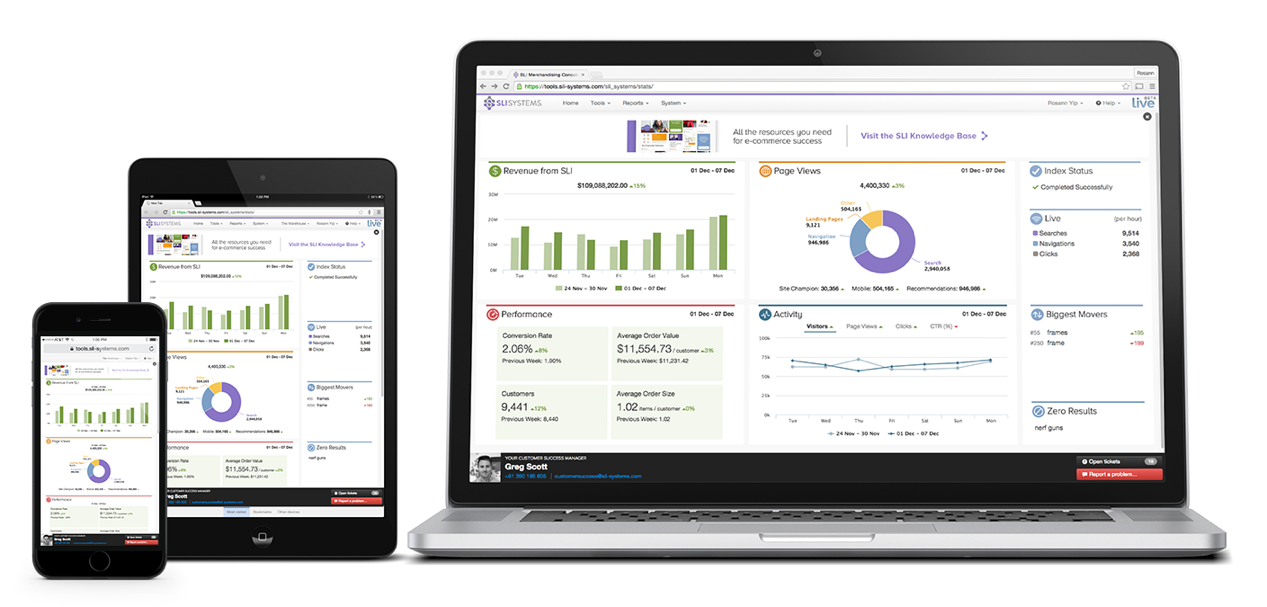
SLI Systems also has a very powerful dashboard built into the Commerce Console. You get an helpful view of your shoppers’ activities and conversion rate through their shopping journey.

Ecommerce conversion rate dashboard - SLI Systems Commerce Console

Or you can simply use a spreadsheet. Capture your monthly unique visitor metrics and plug in your corresponding sales transaction data to calculate your conversion rates. Again, simply divide transactions by unique visitors to get the conversion rate percentage.

Next you’ll start the drill down analysis.

What Is Driving to Your Conversion Rate?

Your overall conversion rate calculation is an average. Many different factors drive that single number. Some factors contribute significantly more than others. It’s your job to break down those key drivers to find growth opportunities.

Start by segmenting your conversion rate data into categories.

The most common way to split up your data is by different customer audiences. Different types of customers have a different relationship with your e-commerce business. They may also have different purchase intent, which directly impacts your conversion rate.

Your analysis can uncover those segments that likely have differing intent to purchase. Then you can calculate the conversion rate for each segment. And you’ll see which audiences have the greatest influence on your overall conversion rate.

Here are several helpful ways to segment your audience.

  • First-time visitors vs. returning visitors – First-time visitors often make up a big majority of online traffic. But it stands to reason that those first-time visitors who may be unfamiliar with your brand are less likely to purchase than returning visitors.
  • Acquisition channel – Where visitors come from can help tell you how likely they are to buy. Segment by channels like organic search, paid search, social media, advertising, and affiliates.
  • Device – The device visitors use may indicate different intent as shown in the Adobe data insights mentioned earlier.
  • Location – Are you a global brand or do you sell domestically? Traffic coming from different international locations may be browsers, not buyers.
  • Other demographics – Google Analytics can help you analyze other demographics like gender, age, or interest affinity groups.

Other popular segmentation you can use to uncover key conversion rate drivers include:

  • Product category – Conversion rates may be higher for different products based on the volume sold, price range, or deliverability. For example, you would expect the online conversion rate to be lower for expensive furniture than easily shipped lower-priced home decor.
  • Promotions and seasons – Different discounting periods or traditional shopping seasons may affect conversion rates.
  • Website elements – You can track conversion rates by different elements of your customer experience.

Make sure you look at your conversion rate over time. Don’t just take a single snapshot in time to make your decisions. A single data point or particular shopping season can skew what you see and may lead you to incorrect decisions.

Calculate your segmented conversion rates into monthly or weekly increments. Go back in time as far as you can. Then you can chart trends and make year-over-year and month-over-month comparisons.

Starting with one segmentation method is also recommended. Add that to your dashboard. Keep tracking that segmented data to see how you are performing. Then expand your analysis to other segment categories.

Your conversion rate analysis helps you find your growth opportunities. But it doesn’t tell you exactly why those different segments are performing the way they are.

Why Is Your Conversion Rate Increasing (or Decreasing)?

Now you can dig a little deeper to understand why your conversion rate is increasing or decreasing. Find the root cause by adding a second dimension to your analysis of a particular segment category.

What is the behavior or characteristic about a given segment that is likely causing sales to go up or down?

The best way to do this is to add one of the other segment categories as that additional dimension. For example, if your primary segmentation is based on acquisition channel, then you can drill down using product category purchased or device used or location demographics.

Analyze that data. Look for trends. Make comparisons.

Maybe your conversion rate was 6% coming from Google Adwords. But the Adwords conversion rate for desktop users was 8% versus 2% for smartphones and 4% for tablets. Now you have an understanding of how the device contributes to that channel’s conversion rate, taking the volume into consideration.

And how did that paid search channel breakdown compare to your other channels? For example, smartphone conversion rate maybe 4% from your emails and 1% from social media.

Identify big shifts and changes. Discover anomalies.

Using the Google Adwords example again, maybe starting in July you see an increase from 5% to 7%. And that higher rate seems to have continued for several months.

Then hypothesize. Ask “why?”

That increase in July may have corresponded with an increase in your PPC bids or budget. Or maybe you launched a new set of keywords for a hot brand. You could hypothesize why the increase happened and continued.

This additional lens into your primary segmentation can uncover the root cause. You are now ready to take action with that data-based knowledge in hand.

How to Prioritize Your Optimization Plan

You are armed with lots of data and valuable analysis. You can now more easily prioritize the action you want to take and build an optimization game plan.

Typically you’ll want to pick one to run every quarter. That single-focus test approach helps you isolate the incremental sales and conversion rate you’ve achieved. You also give enough time to achieve improvements, validate the results with enough traffic, and eliminate most anomalies by running the test for a longer period of time like two or three months.

Which tests should you run first?

It’s always good to start with the test you feel can have the biggest financial impact. Estimate the revenue impacts for all the top activity ideas you have identified. How much would sales increase by each incremental tenth of a percent increase in conversion rate?

Then look at the level of effort and investment cost of running the test. If an activity may have a high-revenue upside while requiring little extra work, then you’ve found a great place to start.

Let’s look at some of the highest conversion boosting opportunities you have.

5 Critical Enhancements for Bigger E-commerce Conversion Rate Optimization

The best conversion rate optimization tests consider the customer experience journey. Understand the different interactions from the first moment a shopper lands on your website, through finding and choosing a product, and all the way to checkout and completing the purchase.

You make many different enhancements to your online customer experience. Here are five design improvements proven to increase conversion rates:

autocomplete site search to increase ecommerce conversion rate

1. Win More High-Purchase Intent Shoppers

Arguably one of the best ways to increase your conversion rate is to win more sales from visitors who already have a high intent to purchase. So how do you know that someone comes to your site with the intention of buying?

Shoppers signal their intent when they use your site search.

SLI studies have found visitors that use search buy at a 2.7x greater rate than visitors who just browse.

Make the act of searching even easier by enticing those visitors who have a specific purchase in mind.

Position your search box in the header and in the center of every page. Provide an engaging prompt to search in the search field. And make the box large and distinctive from other forms. Don’t tuck the search box into the corner or hide it behind a magnifying glass icon that searchers have to click.

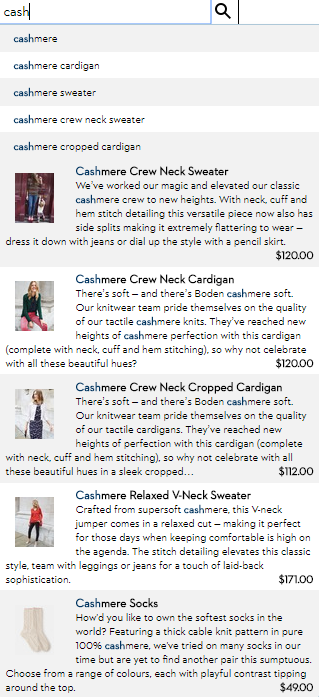
Speed up the search by suggesting possible terms as visitors start typing the first letters of a keyword. This autocomplete functionality draws from your product feed to indicate that productive search results are available. Better yet, you can rank the autocomplete terms by the most popular keywords by clickthrough and purchase data, not just keyword matching.

Pro Tip: Enhance your autocomplete feature by presenting specific products in the search suggestions. Display the product name, image, and price for the most relevant products. Boden speeds up the purchase process doing just that.

This enhanced functionality helps your visitors identify products they are looking for even more quickly. Then send them directly to the product page. Skip the extra category page browsing. Bypass the search results page. Get high-purchase intent shoppers directly to a product.

2. Wow Visitors with Visual Merchandising

The key elements of a product landing page are designed to showcase the product so that customers can easily make a purchase decision – product title, descriptions, specs, purchase options, ratings, reviews, and, of course, pricing and discounts.

This product feed information gives shopper the facts. However, we humans actually make purchase decisions emotionally much of the time. Shoppers love the wow factor. That’s where online visual merchandising excels.

e.l.f Cosmetics shows off their eye shadow products with beautiful images and attractive videos from Instagram. These social media images inspire shoppers. Better yet, many of the pictures are user-generated content from customers.

ecommerce visual merchandising with instagram - e.l.f. Cosmetics

Similarly, fashion sites often display extra images since shoppers can’t actually hold the item in their hands. Visual merchandising best practices, like model videos, product pictures from many angles, and custom images that change with color selection, can help drive more sales.

Pro-Tip: Help customers visualize what their experience will be after they make the purchase. Show action shots and product videos that depict how the product is used, what the buyer gets in the box, or how to install it.

3. Merchandising that “You May Also Like”

The top job of merchandising is to promote the products a visitor is most likely to buy. One of the best online merchandising techniques is to use a “You May Also Like” product recommendation strategy on the product page.

Showing alternative products that are similar to the product being viewed is proven to increase conversion rates.

Unfortunately, many e-commerce sites determine the recommended products using simple category and keyword matching. This approach focuses on the product feed data only.

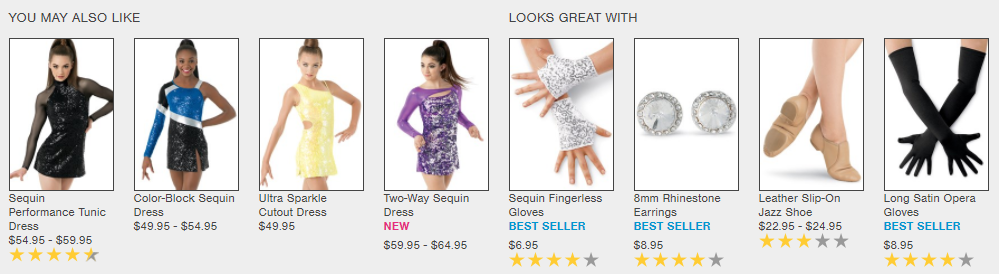
Fortunately, online stores have massive amounts of behavioral and transactional data in addition to product feed data. “You May Also Like” product recommendations that include actual customer behavior are more likely to convert.

For example, Dancewear Solutions recommends several contemporary dance dresses on a product page. It also merchandises complementary products that go with the dresses based on what customers had made purchases in the past.

ecommerce product recommendations engine - Dancewear Solutions

Pro Tip: Customers love a personalized shopping experience. In-store salespeople give a personal touch to help customers get exactly what they want. Now artificial intelligence is helping online stores create a similar personal customer experience.

E-commerce personalization uses machine learning to sift through massive amounts of behavioral data to quickly provide smart product recommendations. Contextual personalization can display products that customers are even more likely to buy based on gender, size, brand preference, or the shopper’s location.

4. Help Shoppers Get What They Want Faster

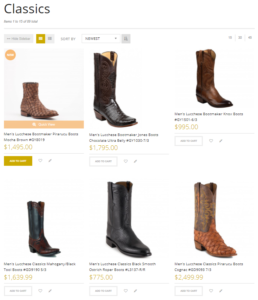
ecommerce merchandising category page buy now button - Allen's Boots

Smart e-commerce companies create as few steps as possible to get to checkout. Customers are more likely to complete their purchase when you allow visitors to add products to shopping carts or go to checkout directly wherever they are on your site.

Don’t limit the use of “Add to Cart” or “Buy Now” buttons to your product pages. Anywhere you merchandise products, even your homepage, is an opportunity for customers to commit to purchasing without an extra click to the product page.

Pro Tip: Include “Add to Cart” button directly in the your category pages and search results pages. That’s what Allens Boots did. This quick enhancement helps speed the conversion, particularly if your customer knows exactly what they want.

5. Eliminate Rational Roadblocks with Content

Don’t rely solely on the product description provided by the manufacturer to influence a buyer. Inform your customers about what a product can do. Offer how-to articles, demo videos, and comparisons against other similar products.

Content has a strong influence on e-commerce conversions both rationally and emotionally. How-to content helps remove rational doubts or questions that make shoppers hesitate. Video content in particular also has an emotional trigger for sales as customers can visualize themselves using the product.

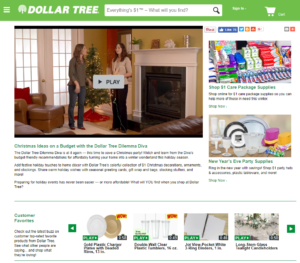
Dollar Tree uses videos to show shoppers curated product ideas and demo top-rated customer favorites.

video merchandising for ecommerce - Dollar Tree

Pro-Tip: Include a set of Frequently Asked Questions (FAQs) on the product product. Ask your customer service team for questions that they get about the product. Review common reasons for returns. Think of questions you would have if you were going to pay your own hard-earned money. Then create a strong set of FAQs written in the language that customers use.

There are hundreds more conversion-rate tips that you can test. Make sure to download these best practice e-books to find new ways you can improve your conversion rates:

  • Get the SEO-Driven Revenue You’re Missing

  • The Big Book of Site Search Tips

  • Use Creative Content to Convince Online Shoppers to Buy

  • The Big Book of Navigation Tips

Image Credit: Wikimedia Commons


E-commerce Merchandising: The Ultimate Guide to the Newest Techniques

Posted by Bob AngusNovember 16, 2017Analytics, Artificial Intelligence, Customer Experience, E-commerce Research, eCommerce, Merchandising, Navigation, Navigation Tips, Personalization, Recommendations, Refinements, Resources, Rich Auto Complete, Site Search, Site Search Tips, Testing, User Experience

E-commerce merchandising has one goal in mind – connect shoppers with the right product so that they “Add to Cart” fast. Merchandise well and you’ll increase conversion rates and boost your average order values.

But execution is always incredibly difficult.

You have different visitors with different mindsets toward actually buying. Those shoppers are engaging with different parts of your website through their shopping journey.

On top of that, you have to wrangle massive SKU quantities, constant product and pricing changes, and frequent promotions.

E-commerce merchandising is complex.

It is no longer as simple as choosing the products you want to move, setting an attractive discount, and plastering the offer all over your valuable real-estate.

You need to figure out what each shopper is most likely to buy right then.

The leading retail brands are employing the newest e-commerce merchandising techniques to successfully unlock the complex code to winning more sales. They approach effective merchandising along three dimensions:

  • Understanding different customers need different merchandising strategies
  • Deploying the right techniques along the shopping journey
  • Delivering the right product that is most likely to be purchased

Plus, they’re using data to drive that complex decision at scale. And you can too.

Let’s breakdown what you can do to optimize these three elements… and dramatically increase your sales.

Customer-Focused E-commerce Merchandising Strategies

“Traditional” merchandisers that worked for brick-and-mortar retail stores often had a pure product buying background. They would master the data. But that mastery focused inward to the business for the purpose of increasing unit volumes, maximizing margins, and avoiding too much unsold inventory.

Yes. You still need to successfully manage your product buying to be profitable through your online channel. But you also need to understand what’s pulling through those sales and why.

Today, world-class merchandisers start from a different perspective. They think about the customer first. Then they apply their product expertise and merchandising skills to fit what their customer segments want.

You will want to incorporate specific merchandising strategies to help win these different types of customers – from visitors “just browsing” to your most valuable returning buyers.

Earn loyalty with returning visitors and customers

The first segment of shoppers you should consider are your return visitors and previous buyers. Why? Your conversion rates should be significantly higher than first-time visitors.

Better yet, you have some easily executed tactics available to boost extra sales.

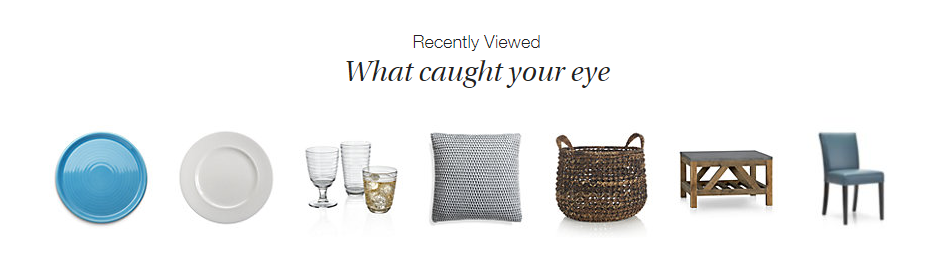
Ecommerce Merchandising Strategy Product Recommendations - Crate and Barrel Home Page Screenshot

Crate and Barrel promotes “Recently Viewed” items on every product page. This makes it super easy for a returning visitor to jump right back to what they were interested in, without having to browse around your site.

This product recommendation strategy also works great on major entry points into your site like the home page or in your shopping cart.

Another source of product data to use for “personalized” products recommendations is your customers’ wish list shopping cart history. These customers have already clearly indicated exactly what they want. So you should boldly give it to them.

Other uses of your visitors’ shopping history include:

  • Highlight a special promotion for wish list items
  • Recommend complementary products that go great with a recent purchase
  • Show a reminder for abandoned cart items
  • Add an easy “Order Again” button
  • Create custom product landing pages for shoppers who clicked your retargeting ads

All of these online merchandising strategies can help grow loyal, repeat buyers and encourage returning visitors to buy more.

But what if someone is a first time visitor? Fortunately, there is another segment of high-value shoppers that you can convert with powerful merchandising.

Win high-purchase intent shoppers

Certain customers come to your site ready to buy. The question is: Are they going to buy from you or go to your competitor?

Who are these high-purchase intent shoppers? They are the visitors that use your site search functionality. SLI studies have found that visitors that use search buy at a 2.7x greater rate than visitors who just browse.

Search users have indicated exactly what they want. They often include a specific product option like a color, size, or material in their query. So you need to quickly get them to the product page for the best selling match.

Don’t make these folks navigate their way to what they want. No extra clicks. You’ll likely lose them even if you have a great price and an amazing free shipping offer.

In fact, there is one merchandising technology that dramatically helps you convert these must-win buyers – autocomplete.

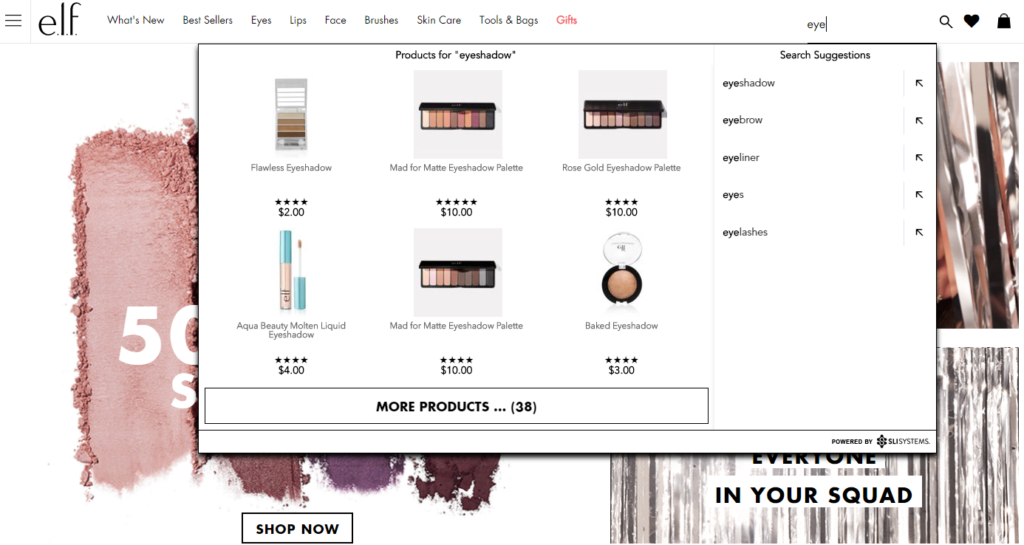
Visual Merchandising Autocomplete E-commerce Site Search - e.l.f. Screenshot

A great autocomplete example is e.l.f Cosmetics. They go beyond simply displaying matching text keywords as the searcher types. They display specific product results while adding visual merchandising with appealing product images.

You are more likely to convert these shoppers by showing a product, not a category. Again, less clicks and browsing is what you want.

That’s just the start. Lock in more sales from high-purchase intent shoppers with other tactics that use search data to improve merchandising.

Now let’s turn our attention to another customer segment, who likely make up the majority of your traffic.

Convert browsers into buyers

Some customers have an idea in mind but may not be ready to buy. In a brick-and-mortar retail analogy, these folks are the “No thanks. Just browsing” shoppers.

They may be “looky loos.” However, your merchandising can effectively nudge these visitors toward a purchase.

Classically online retailers attempt to attract these browsing shoppers by promoting categories or themed product groups like seasonal or clearance categories. However, this approach just keeps them clicking through your site and you hoping they stumble on something that sparks a sale.

And that’s one of the big reasons why many visitors leave an online store with an empty cart. The merchandising kept them in a browsing mindset, not a buying one.

Do not be afraid to promote specific products. Smart online merchandisers are now curating and promoting sets of individual products, not general categories, on their highest traffic pages.

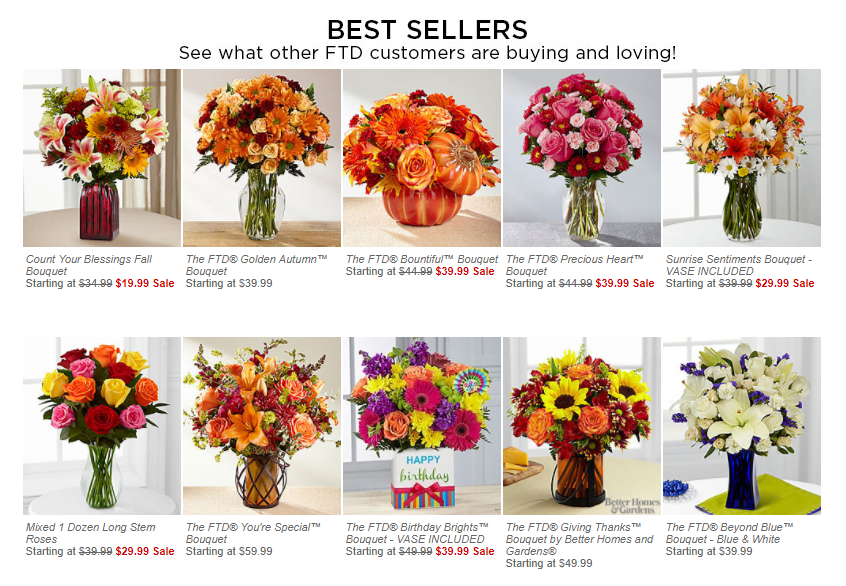
Product Recommendations Strategy - FTD Best Sellers Screenshot

FTD.com gives a big portion of their home page to promote their Best Seller products. What those product recommendations do is switch the shopper to an active “Oh. I need that too.” mindframe. And out of a passive “just looking” mode.

Tap into your massive SKU list to find the top sellers, new products arrivals, seasonal products, or specific sale items. Use your merchandising data analysis expertise.

Then continually test which products are getting the most clicks and conversions.

Simply promoting specific products can help increase the possibility of an impulse purchase, or more likely, can create a desire to come back to your site when they are ready to buy.

Now that you’re thinking from a customer perspective, let’s take your merchandising strategies to the next level. You can optimize the customer experience by where those visitors are on your site.

Merchandising Best Practices For E-commerce Websites

There is a flow to how people shop.

A brick-and-mortar retail store starts merchandising right up front as you walk in the door. Then throughout all the aisles, displays, and checkout counters. The whole store experience is intentionally designed to drive more sales.

An online customer experience also has its flow. Your e-commerce shopping journey can be designed to maximize sales too.

Every part on your site is a merchandising opportunity – the home page, navigation menus, category pages, product pages and your checkout pages.

Hundreds of online site search tips and navigation best practices have been published that can have a big impact on your sales.

Here are the top online merchandising tactics for your e-commerce website that are red hot right now.

Visual Merchandising on Product Pages

Let’s start where customers most often click “Add to Cart” – the product page.

Many elements of the product page help merchandisers showcase that that this is the right product at the right price – product title, descriptions, specs, purchase options, ratings, reviews, and, of course, pricing and discounts.

This information appeals to the rational part of your shopper’s brain.

The part that usually makes the ultimate buying decision is the emotional part of the human brain. That’s where online visual merchandising excels.

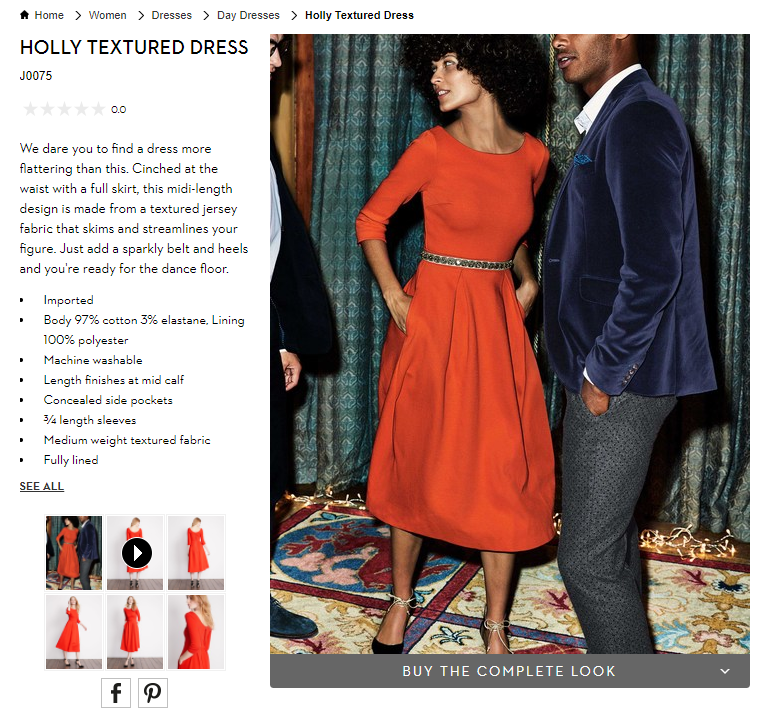
Ecommerce Visual Merchandising - Boden Product Page Screenshot

You also want to show off your products. Boden uses model videos, shows products from many angles, and switches custom images by color selection. These extra images give shoppers context when they can’t actually hold the item in their hands. You want them to easily envision what their experience will be after the purchase.

To help shoppers visualize, update product pictures instantly when they select different options like color and allow shoppers to zoom in to the smallest details.

Also, show action shots and product videos that depict how the product is used, what the buyer gets in the box, or how to install it.

Now augmented reality applications are being tested too. From arranging virtual furniture in a picture of your home to trying on different outfits in selfie mode on your smartphone, this next generation of visualization is an e-commerce merchandising innovation you will want to explore.

Personalized Product Recommendations

Product recommendations have long been a valuable online merchandising tool. You can tune your recommendations strategies using best practices for each different page on your site. Now recommendations technology is getting even smarter.

Smart product recommendations are personalized to the individual shopper in real-time. The products displayed adjust automatically based on user activity, preferences, and sales trends.

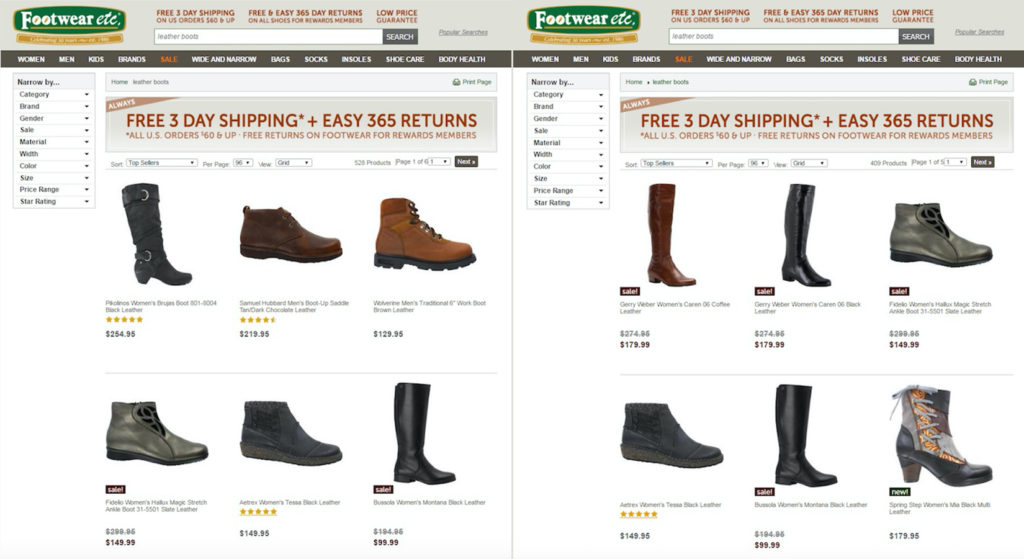
E-commerce Personalization - Footwear Etc Screenshot

Footwear etc. adds a level of personalization based on gender. Product recommendations, search results and category pages use the products or pages previously viewed by the shopper. If a shopper starts out browsing women’s sandals, then recommended product results would boost women’s shoes or accessories on subsequent pages. The screenshot above shows before and after results when a shopper searches for “leather boots”.

This type of contextual personalization can be tuned for many different facets, including gender, size, brand preference, or location.

Not only are these higher-converting recommendations displayed in real-time, but this personalization works for first-time visitors just as well as returning shoppers.

Complementary Sales in the Shopping Cart

You also want to extend those product recommendations to your shopping cart and checkout experience. Just like your grocery store places a rack of candy and magazines in the checkout line, online stores have a great opportunity to capture extra sales right at the point of purchase.

Only for online stores, this upsell merchandising strategy can be even more profitable.

Again, you can personalize the products you merchandise based on real-time data. You know what products they have added to their cart. You know the other products they have viewed.

And most importantly, you know what other products complement those items.

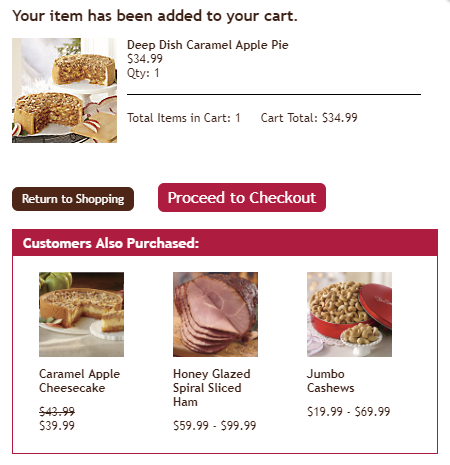
Online Merchandising Product Recommendations in Shopping Cart - Swiss Colony Screenshot

Swiss Colony promotes “Customers Also Purchased” at the beginning of their shopping cart experience.

Other popular recommendation strategies in the checkout experience are “You may also like” and “Complete the set.”

Just be careful to use complementary products. Do not necessarily use the exact same product recommendation logic as your product page. You don’t want to accidently promote an alternative to the product your customer has already decided to buy.

At best, that mistaken recommendation is ignored, meaning a wasted upsell opportunity. At worst, your customer stops and doesn’t complete their order because now they’re not sure if they’re buying what they really want.

So make sure that you are tuning the product recommendations in your shopping cart to complementary products that add to your sales, not disrupt them.

Now let’s use powerful data analytics and technology to deliver the best results without extra work.

Merchandise the Right Product to Win the Sale

You understand the customer. You know how to merchandise for each step of the online customer experience.

Now we can put it all together with great data and your product expertise to personalize the shopping experience… and get the sale.

Data Mining for E-commerce Merchandising

Your website analytics, your product systems, and your e-commerce platform transaction system combine to provide an astonishing array of data. That data can be mined and used to fuel your merchandising decisions.

You just need to look at what you have.

Data you know about your customer:

Your website analytics software offers useful demographic information about your customers and deep insights into what they are doing on your site.

Here are some of the most useful data types that can help your e-commerce merchandising strategy:

  • Traffic Channel: Where did your visitor come from?
  • History: Are they a first-time visitor or returning shopper?
  • Behavior: Where did they go on your site and what did they do there?
  • Gender: Are they female or male?
  • Age: How old are they?
  • Device: Are they on a mobile device, tablet or traditional computer?
  • Geography: Where in the world are they?

Now pair that up with what you know about transactions stored in your e-commerce platform.

E-commerce Platform Data:

Every past purchase provides information that helps you understand what customers are likely to buy in the future.

  • Product Sold: What product exactly is purchased?
  • Options: What sizes, colors, styles, and other product options are purchased?
  • Price: How much did it cost and what was the discount?
  • Order quantity: How many did customers buy per purchase?
  • Time/Date: When did the purchase occur?
  • Payment Method: How did they pay – credit card type, PayPal, on credit/layaway?
  • Shipping: How did the customer want this delivered?
  • Abandoned Carts: What products are selected but never actually purchased?

Best selling products should always be at the top of your merchandising list. But there is even more product data available to you. And that’s your merchandising experience.

Data from your experience:

Lastly, your own experience and intuition adds the special sauce to your merchandising data recipe.

  • Social trends:What’s hot right now with your customers?
  • Brand trends: What product brands can help pull in buyers?
  • Seasonality: What holiday or seasonality drives purchases?
  • Inventory: How much is in stock?

Compile all of this data, analyze it, and determine what products your customers are most likely to buy right now.

However, the challenge with the plethora of available data is… there’s so much data. It’s incredibly difficult and time consuming to effectively wrangle all the valuable data to merchandise to every single visitor on every single webpage for all your products.

That’s where new artificial intelligence technology helps.

Artificial Intelligence Fuels E-commerce Automation

Automating your data processing to power real-time merchandising decisions is quickly becoming a must-have for online retailers.

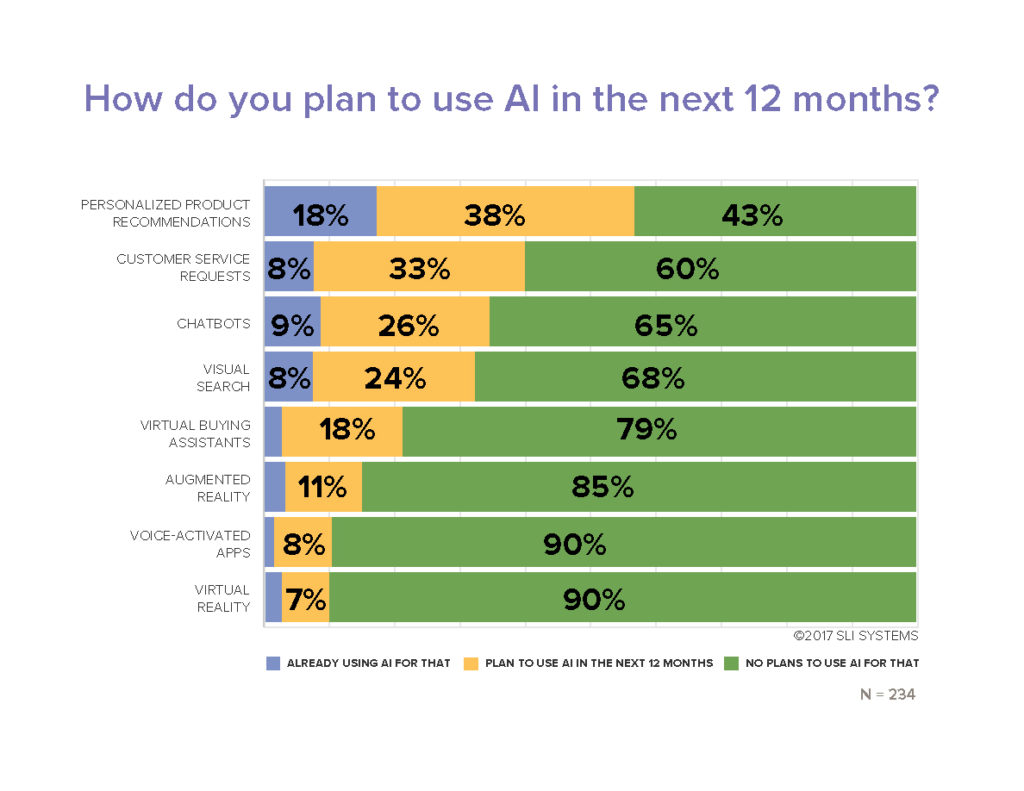
Fifty-four percent of e-commerce sites have already implemented or plan to add AI in the future, according research from the Q3 2017 E-commerce Performance Indicators and Confidence Report. And 20% expect to add AI within the next 12 months.

So what is the most popular applications for AI right now?

Not surprisingly, merchandising techniques are at the top. Personalized product recommendations is number one. Fifty-six percent of online retailers report that they are already using artificial intelligence in their product recommendations strategies (18%) or plan to implement within the next 12 months (38%).

Other merchandising solutions and visual merchandising technologies are also being accelerated thanks to AI. Virtual buying assistants, chatbots, visual search, augmented reality (AR), and virtual reality (VR) are all designed to help shoppers purchase the right product fast.

Ecommerce Artificial Intelligence Applications Research Chart - EPIC Report Q3 2017

More automation definitely helps maximize results in less time. And in new ways.

But is artificial intelligence going to take your merchandising job away? Absolutely not.

You won’t hand over the keys entirely to your automation systems. You need to maintain a mix of merchandising techniques and always be testing to get the maximum results.

Testing Your Merchandising Strategy Mix

“Always be testing” is more than just a matra. It’s a requirement to truly maximizing your conversion rates and your total online sales.

Most every online retailer tests performance of different on-page merchandising elements. That helps determine your optimal page design. For example, a simple A/B test of your search box location can pay off big by converting high purchase-intent shoppers.

Or determine how many products should be displayed in your product recommendations. Pro tip: SLI Systems’ merchandising best practices show that 4 or 5 products are ideal. And that scrolling carousel presentation of more products doesn’t generate significantly more incremental sales.

Another high-impact test determines the best rules for your site search and product recommendation results. Keyword matching algorithms alone likely do not give your shoppers the most relevant product results, which lowers your conversion rates.

Merchandising-savvy online retailers use a prioritized mix of multiple rules to drive the most sales. They combine artificial intelligence results with pre-defined tuning rules, product and category keyword matching, and sales leader products to generate the maximum online revenues.

More E-commerce Merchandising Tips

The key to your online merchandising success is to figure out what each visitor is most likely to buy.

It’s not easy. But you can drive many more sales leveraging a deep understanding of your customers, the latest technology, and the leading edge online merchandising strategies.

We’ve shared the newest merchandising techniques here. And you have many more proven strategies and tactics available to you. Make sure to grab the hundreds of site search best practices, e-commerce navigation tips, and watch what leading retail brands are doing in these online merchandising webinars.

SLI Buyer Engine – The Heart of a Powerful E-commerce Suite

Posted by Chris Brennan, Chief Executive OfficerAugust 31, 2016About us, eCommerce, Merchandising, Mobile, Navigation, Recommendations, Rich Auto Complete, SEO, Site Search, SLI Buyer Engine, Uncategorized

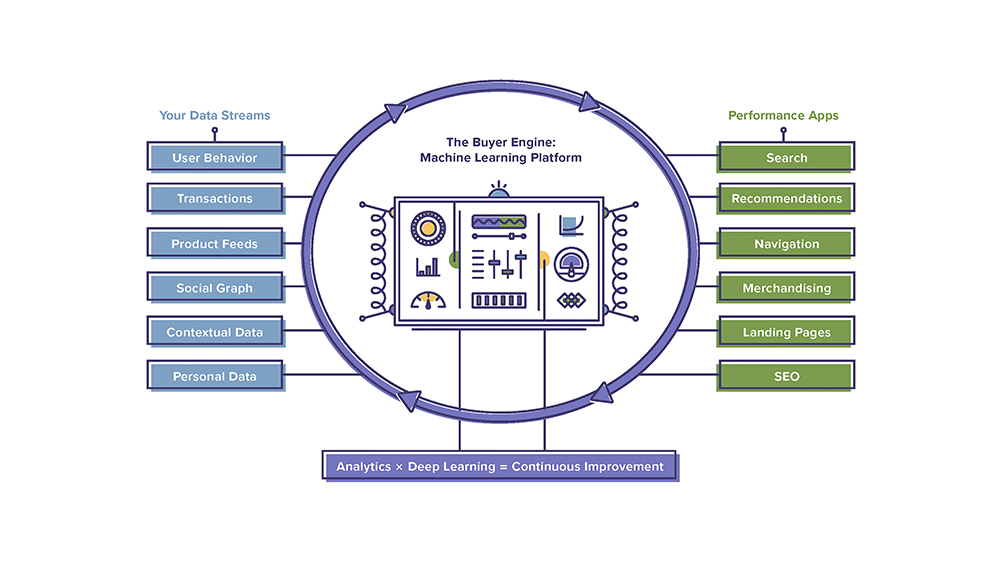
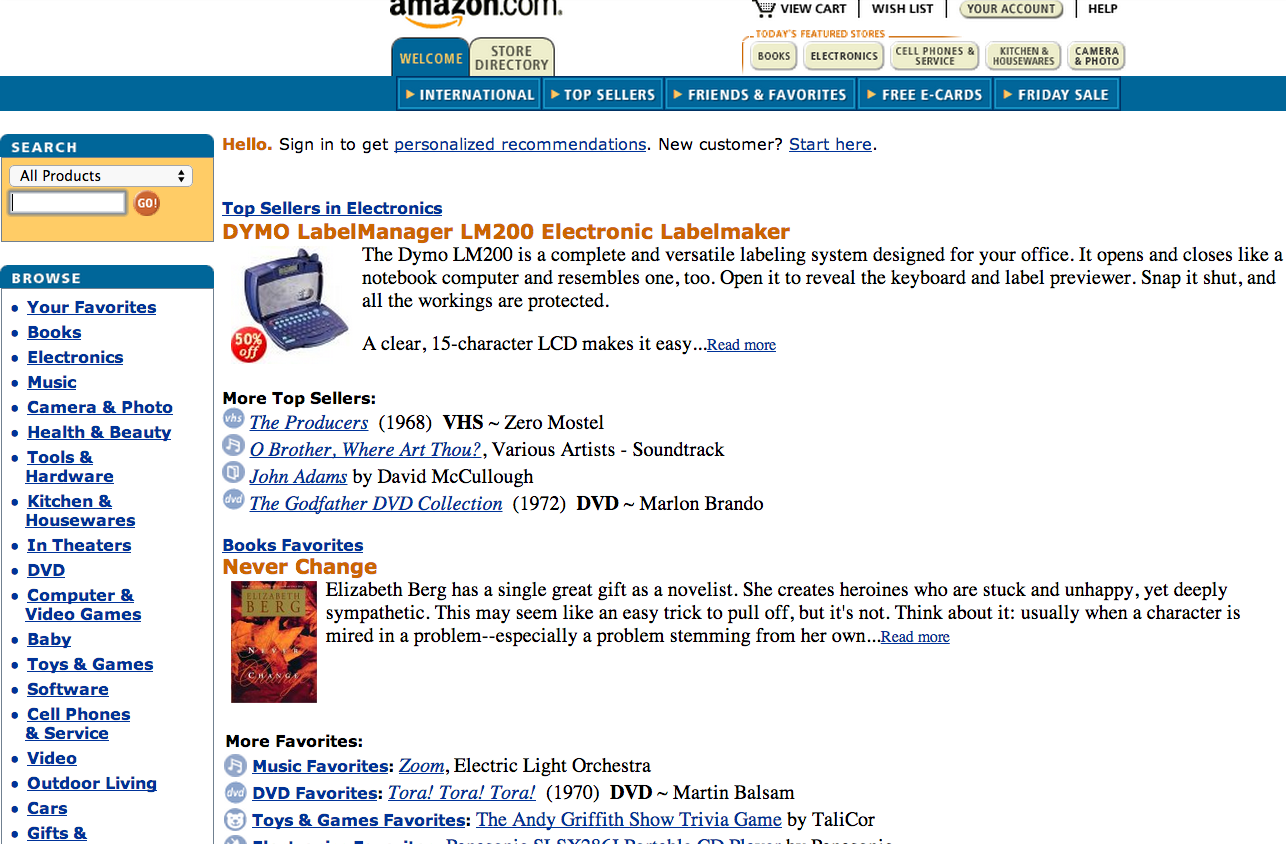
BuyerEngineI have a confession. For more than a decade, SLI has been far too modest about our e-commerce innovations. Perhaps our engineering team has garnered so many patents that they haven’t stopped to reflect. It hit me when we learned of the latest SLI patent related to our auto complete algorithm. We began applying for site search technology patents back when Amazon’s home page was about as intuitive as a bibliography and relevancy wasn’t even a thought.
The fact is, SLI is a global team of e-commerce innovators and expert consultants with unparalleled experience. Since 2001, our team has pioneered apps designed to generate more traffic, convert shoppers into buyers, and maximize orders for B2B and B2C e-commerce leaders worldwide – whether selling 500 or 500,000 products, whether in English, Arabic or 18 other languages, or whether specializing in high fashion or high tech.

At the epicenter of SLI’s flexible and powerful e-commerce suite is machine learning technology, which – until today – remained nameless. The SLI Buyer Engine™ is a cloud-based, machine-learning platform that powers all SLI apps and answers the single most important question: “What is your shopper most likely to buy right now?”  

This means our customers’ bespoke search, navigation, recommendations, mobile experience, merchandising tools and user-generated SEO apps are driven by the same patented technology that makes really smart use of big data in real time.

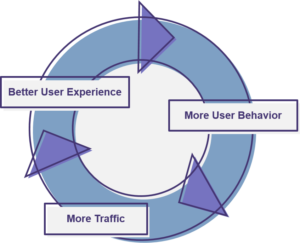
Machine Learning in Action – A Virtuous Cycle

SLI Buyer Engine Virtuous Circle coreOur Buyer Engine continuously learns to improve the performance of all SLI apps and make their results more relevant, whether a shopper is a new user or frequent customer. It can consume in real time a vast array of data streams today, as well as those to come tomorrow.

  • Behavioral data (what someone is clicking on and not clicking on)
  • Transactional data (what someone is buying)
  • Product data
  • Non-product data (blogs, reviews, articles, videos, etc.)
  • Social data (including the shoppers own social graph, and what they have been up to)
  • Contextual data (where are they, local weather, device type being used)
  • Third-party data (e.g. FICO scores)

This is where big data meets personalization. The SLI Buyer Engine drives personalized shopping experiences for first-time visitors and loyal customers. It continuously learns from user behavior, improving the performance of all SLI apps over time by making their results more relevant. By accurately predicting which products to present shoppers through their buying journey, the Engine shortens the path to purchase and makes it easy to delight customers and increase revenues.

Performance-Driven Commerce

Gartner’s 2016 Hype Cycle for Emerging Technologies puts machine learning at the cycle peak, noting that “This Hype Cycle specifically focuses on the set of technologies that is showing promise in delivering a high degree of competitive advantage over the next five to 10 years.”

A recent InformationWeek article explains that machine learning is often used to make predictions through improving search results, anticipating movie or product selections, anticipating customer purchasing behavior, or even predicting new types of hacking techniques.

SLI provides clients with competitive advantage and clear results by addressing most of these use cases today. Search is indeed high-value. Our customers see 2.7x greater conversion rate when site visitors use search and those using the SLI Learning Recommendations™ app, which provides contextually relevant product suggestions while increasing upsell and cross-sell opportunities, see 5-15% average uplift in conversions.

So while the automotive industry awaits self-driving cars, companies in the retail sector that are using SLI machine learning technology are already seeing business impact.

Performance-driven commerce will remain the mission for SLI Systems as we strive to continuously deliver the most relevant solutions for customers, and the most relevant results to their buyers. We will continue to invest in machine learning and big data in order to support other emerging technologies that may be applied to e-commerce, such as conversational commerce, augmented or virtual reality, etc. This will help ensure clients are able to provide the best possible and most relevant experience within new shopping paradigms as well. And at the heart of incrementally better e-commerce performance will be the SLI Buyer Engine.

To learn more about results that B2B and B2C e-commerce companies have achieved with the SLI Buyer Engine, download the report detailing how 40 Retailers Have Transformed Their Online Business Using SLI.

Get Ready for Bunnies & Blooming E-commerce

Posted by Christina StublerFebruary 18, 2016eCommerce, Merchandising, Ratings and Reviews, Rich Auto Complete, Site Search

Boden SpringLove was so last Sunday. Now spring is in the merchandising air.

Never mind the polar vortex hitting the East and Midwest. Easter and its Bunny are arriving Sunday, March 27 – a full three weeks earlier than last year when it hopped onto the scene April 20.

With this year’s abbreviated shopping season, every merchandising day matters. Whether your shoppers celebrate Easter or just long for spring, this is the time to remind them that warmer weather is on the horizon.

Easter is historically the fifth largest spending holiday of the year (after Valentine’s Day but before Father’s Day, Super Bowl, Halloween and St. Patrick’s Day), according to the National Retail Federation.

Candy WarehouseEven if you’re boasting the most beautiful in-store displays, there’s good reason to focus your attention on winning online spring shoppers. Last year, online Easter shoppers planned to spend an average $221.39 – a whopping 58 percent more than brick-and-mortar Easter shoppers, according to the National Retail Federation.

What will shoppers put in their baskets? Food, clothing, gifts, candy and flowers are the top five spending categories for Easter. But don’t make your visitors hunt for what they want.

Boden dressesRead their minds. If shoppers type “Easter” in your site’s search box, make sure your site returns relevant results right away. Candy Warehouse is crushing this by instantly showing search suggestions and product results.

Curate a collection. Boden is using a banner to prompt shoppers to “Make room for new-season dresses.” But the merchandising doesn’t stop there. Clicking on the banner takes shoppers to a collection of spring dresses.

H&D EasterShow the love. Harry & David’s search results not only showcase the most relevant products, but shoppers can quickly see which items have the best and most reviews. This is a great to give browsers the social proof they need to make a buying decision.

For more tips on improving your e-commerce merchandising, download our free white paper Use Site Search Data to Improve Merchandising.

The Next Innovation in E-commerce: Enhanced Rich Auto Complete

Posted by Tanmay BholaOctober 5, 2015eCommerce, Rich Auto Complete, Site Search

racThe world of e-commerce is constantly evolving. When site search was first introduced, the functionality was clumsy at best and completely frustrating at worst. Shoppers typed their entire search query before seeing if the site had what they were looking for. This involved a lot of guesswork and often led to no results or irrelevant results – even when the site had the product shoppers wanted.

In 2008, SLI Systems launched Auto Complete. As soon as users started typing their search query, a search box dropdown instantly displayed search suggestions. In 2011, we were the first site search provider to add images and product suggestions to this experience, which gave birth to SLI Rich Auto CompleteTM and allowed shoppers to find relevant products faster. Each improvement to our Auto Complete experience has increased conversions and customer engagement.

The E-commerce Evolution Continues

Today, we are excited to announce industry-leading enhancements to Rich Auto CompleteTM. Our new Rich Auto Complete experience has been designed from the ground up to speed the path to purchase and engage shoppers on any size device.

After considering a number of usability factors, best practices and client requests, we redesigned the entire experience to increase e-commerce sales, enhance product discovery and reduce the risk of returning “no results.”

RAC Blog ShotGreat for Shoppers

Our latest version of Rich Auto Complete provides better guidance to shoppers as soon as they engage with the search box. We added the ability to show search suggestions based on category, brand or department, which lets shoppers jump to the right section of results. For example, a search for jeans at a large department store might show options for jeans in Women, jeans in Men and jeans in Kids.

Our new dynamic content feature allows users to preview products of interest right within the Auto Complete box. We do this by updating products displayed when users hover over search suggestions, which gives them more choices and increases engagement.

In addition, the new Rich Auto Complete helps you capture more sales from your small-screen shoppers. We’ve created dedicated mobile and tablet designs that automatically display options correctly regardless of device size and orientation. As a result, shoppers can type less and buy more.

mobile_racPowerful for Retailers

Rich Auto Complete uses patented SLI Learning Search® technology to continuously re-rank product suggestions based on user activity. This allows you to showcase the most relevant products to your shoppers, and you can tune the results to control the order in which products appear.

SLI Systems has always customized the look and feel of our solutions to match your e-commerce site. Our new Rich Auto Complete now includes a variety of design options so that you can choose an experience that fits your brand and delights your shoppers.

Our SaaS platform allows your site to evolve alongside our e-commerce solutions. Existing Rich Auto Complete customers will enjoy these new features at no additional cost. New customers can look forward to combining the power of Learning Search® with industry-leading Rich Auto Complete to create a premium search experience

Learn more about accelerating your e-commerce by reading our Rich Auto Complete product brief.

Five Site Features that “Speed Shoppers” Love

Posted by Dawn MortensenMarch 9, 2015eCommerce, Mobile, Navigation, Ratings and Reviews, Rich Auto Complete, Site Search, Social Media, User Experience

50+ years ago, futurists predicted that advances in technology would provide a life of ease. Instead, we use today’s technology to do more, faster – even with shopping. As an increasing number of online shoppers want to find, buy and get on with life as quickly as possible, here are five must-have features for e-commerce sites that want to meet the needs of these “speed shoppers.”

1. Learning-based Site Search

Speed shoppers are likely to go straight to the search box and expect relevant results within the first few items displayed. To deliver such on-target results, a site search provider needs to offer technology that learns from multiple aspects of user activity and continually re-ranks items that are most relevant. The smarter the technology, the better the accuracy and speed for shoppers.

2. Autocomplete with Graphics

aero finalA critical feature for speed in site search is the ability to auto-populate product results and images from the first letter a searcher types, as offered by SLI Rich Auto CompleteTM. If I want to quickly find polo shirts and I start typing “polo,” I appreciate a retailer who shows me “polo” shirts after just typing “po.”

In this example, the retailer also uses SLI Learning SearchTM technology, which intelligently infers that by typing “po” I was most likely looking for a polo shirt and not a “pocket tee” or “popover hoodie.” Smart – and fast.

3. Social Content and Reviews Integrated Into Search

Keep in mind that not all speed shoppers know exactly what they want when they search. A last-minute gift-buyer, for instance, may search for “makeup set” at e.l.f. cosmetics, but before clicking “buy” the giver wants to make sure it’s a quality product. Since e.l.f. incorporates a special “As Seen In” feature into its search, the gift shopper can see that this item has been featured in magazines like O and Woman’s Day. And if that doesn’t instill enough confidence to click “buy,” the shopper can see that it’s a 4-star product with more than 61 reviews. This quick-reference information, placed on the product page, can make a speed shopper giddy about the efficiency of it all.

4. Easy Payment Options

Online shoppers are quickly getting fed up with multiple-step checkouts that require them to provide personal and financial information. As more consumers experience the convenience of PayPal, Apple Pay, Google Wallet or similar payment options, paying with credit cards could soon become a relic. Be sure you offer the payment experience your customers prefer, or they’ll find other sites that do.

5. Optimized Mobile Experience

Speed and ease are especially critical for mobile shoppers. The smaller the screen size, the smaller the amount of patience a customer has before giving up. As John Tomich stated in a recent article for Multichannel Merchant, “A successful mobile interaction with your customer is one in which everything is obvious, easy and fast.” He cites that shoppers overwhelmingly prefer social logins for ease of use. Express checkout and easy payment options are as critical here as with any shopping site. Other critical features are those that will improve findability, like learning-based search and navigation.

The investment in meeting the needs of speed shoppers will undoubtedly pay off. Speed shoppers are usually searchers, which are 2-3x more likely to convert than non-searchers. And when you meet speed shoppers’ needs for efficiency, they’ll quickly become some of your most loyal repeat customers.

Major Corporations Endorse SLI

Posted by SLI SystemsDecember 9, 2014Merchandising, Navigation, Newsletter, Reviews, Rich Auto Complete, SEO, Site Search

Hear in a recent video testimonial how U.S. gourmet food and gifting company Harry & David saw a US$437,000 increase in 2014 sales after implementing SLI’s Site Champion™. Other recent video testimonials include the U.K.’s largest mail order seed company Thompson & Morgan and the U.K.’s number one winter sports apparel and equipment retailer Snow + Rock.

Cameron Gabriel
E-commerce Manager
Harry & David


Clare Dixey
E-commerce Manager
Thompson & Morgan


David Kohn
Head of Multichannel
Snow+Rock

Subscribe_button

Customer Success: Natural Wellbeing

Posted by JoeRSeptember 17, 2013Navigation, Newsletter, Refinements, Related Search, Rich Auto Complete, SEO, Site Search

Natural Wellbeing is a site rich with reports, reviews and expert advice about the holistic and natural wellness products they offer. Such quality content can really help move shoppers through purchase decisions – especially for a natural health products site, where first-time buyers can be skeptical. But in order to be useful, the content has to be easily searchable and relevant to the needs of each individual buyer.

When Natural Wellbeing signed with SLI Systems in 2009, I saw a great opportunity to help them bring their rich content into their site search capability. They had a blog, an active social media presence, and a wiki with well-written descriptions of every herbal ingredient that their certified therapists use. But none of these resources were tied to the search results page. We worked closely with them to implement a number of changes.

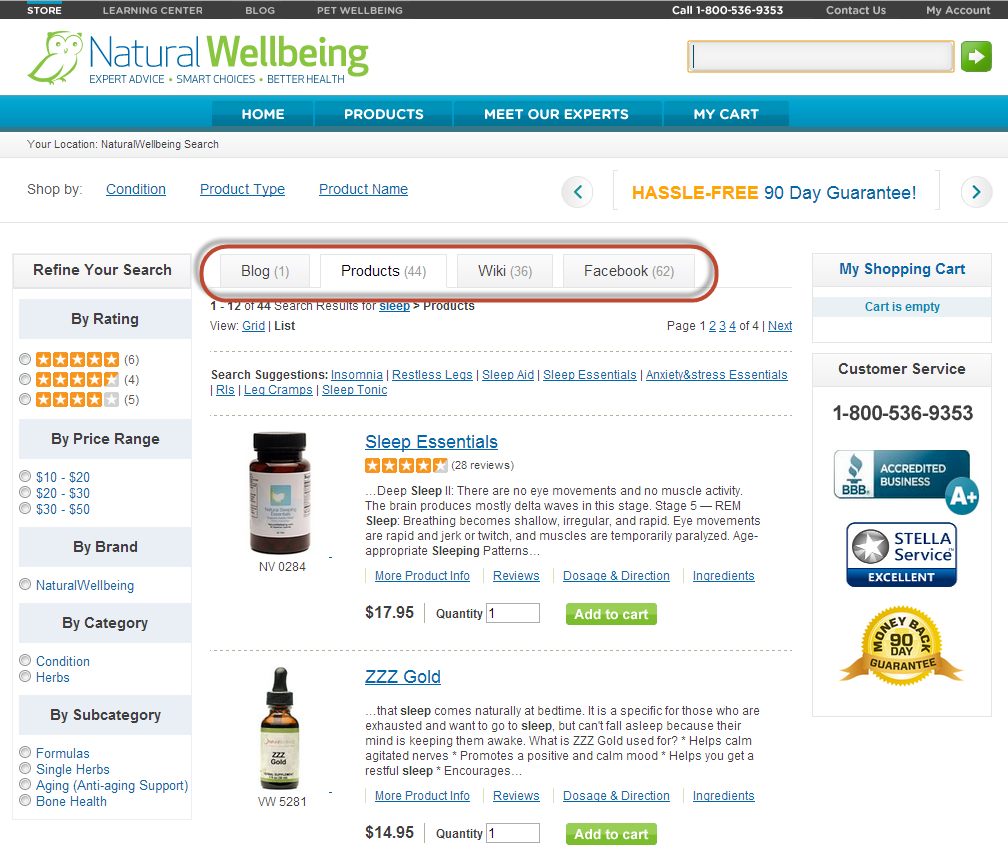
One change was to create a tabbed format to include relevant blogs, wiki content and Facebook content onto each search results page. In the below screen shot, you can see that a search for “sleep” now shows 44 related product results on the product tab, and there are additional tabs for accessing related blogs (1), wiki articles (36) and Facebook posts (62).

refinement_screenshot_11Sep13We also created a set of refinements for them (see the left column in the above screen shot), where users can narrow down the search results by rating, price range, brand, category or subcategory. For example, if a user wants to look at only formulas that contain blends of different herbs and doesn’t want to spend more than $20, they can click the $10 – $20 range in Price Range and Formulas in Subcategory. This narrows the number of product results from 44 to 25, as shown below. From that point, the user may want to look at ratings and read more about the products to decide which they want to purchase.

Since SLI’s site search continually learns and improves, the relevancy of search results improves over time. Natural Wellbeing realizes the benefit of letting SLI’s learning search do its work – it frees them from having to constantly tune results, allowing them to focus on other priorities in their business.

Both Natural Wellbeing and its sister site Pet Wellbeing also use SLI’s Site Champion product, which keeps improving SEO without any work on their part. Site Champion uses visitors’ site behavior to automatically create optimized landing pages that are indexed by Google and other Internet search engines.

In March of this year, I worked with them to add SLI’s Rich Auto Complete, which auto-displays product listings and images based on what users are typing in the search box. Since users can click on these products directly from the search box, the feature shortens the path from searching to buying, which creates a better user experience and improves conversions. Since adding Rich Auto Complete, the sites have received significantly higher page views, search users and search result clicks.

Now I’m working on ways we can help with their push for growth. I heard what they’re doing with email marketing, for example and showed them the types of custom templates and landing pages we can create for those campaigns. I’ve let them know what’s working well for others and have developed solutions that will help them achieve their current goals. It is through casual and interactive conversation that we come up with solutions that make a real impact.  Being an extension of our customers’ team is what I and all SLI Customer Success Managers strive for.

Technical Ability Matters – Don’t Overlook Advanced Site Search

Posted by Terry CostaApril 3, 2013Navigation, Newsletter, Refinements, Rich Auto Complete, Site Search

Changing to a new eCommerce platform is a huge investment, not only in dollars, but time spent integrating your site and training your team on the new features and functions. When you’ve just spent so much time and money upgrading to a new platform, it’s easy to see how adding site search would seem like little more than an additional expense.

But failing to upgrade your eCommerce platform’s search is like upgrading your ski clothes without buying better skis – you may look and feel better, but your technical gear won’t perform well. Upgrading the core search ability of your site can lead to better overall performance and higher conversions.

While platforms do many other things well, they don’t offer specialized features that focus on making your search shine. It’s a fact that visitors who use site search are more likely to convert. So if search is so important, shouldn’t you be paying more attention to it? When you’re looking at your platform’s site search, it’s important to ask a few questions to make sure you’re getting the most out of it.

Are your search results as relevant as they could be?

Advanced site search and navigation improve the quality of search results based on customer shopping behavior and click-throughs, re-ranking products based on popularity. Can it dynamically build SEO pages that continually update to reflect the most popular searches on your site? Pages like this can work toward improving your organic Internet search results rankings.

Are there opportunities for customization?

No two sites are alike, and search features should reflect that. It’s important to implement the features that will appeal to your customers, and make their experience on your site uniquely tailored to their shopping behavior. Don’t let a lack of innovation stifle your site’s growth.

Does your platform share the latest features and best practices with you?

The eCommerce landscape changes quickly and having the best features can make your site stand out from the rest. It’s beneficial to have a partner that understands industry best practices and suggests improvements to site features.

Do you have access to reports and analytics?

The reporting data you get from site search is filled with important insights that can help you understand your users and better target their needs. Having access to the top search terms, poor results and top converting pages can help you anticipate new trends or better promote the most popular search queries.

Does your platform have A/B testing?

Can you make fact-based decisions on the value of certain features, designs, or buttons? A/B and multivariate tests can produce surprising results, because not all customers behave in the same way. In some tests, we’ve seen conversion rates increase when using grid view, while others increase with list view. Since every site is different, you shouldn’t trust a general “rule” – but test it for yourself.

Do you have a dedicated, responsive customer support team?

Having a single point of contact can mean the difference between personalized, responsive service and being continually frustrated from lack of response. Making sure you have strong support will give you time to focus on other business priorities.

If the answer to any of these questions is ‘no’, then I’d suggest taking a good look at what your current site search is really providing you. A good site search will give fairly accurate results and have a few bells and whistles. A great site search will not only deliver relevant results, it will give you crucial insights into what drives your customers and actionable ways to proceed. Additionally, it shouldn’t be so overly complex that you won’t use it.

If you’d like a hassle-free solution and a solid team behind you to help you grow your site, give us a shout at discovery@sli-systems.com. We’d love to hear from you.


Load More

Stay up to date with SLI

Featured Posts

  • Maximize Revenue with Enhanced Product Impact Testing
  • Top Five Ways to Prepare for Peak Season
  • Facets, Facets, Who’s Got the Facets?
  • Personalization: It’s Kind of a Big Deal
  • M is the New E: Mobile Commerce Trends and Predictions

Categories

About SLI Systems

  • What We Do
  • Who We Are
  • Why SLI

Learn

  • Webinars
  • News Room
  • Events

Connect

© Copyright SLI Systems, 2018. All Rights Reserved | US: (866) 240-2812 | Legal