SLI home
User login

A BLOG FOR E-COMMERCE LEADERS

  • Blog
  • Resources
  • Webinars
  • Customer Experience Scorecard

SLI Blog

[Quiz] Are You Giving Your Site Visitors a Personalized E-commerce Experience?

Posted by Amy LindseyMarch 9, 2017Uncategorized

Providing your site visitors with a personalized e-commerce shopping experience is critical to drive conversions and increase customer loyalty. Are you giving your site visitors a personalized e-commerce experience? Take this short quiz to find out!

Read More

4 Ways Content Drives Commerce

Posted by Chris Brubaker, Chief Marketing OfficerMarch 7, 2017Uncategorized

To have a chance in the battle against Amazon.com and other megastores, retailers are arming their e-commerce sites with the most powerful online tools — and creative content is proving to be a valuable weapon of choice. Your online presence needs to be about much more than the products you sell. A website or mobile site should be an educational resource for consumers, offering unique photos, videos, tools, blog posts, reviews and more, which amplify your brand and convince shoppers to buy.

After all, marketing with content pays off. The Content Marketing Institute found that companies that adopt content marketing see conversion rates that are nearly six times higher than their competitors. In fact, content marketing leaders experience 7.8 times more site traffic than nonleaders.

While content marketing requires an investment of time, money and skill, here are four practical ways any online business can provide shoppers with useful content that drives commerce:

1. Get seriously social. Be sure to align your social media strategy with the way your customers use it, applying resources where they matter most. Find out which channels your customers use most with tools like BuzzSadorebeautyumo and others that do the in-depth research for you. If you have more fans on Pinterest than Twitter, then cater to those users with high-quality photo content that’s perfect for pinning.

You can also integrate content from your social media networks into your website to deliver more information to shoppers and get them excited about buying your products. For example, with more than 26,000 Facebook likes and nearly 5,000 Twitter followers, Adore Beauty knows that it makes sense to bring its social conversations into its product search. When you use the search box on the adorebeauty.com site, you’ll see related product results along with social media posts, discussions and articles related to the same search term.

2. Bust out your blog. A blog is an excellent way to incorporate non-product content while showcasing your brand’s individual voice. It can also generate some great organic traffic to your site and naturally improve your search engine optimization.

elfbeautyblog

The e.l.f. Cosmetics beauty blog offers a prime example. Posts share a wide range of beauty topics, from tips and how-tos to the most up-to-date seasonal beauty trends. Many of these posts don’t actually promote e.l.f. products, but provide fun insight or helpful information. The celebrity-inspired looks, with links to the products needed, are powerful for driving conversion.

To make finding valuable content seamless, include blog content in search results — somewhere below best-selling products but above the fold. Keep in mind that while a blog can be an impactful tool for posting information about new products, it should first be an educational resource. Balance promotions with content that’s purely meant to educate and help solve readers’ problems.

3. Serve up tips, tutorials and recipes. Whether selling fishing rods or casserole dishes, specialty retailers can offer great educational value and a sense of community to their customers online. Step-by-step articles with photos or video instructions build excitement about the products needed for a task.

recipes

For instance, for every product search, Andersen Windows’ site serves up results with support information and technical documents, including spec sheets, installation guides and how-to videos. As a one-stop shop for the products and instructional information its customers need, Andersen has become an invaluable resource.

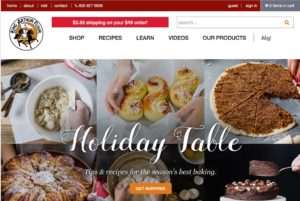
Catering to food fans? King Arthur Flour, a popular site for bakers of all levels to purchase baking products, has made it easy for customers to share recipes, read reviews, shop for ingredients, and link to related videos or blogs. By connecting users with ingredients and products that can be bought right on-site, King Arthur Flour increased its conversion rates from 3.7 percent to almost 6 percent, and search-based revenue from 17 percent to nearly 50 percent.

4. Get real with FAQs. The Frequently Asked Questions (FAQ) page doesn’t have to be dull — it can be a great tool for content marketing. By answering customer questions in a creative way, the FAQ page can help engage your customers, demonstrate knowledge and show your brand’s personality. Customer questions can also fuel ideas for other content, such as a new blog post or a helpful how-to video. Then, when people search for answers, they’ll find even more of your content to help.

REI is one retailer that makes great use of FAQs. The outdoor retailer fields actual questions from its customers and turns them into how-to and advice videos on its “REI Find Out” YouTube channel. The effort positions REI as an authority. When people look online for answers to questions like how to fix a bike flat, REI’s content will pop up in their search.

These four strategies, among others, increase customer engagement, loyalty and, ultimately, sales. To be effective, content-rich sites must ensure shoppers can quickly find relevant content. Be sure that you provide site search that exceeds expectations with an advanced autocomplete function (i.e., makes suggestions as you type) and intuitive navigation. A search box drop-down with thumbnail images, mini descriptions and prices are eye-catching features. After all, your customers may not even know you offer a particular product until you show them.


This article first appeared in Total Retail on January 7, 2017.

Read More

Is Your Site Navigation Optimized for Conversion?

Posted by Amrita Sohal, Sales Director at SLI SystemsFebruary 28, 2017Uncategorized

The opportunities provided by e-commerce are at an all-time high. Technology is evolving, customer behavior is changing, and sales are skyrocketing. In fact, by 2020, e-commerce sales are expected to reach $4 trillion. This growth is prompting companies to ask what they can do to capture a bigger piece of this expanding market.

Website navigation is something that most companies know is important, but far too many don’t spent enough time optimizing it for maximum results. When shoppers arrive and find navigation that isn’t friendly, they click away, often straight into the arms of competitors.

Even small changes can have a serious impact on the bottom line. Here are seven strategies for improving navigation and maximizing conversions.

Draft “A” Players to the Menu

Most navigation menus are created logically based on what companies believe customers will search for without much consideration about the impact of quantity. When it comes to the number of choices available on the menu, less is always better. But why?

Psychological experiments show that a person’s short-term memory holds only a limited number of items. When you pass that limit, you start forgetting items. But what is that perfect number?

There are seven days in a week, seven colors in a rainbow, seven seas and a seven-number limit on what people will remember (it can be plus or minus a couple of items, depending on the individual). So start thinking about your navigation menu as the “A team.” There are a limited number of spots, so reserve those spots for the very best performers.

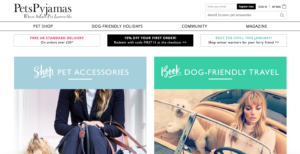
For example, check out PetsPyjamas website. The company has narrowed down its navigation menu to four items.

petspyjamas-navigation

Key takeaway. The navigation menu should contain no more than seven items. Test different items to discover which combination produces the best results.

Order Items with Purpose

When creating the navigation menu, consider what is known as the “serial position effect,” which explains the tendency of people to recall the first and last item on a list. All those items that appear in the middle are generally lost.

For example, the last time you visited the grocery store you may have asked your significant other, “Hey, do you need anything?” He or she then rattled off several items, which you tried to commit to memory. The first few items stuck and the last items stuck — but everything else in the middle was lost. This is the serial position effect in action. But how does it apply to optimizing your navigation?

The answer is simple. Take the two most important items from your navigation list, and place those in the prime spots, which are the first and last navigation positions.

For example, if your most profitable category is shoes, you should list it first on the navigation menu, followed by another highly important category. Contact Us should be placed last. Number each page that will appear on the navigation menu by importance and place as appropriate.

Key takeaway. Ordering your navigation menu intuitively is a good start, but if you want to drive greater results, you need more. The most important items should always go first and last in the lineup.

Use Descriptive Words

Visit any website and you’ll often view general navigation headers such as Products, Services or About Us. These labels get the job done, but if you want to drive greater conversions, you need to get descriptive.

Most customers start by searching something specific, not “products” or “services.” So when you find a way to incorporate the descriptive words that customers search into your navigation headings, it creates optimized results.

For example, perhaps a customer searches for “winter boots” and locates several retail stores that offer that category of product. If you have a navigation category titled “winter boots,” that will help optimize your website and conversions.

If you aren’t sure which terms are being searched, check out the Google Keywords tool, which reveals the keywords that customers are searching to find similar products and services. There are also various analytics tools that will uncover this information.

Key takeaway. If you have a choice between listing “services” or a specific service on the navigation menu, always opt for the latter. Being specific results in a website that is instantly more optimized and relevant to customers.

Break Down Search Barriers

Site search does not get enough credit. Shoppers who use site search are some of your most profitable customers, with order values 11 percent higher than non-searchers’ order values. Evaluate your existing site search and ask, “Could it work better?”

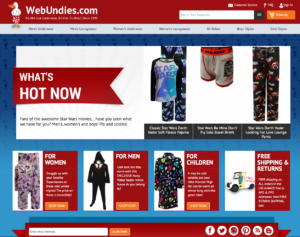
Start by placing the search bar strategically. For example, make your search bar more noticeable by changing the color so it stands out. WebUndies.com created an off-white navigation bar to ensure that users can easily find it.

webundies-navigation

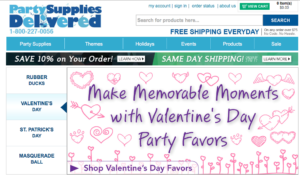
Party Supplies Delivered includes a colored button next to the search feature to make it stand out.

party-supplies-delivered-navigation

You can also place text inside the search bar to encourage visitors to use it. For example, you can include text such as “enter keyword or item number” to get customers started. And finally, it’s always important to ensure that your search functionality works properly and customers don’t turn up empty-handed when searching your products.

Key takeaway. Customers who use search are more likely to purchase. If your website navigation strategy does not optimize search, consider revising it. Shoppers who search are proven to convert and spend more on average. Capture these shoppers and you can quickly improve your bottom line.

Create Strategic Navigation for Different Audiences

In Lewis Carroll’s Alice in Wonderland, Alice says, “Would you tell me, please, which way I ought to go from here?” The Cheshire Cat replies, “Well, that depends a good deal on where you want to get to.” Alice says, “I don’t much care where.” And the Cheshire cat replies, “Well, then it doesn’t much matter which way you go.”

Like Alice, customers need direction. They have a general sense of where they’d like to go, but need companies to illuminate their path and make it easy. Some companies have two or more very different segments they serve. As a result, the content they need to view is distinctly different.

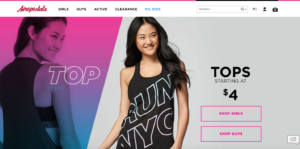
For example, clothing company Aeropostale serves both men and women. They must provide relevant experiences for both audiences, but first and foremost they need to get them headed in the right direction.

The company accomplishes this with a choice on the home page, “Shop Girls” or “Shop Guys”, which helps people navigate in the right direction.

aeropostale-navigation

Key takeaway. If you serve two very different segments, navigation should be optimized to lead each group quickly to the right path. Accomplishing this results in far fewer lost visitors, decreased bounce rates, and higher online conversions.

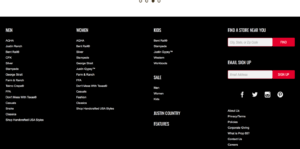
Create Fat Footers

Navigation fatigue is a real thing. To combat it, use all of your website real estate, especially that footer. This is a place where you can provide a bird’s-eye view of the site and allow users to zoom in and find what they need most.

This is also a huge SEO opportunity, because you can include commonly searched words to drive more traffic. Plus, since the footer is neatly tucked away at the bottom of the page, it doesn’t clutter up the user experience.

Justin Boots uses this strategy. The company, which sells high-quality boots for men and women, lists relevant SEO terms with links to their pages at the footer.

justin-boots-navigation

Key takeaway. Include your most important navigation terms in the header of the page, but don’t forget about the footer space. This commonly unused space can provide additional navigation and SEO opportunities.

Monitor Customer Behavior

Reach your customers and generate greater results by understanding their behavior on your website. For example, analytics tools provide insight into a customer’s journey through your website, ranging from where they originated to the various pages they visited.

Tapping into this data can help you understand overarching themes in customer navigation and behavior. For example, you may discover that a large percentage of customers are exiting your website on the same page. Why are bounce rates for this page so high? Could it be an issue with the navigation, or does the content need revising? Make changes and test the results to uncover the problem.

Key takeaway. Understand customer behavior to optimize navigation. These patterns tell a story and allow you to make changes to enhance the customer experience and drive greater impact.

Delight Your Customers

Navigation is about decreasing bounce rates and driving conversions, but at its core it’s about the customer. Strategically optimizing navigation is a time commitment for companies, but to the customer it must always feel simple. Navigation menus, search boxes, and all pieces of the puzzle must work together effortlessly to create experiences that eliminate friction.

Jeff Bezos, founder of Amazon, said, “We see our customers as invited guests to a party, and we are the hosts. It’s our job every day to make every important aspect of the customer experience a little better.” When you start thinking like a host rather than an e-commerce company, you naturally create more delightful experiences — and the conversions quickly follow.

What is SLI Systems?

At SLI, our machine-learning platform offers up the most advanced technology available to accelerate your e-commerce and continuously delight customers at every click. SLI Learning Navigation® builds dynamic navigation based on shopper behavior to guide shoppers to what they want in the fewest amount of clicks.

For more tips, check out our e-book The Big Book of Navigation Tips.

Read More

How to Adapt Your SEO Strategy to Better Support E-Commerce

Posted by Kim Presser, Director of SalesFebruary 18, 2017Uncategorized

seo_cmykasset-22

Adapting your SEO strategy to support your e-commerce site can be a daunting process. This is particularly true for companies that are just beginning to venture into e-commerce. Consistently achieving high rankings on search engines is vitally important to the success of your e-commerce business.

High rankings equal more traffic, which, in turn, results in larger sales and a higher bottom line.  But staying on top of the rapidly shifting algorithms search engines use to rank websites can seem nearly impossible at times. In this article we’ll go over some basic tips that can help your company effectively transition your SEO strategy to better support your e-commerce goals.

Adopting some of these basic guidelines can help ensure that traffic to your site, and consequently sales, don’t dip as search engine algorithms change.

Use a Platform That Integrates SEO

While this tip may be obvious, many companies still attempt to implement effective SEO in-house. Although there are varying degrees of success with this, it is important for many companies seeking to expand their e-commerce site to build their SEO strategy around a flexible platform that incorporates a robust SEO functionality into its framework.

By using a platform to streamline your SEO efforts, you are able to better focus on two other areas of e-commerce that matter: your products and your customers. Platforms that integrate SEO have the inherent advantage of being able to apply seamless changes across the framework of your site to adapt to changing search engine algorithms.

Additionally, a platform that incorporates support for SEO will allow you the flexibility to make quick and effective adjustments to your landing pages and internal linking so that you continually rank high on search engines.

Create Smart Landing Pages

Creating smart landing pages for your products should be an integral part of your SEO strategy.  Your platform should be flexible enough to allow you to create landing pages based on the products that your customers are searching for.

These landing pages will then be crawled and picked up by search engines, resulting in higher rankings and more traffic. Ensure that your landing pages can be created dynamically, so that you can quickly and effectively adapt to both your customer’s changing shopping patterns and changes to search engine algorithms.

Make Your E-Commerce Site Mobile-Friendly

Although ensuring that your site can be accessed easily and quickly from both mobile and desktop devices should be a cornerstone of your e-commerce strategy, many companies fail to account for mobile accessibility in their SEO efforts.

Having responsive pages that load quickly on mobile devices will result in higher rankings on search engine results. When designing or making improvements to your e-commerce site, make sure that each page is optimized for mobile.

Prioritize User Experience

Adapting your site design to enhance user experience should also be a cornerstone of your SEO strategy. Ensure that your site is easily navigable and searchable. Include robust search and autocomplete functionality that will allow your customers to easily find the products they’re looking for.

Also implement intelligent structuring into your site, and verify that search queries end up where they are intended to go. Focus on curating quality content over quantity. Lastly, respond to feedback from customers, whether it be through direct feedback or analysis of usage patterns, to ensure that your site is structured and designed for optimal usability.

Don’t Forget About Security

Utilizing SSL or HTTPS security on your site is a necessity in todays e-commerce world. Not only will your customers feel more secure, but your rankings on search engines will also be positively impacted. Failure to use SSL or HTTPS on your website will result in search engines labelling your site as “not secure,” which will impact both your rankings and the traffic generated to your site.

Ensure that your SEO strategy includes shoring up any security vulnerabilities on your site, and verify that your site is utilizing SSL or HTTPS. Your customers will appreciate it, and your rankings will improve.

For more help improving your SEO strategy to better support e-commerce, watch our webinar How to Get the SEO-Driven Revenue You’re Missing.


Read More

Increase Sales This Easter With E-Commerce Recommendations

Posted by Amy LindseyFebruary 16, 2017Uncategorized

original

As Easter draws near, online retailers around the world should be prepared to maximize every dollar they can from the increase of shoppers they’ll have over the holiday.

In 2016, more than 8 in 10 Americans celebrated Easter, according to an NRF survey. Those who celebrated spent an average of $146 per person on planned Easter purchases—a 3.8 increase over the previous years’ spending.

In some locales, Easter is a much larger shopping holiday than it is in the U.S. In the UK last year, planned Easter purchases rose 4.3 percent, when compared to sales in April 2015. Easter shoppers in the UK spend more since the UK declares the Friday before Easter Sunday and the Monday after, bank holidays. Also over Easter, schools in the UK close for two weeks, prompting many families to increase spending not only on traditional Easter goods, but also on travel, sporting goods and DIY projects.

Online retailers whose markets cover areas where Easter celebrations are pronounced can benefit from taking proactive steps to prepare their e-commerce strategy for an influx of customers in the coming months. Here’s what e-commerce companies need to know.

Industries That Should Be Prepared for Easter Shoppers

While all e-commerce retailers will do well to prepare for Easter shoppers this year, it’s more critical in some industries than others. Apparel, sporting goods, travel and home improvement retailers should be prepared for larger-than-average sales numbers this Easter season, as should retailers selling movies, books and magazines.

Personalization: The Key to a Successful E-Commerce Presence

Today, customers shopping online have more opportunities than they could ever hope to redeem. Thousands of online merchants provide products that are similar to or duplicates of one another, and it’s harder than it’s ever been to get noticed online.

Fortunately, e-commerce merchants still have one secret weapon: personalization.

In a world where the possibilities are limitless and customers can have anything they want, whenever they want it, personalization can serve as the added “boost” that helps differentiate one company from another.

Personalize Your Shopping Experience with Smart Recommendations

Today, there are dozens of different solutions for e-commerce retailers who want to make the shopping experience more personal for customers. Tools designed to “learn” from customer behavior and make recommendations based upon it are a great place to start. In addition to providing a more personalized shopping experience, these tools can also do the following things:

  • Boost E-Commerce Sales. Tools that learn from customer behavior can take a great deal of the guesswork out of your merchandising strategies. By automatically adapting to your customers, they make it easier for your company to cycle products according to customer desire, which allows for more (and simpler) e-commerce sales.
  • Create Cross-Sell & Upsell Opportunities. Companies that already have customers on their website over the Easter holiday want to do everything in their power to enhance the order value of each shopper. The right recommendations can provide compelling cross-sell and upsell opportunities. When this is done efficiently, it can help boost a company’s bottom line.
  • Provide Tailored Recommendations. When a tool can learn from a customer’s shopping and browsing behavior, it can display products that are likely to appeal to a given customer. This makes the shopper feel understood by your company, and will lead to repeat sales.

Better Easter Sales Start Here

While many merchants struggle to prepare their sites for sales booms over the Easter holiday, machine learning, cloud-based tools are the perfect place to turn.

Recommendations that are powered by cloud-based machine learning reduce site managers’ legwork and make it easier for companies to deliver a highly personalized, targeted shopping experience to each and every customer, naturally leading to happier shoppers and higher Easter sales.

To learn how you can maximize average order values on a cloud-based, machine learning platform, read the SLI Systems Learning Recommendations™ product brief.

Read More

Why Autocomplete is Essential to Site Search

Posted by Katherine Belshae, Sales Director at SLI SystemsFebruary 11, 2017Uncategorized

In today’s e-commerce environment, using a robust site search system with autocomplete has been recognized as one of the key steps in generating higher revenue. Shoppers that use site search have higher average order values and higher revenue per visit than shoppers that simply browse.

Additionally, shoppers that search for items are more likely to be converted from browsers to buyers, and less likely to move on to other vendors. While site search functionality can be found on nearly every e-commerce site today, many sites fail to capitalize on the power of search because they don’t incorporate a powerful autocomplete feature in their search design.

First, let’s cover some of the top reasons why autocomplete is essential for site search functionality, particularly in the changing e-commerce landscape of 2017. Finally, I’ll discuss how autocomplete can be enhanced to provide a rich shopping experience that leads to even higher conversions.

More Mobile Shoppers Than Ever Before

For the first time ever, more people are shopping from mobile over desktop devices. This trend is expected to continue throughout 2017 and beyond. Autocomplete is essential for catering to mobile shoppers on your site. Many shoppers on mobile devices expect a powerful autocomplete function so that they can easily navigate between different products.

Shoppers desire the convenience of not having to type out complete product names or descriptions on a small screen keyboard. Accommodating this will result in higher revenue per visit and greater customer retention.

Seamless Desktop to Mobile Shopping Experience

Autocomplete functionality for both desktop and mobile devices allows you to deliver a consistent shopping experience across all devices. Users on mobile devices have begun to expect a similar shopping experience regardless of the device they access your site through, and it is up to you to deliver on this expectation.

Autocomplete assures desktop and mobile users that they can quickly access whatever product they are searching for without having to deal with lengthy search terms or search filtering options that may be unwieldy on mobile devices.

Easier Site Navigation

Intelligent site design, with a focus on simple navigation, has always been crucial to shaping a satisfactory online shopping experience. Incorporating autocomplete into your site’s search tool is an essential aspect of overall site design. Although smart site layout, menu options, and filtering tools are important aspects of ensuring shoppers can find the products they desire, autocomplete adds another dimension to these tools.

Autocomplete enables your customers to quickly and easily find the products they are looking for, without having to scroll through pages of similar products first. If customers are confident they can find products quickly and efficiently, they are more likely to be converted from one-time shoppers to repeat customers.

 A Richer Autocomplete Experience

The benefits of autocomplete are not limited to quick and easy navigation, however. While this is the core function of autocomplete, it can also be configured to learn from shopper’s behavior and offer dynamic product recommendations based on a customer’s shopping and purchasing history.

This will allow shoppers to quickly access products they repeatedly purchase, or products similar to those they have already searched for. Additionally, if a shopper is using more general search terms, autocomplete can offer category recommendations by brand, product type, or department level – allowing shoppers to quickly navigate to the level they want to browse.

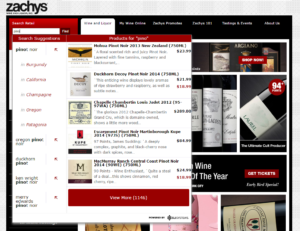
Zachy’s Wine and Liquor capitalizes on the converting power of autocomplete by enhancing their standard functionality with search suggestions based on user behavior, made visually appealing with product images and short product descriptions.

By combining intelligent recommendations and product images into its autocomplete feature, Zachy’s increased conversion rate by 10x for shoppers using site search, and average order values by 2x for those same shoppers.

zachys

These aspects of predictive autocomplete create a more customized shopping experience for your customers, and can result in higher revenue per transaction through recommendations. Leveraging a rich autocomplete platform on your site is crucial to generating greater revenue online. Autocomplete allows you to easily offer a more customized shopping experience for nearly every site visitor.

Autocomplete is an essential tool for catering to mobile shoppers by giving them the tools they need to quickly and conveniently navigate through your site to the products they want.  Autocomplete also allows you to cater to both desktop and mobile shoppers – giving shoppers the seamless shopping experience they desire regardless of the device they are using.

To learn more about autocomplete and how to improve the search functionality on your site, take a peak at our e-book The Quick Guide to Better Site Search.


Read More

5 Personalization Tactics to Leverage in Your E-commerce Strategy

Posted by Amrita Sohal, Sales Director at SLI SystemsFebruary 2, 2017Uncategorized

personalization

Travel back a century, and personalized experiences weren’t the exception but rather the norm. When you entered a department store, the clerk would know your name, remember recent purchases and make personalized shopping recommendations.

A few items from the most recent store shipment may have even been held for you because the clerk truly understood your preferences. Fast-forward several decades, and brands today are creating these same experiences — but they’re doing it much differently.

Retail e-commerce sales are forecasted to reach almost $1.92 trillion this year, with double-digit growth expected through 2020. At the heart of this growth are personalized experiences. Gartner predicts that by 2018, B2B companies with effective personalization strategies will outsell their competitors by 30 percent.

But where should you start? Here are five personalization tactics to leverage in your e-commerce strategy.

Personalizing Email: Going Beyond First and Last Name

People frequently receive emails from retailers that include first and last name personalization. But think about it. After reading these emails, do people really feel a personal connection with the brand? Probably not. This “first and last name” tactic was the earliest form of personalization, but marketers today are taking this one step further to achieve excellent results.

A study by Experian revealed that personalized email promotions resulted in a 29 percent open rate and a 41 percent click-thru rate when compared to emails that do not have personalization.

But it’s important to note that customers aren’t just reading and opening these emails at higher rates. They are also making purchases. In fact, 41 percent of customers report purchasing more from retailers that send them personalized emails. But where should you start?

If you want to optimize your email campaigns to drive greater open rates, click-through rates, and sales, consider segmenting your customers into carefully selected categories so that each individual receives more relevant emails.

Start by examining the behavior of each customer. For example, you could evaluate how frequently customers have purchased in the past and segment them into three different categories – one-time buyers, three-time buyers, and buyers who are no longer engaged.

Once you have these segments, you can create messaging designed to resonate with each group based on that group’s levels of engagement. This means that emails sent to frequent purchasers will be much different than emails sent to those with low engagement levels. For example, you may choose to send the disengaged customers a “we miss you” email with a special offer or other incentives to shop again.

Implementing triggers is another great way to reach and engage with customers on a more personal level. Begin by carefully tracking the behavior of customers on your website. You can set up triggers that will send off emails based on this behavior. For example, let’s say that a customer abandons her shopping cart. Within seconds, she could receive an email focused on reengagement that includes a discount if she purchases within the next 24 hours. drives her to make a purchase (more on that in a minute).

Key takeaway. Use data about your customers’ behavior to drive personalization efforts. Segment groups of customers with the same behavior to create targeted, personalized campaigns, such as email campaigns to reengage shoppers and drive sales.

Webpages: Add Relevancy to Your Pages

Most companies have a standard website that greets all customers. Maybe you’ve even evaluated the performance of your website through A/B testing. But your home page could be converting an even larger number of visitors with some simple tactics in personalization.

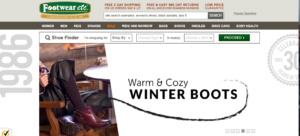
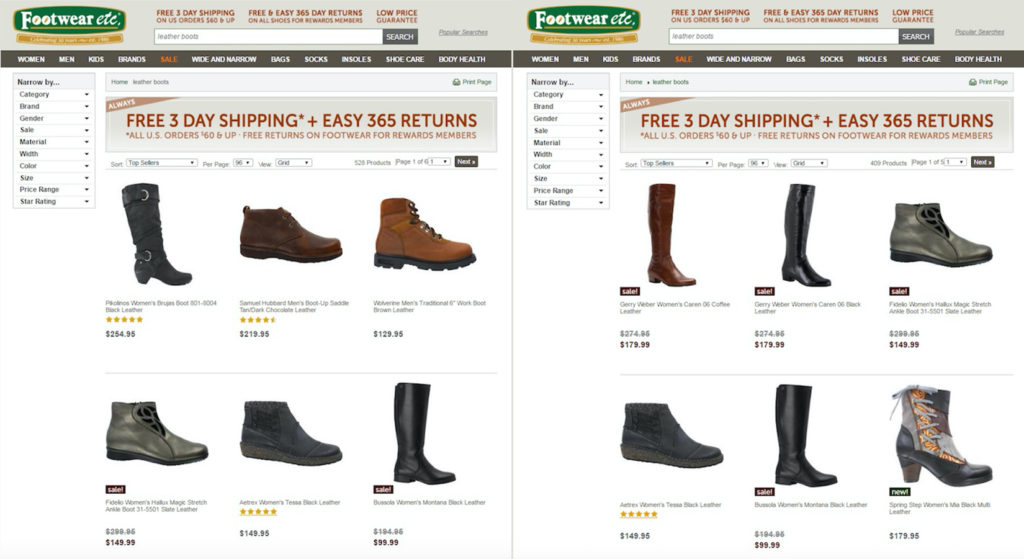
Footwear etc. was able to leverage past customer data to display personalized products on its home page in real time. While this may seem like a small change, they saw a 10% increase in revenue per visitor as well as a 5% increase in conversion rate and average order value (AOV).

footwear

Key takeaway: Get customers to the products they want faster by delivering personalized experiences in real time.

Ramp Up Relevancy with Real-Time Offers

Real-time personalization is one of the most innovative strategies for e-commerce companies to deploy. This technology creates a highly personalized experience for every visitor. But how does it work?

Real-time data is collected from visitors on your website through cookies and other tools. Logic rules match the visitors’ data and segment them into groups. For example, you may show a targeted pop-up to a visitor who arrives from a certain website. Here are a few more methods used to create real-time offers and experiences.

  • Past content: Some companies are capturing details about content the customer has viewed in the past. In fact, 48 percent of marketers use this type of data to create real-time offers.
  • Geographic location: Forty-five percent of companies use location to create contextually relevant offers.
  • Time on site: Thirty-six percent of companies use this type of data to create relevant offers.
  • Site navigational behavior: Thirty-five percent use data about how a customer is navigating the site to provide relevant offers.

The payoffs for personalizing content in real time are large, with nearly three-quarters of companies citing increased visitor engagement as a main benefit and 54 percent saying it improved the customer experience.

When you collect information about each customer on an individual level, a higher level of personalization is available. For example, from where did they enter your site, and how many times have they visited your site? If the customer is a repeat customer, you could send a coupon to his or her mobile device to increase loyalty and close the deal.

Key takeaway. Ask customers to buy lunch right after they’ve eaten — and they won’t buy. They aren’t hungry. But target the customers as they’re walking into the food court at a mall — and now you’ve hit the sweet spot. Achieving the highest level of personalization is all about timing. When you tap into this timing element, sales will drastically improve.

Serving Up Recommendations Like a Friend

If you’re shopping with a friend at an electronics store, he or she might call out, “Hey, didn’t you say you needed batteries? AAA batteries are down this aisle.” Providing personalized recommendations is all about acting like that friend. First and foremost, it’s about being helpful. Once you accomplish that, along with understanding what that “friend” needs most, sales will naturally follow.

Personalized recommendations are welcomed by your customers, and some even look for them on your website. In fact, 77 percent of shoppers say they find recommendations extremely useful, and nearly one-third of customers report having purchased products based on recommendations the company has shown during the sales process. Here are a few tips for creating these types of personalized experiences for your customers.

  • Target customers based on pages visited. Harnessing data from pages that customers have visited allows you to include specific product recommendations based on interests. For example, you can provide suggestions with terms such as “people also viewed” or “people also bought.”
  • Review previously purchased items. The items that your customers have purchased in the past may tell a story about their future needs. For example, perhaps they purchased a printer or a water purifier—something that needs refills frequently. Based on this history, you can display relevant replacement items at the precise moment of relevance.
  • Serve up location-relevant content. For example, let’s say that you’re walking toward a coffee store. As you get closer, your mobile phone delivers a message and provides a coupon. As a result, you enter the store, use your coupon — and the store derives higher revenue.

Key takeaway. Personalization is about becoming your customer’s trusted adviser and friend. If you consistently serve up relevant recommendations, the customers will begin to listen more intently. As a result, customer relationships will become much stronger.

Personalization on Devices

Mobile accounts for one out of every six dollars spent online. Plus, 40 percent of consumers say they purchase more from retailers that personalize their shopping experience across all channels. As a result, when you are thinking about personalization, it’s critical to address mobile devices.

Customers expect the same shopping experience across all platforms, whether they’re interacting through your website, social media — or a mobile device. Plus, it’s important to note that over half of all searches take place on mobile devices. Real-time personalization, as discussed above, helps you push out relevant offers through the devices your customers are using in the moment.

For example, Apple uses this strategy by integrating the mobile experience with physical store locations. Upon entering the store, customers are greeted by Apple on their mobile devices and shown relevant details about products as they move through the store. Unifying all channels helps create the personalized experiences that customers today demand.

Key takeaway. Personalization can no longer happen through just one channel. It’s about creating consistent and relevant experiences across direct mail, email, desktop, mobile, and any other channel where you can reach your customers.

Personalization: Moving Forward with Greater Impact

Jeff Bezos, Founder of Amazon, said, “A company shouldn’t get addicted to being shiny, because shiny doesn’t last.” Personalization isn’t new; marketers have used it for years. The depth at which personalization is achieved, however, is rapidly changing.

Focus first and foremost on the customer. When everything is viewed through the lens of the customer, you instantly become that “trusted advisor,” and results will naturally follow. Using personalization, you create those unexpected moments of serendipity when authenticity is felt and true loyalty is achieved.

Personalization at SLI

At SLI, our machine-learning platform offers the most advanced technology available to accelerate your e-commerce and continuously delight customers at every click. SLI Enhanced Search Personalization™ instantly and dynamically personalizes the shopping experience for both your first-time visitors and loyal customers in real time.

For more tips, check out our webinar Predict More Sales with Personalization.

Read More

6 E-commerce Trends to Capitalize on in 2017

Posted by Chris Brennan, Chief Executive OfficerJanuary 19, 2017Uncategorized

Shopping online concepts

Consumers increasingly expect greater ease and personalized experiences from their online interactions. Online retailers are faced with new challenges for engaging with, and adapting to, the demands and expectations of their customer base. Below, I’ve outlined six of the most important e-commerce trends that should be on your radar as you plan your strategy for 2017.

Incorporate these market shifts into your business model to stay on the forefront of the industry and lay the groundwork for future growth. You’ll provide a top-notch online shopping experience that keeps customers coming back for more.

Real-Time Analytics

Online retailers have access to unprecedented amounts of data on their customers. The challenge is not in the gathering, but in how to filter and translate data in real time into usable and actionable insights. Delays between collection and action can be costly.

In 2017, closing this gap will be critical for the success of online retailers. Those who measure in real time can act in real time to optimize their performance. Integrate a robust analytics platform to capture real-time performance, gain immediate insights, and compare them against your goals or KPIs. Your customers will be delighted with their instantly customized shopping experience.

Equal Expectations from Desktop and Mobile

Of all e-commerce trends, probably the most notable is the continued move to mobile. Mobile accounts for over half of all e-commerce traffic. No online retailer can afford to ignore it. Online shoppers in 2017 want a responsive, streamlined experience from mobile and desktop alike.

Consumers will fully expect every functionality and customization they encounter on their desktops when they shop on their mobile devices. Live-chat services, relevant product recommendations, intelligent auto-complete searches, and smart filtering options will all be necessary if you want to expand and retain your mobile consumer base and keep them coming back for more no matter how they choose to shop.

Personalized Shopping Experiences

Smart retailers realize that the same search term doesn’t mean the same thing to every customer. In 2017, both repeat customers and first-time customers will expect a bespoke experience whether they are searching, navigating or being presented with recommendations. Retailers who tap into the power of machine learning to create contextual personalization across their sites will win higher conversions.

To capitalize on this trend, integrate responsive software that learns from customer behavior to present custom-tailored search and navigation results and intelligent predictive product recommendations.

In addition, expand product recommendations beyond the scope of your site. Integrate them into emails, social-media and web banners to enable broad customer engagement in all corners of the Internet.

Artificial Intelligence (A.I.)

AI is already changing the online retail playing field through predictive search, personalized recommendations, the use of digital shopping assistants and visual product discovery, which allows users to take pictures of items they like, conduct a visual search for the item online, and get personalized recommendations.

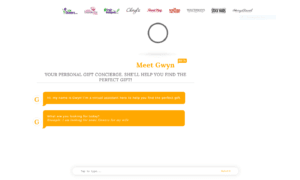
Consider how 1-800-Flowers is using AI to power their GWYN (Gifts When You Need) service. Acting like the shopper’s own personal assistant, GWYN asks the shopper a series of questions in order to learn and predict the product that would be most appropriate. If a user types “I’m looking for a gift for my mother,” GWYN will use natural language processing abilities to interpret the search phrase, ask qualifying questions about the occasion, and make smart product recommendations.

With intelligent machine engines running behind the scenes, retailers will be able to deliver to their customers the highest degree of adaptive personalization possible, helping them feel increasingly understood, catered to, and apt to buy. Retailers who ignore this fast-moving trend will be left playing catch up.

Same-Day Shipping & Free Returns

Flexible delivery and return options will be required of online retailers in 2017 and beyond. Services like Amazon Prime’s free two-day and expanded same-day shipping options have shifted customer expectations toward rapid, cheap, or free shipping. Retailers need to be ready to meet these expectations in order to expand and retain their customer base.

Customers also want a painless returns system. Free returns mitigate the risk of online shopping and encourage customer loyalty. Online retailers such as Zappos have been offering free returns with no questions asked, and consumers have begun to expect that service on other sites.

Customer Engagement: Focus on Social Media

Providing seamless customer service across social media platforms will continue to be a big trend in e-commerce. Retailers who engage with customers on diverse social media platforms enhance the user experience, and give their customer multiple venues through which they can directly speak with customer service representatives.

The delocalization of customer service will allow retailers to reach their customer base across a broad network of platforms. At the same time, responsive customer service across social networks helps convert one-time purchasers into return shoppers. Not to mention the fact that this type of customer service drives increased traffic to your site by demonstrating to first-time shoppers that their questions won’t fall through the cracks.

These six e-commerce trends for 2017 demonstrate the need for online retailers to accurately predict their consumers’ needs, while expanding the base with which they engage with customers and potential customers alike. Capitalizing on these trends will require online retailers to expand their e-commerce deployment to include robust systems that offer real-time analytics, intelligent predictive product placement, and a customized user experience, regardless of whether consumers are on a desktop or mobile platform.

To learn how to capitalize on e-commerce trends with predictive search, download this e-book: The Big Book of Site Search Tips.

Read More

How to Win Over Mobile Shoppers in 2017

Posted by Kim Presser, Director of SalesJanuary 13, 2017Uncategorized

There are very few technologies that have impacted commerce as deeply as mobile. In fact, the adoption rate of mobile is twice that of the Internet, three times the rate of social media, and 10 times the rate of PCs.

In 2011, mobile commerce made up only 11.6 percent of the total $303 billion in U.S. e-commerce business. However, this percentage is forecasted to reach 45 percent by 2020. Trends clearly illustrate that mobile commerce is at the forefront of some amazing growth, so how can companies more effectively win over more mobile shoppers in the coming year?

Many customers rely on mobile to shop, but not all customers are having a great experience. Identify the trouble spots, deploy strategies to fix those areas, and serve up experiences that delight customers – and you will create unshakable customer loyalty. But where should you start? Here are some common problem areas to target.

Payment: Create Trust and Simplicity

One of the top reasons that mobile shoppers abandon their carts is concern over payment security. In fact, a survey conducted by eConsultancy discovered that 58 percent of respondents left the checkout page due to concerns about security.

As a customer, when you shop major retailers such as Amazon.com, you already have a relationship established, and your payment details are safely stored online. When shopping with a new retailer, however, you may wonder if your payment is truly safe.

As a retailer, you will capture more shoppers and sales by handling this objection upfront. Start by offering a variety of payment options, including some that are alternative forms of payment, such as PayPal, ApplePay, or Google Wallet.

Forty-three percent of commerce companies already offer these payment alternatives. Using them allows customers to complete the transaction on your site, but payment details are handled through the customer’s favorite alternative payment provider, which offers the shopper additional peace of mind. Here are a few tips to simplify the mobile shopping experience and capture more sales:

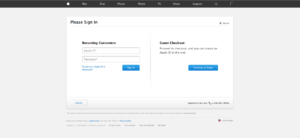
  • Don’t require account sign-up. Mobile users complete transactions on the go. They are waiting for coffee, riding the train to work, or waiting at the airport. They don’t always have time to create an account. So let users decide whether they want to create an account or “check out as a guest.” Check out this example from Apple, which provides customers with both options:

apple-screen-shot

  • Require the fewest steps possible to check out. Look at your existing form. Does it include anything that is unnecessary or that could be streamlined? When it comes to checkout, the fewer steps, the better. Sometimes this involves deleting steps entirely or consolidating steps to provide fewer screens overall. Carefully securitize everything that you require, and ask, “Do we truly need to ask customers for this information?”
  • Anticipate customers’ questions. What types of questions does the customer service team commonly receive about the mobile ordering process? Capture this data. Then use it to create a more seamless and intuitive experience for customers.
  • Make payment errors easy to fix. Did the user forget to enter something or miss a few digits? If so, make correcting those errors fast and easy. Eliminate potential frustration by ensuring that the customer does not need to re-enter data.
  • Ask for only essential information. Customers already feel uneasy about providing payment information to a new retailer. In fact, 11 percent of U.S. adults abandon an online purchase because the site requests too much information, so ask for only the bare minimum.

Key takeaway: Mobile customers move at a much faster pace than desktop users. As a result, commerce companies must continually work to match the rapidly changing needs of these customers. They must continually ask, “How can we simplify the shopping process for the customer?” and “How can we require less from people to complete their transactions?” Asking these questions often enough will help remove potential roadblocks between you and the sale.

Create a Seamless Design

First, it’s important to understand which pages mobile visitors use the most (more on this in a minute). Don’t rely on assumptions, because understanding which pages they use most is one of the most powerful ways to improve the customer experience and capture more sales.  

Once you collect this data, apply the insights directly to the navigation menu. For example, if users visit pages X, Y and Z most frequently, those pages should be the easiest to locate from the home page. Here are a few tips for prioritizing navigation:

  • Identify exactly which pages mobile viewers use the most.
  • Group these pages by commonalities. If you sell cloud services, for instance, group the most commonly viewed pages related to the cloud in a single category.
  • Place the categories (which are driven by the most commonly visited pages) on your mobile navigation menu.

As with any strategy, you’ll want to revisit navigation frequently. The pages that are most popular today may change 12 months from now, and if they do, navigation should be adjusted as well.

When you make a change, measure the results. Are visitors staying on the site longer, and are more of these visitors converting to sales? Understanding this information will assist with driving greater success. Here are a few more tips:

  • Delete large graphics and photos to cut back on the time it takes for mobile pages to load.
  • Increase the size of call-to-action buttons so they are easier to tap.
  • Evaluate existing text. All text should be as concise as possible.

Key takeaway: Provide a great mobile commerce experience with strategies that are fluid. The needs of mobile users change fast, so when you implement a change, measure it. Then continue to track progress and be willing to quickly adapt if those changes shift in the future.

Focus on Speed and Performance

Mobile users expect a fast online experience. Check out these statistics:

  • Forty-seven percent of consumers expect a web page to load in two seconds or faster.
  • Pages that don’t load fast enough are abandoned. In fact, 40 percent of people abandon a website that takes more than three seconds to load.
  • A one-second delay in page-loading time results in a 7 percent reduction in conversions.

These statistics highlight why the mobile commerce experience needs to be fast. But also consider this: 70 percent of mobile searches lead to action within a single hour. So if pages don’t load quickly enough, the impact on revenue could be significant.  

For example, if your e-commerce site earns an average of $50,000 each day, but a technical issue results in pages that load one second slower, your company could lose over $1.2 million each year – all because of a one-second delay in loading time. So what can you do to speed up performance?

Part of the answer is design. For example, removing clunky graphics that take too long to load is a good start. But often the problem is the actual technology that delivers the mobile experience. Test your site and set a timer. How long are pages taking to load? If there’s a problem, dive into the potential causes to get it resolved quickly.

Key takeaway: The key to capturing and converting more mobile customers is speed. Pages must load fast. What strategies can you use to help pages load more quickly? Generate and deploy these strategies to maximize results in 2017.

Leverage Location-Based Services

Location-based services help shoppers use mobile devices as they shop at brick-and-mortar retailers. This typically works by delivering targeted data to the user’s mobile device when the device travels into a location with an enabled app.

Apple introduced “iBeacons” to its retail locations in recent years. When customers enter the store, they are greeted via their mobile device. The mobile devices then show visitors relevant product information and related promotions as they walk through the store. Visitors even have the ability to pay without getting into a traditional line.

Macy’s recently tried this mobile technology as well. This video shows how it works:

As the customer enters the store, the beacon technology reminds her to open the appropriate mobile application. As she moves through the store, it provides information about specific offers and deals based on the customer’s movements. The device also helps track any products the customer likes and may want to purchase in the future.

Key takeaway: One major advantage of mobile commerce is that companies can finally understand customers in context. Timing is everything, especially when customers are busy and using mobile devices. Location-based technology helps commerce companies get the timing right.

Understand Mobile Customers Better Through Analytics

Mobile analytics is the key to truly understanding your customers, providing insight into such customer behavior as total visits, usage, location, types of devices being used, and any errors that are interrupting the mobile experience. But using analytics starts with asking the right questions. Here are a few suggestions:

  • What trends are evident in this segment of mobile commerce customers?
  • What pages and features do mobile customers engage with the most?
  • What are customers doing (or not doing) through mobile?
  • What actions would you like customers to take through mobile? And how can you change the experience to influence those behaviors?
  • Are there ways that you can provide more personalized messages or experiences?
  • What role could geolocation play in creating better and more engaging mobile commerce experiences?

Once you start asking these questions, you can truly understand existing customer behavior and tailor the mobile experience to better fit customer demands and needs.

Key takeaway: Commerce companies have no shortage of data. But mobile analytics is about taking that data and turning it into actionable insights to elevate the customer experience.

Deliver More Relevant Search Results

When customers arrive at your site through mobile, they are likely searching for something specific. Search plays a critical role in converting these customers into buyers. If they come up empty-handed after searching, revenue takes a hit.

Examine your existing platform and look for errors in search capabilities. What happens when you search for a specific product by name and product number? Does it come up? What happens if you use a different name, such as “blow dryer” instead of “hair dryer”? Or, equally important, what happens when you misspell the product? Can customers still find what they want, or do they hit a dead end?

Key takeaway: Mobile search must be just as good, if not better, than searching on a desktop. With the growth of mobile commerce, increasing numbers of customers are doing searches through mobile. Seek out potential flaws, and develop strategies to fix them.

At the end of the day, it’s all about the customer. How can you provide a mobile commerce experience that won’t disappoint the customer and won’t just make them happy, but will truly delight them? Identify critical weak spots, such as the ones listed above, and create strategies to proactively resolve any issues.

Bounce rates will decrease, more shoppers will convert and your number of repeat customers will increase. It all starts with faster, more authentic and more engaging mobile commerce experiences.

To learn more about creating a seamless mobile experience, download our e-book Site Search and the Mobile Experience.

Read More

Can We Guess Your E-Commerce Conversion Rate? [QUIZ]

Posted by Amy LindseyJanuary 11, 2017Uncategorized

When you measure the success of your e-commerce site, one KPI stands out above the rest: conversion rate. Conversion rate is the percentage of your site visitors who take some sort of desired action, such as make a purchase.

Your e-commerce conversion rate depends on a variety of factors, including whether your site:

  • Is optimized for mobile
  • Uses advanced site search
  • Offers product recommendations
  • Has a quick and easy checkout process

…among others.

Are you doing everything you can to maximize your conversion rate through an unforgettable online shopping experience? Take this short quiz, and let us take a guess!

Read More

Key E-commerce Mistakes That Could Be Hurting Your Bottom Line

Posted by Katherine Belshae, Sales Director at SLI SystemsJanuary 10, 2017Uncategorized

mistakes-to-avoidNavigating the E-commerce landscape can be daunting for businesses that have been stuck in the brick-and-mortar mentality. But it doesn’t have to be. Below are a few key mistakes online businesses make that may be affecting their bottom line. Correcting these mistakes will result in a more streamlined e-commerce site, and an expanded, engaged, and more loyal online customer base.

Not Optimizing Your Site for Mobile

With over half of online shopping being conducted on mobile devices, it is imperative that your e-commerce website is optimized for mobile. Doing so requires software that has excellent support for both desktop and mobile shoppers. When you choose an e-commerce software provider, pay particular attention to how customizable the shopping experience can be.

Customers want a shopping experience that is tailored to them, regardless of which platform they use to access your content. Ensure that the transition between desktop and mobile is seamless, so that both first-time and returning customers can use the most convenient option for them.

Ignoring Your Analytics

One of the biggest differences between traditional shopping and online shopping is the sheer amount of data that can be collected about your online customers. Use this incredibly powerful tool to your advantage. Invest in deep analytics software that utilizes metrics to highlight key performance indicators. This will allow you to generate more actionable insights that can drive change within your organization.

Ensure your analytics software can provide real-time analysis of the data that you need most, and has the ability to filter it down into a usable and intuitive format. Real-time analytics can help take your e-commerce business to new levels when it comes to customer service and engagement, as well as give you greater depth and breadth of knowledge about your customers.

Using Manually Produced Product Recommendations

In the past, online retailers used staff to manually merchandise their product recommendations, but this is no longer the most efficient or accurate way to recommend products. Instead, implement machine-driven, intelligent, product recommendation software to automate your recommendations strategy.

One of the primary benefits of this approach is that it provides more accurate product recommendations based on customer search history or product views. In these cases, more accurate recommendations lead to more sales.

Additionally, machine-driven recommendation software works more quickly and efficiently than manual merchandising. This can free up costly manpower to work on other forms of customer engagement, while providing a more tailored and relevant shopping experience for your customers.

Not Taking Advantage of Social Media

The myriad of connections between social media and online shopping shouldn’t be ignored or downplayed by your organization. Leverage a robust and far-reaching social media presence to engage with your customer-base across a variety of platforms.

Responding to customer reviews, offering product recommendations, and responding to customer questions or concerns on social media platforms will help you provide a superior level of customer service.

This, in turn, will encourage new customers to navigate to your site. In addition, a strong social media presence transitions a higher percentage of customers from one-time shoppers to returning customers. Social media should also be leveraged as part of your overall merchandising plan to disseminate information about promotions or new products.

Using social media to stay in contact with your customer base can create a better customer experience where consumers feel engaged and important, while also giving you multiple avenues to provide proactive customer service.

Ignoring SEO

Good SEO ensures shoppers can find your site without slogging through pages of search engine results. Develop a comprehensive SEO plan to guarantee your site will consistently rank high in search results.

In the past, this was done primarily through targeting specific keywords. However, search engine algorithms have become more sophisticated over time. Adapting to complex search engine algorithms will require you to use a broad approach to SEO.

The most efficient way to maximize your SEO footprint is to adopt SEO optimization software. You’ll free up time for other projects and automate your rankings for relevant keywords. Make sure to use an SEO solution that is flexible enough to adapt over time to changes in search engine algorithms. Doing so will allow you to stay ahead of the curve every step of the way.


To learn more about creating an online experience that can rival the in-store experience, watch our webinar Merchandising Matters: Mimic the In-Store Experience.

Read More

Desktop vs. Mobile Shoppers: How to Cater Your Shopping Experience to Both

Posted by Murray Brook, Senior Sales DirectorJanuary 6, 2017Uncategorized

mobile-desktop-shoppingTailoring a seamless shopping experience for both desktop and mobile users is crucial to the success of online retailers today. Currently, over half of e-commerce sales are being conducted on mobile devices, and this number is projected to increase in the coming years.

Ensure that your mobile customers have the same personalized shopping experience as desktop users so that you can tap into this market more effectively. Below are some tips that will allow you to cater your shopping experience to both mobile and desktop users, allowing you to provide top quality service on both platforms.

Utilize a Flexible Platform

The software platform you deploy should incorporate support for both mobile and desktop shopping experiences. Whether you generate more sales from one group or the other, having a platform that includes a robust set of tools for both mobile and desktop will allow your customers to have a seamless shopping experience between the two.

Both systems should utilize intelligent predictive search. This is particularly true in mobile applications, where users typically don’t want to spend the time typing an entire search query. Additionally, the platform should incorporate smart product recommendations for both mobile and desktop users, allowing them to more easily navigate to products they may be looking for.

Ultimately, this will increase the size of your transactions and your bottom line. Be wary of using two completely different software systems for mobile and desktop. Customers want a consistent shopping experience when they navigate to your site on a mobile device, not a surprise.

Keep Navigation Simple

Your site’s navigation should be simple and intuitive. While this tenet has a long track record of success when it comes to desktop sites, user-friendly navigation on mobile has experienced slower implementation. Mobile users should have access to collapsible menu buttons that allow them to quickly navigate between different areas of your site.

Mobile e-commerce sites also benefit greatly from easy-to-use and intuitive filtering options. Collapsible and easily understandable filters help your mobile users avoid scrolling through pages of items they aren’t interested in.

Lastly, mobile shoppers operate on a number of different devices with independent needs. Ensure your software will allow users with smaller screens or slower loading times to access your content in a responsive and easily navigable manner.

Continuous Support is Required, Not Optional

The rate at which both desktop and mobile shopping patterns change over time demands using a system that has continued support. This will allow you to continue to fine-tune the experience for your users, regardless of how they access your content.

And it is important to remember that mobile shopping behavior is always evolving based on new mobile technologies. Features that you may not use now might prove crucial by next year. Make sure you have the support you need to continue to customize the shopping experience for both users. This will allow you to stay competitive, while increasing customer return and retention.

Rely on Real-Time Analytics

Utilize real-time analytics software to track how customers are using your site. This information will allow you to tailor their shopping experience quickly and efficiently. Ensure you are using software that has a robust set of analytics metrics, so that you are armed with the information you need to gain insights into shopping patterns.

Also, use analytics software that provides the data you need in real-time, so that you can act on information that is current rather than outdated. By doing so, you will be able to quickly respond to changes in customer patterns, as well as customize user experiences for both mobile and desktop users.

Incorporate a Variety of Payment Methods

While desktop shoppers may be happy to type in their credit card information to complete a transaction, mobile shoppers often prefer a more streamlined approach to the check-out process. Ensure that your system has a variety of payment options for users, including support for mobile wallets such as Apple Pay, Android Pay, and Paypal. These systems offer the flexibility for mobile users to pay how they would like, even if they don’t happen to have their card on them.

For more tips on creating a seamless mobile shopping experience for your customers, download our e-book Site Search and the Mobile Experience.

Read More

The Race to Retail Relevancy: Discover why it’s not what you sell, it’s how you sell it

Posted by SLI SystemsDecember 23, 2016Uncategorized

Whether you realise it or not, you are in constant competition to win the attention of your consumers. You’re competing against every single communication an individual on your list receives – every day. While your customers may engage with your brand on a regular basis, their loyalties don’t just lie with you. The most recent report dotmailer sponsored from the DMA reveals that 30% of respondents claim to receive more than 40 marketing emails per week. If the reality is anything like this volume, those getting heard will be performing beyond the norm. And they are your competition.

Email is still the preferred channel for marketers and consumers alike. But with 84% of consumers finding less than half of the emails they receive to be relevant, you need to be doing more to add value to your communications.[1] As humans, if we’re privy to irrelevant conversation, we tend to switch off quickly. It’s no different in the inbox. The window of opportunity to appeal to your consumer is small; one in three consumers delete marketing emails after reading the subject line.[2]

There’s no ROI to be made in irrelevancy. But those that strategise to deliver relevant marketing campaigns will achieve the highest open and click rates, and the greatest sales growth. This blog post looks at what it takes to be relevant to your consumers, so you can win the battle of the inbox.

5 tactics to make your marketing communications relevant

1 – Timing

There’s no right or wrong day or time to send email, but there ARE some that are better or worse, and these depend on your audience. What behaviours can you identify in your customers? One of dotmailer’s current retail clients has recently seen success by extending its abandoned cart program and optimising by send time. Through testing, the company identified that its best conversion time for abandons was Sundays, between 7:30 pm and 9:30 pm, which is now when it sends the final email in its campaign.

You can use your own data to work out the best send time for your business. As always, be sure to split test your campaigns regularly to maintain the accuracy of your strategy.

2 – Message

A relevant communication will convey a message that adds value to the consumer’s day. In December, for example, a relevant message could be details of the last order and delivery dates for the holidays. What’s more, the message needs to be relevant to the recipient’s stage in the customer lifecycle; existing customers should not receive a first-purchase incentive, but might be much more interested in joining a loyalty program.

Getting your messages as relevant as possible means using your consumers’ past purchase history and likely buying patterns. The best messages will use data from your brand’s various channels to predict and send targeted content based on what a consumer is likely to purchase in the future.

3 – Segmentation

Segmentation is one of the most powerful tools to drive relevancy, and, when used effectively, it can monetise your data like nothing else. To be useful, your segments should enable you to provide your contacts with more relevant messages; for example, a useful segment to have is a ‘newly acquired contacts’ segment, which is built upon a simple communication idea, like “Thank you for signing up.” Simplicity is key – remember that the more niche your segments become, the fewer customers will receive your emails, which depletes your chances of a healthy ROI.

4 – Stage in the lifecycle

Practising strategic lifecycle targeting will ensure that your company avoids the pitfalls of the batch and blast approach. Different customers are (clearly) at different stages in their relationships with your business, and should be communicated with accordingly. From the enquirer, to the first-time buyer, to the repeat purchaser, each stage requires a different set of engagements to drive relevancy.

5 – Recency

The sooner you can react to consumer behaviour, the more likely your communications are to be successful. This is where an email marketing automation platform like dotmailer comes into its own; setting up automated programs allows you to react to behaviours on mass scale.

Abandoned cart campaigns provide a great example of this: an email alerting someone to their abandoned items within minutes (rather than hours), returns significantly better results. dotmailer’s client, the vintage British brand Cabbages and Roses, has a three-part abandoned cart program. The first email is sent just after abandonment, and achieves an average conversion rate of 19%, compared to the second email which is sent 24 hours after abandonment and only achieves 6% conversion.

Achieving Relevancy

Let’s look at how you might put these ideas into practice.

There are three evergreen follow-up campaigns that should be triggered by customer behaviour:

  • Welcome sequence – triggered each time someone joins the database
  • Abandoned cart alert – triggered by a customer leaving the site with products in their cart
  • Post-purchase follow up – triggered by a successful delivery

Each of these programs can be built from a single email and scaled up as you progress. No excuses!

Where’s my data and how can I use it?

Retail makes available a gold-mine of data for the marketer to capture. Remember that the good use of data is what drives relevancy.

Data that might trigger communications:

  • Interactions with communications – e.g. opens and clicks
  • Buying behaviour – e.g. a purchase
  • Personal data – e.g. date of birth, due date, anniversary etc.

Data that might influence messaging or personalisation:

  • Product data – purchases; items a customer has viewed or saved
  • Website behaviour – frequency of visits; items viewed
  • Buying behaviour – how many times a customer has bought; average spend value; time of purchase (time of day; day of the week; time of the year)
  • Personal data – e.g. name, address, date of birth, due date etc.

The key to successful relevancy in email is to start small and scale quickly. Relevancy is not about identifying every customer action from which you can trigger a sequence of communications. It’s about working out the most powerful and appropriate sequences to build for your customers, and then perfecting these communications.

Email marketing automation supports time-poor marketers

So, you know what data you need to get working for you, but you don’t have the time or people-power available to tailor and hand-deliver every relevant email marketing campaign to each of your contacts individually. Who has? An email marketing automation platform like dotmailer is the most cost-effective, time-effective way to gear up for the race to retail relevancy. Drag and drop your way to on-brand, personalised campaigns that meet every requirement your business has. Then set up programs that trigger emails based on your customers’ behaviour. Relevancy doesn’t have to come at the price of your resources. When prioritised, it’s the easiest tool to bag you the top spot in the inbox.

Want to know more about driving relevancy with email marketing automation? Take a look at our top tips for 2017.


rohanbw1-002Rohan Lock has more than 10 years’ experience helping e-commerce brands optimise their digital marketing. After heading up dotmailer sales and account management and subsequently as group sales director based in the UK, Rohan, a dotmailer veteran, has recently moved back to Melbourne as a means to develop the brands presence in Asia-Pacific. Now as dotmailer’s regional director, Rohan works with local integration and agency partners, as well as key global relationships and integrations, including Magento, Salesforce and Microsoft Dynamics, to bring dotmailer’s technology offering to local organisations.
[1] DMA Consumer Email Tracker Report, p.13.

[2] Ibid., p.17.

Read More

Is Your Site Search Working?

Posted by Joseph Durso, Sales DirectorDecember 23, 2016Uncategorized

A customer has just arrived on your website, credit card in hand, ready to purchase. She’s not just browsing; she’s searching for something. Maybe it’s a category of products, such as winter shoes, or a specific product, right down to the model number.

Then something terrible happens. Your customer searches for what she want and receives nothing but the message:  “No results.” Frustrated, she quickly navigates away from your site and straight into the arms of your competitors. Game over.

Shoppers who use site search are your most profitable. In fact, their order values are 11 percent higher than non-searchers’ order values. If your searchers bounce more than they buy, what can you do to recapture this lost revenue? Start by finding out where your search function is going wrong.

Red Flags … When Search Is Not Working

Turn on your coffee maker in the morning, and if it’s not working, you’ll find out fast. Your car tells you there’s a problem with disconcerting sounds. But what happens when the search functionality on your e-commerce site isn’t working well? Complete silence. No terrible noise, no overflowing liquid on the floor – no  dramatic symptoms. The red flags of poor search functionality are much more subtle. What signs should you look for? Here are seven places to start:

Search by Product Name and Number

Many customers arrive at an e-commerce site through a defined buying journey. For example, they might come from a Google search. If a shopper Googled “best wiper blades for Honda Pilot,” he would likely find a Honda customer forum in the search results. On the forum, one user recommends PIAA wiper blades and indicates the manufacturer’s part number. Naturally, this shopper’s next step would be to search for that product and part number on his favorite auto parts retail site. This is where site search becomes critical.

If this shopper had chosen to search for the part on Tire Rack’s website, which supports searches by product name and part number, the exact match would be presented.

tire-rack-wiper-blades

Sixteen percent of e-commerce websites do not support searches for product name or model number, and as a result, customers reach a dead end.

Key takeaway: Bill Gates said, “Your most unhappy customers are your greatest source of learning.” In this case, your unhappy customers are leaving quietly. Test your existing search features to determine if it is possible to search your site by product name or number.

Fine-Tune Autocomplete Suggestions

Have you ever known someone who finishes other people’s sentences? Sometimes they are correct, but other times, they are aggravatingly wrong. Autocomplete works in a similar way. The majority of websites, 82 percent, use this function. When the results are wrong, searchers get annoyed. And annoyance is not good for business.

Most of the annoyance stems from usability issues, as the autofill feature delivers suggestions that are repetitive or lead the customer to dead ends. For example, the autosuggestion may be based on prior searches or old catalog content that is no longer relevant.

So what’s the remedy? There are a couple of potential fixes. First, leverage a platform that learns from shoppers’ real-time buying behaviors to ensure all suggestions are as relevant and helpful as possible. Second, test query suggestions on a regular basis, and make sure to weed out those with no results.

Key takeaway: Guy Kawasaki, Alltop co-founder, said, “Ideas are easy. Implementation is hard.” Autofill is a great idea, which is why so many e-commerce companies use it. Examine the usability of your autocomplete to be sure it’s not negatively affecting your bottom line.

Don’t Ignore Product Jargon

Potential customers likely have a specific  product in mind when they arrive on your site. But as they start searching, the functionality of your search technology may be driving a wedge between them and your product.

For example, consider a visitor who is searching for a hair dryer. If they type “blow dryer” into the search bar, the site search functionality should be configured to support that common synonym. But if the search comes back with the dreaded message “No results were found,” the shopper is apt to get frustrated and leave the site for a competitor.

Search capabilities need to be smart, not rigid. Search technologies must allow users to get relevant results from a variety of search terms related to the product. This problem is more widespread than e-commerce companies might believe.

Only 30 percent of e-commerce search engines included keywords from each product’s parent category, which means the user has to use the exact language of the parent category to locate the product.

Doing this well requires deep knowledge of your products and your customers. For example, Bevmo knows that some members of its worldwide customer base use the terms “Scotch” and “whisky” (spelled with a “y”) interchangeably, while others use the terms “bourbon” and “whiskey” (spelled with an “ey”) interchangeably. Bevmo has configured its search to capture this nuance. A search for “whisky” returns results for Scotch (while still returning some results for “whiskey” to account for those who may have just misspelled).

bevmo-whisky

Key takeaway: Potential customers are using a variety of words to locate the products you sell. Design your search to be flexible enough to return excellent results from all potential synonyms a user might type into the search bar.

Don’t Expect Searchers to Be Perfect

An article published by The Washington Times reported that nearly two-thirds of Americans surveyed thought that the spelling abilities of U.S. adults are on the decline. Many search functions, however, expect users to spell with absolute accuracy.

Eighteen percent of websites handle phonetic misspellings so poorly that users would practically need to pass a spelling test to be successful. Often this occurs when someone hears about a product from a friend but has never seen the product name in print. So when they search for the item, they understandably misspell it.

Every e-commerce company should put their site to the test. Think about which products may be misspelled, and then type those terms into the search bar. What happens? Does the product appear, or is the searcher left with no results? If it’s the latter, broaden the scope of the query so it accounts for similarly spelled words – or words that are related.

Key takeaway: Great customers may be terrible spellers (just ask Albert Einstein, who was a brilliant scientist and mathematician, but a notoriously poor speller). Even customers who spell well make mistakes when they are in a hurry. Never make customers work hard. Support searches for misspelled words to create an easy experience that delights your customers.

Account for Abbreviations and Symbols

Abbreviations and symbols go hand in hand with today’s digital communication (think LOL and the whole host of emojis). Yet searches that include abbreviations and symbols are not supported by 60 percent of e-commerce websites.

Take, for example, a search for #2 pencils. Office Depot’s search successfully returns the same results whether users type “#2 pencil” or “2 pencil” into the search bar.

office-depot

If your site is missing this functionality, take stock of the symbols and abbreviations your users are most likely to use and incorporate them into your supported search terms.

Key takeaway: Stand out by giving customers the ability to search using abbreviations and symbols.

Understand the Intent of Searchers

Search is evolving and becoming more advanced. For example, just a few years ago long-tail search queries could not be supported. Today’s technology is able to pull little bits of information from long-tail terms to read the searcher’s intent. Let’s look at an example:

A customer searching for “boy shirts” has a much different goal than a person searching for “boy’s short-sleeve white shirt.” One will be content with a wide selection of products, while the other has a more specific product in mind, and therefore, higher expectations from search results. If your search is configured to understand the second shopper’s intent through these detailed keywords, you can serve up more relevant results, improving the likelihood of conversion.

In fact, websites with semantics-based search engine results have a shopping cart abandonment rate of only 2 percent, compared with rates as high as 40 percent on sites without this capability.

Key takeaway: Search capabilities should account for long-tail searches to reduce shopping cart abandonment and boost profits.


Leave Helpful Bread Crumbs

Like Hansel and Gretel finding their way out of the woods, most websites leave a breadcrumb trail to help shoppers go back without clearing their search results. Breadcrumbs that link back to previous search or navigation results pages allow shoppers to easily navigate back and forth, filtering and unfiltering results.

Boden, the popular UK retailer, allows users to, in essence, navigate backward through results with its clickable breadcrumb trails.

boden

Key takeaway: Don’t force users into a limited search. Allow them to filter by checking and unchecking their search terms to get a perfect result.


The Results… When Search Is Improved

The above discussion highlights red flags and common search challenges, but what happens when a customer’s search goes right? When customers quickly locate the items they’re looking for, more shoppers become buyers. Delighted with their experience, they’ll return to your site again and again. Here are a few examples of online retailers who’ve put their site search to work providing seamless customer experiences that generate tangible results.  

King Arthur Flour

King Arthur Flour has an engaged community of bakers. These bakers frequently visit and search the company’s e-commerce site.

king-arthur-flour

Providing recipes, tips, videos and products is an important part of the company’s strategy for engagement. Poor performing site search was keeping visitors from these resources. After improving its search, the company saw these results (among others):

  • Conversion rates for search users rose from 3.7 percent to 6 percent
  • Revenue from search users increased from 17 percent to 47 percent

Once the site’s search challenges were fixed, King Arthur Flour saw results that directly impacted the bottom line.  

Paul Smith

The retail company Paul Smith has shops throughout Europe, Asia and North America, with 200 stores in Japan alone.

paul-smith

The company set out to improve both the mobile and traditional search experience. Results included:

  • A 39 percent rise in conversions from search
  • An 11 percent increase in overall site revenue

Improvements in search ability provided an online shopping experience that exceeded customers’ expectations because they located the products they wanted more quickly.

Your Chemist Shop

One of Australia’s leading online pharmacies struggled with slow-to-load search results, which frustrated customers and led to high bounce rates.

chemistshop

By improving the site’s search results and search functionality, the company was able to:

  • Increase conversion rates threefold from customers using the improved site search
  • Lower the bounce rate for search users by 3.5 times

Customers can now quickly find the products they need and complete their purchases with less resistance.

Moving Forward

Aesthetically, a good search looks just like a bad one. At first glance, you can’t tell them apart because search is influenced by many factors that you cannot see. But once you identify these issues, you can quickly resolve them and greatly improve usability.

Bob Parsons, founder of GoDaddy, said, “Anything that is measured and watched improves.” When you watch, measure and track the journey of searchers, you can create experiences that bring them delight. As a result, they will feel understood by your company and feel engaged as overall relationships and revenue grow.

To learn more about the importance of site search and to discover tips for improving your site search, download our e-book The Quick Guide to Better Site Search by clicking the button below.

Read More

Is Your Merchandising Working?

Posted by Amy LindseyDecember 16, 2016Merchandising, Site Search, Webinar

Just as in brick-and-mortar stores, the importance of designing your online site to sell most effectively can’t be overstated. Building online merchandising equivalents of in-store experiences promises that shoppers will not only find what they came to your site to find, but will discover products they didn’t even know they wanted, until you showed them.

Good brick-and-mortar merchandising can:

  • increase traffic by offering attractive visual experiences
  • increase sales by featuring products through promotions and displays
  • build loyalty through appealing, easy-to-access settings

The same principles apply to online merchandising; it’s just the implementation that’s a bit different. As you build out the merchandising functionality on your site, keep these best practices in mind.

Let Your Data Drive Programs

Knowing what your shoppers are interested in helps you respond to current trends and anticipate future promotional opportunities. When customers search, they’re telling you exactly what they want. Leverage data from search keywords and browsing behavior to power your search, navigation, email and advertising campaigns. With customer-generated data behind you, you’ll get the most traction for your time and money.

Everlast uses customer data to create highly relevant search and navigation results, as well as personalized recommendations. Once a personalized list is generated, the company uses it in targeted email and advertising campaigns. Techniques like this have brought Everlast 6x higher conversions site wide.

everlast-personalized

 Make Discovery Easy

Isn’t it helpful when you enter a store and a sales associate helps you find the exact item you’re looking for? Make the same true for online experiences. You can do this in a few ways: first, offer search that provides the most relevant products in the first couple rows. Second, show the most relevant products visually as the search query is entered. And third, tie the most popular keywords to promotions that you feature on your home page.

Pet360, an online retailer of pet supplies and pet health products, uses patented Rich Auto Complete technology from SLI Systems to not only give searchers suggestions based on the first few letters they type, but also show images, descriptions and prices for the most popular products based on those letters, right in the search box drop down menu. Rich Auto Complete tehnology has made discovery so easy for Pet360 shoppers, that they’ve seen a 20% increase in revenue from search.

pet360-richautocomplete

 Roll out the Banners

Merchandising banners are the perfect way to highlight specific offers and time-sensitive messages. As you’re planning a banner strategy for your site, consider trigger banners that that load when certain search conditions are met. Use shopper’s most popular keywords to trigger the display of highly relevant messages or calls to action. Banners on search results pages can highlight specific brands, seasons, holidays or other specials promotions.

Enhancing merchandising with relevant product banners on search results pages has paid off for UK clothing retailer Boden. For example, a search for “coats” returns a highly relevant results page where product tiles are preceded by a banner shown only when customers search for coats, cleverly utilized as an additional, easy-to-use navigation menu.

boden-banners

Including dynamic product banners on search results pages has increased Boden’s sales by 10%.

If your site sells multiple brands, appeal to your brand-loyal customers by making your top-selling brands stand out. Brand-specific banners can be configured to appear automatically when a customer searches for that brand, giving your customer just the shopping experience he or she is looking for.

Give Shoppers a Soft Place to Land

Enhance seasonal or brand promotions further with curated landing pages based on shopper’s likely search terms. For example, if you would like to promote a series of special holiday products, create a landing page that loads whenever the word “holiday” is searched. Landing pages give you more control over the way products are displayed, allowing you to give your shoppers what will feel like a custom-tailored shopping experience.

Landing pages aren’t just useful for site searchers, either. You can drive users to your landing pages through your email marketing and social media campaigns. That way, if you want to promote different sets of products within different channels, you’ll have full control over what users see the minute they land on your site, making conversion much more likely.

Merchandise Across Channels

As you’re building out your merchandising functionality, don’t forget the mobile experience. A streamlined mobile experience that works around the physical constraints of a mobile device will make it easier for shoppers to find (and buy!) what they want. For instance, keeping your search box front and center on every page is critical to keeping shoppers on your site so they don’t waste time navigating an entire site. Additionally, adding refinements in large, tap-friendly dropdowns lets shoppers narrow down to the most applicable results. And don’t forget to creatively use banners on every page to highlight promotions.

Currently, about 30% of e.l.f. Cosmetic’s online traffic comes from mobile devices. So creating an optimally merchandised mobile experience is essential. e.l.f.’s mobile site is designed for easy search and navigation, and simple, relevant banners appear on every search results page to increase the likelihood that mobile shoppers will convert.

elf-eye-shadow

elf-mobile-nav

Focusing merchandising efforts on site search is working for e.l.f. Currently, conversion for mobile visitors using site search is four times the rate of mobile users who don’t use search. Mobile sites that neglect merchandising opportunities around site search are missing out on higher sales.

Manage Your Merchandising

All online retailers want to merchandise in ways that work. It’s the time commitment that brings us down. We know how you feel. Merchandising can be your team’s biggest time suck. Analyzing data, constant tweaking, and sending requests back and forth to your IT department can be a full-time job…or multiple full-time jobs. What could your team accomplish with that time and manpower if merchandising could be automated?

With the right tools, much of it can. E-commerce software powered by machine learning, with a user-friendly interface, allows e-commerce managers to easily spot trends in user behavior, then capitalize on those trends with custom banners and landing pages for use on their websites, mobile sites, email campaigns and pay-per-click campaigns—all without the need for IT. Products can also be easily moved and highlighted to respond rapidly to shopper behavior and promotional opportunities. Your merchandising console should put the power to create and curate at your fingertips, with the data and tools you need to drive sales and stay ahead of the curve.

Hear how Jamie Buroff, digital merchandiser, uses many of these techniques to make merchandising work for Frontgate in this short video.


Read More

This Holiday, E-commerce Is Going to the Dogs (and Cats)

Posted by Dawn MortensenDecember 14, 2016Uncategorized

This holiday, cats may be a bit jealous of their dog friends, who will be digging more than two and a half times the number of gifts. As an annual holiday tradition, SLI Systems reports on what shoppers are searching for most in a particular category during the season. This year, we chose to look at a fast growing segment: gifts for pets.

According to PwC’s 2016 Holiday Outlook, pet owners will spend an average of $62 each this year on dogs, cats or both. We analyzed 3.5 million site searches that took place across eight different pet sites that use SLI Systems Learning SearchTM. The study focused on searches from the beginning of November through Cyber Week, but excluded searches for pet supplies like food or medicine in order to focus on likely gift items.

pet_graphs_final


Here are some of the interesting things we found:

  • Dog gifts are 2x more popular than cat gifts – Searches containing the word “dog” were 2.5x more common than those containing “cat.”
  • Dogs all set for slumber – Across the globe, site searches for “dog bed” were nearly 2x more common than the second most popular item: “dog collar.” The remainder of the top ten, in order, were: toys, treats, coats, bowls, sweaters, crates, chews, and bones.
  • Cats want to play and scratch – Sixteen percent of cat-related searches were for “cat toy,” earning the leading spot among the most popular cat gifts this season. Also clawing their way into the top ten, in order: “scratch” items, beds, catnip, collars, treats, carriers, bowls, trees, and of course, condos
  • Diggin’ for Deals – Searches for dog products accompanied by the word “sale” were 16% more common within dog-related searches than when “sale” was used within cat-related searches, indicating dog owners are more likely to seek discounts.

U.S. Highlights – California and New York Into Pet Gifts

  • Top Five Dog-Loving States – Dogs are living the dream in California, where 9.2% of all dog-related site searches originated. Grabbing 7.7% of dog item searches was New York State, followed by Florida (5.8%) and then Pennsylvania and Texas, which virtually tied with 5.7%.
  • Top Five Cat-Loving States – Cats also find the most comfort in California. More than 10% of U.S. searches for cat products originated in the Golden State, with New York (8.9%) close behind, followed in order by Pennsylvania (6.5%), Florida (6.1%) and Wisconsin (5.8%). New York and California also virtually tied for top searches for “kitten” items.

It’s understandable that the highest percentage of searches for pet gifts came from California, since it’s the most populous state in the U.S., with more than 39 million residents, followed by Texas (27.5), Florida (20.3 million), New York (27.5 million) and Illinois (12.9 million) (U.S. Census Bureau, 2015). Wisconsin, with about 5.8 million residents, however, ranks 21st in population, making the state’s love of furry felines especially notable.

To learn more about how SLI Systems addresses the e-commerce acceleration needs of pet retailers, take a look at the Pets industry sector page on our website.

Read More

Black Friday to Cyber Monday By The Numbers: Get Your Mobile On. Now.

Posted by Chris Brubaker, Chief Marketing OfficerDecember 10, 2016Uncategorized

This year’s Thanksgiving to Cyber Monday shopping weekend was record breaking for e-commerce.

We have compiled a snapshot of how the long weekend played out in the U.S. so that online merchants can prepare well in advance for the 2017 Holiday season. Here are key takeaways, by the numbers:

Thanksgiving Day – Savor, Search, Shop

  • 5% of consumers say they shopped online while actually at the Thanksgiving table
  • $1.93 billion in sales, up 11.5% YoY (Adobe)
  • Mobile sales alone reached $449 million between midnight and 5 pm, a 58% YoY leap (Adobe)

Black Friday – Deepening Discounts

  • $3.34 billion in sales, up 21.6% YoY (Adobe)
  • Online sales reached $490 million on Black Friday morning, with mobile generating 57% of visits and a hearty 40% chunk of sales (Adobe)
  • Black Friday deals among top 10 U.S. retailers were 5% greater than last year – painful for profits (FORTUNE)

 Cyber Monday – Mobile All The Way

  • $3.45 billion in sales, up 12.1% YoY (Adobe)
  • $1.19 billion of those sales, or a whopping 35%, were conducted via mobile
  • $139 average order value; $21 less than on Thanksgiving Day, given deeper discounts (Adobe)
  • 7% increase in online sales YoY (IBM)

Thanksgiving-Cyber Monday Weekend (Nov 24-28) – E-commerce FTW!

  • 10 million more Americans shopped online than in stores; 108.5 million vs. 99.1 million (NRF)
  • 6% of Millennials (ages 18-34), 35.5% of those 35+, made a purchase via smartphone (LivePerson)
  • Mobile revenue increased 30% YoY and desktop increased 6% YoY (Branding Brand)

FORTUNE Editor Phil Wahba recaps the weekend best: “To compete with Amazon, traditional retailers have been pouring billions into their e-commerce offerings. That includes upgrading shopping apps, equipping stores to handle pickups for online orders as well as ship e-commerce orders, and introducing mobile payment apps. The efforts have led to sharper e-commerce performance for many.”

The key to e-commerce sales and success this year was readiness. It is clear that retailers have stepped up their game online across their websites, mobile sites, and mobile/tablet apps.

What the data doesn’t show us, however, is potentially lost sales. How many mission-focused shoppers “bounced” when unable to find items they were looking for using site search and navigation? How many sales were lost when a shopper browsing on a smartphone or tablet had to wait for a page to load or scroll for far too long? After all, while conversions were higher over holiday averages, smartphones only saw 1.9 percent, tablets only 3.7 percent, and desktops were at 4.3 percent – indicating there is still much work to be done to streamline the mobile experience.


Here is a great place to start. The SLI Site Search and The Mobile Experience paper is an invaluable guide for ways to provide mobile and tablet shoppers with an amazing user experience. Get started, now…

Read More

The Evolution of Predictive Search

Posted by Amrita Sohal, Sales Director at SLI SystemsDecember 2, 2016Uncategorized

It’s happened to all of us. You’re shopping online, you type what you want into the search box — and nothing comes up. In some cases, you know the retailer has the product, but the search feature simply isn’t working correctly. At this point, you may do a couple of things. You may go hunt for the product using the navigation menu, which is time-consuming and leaves you frustrated. Or, more likely, you’ll leave the site for a competitor with better search functionality.

Companies know that providing an excellent customer experience is at the heart of their success. Seventy-eight percent of marketing professionals say they try to differentiate through customer experience. A major element of a stellar customer experience is a frictionless search process. Better search communicates to your customers, “We value your time, so we’re going to make shopping with us super easy.” In fact, 77 percent of U.S. adults say that valuing their time is the most important thing a company can do to provide them with good service.

The best way to value your customers’ time is to predict precisely what they are searching for and serve it up at exactly the right time. Over the past 25 years predictive search has advanced and evolved toward the goal of giving customers a perfectly predictive shopping experience. Sergei Brin, co-founder of Google, recently said, “My vision when we started Google 15 years ago was that eventually you wouldn’t have to have a search query at all.” Advancements in predictive search are turning this vision into a reality. Let’s take a look at the evolution of predictive search and see what  the future holds.

The Early Days of Search

Today the Internet is full of digital natives. If you’ve ever seen a 5-year-old ask his parent, “Why are you typing into Google? Hit that button and talk instead — it’s faster,” you know the progression.

Travel back in time, though, and you’ll find search features that would feel prehistoric today.

Archie was the very first search engine, launched over 25 years ago. Back then, locating pages through search required that you type the page name exactly how it appeared. Spelling mistakes? No results. Using different words to describe the page? No results. Missing a single word? You get the point. The phrase had to be an exact match or the searcher was left empty-handed.

Fast-forward, and today’s technology has advanced significantly. But companies are still working toward providing even more relevant and contextually engaging search experiences — especially with the advent of smartphones.

Mobile Arrives in Full Force

Mobile phones weren’t new in 2007, but that was the year the smartphone took customers by storm. The Academy Awards got a sneak peek into the technology when Apple ran its first ad, titled “Hello.” Check out the ad to see how far we’ve come.

But even Steve Jobs couldn’t anticipate how that single innovation would forever change not only mobile, but search.

As the new technology took hold, people were no longer searching for products and services only on their desktops or laptops. They were searching while waiting in line at the local coffee shop, sitting at the airport, or riding the morning commuter train. This amped up the potential rewards for companies who could crack the code on search.

If brands could predict what customers wanted to search for next, this could have a serious impact on the customer experience. For example, what would happen if companies could present search term suggestions before a person even thought to search?

The Early Days of Predictive Technologies

Thus began the advent of predictive technologies, such as  Google Suggest, which in 2008 began predicting what customers were likely to type into the search box. It took inventory of all the searches a person performed online, then meshed that data with popular search results. As a result, a search for “dogs” on Google, would now auto-suggest breeds of dogs that you’d searched for in the past, or the most popular breeds. It was a small change that made a large impact.

Prior to Google Suggest (which became Google Instant), it took from nine seconds to as long as 90 seconds to manually key in search requests. After the launch of Google Instant, search times got much faster. Google estimates it’s saved searchers 3.5 billion seconds each day with this method of search.

Today many companies use similar search functionality on their e-commerce sites. A good example is Amazon. Let’s say that you type “toy” into Amazon’s search box. Amazon auto-suggests commonly searched phrases such as “toys for 1 year old” and “toys for 2 year old boy.” Suggestions take shoppers where they want to go faster, and as a result, conversions and revenue are greater.

amazon-screen-shot

Link: http://www.amazon.com/

Sporting goods retailer, Everlast Worldwide, has a similar feature on its e-commerce site, but using patented Rich Auto Complete™ technology from SLI Systems, Everlast takes the power of predictive search one step further. As you begin typing the word “shorts” into the search box on the Everlast website, not only are you offered immediate suggestions of “men’s shorts,” “women’s shorts” and “MMA shorts,” you’ll also see pictures, descriptions and pricing of relevant, popular products displayed right alongside the search suggestions. Although the visual autocomplete technology was launched in 2010, SLI has been improving it for over 6 years to enhance the power of prediction with visual cues. Since implementation, Everlast’s revenue from search grew from 1% to 10% of total revenue.

everlast-screen-shot

Link: http://www.everlast.com/

Location Awareness: Understanding Customers in Context

When location services became available on smartphones, it provided another opportunity for predictive search to produce even smarter results.

For example, using location, Google can now answer questions in context at the exact moment of relevance. So if you’re shopping at a local mall, it’s getting late, and you want to know what time stores are closing, you can simply ask your smartphone, “What time does this mall close?” Prior to location services, this question would have been too vague to retrieve an answer through regular search capabilities. How could the phone possibly know what mall you were referring to? But with location awareness, the search query can be processed because the search engine knows where you are located.

Seventy-four percent of adults use their phones to get directions or other information based on their current location. In addition, many people are using applications that rely on location to share information with friends. For example, the popular application “Find My Friends” allows you to find a friend’s exact location when both of you are connected through the app.

Location awareness provides additional power to predictive search capabilities by giving customers access to the products and services they need at the exact moment of relevance.

Predictive Search: What Is It?

Predictive search helps users find results faster and discover answers to questions they haven’t thought of yet (but likely would in the future). For example, Google Now launched in the summer of 2012. It was coined a “predictive personal assistant for Android and IoS,” but this technology is basically using predictive search to generate answers to customer questions in context.

The technology leverages all Google products that a person uses to learn more about them. It harnesses behavioral data from Gmail and google calendars, for instance, to predict what you want next.

The system learns where you live, work and travel, what television shows you like, what music you enjoy, and other critical details to serve up relevant experiences through e-commerce personalization. Essentially, Google is searching before you even think of it. But how does this type of predictive search work?

For Google Now, programmers create what they call “cards.” They use these cards to continually gather details about your life so they can produce better search experiences. So when you get in the car to head to the airport, the Google Now app automatically pulls up directions and estimated travel time to the airport before you even make the search inquiry.

The result? You just saved time, as Google  accurately understood your search needs in context.

If you’re traveling to another country and need to know the exchange rate of the U.S. dollar, the moment you land, the app will welcome you and provide the weather, the exchange rate, and other details you may need. It has effectively anticipated your needs at the moment of relevance.

Predictive search can also track previous behaviors to predict future search needs. For example, if you typically view movie listings every Friday after work, predictive search will automatically deliver movie listings at 5 p.m. each Friday — before you make the search query yourself.

Behind the Scenes: A Quick Look

Predictive search will continue to evolve, but here’s how it’s currently working for search applications such as Google Now. The technology pulls data from several critical sources, including:

  • Location. Where are you located right now? What is the history of your locations? The technology leverages this information to predict what you’ll want to search for in the future.
  • Search details. What have you searched for in the past? This data may provide answers on what you want in the future, so predictive technology stores that for later use.
  • Email. Google Now recognizes flight confirmations in your email. The example above showed how the app knew at the exact time of relevance when you would need travel time and directions to the airport.
  • Calendar. When you mark events on your calendar, the technology can anticipate that you need to shop for upcoming events, such as birthdays, anniversaries or holidays.

All this data is inventoried, stored and used in conjunction with location-relevant data to anticipate your needs quickly and accurately.

Predictive Search: Does Your Company Need It?

The examples above show how people are using search technologies, such as Google Now, to find the information they need. But how does this work for e-commerce? Predictive customer analytics technologies are critical to forging stronger and authentic connections with customers.

For example, a customer could be visiting a brick-and-mortar store and looking for a product that’s out of stock. Predictive technology would know that the product is out of stock, immediately ask if the customer wants it sent directly to his or her home and offer expedited shipping to get it there the next day. Additionally, predictive technology gives you the insights to suggest relevant alternatives to the out-of-stock item.

Or, if a customer shopping online is getting close to the checkout process, predictive technology can pull up data showing this person ordered a birthday gift for a family member at the exact same time last year. The search technology could ask if they need to shop for that person again, or whether he or she wants the items in their cart gift-wrapped at a discounted price. Creating these hyper-personalized experiences through predictive search is powerful for e-commerce.

Moving Forward With Greater Accuracy

Predictive search is helping companies tap into their customers’ needs with increased  accuracy. Combining historical, current and geographical data allows companies to serve up contextually relevant results before the customer thinks to make the request.

In the future, search will transform as machine learning continues to use the infinite data points that it collects to get smarter. As Jeff Bezos, founder of Amazon, said, “If you’re competitor-focused, you have to wait until there is a competitor doing something. Being customer-focused allows you to be more pioneering.” Companies that adopt this technology early will become stronger as they facilitate these targeted moments of serendipity with customers.

SLI Learning Search®

SLI Systems accelerates e-commerce with an easy to use, predictive product discovery platform that learns from customer behavior. With a more direct path to purchase, SLI helps global e-commerce retailers create a truly extraordinary buyer experience by predicting which items each shopper is most likely to buy. To learn more about how our platform grows sales and delights customers, download The Quick Guide to Better Site Search.  

Read More

How to Move to a New Navigation Solution Without Losing Your SEO Value

Posted by Jennifer Hadley, Customer Success ManagerNovember 22, 2016Uncategorized

Business man watching the failure in the world of investment

After spending time and money (and blood, sweat and tears) building up traffic to your category pages, you might be hesitant about making any changes that would sabotage your SEO value.

If you are considering a new navigation solution, but concerned about losing traffic to your category pages, there are a few things you can do before moving to the new solution that will help preserve the SEO effort you’ve put into these pages.

Read on for some common SEO concerns we’ve heard and the tips we’ve followed and tested to make sure SEO value is preserved when moving to a new category page solution.

Set up redirects and preserve page authority

SEOs and Google Webmaster Trends Analysts agree that one of the most important things you can do is set up permanent redirects from your old category URLs to the new category URLs. When done correctly, this is a great way to preserve page authority and pass it on to the new page. Make sure that these redirects remain active for at least a few months after the solution is live.

Clean up old URLs so they are de-indexed by search engines

There might be a few old category pages that you do not want to redirect. Some of these pages might just not be valuable enough or maybe they are pages created from refinements such as sort order and pagination. If these ended up indexed, and you do not want to redirect them to a new page, you should make sure these are de-indexed.

Manage bot access so the correct pages get crawled and indexed

While implementing the new navigation solution, you want to make sure that the new navigation pages are not accidentally indexed. Avoid this by configuring the robots.txt file accordingly and then updating again after going live.

Get picky with the categories you index

It isn’t a good idea, or even necessary, to index any and all refinements that you are including on your category pages. For example, if you sell furniture on your site, you might want to index category brand, but not price range.  While moving to your new category page solution, keep in mind that every refinement you allow to be indexed, basically multiplies the amount of indexable pages.

Double check canonical tags

This is also a great opportunity to double check that you have the appropriate canonical tags set up. In particular, you should check that proper canonicalization is in place for URLs and pagination in order to avoid the indexation of duplicate content. Click here to learn more about the canonicalization of pagination.

 Migrate or add rich content

If you included rich content such as banners and descriptions on your old category pages, make sure this content is migrated over to your new pages. This is also important for maintaining SEO value. If your category pages were content deficient, take this opportunity to do it right and consider adding banners, rating information, reviews and relevant product descriptions.

Choose a solution that gives you SEO control

Having control of the SEO as much as possible on your new category pages is crucial. With SLI Systems Learning Navigation®, you are able to decide which pages are indexable, which can help you avoid spamming Google with duplicate content. You are also able to access an easy-to-use interface where you can customize the URLs, titles, descriptions and meta tags for these pages.

Good quality SEO on category pages is valuable because it drives organic traffic to your site and provides a crawl path to your product pages. When your transition to a new system is handled correctly, the right navigation solution will not only preserve the SEO value you’ve already built, but will continuously improve the SEO value of your category pages long into the future.

To learn more about SLI Learning Navigation®, click here.


Read More

9 Factors to Consider When Evaluating E-commerce Platforms

Posted by Kim Presser, Director of SalesNovember 18, 2016Uncategorized

The shopping environment of previous generations has been replaced with robust virtual shopping experiences, one-click ordering, and apps that serve up lightning-fast and highly relevant user experiences. This progression has fueled shifts in buyer behavior and an evolution in the best e-commerce platforms.

Today, buyers expect brands to deliver more. And e-commerce companies have to work harder than ever to meet those demands, but the payoff is worth it.

By 2018, it’s expected that online sales in the U.S. will grow to $414 billion, a 57 percent increase over just three years ago. And by the year 2020, customer experience is expected to overtake price and product as the key brand differentiator.

The capabilities of your e-commerce platform affect your ability to engage customers more deeply and create a truly extraordinary buyer experience. Some retailers find that the right e-commerce technology partner can help them overcome the limitations of their platform. Other retailers find the need to switch to an e-commerce platform that can meet their growing needs.

If you’re in the market for a new e-commerce platform, where should you start? Here are nine factors to consider before adopting a new e-commerce platform.

Reporting and Analytics: View Customers with Clarity

Today there is no shortage of available data. Transforming that data into valuable insights is where most companies get stuck. Max Levchin, PayPal co-founder, said, “The world is now awash in data and we can see consumers in a lot clearer ways.”

But insight is not enough. You must have the right tools to turn insights into action.

Here are a few questions to consider as you evaluate the reporting and analytical capabilities of a new e-commerce platform.

  • Does this platform allow you access to historical and behavioral data? If so, how can you transform that data into actionable insights to fuel more authentic and engaging customer experiences?
  • What specific insights can you learn from the searches that your customers are conducting through the platform?
  • What types of data-rich tools does this platform offer? Does it provide reports, dashboards or other resources that can drive greater performance?
  • Will this platform help you monitor key business metrics, for example, conversation rates or average order values?

Your goal is to create the experiences that your customers demand. Be sure your e-commerce platform offers the analytics to get you there.

Integration: Does It Play Nicely With Others?

A major factor that sets e-commerce platforms apart is third-party integration. Most companies are using a variety of third-party applications in their daily workflow, so it’s critical to select a solution that will seamlessly integrate with your existing applications.

For example, maybe you use an application that targets customers by geographic location. Or perhaps you leverage an application that helps to discover customer shopping habits and generates personalized emails based on those behaviors. Here are a few questions to ask to ensure your new e-commerce platform supports  the third-party functionality you need.

  • Where is customer data stored in the e-commerce platform, and can that data be harnessed by third-party applications?
  • Which application owns pricing? Can it integrate with other applications?
  • How are credit card details authorized and fraud detection handled?
  • Can existing and future promotions be synchronized with other channels, creating a consistent omni-channel experience for customers?

Depending on the complexity of your existing environment, integration may be a key factor for your business. Before you buy, get an in-depth understanding of how existing applications and applications you may need in the future will integrate into the platform.

Scalability: Find a Partner That Can Grow With You

The word “scalability” is used all the time when it comes to technology. But in the case of selecting an e-commerce platform, it’s especially important. Why?

E-commerce is growing, which means in five years your business needs may look much different. Switching platforms is a large undertaking, which requires internal resources, time and money. Considering scalability today will save time and headaches in the future. Here are a few questions to consider.

  • How many visitors does this solution currently support?
  • What is the average number of orders per hour, day and week this platform can support? How does this compare to your company’s current volume and future forecasts?
  • Can this solution support a complex product catalog? How many SKUs can it support?

It’s tempting to purchase only what you need, especially if there are budget concerns. After all, some of the features won’t appear relevant to today’s business. But when you weigh today’s needs with future needs, you can strike a healthy balance that ensures future success.

Product Catalog: Display the Right Products at the Right Time

Your product catalog is at the core of your e-commerce business. You can’t afford to lose customers at this step in the buying cycle. So, when selecting a new platform, what should you think about in regard to your product catalog? Here are a few questions to consider.

  • What types of products can the platform display? Can it display the products that you offer today as well as what you may offer in the future?  
  • Can you easily present related accessories and product bundles to clients? For example, if your customer is shopping for dresses, can you present matching sweaters, shoes and jewelry?
  • Are there any limitations to the way this platform displays products? And if so, are those factors critical today or in the future?

Every customer will engage with your product catalog. It’s where they’ll decide whether to purchase from you or go elsewhere. The right platform helps you get this piece of the puzzle right and drives higher conversion rates.

Search Ability: Find, Seek … Delight

Nothing is worse for a customer than searching for a product – one that you offer – and coming up empty-handed. Customers’ attention spans are shorter than ever, so you must deliver what they want at the moment of relevance. Otherwise, they are lost forever.

Select an e-commerce platform with robust search capabilities that deliver without fail and support a dynamic search experience.

If you’ve located the perfect e-commerce platform, but the search functionality is lacking, don’t worry. This isn’t a huge problem – so long as the platform integrates well with leading search providers. Here are a couple questions to consider:

  • What does the e-commerce search experience look like for this platform? Ask for a demo so you can better understand how it works and uncover any potential flaws and integration capabilities.
  • How easy is it to integrate with leading search providers? Does the process feel intuitive to users?

For example, e-commerce platform Magento provides flexible integration with leading search providers, making it easy to offer users a more seamless e-commerce experience.

magento-screen-shot

Another good example is SAP Hybris, which allows you to provide a consistent omni-channel experience for customers along with seamless search integration and capabilities.

hybris-screen-shot

Customers come to your e-commerce site with high expectations. When you deliver and exceed those expectations with the right e-commerce platform and robust search integration, you create strong relationships and increase customer loyalty.

Design Flexibility: Deliver an On-brand Experience

The majority of customers are visual. It’s how they learn, process information and prefer to engage with the world. In fact, 65 percent of people are visual learners. So what’s the connection between visual learners and your e-commerce business?

The answer is simple. You need to capture attention, hold on to it, and use it to generate interest. Flexibility in design makes this possible. The average e-commerce site’s bounce rate is 33.9 percent. That means that nearly a third of all people visiting an e-commerce site are leaving right away. Agile design helps you decrease bounce rates.

When looking for a new e-commerce platform, ensure that site navigation is easy, the page layout is intuitive, and the steps required to complete the shopping process are visually engaging. Here are a few questions to consider.

  • What options are available for page layout?
  • How flexible are the design options?
  • Can you use an outside designer to create pages, and if so, does the platform make the process easy?

The right platform is all about simplicity, flexibility, and agility. You need it to be customer-friendly and simple for your internal team and outside partners to customize.

Site Security: Lock It Down, Protect Your Customers

Security is a key component when selecting the right e-commerce platform because it’s critical to the success of your business. You don’t need to look far to see what happens when security is weak. Target, Home Depot, and Anthem are prime examples.

In addition, those collecting customer payment information must also use a PCI-compliant processor. So the provider that you select should offer a platform that works easily and securely with your preferred payment processor.

Ask any potential partners about the security of their offerings and how they integrate with PCI-compliant processors.

Support and Service: More Than a Vendor, a Partner

With any new platform, even the most user-friendly, you will likely have questions. What will happen if your team gets stuck? If the answer includes being sent to voicemail or waiting on hold, you may want to keep looking.

Start by asking what resources are available online. Some providers offer how-to guides, FAQs or, even better, video tutorials for common problems. In other cases, online resources aren’t solving the problem and you need real-time assistance from a person. How hard is it to speak with someone? What are the average wait times?

Deploying a robust e-commerce system is great, but all the features aren’t worth it if you can’t get the help you need quickly. Support and service are key differentiators for e-commerce platform offerings, helping you to better serve customers and operate with greater efficiency.

Pricing and Budget… Never Sacrifice on Quality

We can’t talk about selecting the right e-commerce platform without addressing budget. Regardless of your company size, you likely have a limit to what you can spend. While cost is important, avoid making it the center of your search.  

There are many costs to implementing a new e-commerce system that are not included in the initial price. For example, maybe the provider doesn’t offer great support, so employees are wasting countless hours troubleshooting problems – and even worse, the customer experience is suffering. You won’t see these costs in the price tag, but they’ll show up later as lost sales or diminished productivity.

If you purchase a platform based on price and then later discover that it’s missing critical features, expenses can add up fast when you’re forced to purchase new tools or modify existing tools to make it work.

Consider price, but don’t make it your focal point.

In the End … It’s all about the Customer

The best e-commerce platform is the one that helps you provide a stellar customer experience. It helps you exceed your customers’ expectations with shopping experiences that flow easily and naturally. Jeff Bezos, founder of Amazon, said, “A brand for a company is like a reputation for a person. You earn reputation by trying to do hard things well.”

When you select the right e-commerce platform for your business, you’re on your way to creating lasting relationships and loyal customers – the Holy Grail in a highly competitive marketplace.

What is SLI?

At SLI, our machine-learning platform offers up the most advanced technology available to accelerate your e-commerce and continuously delight customers at every click.

For more tips, check out our platform guide, SLI Advanced Technology and Infrastructure Overview.

Read More

Personalize Mobile Search to Boost Sales (6 Tips)

Posted by Dawn MortensenNovember 16, 2016Uncategorized

RetailDive Editor Jason Ankeny recently defined site search rather poetically, saying:

“Search boxes — models of design simplicity comprising nothing more than a text input field and submit button (and, sometimes, a magnifying glass icon for flair) — are fixtures of virtually every content-rich website, enabling consumers to pinpoint anything and everything they’re seeking in a matter of keystrokes.”

Quick translation: Smart site search shows shoppers exactly what they want before they even finish typing their search phrase. Great site search can also boost conversion rate and revenue by 19 percent or more.

But here’s the catch – even with mobile sales on track to surpass a record $123 billion this year, 35% of consumers are still generally dissatisfied with mobile site search and 38% complain they receive worse search results when shopping on their mobile device (RichRelevance). Given today’s widespread use of mobile, this is unacceptable.

If They Can’t Find It, They Can’t Buy It

To boost your mobile customer experience (CX) and resulting revenue, make sure your shoppers can find what they’re looking for on their mobile devices by keeping these best practices in mind:

  1. Center the search box.This might seem a tad obvious by now, but a search box should be front and center – at the heart of every mobile page.
  1. Autocomplete searches.Convert shoppers at twice the rate and boost AOV by 17% or more with an autocomplete feature so users only have to type in a few letters to find the search term they want. Include graphics to make their search even easier.
  1. Refine refinements.Use large, tap-friendly dropdowns that list only the most popular refinements so shoppers can easily narrow results down to the perfect product. Consider color, brand and price for your refinements.
  1. Always show results.When you don’t have the item a shopper searches for, admit it, but don’t just serve up an apology. Use the screen space to recommend similar products, and you might still capture a sale.
  1. Relevance is the most important feature.With smaller screens, your mobile shoppers need to see what they want in the first three-to-five results — or they’ll bounce. Ensure your search results are accurate and relevant.
  1. MAKE IT PERSONAL. Provide results that match the shopper’s needs in real time – for both first-time visitors and loyal customers. Find a tool that continuously learns from user behavior and accurately predicts which products to present shoppers.

This last tip is crucial to reduce friction for mobile shoppers. Personalized results streamline product findability, which is increasingly important as shoppers’ patience declines.

With just a couple weeks until the biggest shopping weekend of the year, it’s time to give your e-commerce site the gift of smart mobile search. From November through December 2015, mobile sales increased 59% (ComScore). For holiday 2016, make sure you’re speaking the right language to your growing share of mobile shoppers.


For more tips, check out our guide to Site Search and the Mobile Experience, or find out more about how SLI ESP™ adds contextual personalization to site search and navigation.


Read More

7 Powerful Tips to Increase Your E-commerce Conversion Rates

Posted by Murray Brook, Senior Sales DirectorNovember 11, 2016Uncategorized


Laptop

Revenue from online shopping is expected to surpass $1.5 trillion this year, representing a huge opportunity for online retailers. Improvements in the mobile experience and the increasing convergence of online and in-store shopping are fueling the rise of e-commerce.

Even though the opportunity is immense, many online retailers still struggle to increase conversion rates. Customers are shopping, but how can retailers drive more shoppers to complete their purchases?

Here are seven powerful tips that will increase your conversion rates and transform more “window shoppers” into buyers.

Shopping Cart Abandonment: Creating a Strategy

Once the customer reaches the checkout page, they’ve completed nearly all the required steps in the purchase cycle. Then, they slip through your fingers. The customer stops, leaves the page and never returns. What went wrong?  

Shopping cart abandonment is not uncommon. In fact, 89 percent of shoppers have at one time abandoned their online shopping cart, according to a report published by Forrester Research. If you want to increase conversion rates, you must understand why.  

For starters, consider that shoppers are constantly “comparison shopping” during their online experience. As they reach the end of the buying cycle, they may quickly compare your prices with other retailers’. In fact, 71 percent of shoppers say the reason they shop online is to find a better deal.

Before hitting the “place order” button, they must first answer the burning question, “Does another retailer offer a better price, free shipping or a coupon?” These are just a couple of the potential reasons why customers are leaving their carts. Here are a few more to investigate.

  1. Checkout is too hard. There are too many steps, or you’re requiring them to give too much personal information before they can complete the purchase (more on this a little later).
  2. Checkout is not optimized for mobile. Mobile accounts for over 50 percent of all e-commerce traffic. A non-responsive mobile interface can lead customers straight to your competitors.
  3. Shipping isn’t free. Many online retailers, such as Amazon Prime, have set a precedent for free shipping. At checkout, customers get sticker shock when they see the total price after shipping is added. Suddenly, the purchase seems like a bad deal.
  4. Customers are stuck. Maybe they have a question, but simply don’t have time to call and speak with customer service to get an answer. Many companies are solving this problem with live chat.

To truly understand why customers abandon carts, it’s important to test. Make one change, such as offering free shipping on orders, and measure your conversion rates. Are more customers converting? If so, you may have found a key contributor to your poor conversions.  

Create Better Search Capabilities

The ability to search and quickly find relevant results is a critical need for customers. About 30 percent of e-commerce visitors use internal site search, yet only 15 percent of companies have dedicated resources to optimizing the site search experience.

Focusing on search has serious payoffs because people who use search functions tend to spend more money. One company found that only 10 percent of customers used search functionality, yet close to 40 percent of the site’s revenue came from those searchers.

Tools such as Google Analytics offer insight into the search terms the majority of your customers use. For example, you may find there are thousands of searches on your website for coffee tables, but if you haven’t configured your search to support that term, the results will not be relevant. Or worse, the only result will be a “no results” page. That’s when your shopper walks away  without converting.

Consider: Are the results of your existing search function configured around the terms your shoppers are most likely to use, and are those results highly relevant to your shoppers?

Not sure where to start to improve your search functionality? Here are a few simple tips.

  • Put More Emphasis on the Search Bar. Make it easier for shoppers to find the search bar. Put it at the top of the page, give it a bold color, and make it stand out. Then measure your results.
  • Fine-tune Search Results. Let’s say someone is searching for blue couches. After completing the search, analytics show that you have a 40 percent exit rate. Find out what went wrong. Maybe the product is discontinued or maybe it’s out of stock. If so, rather than sending your searcher to a “no results” page, provide your customer with other relevant options and recommendations. For example, include pictures and descriptions of related products to improve your conversion rate.
  • Isolate Underperforming Terms. Are customers using search terms that aren’t performing well? If so, find and isolate these terms. Make changes to recapture and convert some of those searchers who would have previously moved on to competitor products and sites.

Reach Customers at the Exact Point of Relevance

Surprisingly, the majority of customers who abandon shopping carts get no follow-up communication from the retailer. Not only does the customer slip through the cracks, but so does a large chunk of revenue. In fact, only 14 percent of top web retailers use e-mail campaigns to retarget shoppers who abandon their carts online.

Sending these prospective customers targeted e-mails may result in higher conversions. Using this strategy, Smileycookie.com improved conversion rates by 263 percent. In a three-part e-mail series that targeted customers who abandoned their shopping carts, SmileyCookie enabled customers to quickly return to checkout to complete their transaction. Here’s what they did.

  • Sent the first email immediately. Within the follow-up message, “Oops … was there a problem checking out?” customers found an easily accessible link to return to their carts.
  • Followed up with a discount. If the customer did not respond, within 24 hours another e-mail would arrive to their inbox. This e-mail offered the customer a small discount to complete the purchase (10 percent off, for example).  
  • Provided a larger discount. If the customer still did not respond, a final e-mail was sent, offering an even larger discount if the customer completed the purchase (up to 20 percent off).

On average, the above strategy recaptured 29 percent of abandoned shopping carts and transformed those previously lost sales into conversions. The e-mail open rates were also high. The first email received a 54 percent open rate, the second 50 percent and last 23 percent.

Build More Trust with Customers

Some shoppers are nervous about providing their personal details and payment information to a company they haven’t yet done business with. You can recapture these lost sales by building customer confidence in the security of your business. But how?

Check out Groupon’s website. You’ll see a sidebar that includes payment FAQs to reduce any concern about the security of your credit card or payment method. They also include a “promise to you” section and a “trust certificate.”

Review your checkout page. Does it assure shoppers that their personal information and payment details are safe? If not, make some changes, then watch your conversion rate for an increase.

Offer Free Shipping

There is a good reason why over 50 percent of merchants offer free shipping. Free shipping drives higher conversion rates. A study conducted by an e-tailing group found that free shipping is the number one factor that drives customers to make a purchase. Moreover, the lack of free shipping is the number one reason that customers are not happy with their online shopping experience.

In another study, 93 percent of respondents said that free shipping on orders would encourage them to purchase more products – and data backs this up. Orders with free shipping had an estimated 30 percent higher value than those without.

When you offer free shipping, not only will more customers buy, but the average order value of each purchase will be higher. This alone could generate huge results for your company.

It worked for online retailer 2BigFeet. They decided to test out free shipping and measure the results. When they offered shipping at no cost to orders over $100, conversions increased by 50 percent!

Checkout Versatility: Provide a Frictionless Experience

Customers shopping online want the experience to feel easy, smooth and fast. However, some companies require customers to create an account before completing a purchase. For some customers, that’s asking too much. You’ve created friction (and cart abandonment). Instead, try a different approach to drive higher conversion rates.

Nike gives users three options to complete their purchase. They can sign into their account, checkout as a guest or use their PayPal account.

Also consider Tom’s Shoes. They give users three checkout options: one for registered customers, one for new customers and one for customers who want to login with a social media account for a faster checkout process.

Check out your checkout. Are there any points where customers may be facing resistance? If so, make some changes and measure the impact on conversion rates.

Test Simple Changes … Such as Buttons to Drive Greater Conversions

Have you heard about the $300 million button story? One company had what they thought was a simple setup, yet the setup was preventing many customers from completing their purchase.

The company used a checkout form that was straightforward, one that customers encounter all the time. It included two buttons: Login and Register. So how could these two buttons lose the company millions in sales? The problem wasn’t actually in the form itself, but instead, where users encountered it in their buying journey.

Customers reached the form after filling their shopping cart with items and clicking on the checkout button. Now they were stuck. They couldn’t complete the purchase without first logging in or registering. At this point, customers abandoned their carts in droves.

The company solved this problem by removing the Register button and replacing it with  a “Continue” button with a message that explained that customers didn’t need to register to make a purchase.

The results were remarkable. Customer purchases rose by 45 percent, resulting in $15 million in additional revenue the first month. After the first year, the company increased revenue by $300 million. The lesson? Don’t require users to register to complete their purchases.

Don’t Just Meet Customer Expectations, Exceed Them

Online customers are demanding. Retailers work hard to meet those demands, providing the minimal amount of friction during the online shopping experience. When you achieve this, customers will visit you with more frequency and you’ll build greater loyalty.

Ultimately, conversions are driven by relationships. When you carefully observe customer behavior, identify where you’re losing customers and understand why. Then you’ll have the insights you need to create relationships that drive higher conversion rates.


For more ways E-commerce retailers are increasing their conversion rates and  revenue, check out  40 Retailers Results Using SLI.

Read More

All Things Amazon and Personalization Prevail at SLI Connect NYC

Posted by Chris Brubaker, Chief Marketing OfficerNovember 9, 2016Conferences, eCommerce, Personalization, Search Conferences, Site Search, SLI Buyer Engine, Uncategorized

sli-connect-2016-top-image

Dozens of e-commerce companies, thought leaders and SLI partners convened this fall at Carnegie Hall in New York City for our third annual SLI Connect event. During packed presentations and breakout sessions the group tackled many issues and opportunities for online retailers today. Among the over-arching themes were strategies to compete with Amazon, ways to offer a personalized experience, and best practices in quickly connecting buyers with the products they are most likely to buy.  Here are some highlights.


Many Ways to Compete with Amazon

 E-commerce is growing 12%, offering many opportunities to grow sales. As SLI Systems CMO, I shared ways that online merchants can seize the greatest share of sales, particularly when competing with Amazon, which is “ruthlessly efficient in selling online.” SLI’s goal is to give everyone else the tools that the big players have, so that they can increase traffic, turn shoppers into buyers, and sell more to each buyer. SLI enables a virtuous cycle of predictive product discovery: increased site traffic powers the SLI Buyer Engine to improve user experience; this converts more shoppers into buyers and increases AOVs; then, analysis of user behavior drives new site traffic. It’s the beauty of processing data streams in real time.

eShopportunity Founder Fahim Naim offered methods for retailers to expand sales, using examples from e-commerce trailblazers Jet.com, Boxed.com and Enjoy.com. Offer membership and subscription options to drive engagement, use sample boxes for trials and awareness, and add marketplaces to expand the share of wallet. He also explained key trends to watch, such as:

  • Showcasing video on mobile; customers are 64% more likely to buy after watching a video
  • Increasing personalization via emails; Jupiter said relevant emails drive 18x more revenue
  • Personalizing the site experience, including search, recommendations and displays
  • Ensuring site search considers out of stocks, smart autocomplete, trending items, location
  • Making use of augmented/virtual reality, like apps from IKEA and Converse

 Jeff Fox with SLI partner Feefo shared how customer reviews and ratings provide invaluable business insights for teams, service and products functions across industries. He net out best practices in capturing the customer experience to drive sales, including engaging genuine customers, evaluating feedback and responding, expanding content reach, driving traffic to the website, sharing reviews across social platforms and generating Gold stars to increase Google QS. In fact, Google rewards you for having an improved quality score by lowering your Adword spend – and in some instances, good ratings can cover your ad spend.


From Site to Paid, #SearchIsSexy

 SLI Chief Innovation Officer Shaun Ryan recapped the evolution of e-commerce and site search, beginning in 2001, covering the rise of user-generated content, social media – from Myspace to Pinterest, e-mail marketing, SEO and paid Search/Google Shopping, mobile, personalization, video, and marketplaces. He explained that the future of site search is about perfecting cross-channel selling, buying for profiles (implicitly OR explicitly letting users specify who they are buying for), and for non-Amazon merchants, exploring the (controversial) opportunity to collectively use preferences to offer a better experience for the shopper.

 Panel session moderator Melissa Campanelli, with Total Retail publishing, who earlier spoke on the state of retail amidst digital disrupters (notably the presidential election) (watch video here), asked the panel whether search has lost its edge, like email, the group agreed that search remains important given the strong value/intent to buy when someone uses a site search box. One panelist explained “Amazon is great if you know what you want but it sucks if you just want to browse. Think about how can people browse and find things easily. Not many sites do this well.” Another panelist added, “Search is sexy” – and a new hash tag was born: #searchissexy.

Greg Bauman of e-commerce paid search management firm ROI Revolution shared Google Shopping strategies, including tracking keywords, spending where the cost for CVR is less (such as with umbrellas in AZ vs. OR), and not using up your daily budget before peak hours. It’s important to leverage the data Google gives you when defining your strategy. Optimize your titles with the most impactful keywords at the front of a description (using brand or manufacturer; not company) and descriptions using the fewest number of keywords that will increase views. And, use Custom Labels to make use of best sellers or clearance based on seasonality, price, profitability, and stock location.


Make it Easy and Personalized

SLI customer Everlast teamed with SLI partner Bronto to share a results-packed case study about their use of Bronto’s software for email management. The duo provided a detailed playbook with strategies for list growth and customer segmentation, as well as how lifecycle messaging drives revenue. By executing on a series of well-timed – yet unpredictable – personalized email messages, Everlast has seen 13% list growth in less than one year.

On the future of e-commerce, panelist Marc Lippmann, Managing partner with Debra Lippmann cosmetics, stressed the value of providing shoppable content. That is, enabling shoppers to buy an item, in the moment, while they are looking at commerce content and video. Delivering frictionless mobile checkout is also critical for future success. Marc explained that Apple Pay is revolutionizing mobile commerce, with users calling the feature “delightful!”


To learn more about e-commerce personalization, read how SLI Enhanced Search Personalization™ instantly and dynamically personalizes the shopping experience for both first-time visitors and loyal customers in real time.

Read More

Harness the Power of Mobile for Higher Holiday Sales

Posted by Amy LindseyNovember 1, 2016eCommerce, Merchandising, Mobile, Mobile/Tablets, Navigation, Personalization, Recommendations, Uncategorized

Portrait of a girl shopping online.

Evidence from 2015 suggests that record-breaking numbers of holiday shoppers will make their 2016 purchases online. (Click here to Master 2015 Holiday Trends to Clinch 2016 Holiday Sales.)

Trends show a steady shift from the majority of online purchases being made from a desktop to more purchases being made on mobile devices. While computers still brought the highest average transaction size at $114 (over $89 for tablet and $70 for smartphone), for six of the days leading up to Christmas last year, traffic from smartphones surpassed that of desktops.

Savvy online retailers are preparing to harness the “runaway power of mobile” (NRF) to close more sales than ever during the holiday 2016 buying season.

Here are four strategies to optimize the mobile experience and drive higher sales this holiday and beyond.

Drive Conversions with Interactive Content

Four times as many consumers would now rather watch a video about a product than read about it (NRF). Further, one in four consumers will lose interest in a company if it doesn’t have video. This is great news for retailers who want to capitalize on the rise of mobile for holiday shoppers. Since mobile users are turned off by lengthy text, videos create a clean and attractive design that enhances the user experience. Videos and other interactive content, such as blogs and reviews, can be embedded right into the search results to increase the likelihood that busy holiday shoppers will convert.

Create a Personalized Search and Navigation Experience

Personalization is the next big thing. Customers are increasingly coming to expect a personalized online shopping experience. Nowhere is personalization more important than mobile sites. With long lists of family and friends to buy for and limited time to do it, mobile shoppers this season will want relevant products served up fast, which is a challenge for retailers, given the limited real estate of small screens.

Mobile search and navigation results will win higher conversions when they are automatically fine-tuned on critical facets personal to each shopper, such as gender or size. (See how SLI Systems is personalizing the entire shopping experience.)

Help Searchers Find Your Site

While mobile has yet to surpass desktop for actual purchases, the majority of search is now mobile. Fifty-six percent of searches that resulted in a click to a top retail site during November and December 2015 were conducted on either a smartphone or tablet (NRF).

Mobile users, even more than desktop users, are unlikely to scroll through the first couple of results. While you may not be able to compete with Amazon or other giant online retailers’ rankings for the most commonly used search terms, you can win by capturing long-tail search terms from your shoppers and using them to create dedicated landing pages that are crawlable by search engines. Then, when searchers type those long-tail terms into Google, your landing page will pop right up where mobile shoppers are likely to click.

Use Creative Omnichannel Strategies:

The retail store is not dead. It remains a mecca of holiday spending. Innovative retailers are using the capabilities of mobile to enhance the in-store experience, and vice versa.

To be successful, go beyond what shoppers expect (such as seeing in-store availability for products they see online) and delight them with the unexpected. Offer Wi-Fi during the holidays to make it easier for shoppers to make comparisons and read ratings and reviews on their smartphones. Allow mobile shoppers to set up in-store appointments for services (great for busy holiday shoppers). Or take it another leap forward to create a virtual shopping experience as described in the Forbes article: Virtual Reality Coming Soon to a Clothing Store Near You.

Harnessing the power of mobile for higher holiday sales is all about tailoring the entire shopping experience, from search to purchase, to the wishes of your shoppers. After all, happy holiday shoppers purchase more, and that will make your days merry and bright!


Read More

Announcing SLI ESP: Take Mind Reading to the Next Level

Posted by Chris Brubaker, Chief Marketing OfficerOctober 18, 2016Personalization, Success Stories, Uncategorized, User Experience1 comment

There’s no contest: 2017 will be “The Year of Personalization,” and now we have some direct insight to back up this claim. A recent survey distributed to all retailers attending SLI Connect NYC revealed all but one retailer at the show chose “personalization and relevance” as the top trend impacting e-commerce in the next year. What’s more, when asked about 2017 business priorities, all but one retailer chose “personalizing content and recommendations for the customer.” It’s time to make advances in personalization a priority.

Enter SLI ESP

In supporting more than 17.5 billion search queries this year (a 12% lift over last year), SLI has a wealth of insight into delivering a personalized experience for shoppers around the globe. The new SLI ESP instantly and dynamically personalizes the shopping experience – for both first-time visitors and loyal customers – providing results that match shoppers’ needs in real time.

Powered by the patented SLI Buyer Engine, SLI ESP adds contextual personalization to the industry-leading relevancy SLI is known for. We understand the same search term means different things for different people, which is why SLI ESP delivers different results to each shopper in real time. By continuously learning from user behavior and accurately predicting which products to present shoppers through their buying journey, SLI ESP acts as a personal shopper for your visitors, shortening the path to purchase, delighting customers and increasing revenues.

When personalized by gender, SLI ESP beta customer Footwear etc. saw a 10% increase in revenue per visitor to personalized search and navigation pages. They also saw a 5% increase in conversion rate and average order value (AOV).

footwear-before-after

The image on the left shows highly relevant results for “leather boots” based on SLI Learning Search. The image on the right shows how SLI ESP personalizes the results for “leather boots” in real-time based on the customer’s preference for women’s shoes.

Redefine Personalization as Relevance

Shop.org Summit Chief Artemis Berry sums it up well: “There’s not much better than a friend who ‘gets’ you. An e-commerce retailer that does can be a close second. You know the type: Anticipating your needs. Knowing your style. Giving you what you want, before you even know what it is (Medium article).

Berry wisely reminds retailers that while the task may seem daunting, it doesn’t have to be. Her suggestion? Redefine “personalization” as “relevance.”

This concept is more powerful than you might think. Rather than being overwhelmed by the personalization hype, it means you can start making it a reality right NOW.

Talbots executive Rob Schmults says, “If the value of personalization is achieved by relevance, that means personalization is a range rather than an absolute. So rather that being some binary state where either you are or you aren’t, we quickly got to a place where movement across a range was how you made progress… Personalization is not out of reach (NRF Think Tank).”

At SLI, we could not agree more. Not all shoppers are the same and neither are personalization solutions. It is time to delight your customers and keep them returning with the shopping experience that’s as unique as they are.

Read More

Master 2015 Holiday Trends to Clinch 2016 Holiday Sales

Posted by Chris Brubaker, Chief Marketing OfficerSeptember 7, 2016eCommerce, Mobile/Tablets, SEO, Site Search, Site Search Tips, Uncategorized

tipsEvery year it seems like just as we start settling into the summer haze, holiday planning kicks into high gear! Since 31.5% of the $343 billion transacted online occurred in the fourth quarter last year (U.S Commerce Dept), smart retailers can’t afford to nap (for too long) in that beach chair. If those numbers don’t get you on your feet, take this in. During the 2015 holiday season:
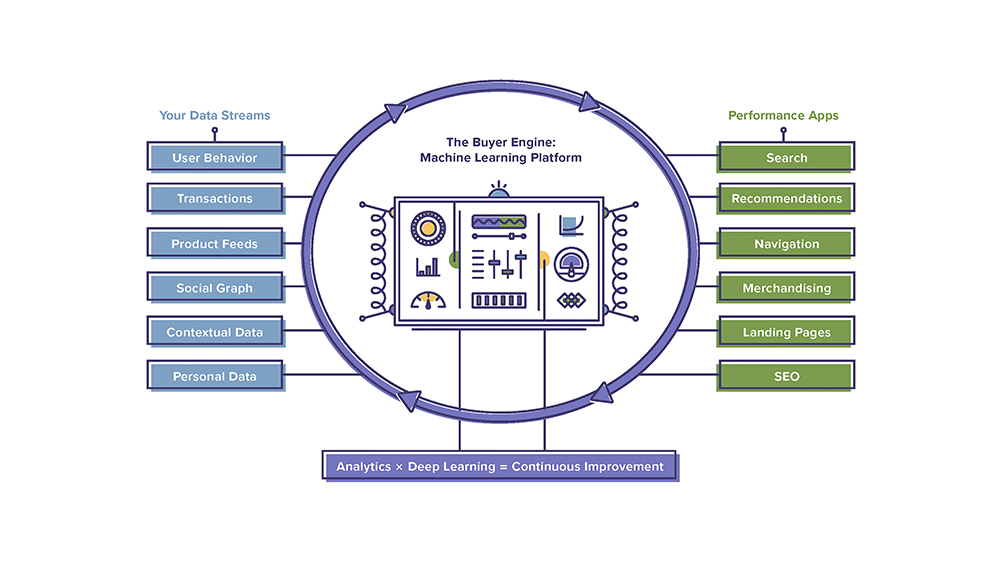
  • Non-store sales (mostly online) grew 9%, compared to 1.9% in-store sales growth (NRF)
  • Sales from desktop surpassed $1 billion on 16 days during Holiday 2015 (Comscore)
  • The average transaction size via desktop was higher than mobile and in-store. More than half of consumers increased the amount of shopping they did online this year (NRF)

It’s no time to panic though. You’re right on time. Instead, let’s reflect on key trends from 2015 to ease back into and clinch holiday sales this year:

#1. Consumers actively shop online on Thanksgiving Day (and earlier that week).

This is no longer in question (or taboo). In 2015, online sales increased 21% over Thanksgiving 2014 (IBM). For perspective, this is 58% over the 2012 holiday. On Thanksgiving 2015, AOV was $123 (surprisingly on par with Cyber Monday) and estimated web sales were $1.73 billion (Adobe). Other top revenue days to keep in mind this season include (Custora):

  • Cyber Monday: 6.3% of holiday revenue, $3.07 billion in web sales
  • Black Friday:2% of holiday revenue, $2.74 billion in web sales
  • Sun, Nov 29 (3%), Sat, Nov 28 (2.8%), Tue, Nov 24 (2.7%) and Wed, Nov 25 (2.2%)

PRO TIP: Arm your site with strong promotions early in the holiday season. Last year, Amazon offered Black Friday deals an entire week early. Macys.com Black Friday deals started the day before Thanksgiving, and Walmart.com followed suit offering deals early on Thanksgiving Day. U.S. consumers made 47% of their online purchases by the end of Cyber Monday (Comscore).

#2. Consumers shop heavily on their mobile devices.

While we all know this at this point, the numbers really drive the message home. During the 2015 holiday season, U.S. mobile sales increased 59% to $12.65 billion, which is 18% of U.S. holiday e-commerce sales; and mobile traffic exceeded desktop traffic every day during the season (Comscore). What’s more, based on research from 8,000 brands and 35,000 e-commerce shops, IBM found 31% of Nov/Dec web sales occurred on mobile.

PRO TIP: If they can’t find it, they can’t buy it. Given the space and speed challenges of smartphones, a prominent search box can be the best gateway to quickly finding and buying products on mobile sites and apps. The most important site search feature is relevance. If you provide relevant and fast search results, visitors are more likely to find what they’re looking for and make a purchase (e.g. push the most popular results for a search term to the top of the list).

#3. Consumers are coming to and buying from your site via Search.

Search brought in 29% of retailers’ online sales during the 2015 holiday season, second only to Affiliates (Adobe). Other acquisition methods include Direct (22%), Email (15%) Display (2.5%) and Social (1.4%). What’s more, 56% of searches were conducted on a smartphone or tablet during the 2015 holidays (NRF). Fortunately, if your site meets the following five criteria, you have an excellent starting point to succeed with your search engine rankings:

  1. Your products and content are relevant to the search phrases shoppers actually use
  2. Your site is mobile-friendly
  3. Many highly credible sites link to yours
  4. Your page load times are sufficient
  5. You score well in engagement signals such as bounce rate, time on site, and pages visited per session

PRO TIP: It’s no secret that Amazon wins broad keyword searches. It’s imperative to understand the importance of more specific keyword searches, called long-tail terms. While 70% of search traffic is long tail, most retailers just focus on the top 10-20% of keywords. To find these valuable long-tail terms, review your top site search terms, map these keywords to the products you sell, and then create keyword-optimized landing pages. Shoppers who find your site via long-tail search terms are more likely to find and buy exactly what they want.

Now that you’ve eased back into holiday planning and mastered just three (of many!) takeaways from the 2015 season, here’s some more good news: there are two more shopping days this year between Thanksgiving and Christmas Eve. That’s 48 more hours of opportunities to provide your customers with amazing, personalized online customer experiences to clinch 2016 holiday sales. So recline (for a bit longer), start planning, and enjoy the last few days of summer!

For more tips, check out our guides to Site Search and the Mobile Experience and How to Get the SEO-Driven Revenue You’re Missing.

Read More

SLI Buyer Engine – The Heart of a Powerful E-commerce Suite

Posted by Chris Brennan, Chief Executive OfficerAugust 31, 2016About us, eCommerce, Merchandising, Mobile, Navigation, Recommendations, Rich Auto Complete, SEO, Site Search, SLI Buyer Engine, Uncategorized

BuyerEngineI have a confession. For more than a decade, SLI has been far too modest about our e-commerce innovations. Perhaps our engineering team has garnered so many patents that they haven’t stopped to reflect. It hit me when we learned of the latest SLI patent related to our auto complete algorithm. We began applying for site search technology patents back when Amazon’s home page was about as intuitive as a bibliography and relevancy wasn’t even a thought.
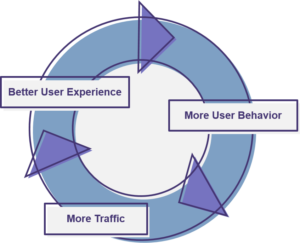
The fact is, SLI is a global team of e-commerce innovators and expert consultants with unparalleled experience. Since 2001, our team has pioneered apps designed to generate more traffic, convert shoppers into buyers, and maximize orders for B2B and B2C e-commerce leaders worldwide – whether selling 500 or 500,000 products, whether in English, Arabic or 18 other languages, or whether specializing in high fashion or high tech.

At the epicenter of SLI’s flexible and powerful e-commerce suite is machine learning technology, which – until today – remained nameless. The SLI Buyer Engine™ is a cloud-based, machine-learning platform that powers all SLI apps and answers the single most important question: “What is your shopper most likely to buy right now?”  

This means our customers’ bespoke search, navigation, recommendations, mobile experience, merchandising tools and user-generated SEO apps are driven by the same patented technology that makes really smart use of big data in real time.

Machine Learning in Action – A Virtuous Cycle

SLI Buyer Engine Virtuous Circle coreOur Buyer Engine continuously learns to improve the performance of all SLI apps and make their results more relevant, whether a shopper is a new user or frequent customer. It can consume in real time a vast array of data streams today, as well as those to come tomorrow.

  • Behavioral data (what someone is clicking on and not clicking on)
  • Transactional data (what someone is buying)
  • Product data
  • Non-product data (blogs, reviews, articles, videos, etc.)
  • Social data (including the shoppers own social graph, and what they have been up to)
  • Contextual data (where are they, local weather, device type being used)
  • Third-party data (e.g. FICO scores)

This is where big data meets personalization. The SLI Buyer Engine drives personalized shopping experiences for first-time visitors and loyal customers. It continuously learns from user behavior, improving the performance of all SLI apps over time by making their results more relevant. By accurately predicting which products to present shoppers through their buying journey, the Engine shortens the path to purchase and makes it easy to delight customers and increase revenues.

Performance-Driven Commerce

Gartner’s 2016 Hype Cycle for Emerging Technologies puts machine learning at the cycle peak, noting that “This Hype Cycle specifically focuses on the set of technologies that is showing promise in delivering a high degree of competitive advantage over the next five to 10 years.”

A recent InformationWeek article explains that machine learning is often used to make predictions through improving search results, anticipating movie or product selections, anticipating customer purchasing behavior, or even predicting new types of hacking techniques.

SLI provides clients with competitive advantage and clear results by addressing most of these use cases today. Search is indeed high-value. Our customers see 2.7x greater conversion rate when site visitors use search and those using the SLI Learning Recommendations™ app, which provides contextually relevant product suggestions while increasing upsell and cross-sell opportunities, see 5-15% average uplift in conversions.

So while the automotive industry awaits self-driving cars, companies in the retail sector that are using SLI machine learning technology are already seeing business impact.

Performance-driven commerce will remain the mission for SLI Systems as we strive to continuously deliver the most relevant solutions for customers, and the most relevant results to their buyers. We will continue to invest in machine learning and big data in order to support other emerging technologies that may be applied to e-commerce, such as conversational commerce, augmented or virtual reality, etc. This will help ensure clients are able to provide the best possible and most relevant experience within new shopping paradigms as well. And at the heart of incrementally better e-commerce performance will be the SLI Buyer Engine.

To learn more about results that B2B and B2C e-commerce companies have achieved with the SLI Buyer Engine, download the report detailing how 40 Retailers Have Transformed Their Online Business Using SLI.

Read More

Perfecting E-commerce in the Beauty Industry

Posted by Aparna GrayAugust 12, 2016Site Search, Success Stories

Adore BeautyThose in search of the perfect foundation, the best anti-aging serum or the hottest shade of lipstick used to have to go from makeup counter to makeup counter, only to be disappointed by a limited selection of brands and information.

In 2000, fresh-faced 21-year-old Kate Morris took this challenge into her own hands and launched Adore Beauty, an online beauty boutique that now boasts more than 150 brands and 10,000 products.

Adore Beauty stands proud today as Australia’s leading e-commerce beauty brand. And with thanks to the support of SLI Systems, it provides a glowing example of a retailer that has navigated the journey from pure play to omnichannel to international success story.

The changing face of e-commerce

Adore Beauty has been an online-only brand from the outset, but it wasn’t until the world of e-commerce took off in a big way that the team sought out the help of SLI Systems.

As search functions like Google developed in sophistication, the expectations of consumers grew, and Adore Beauty knew it had to up its game to keep shoppers happy and continue to convert sales.

A digital make-over

“We partnered with SLI Systems in 2010 because of its deep commitment to customer service,” said Adore Beauty E-commerce Manager Gareth Williams. With SLI Learning Search Connect for Magento, Adore Beauty is able to guide its shoppers to the right products from the moment they type in the search box. “The SLI Learning Search Connect extension for Magento was easy to implement and the results speak for themselves. We know when shoppers use search, we’ve got them,” Gareth said.

Shoppers who use Adore Beauty’s search tool now spend four times longer on the site than those who don’t – soaking up the relevant beauty tips, blogs and user reviews that SLI serves up in addition to visually tempting products.

“As an online business, it’s important to remember that each online session is a person, and each person is a potential customer,” said Gareth. “With SLI, we are able to constantly tune search results and ensure the customer is served the best result at that point in time. This type of service coverts sales and keeps our customers coming back for more.”

Success that speaks for itself

From humble beginnings, Adore Beauty has experienced 73 percent growth in the last 12 months alone and now generates around $16 million in turnover. The award winning e-commerce beauty brand attributes 30 percent of site revenue to the power of SLI.

But not content with its phenomenal success at home, Adore Beauty is now in search of a new challenge.

“We recently decided to expand into the Chinese market. With cultural differences, a language barrier and additional paperwork and red tape, it has certainly been challenging. But with SLI Systems on board, we are confident we have the right technology in place to help us make a success of this exciting opportunity,” Gareth said.

For more information, check out our Adore Beauty case study.

Read More

SLI Celebrates 15 Years of Innovation

Posted by Shaun RyanAugust 1, 2016eCommerce

Everyone at SLI has heard the story of how this company started. In 2001, five of us bootstrapped SLI out of necessity and because we saw an opportunity. We had lost our jobs when NBCi collapsed in the dot-com crash (NBCi had bought our previous company GlobalBrain). But we knew there was an opportunity for the search technology we created. So on August 1, 2001, SLI was born with the aim of improving site search.

In many ways, we were ahead of our time.

We were selling our software as a service before SaaS was even a word. The way our learning works draws upon neural network architectures that are now gaining a lot of attention from a VC world enamored by everything machine learning and artificial intelligence. We quickly started dealing with massive amounts of data before big data was the big thing. And at the time, most sites didn’t have search, or if they did, it was an extremely poor experience.

In 2003, we focused on e-commerce because we saw those selling online had the clearest benefit from better search: They sold more. As e-commerce evolved, so did SLI to better meet the needs of retail leaders and their buyers. Our offerings expanded well beyond search and now include navigation, recommendations, user-generated SEO, mobile and easy-to-use merchandising and reporting tools. We are now a world leader and a global company (with Kiwi roots).

It’s been a fascinating journey, and I’d like to thank all of those who have been part of it. In particular my co-founders: Wayne, Mike, Geoff and Jamie and our families, but also all of the employees both past and present, our customers, partners and investors.

E-commerce continues to get better and so does SLI. We’ve only scratched the surface. As technology continues to change, I’m looking forward to what’s next.

Read More

4 Things Retailers Should Learn from Pokemon Go

Posted by Dawn MortensenJuly 11, 2016Social Media, Uncategorized

Pokemon

If you noticed far more people engrossed in their smart phones while walking through neighborhoods or strip malls this weekend, it wasn’t just your imagination – it was Pokemon Go, the new augmented reality game that uses location-based technology to allow users to catch, train and battle with Pokemon as they walk through their real-world environment.

Just 5 hours after its release on July 7, Pokemon Go became the most popular iPhone app in the United States. According to July 10 data from SimilarWeb, it will only take a couple more days before Pokemon Go hits as many Daily Active Users as Twitter.

This is a phenomenon anyone who does anything online should pay attention to. After watching my kids, their friends, and even my husband get caught up in the real-world Pokemon hunt over the past 96 hours, I’ve noticed some of the basic elements of the game that are making it very popular, very fast. And I think that these same principles are key to succeeding in retail.

  1. Connect People with Their Favorite Things. Pokemon were already one of kids’ (or kidults’) favorite things. Smart phones are another. And this new game allows them to interact with both in a unique way. Technology is appealing when it helps people connect more with what they love. It’s the same with online retail – allowing customers to better engage with and experience what they love is always going to deliver positive returns.
  1. Make It Fun. All around the country, strangers are suddenly collaborating in parks or at storefronts about how and where to catch the local Pokemon. Most people get an endorphin boost from acquiring something new – especially something rare – as well as from achievements and prizes, no matter how small. I think this same principle gave rise to the term “retail therapy.”
  1. Everyone Loves a Treasure H Pokemon Go is proof of this – it’s turning into one of the biggest hunts in history. Good merchandisers know how sometimes, making something a bit harder to acquire can increase demand. Secret sales or specials to those customers “in the know” are often effective.
  1. Getting People Active Is a Win. Whether playing online games or shopping, we love our computers and mobile devices and spend an ever increasing amount of time sitting in front of screens. Most of us want to get more active, but we don’t want to give up our technology. Any app that causes us to do the things we love online while also getting the exercise of moving around the real world naturally gains quick support. (I know my kids got more exercise this weekend than they have all summer!)

Beyond these basic principles, there are other reasons for retailers to pay attention to Pokemon Go. Many store fronts have Pokemon assigned to their GPS coordinates, and you can only catch these Pokemon by walking near the store. Imagine the possible tie-ins with promotions.

We’ve said this is the year of virtual reality, and that online shopping experiences will soon involve more of it. Pokemon Go is yet another way that the online world is merging with reality, and the possibilities for retailers are exciting.

Read More

Posts pagination

< 1 2 3 4 5 … 22 >
Facebook
Twitter
LinkedIn
YouTube
Flickr

Stay up to date with SLI

Featured Posts

  • Maximize Revenue with Enhanced Product Impact Testing
  • Top Five Ways to Prepare for Peak Season
  • Facets, Facets, Who’s Got the Facets?
  • Personalization: It’s Kind of a Big Deal
  • M is the New E: Mobile Commerce Trends and Predictions

Categories

About SLI Systems

  • What We Do
  • Who We Are
  • Why SLI

Learn

  • Webinars
  • News Room
  • Events

Connect

© Copyright SLI Systems, 2018. All Rights Reserved | US: (866) 240-2812 | Legal