
SLI home
User login

A BLOG FOR E-COMMERCE LEADERS

  • Blog
  • Resources
  • Webinars
  • Customer Experience Scorecard

SLI Blog

Posts with video Tag

Improve E-commerce Conversion Rate with 5 Critical Enhancements

Posted by Bob AngusDecember 13, 2017Customer Experience, eCommerce, Merchandising, Navigation Tips, Personalization, Recommendations, Rich Auto Complete, Site Search Tips, User Experience

Your e-commerce business is full speed ahead. But that’s not good enough. You’ve been tasked with higher and higher growth expectations.

ecommerce sales buy button

And now you have even more at stake. You are likely spending more and more to drive traffic to your site. You can’t let that big investment in advertising fizzle with diminishing ROI.

Good news. You have a high-impact driver you can execute against right now.

Improvement to your conversion rate is the greatest lever at your disposal. Even a small conversion rate increase can generate big revenue gains.

This comprehensive guide to e-commerce conversion rates helps you build a winning game plan for your online store, including:

  • What e-commerce conversion benchmarks to use
  • How to analyze your conversion rate
  • How to optimize 7 critical conversion rate drivers

Let’s start by understanding how you can best measure conversion rate.

What is a good e-commerce conversion rate?

Online retailers track many conversions throughout their customer experience. Any action goal can be considered a conversion. A click on your email, a click on an advertisement, or a newsletter signup are considered conversions.

The conversion metric you really want to focus on is a purchase. Your sale conversion rate is calculated by simply taking the number of purchase transactions and dividing that by the total unique visitors to your online store during a time period.

That’s pretty straightforward. But what is a good conversion rate to set as your target goal?

This 2017 holiday shopping to date, average e-commerce conversion rates are showing growth: desktop 4.5% (up 10.6% YoY), smartphone 2% (up 12.3% YoY), tablet 4.3% (up 9.3% YoY), according to Adobe Digital Insights.

And Amazon boasts an amazing 74% conversion rate for its Prime members and 13% for non-Prime visitors back in 2015, based on a Millward Brown Digital study. In comparison, the same study showed the average conversion rate for Top 500 merchants is 3.32%.

Are those the right conversion rate benchmarks for you? Probably not.

It is interesting to set an aspirational goal against Amazon or other leaders that compete in your industry. However, you are best served by benchmarking where your own store is now. Then set a course for continual improvement to drive conversion optimization goals and strategies.

Measure your overall sales conversion rate for your entire website the past year. That’s your starting point. That’s the number you want to beat in 2018.

Then the key is to drill down into your sales-rate performance for different contributing factors and customer segments. That’s where your actionable insights really happen.

Now let’s explore the best way to analyze your conversions to enlighten your growth plans.

How You Can Analyze Your Conversion Rate

Conversion rate is a very useful metric to track. But the real impact to your e-commerce business is analyzing and understanding what is driving your performance and why.

That deeper conversion analysis helps you:

  • Determine what segments are contributing to your overall conversion rate
  • Identify the root causes
  • Prioritize and track success of your optimization game plan

The first step is to build a dashboard that tracks and trends your conversion rate. Google Analytics and many e-commerce platforms provide a dashboard that lets you see your conversion rate over different periods of time.

SLI Systems also has a very powerful dashboard built into the Commerce Console. You get an helpful view of your shoppers’ activities and conversion rate through their shopping journey.
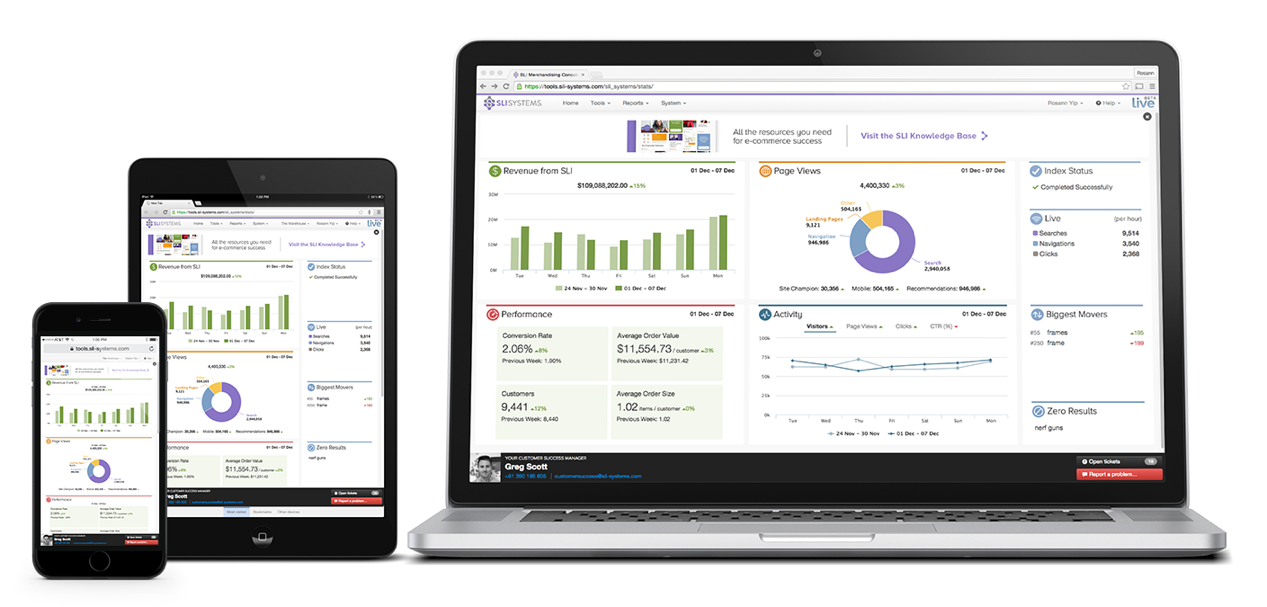
Ecommerce conversion rate dashboard - SLI Systems Commerce Console

Or you can simply use a spreadsheet. Capture your monthly unique visitor metrics and plug in your corresponding sales transaction data to calculate your conversion rates. Again, simply divide transactions by unique visitors to get the conversion rate percentage.

Next you’ll start the drill down analysis.

What Is Driving to Your Conversion Rate?

Your overall conversion rate calculation is an average. Many different factors drive that single number. Some factors contribute significantly more than others. It’s your job to break down those key drivers to find growth opportunities.

Start by segmenting your conversion rate data into categories.

The most common way to split up your data is by different customer audiences. Different types of customers have a different relationship with your e-commerce business. They may also have different purchase intent, which directly impacts your conversion rate.

Your analysis can uncover those segments that likely have differing intent to purchase. Then you can calculate the conversion rate for each segment. And you’ll see which audiences have the greatest influence on your overall conversion rate.

Here are several helpful ways to segment your audience.

  • First-time visitors vs. returning visitors – First-time visitors often make up a big majority of online traffic. But it stands to reason that those first-time visitors who may be unfamiliar with your brand are less likely to purchase than returning visitors.
  • Acquisition channel – Where visitors come from can help tell you how likely they are to buy. Segment by channels like organic search, paid search, social media, advertising, and affiliates.
  • Device – The device visitors use may indicate different intent as shown in the Adobe data insights mentioned earlier.
  • Location – Are you a global brand or do you sell domestically? Traffic coming from different international locations may be browsers, not buyers.
  • Other demographics – Google Analytics can help you analyze other demographics like gender, age, or interest affinity groups.

Other popular segmentation you can use to uncover key conversion rate drivers include:

  • Product category – Conversion rates may be higher for different products based on the volume sold, price range, or deliverability. For example, you would expect the online conversion rate to be lower for expensive furniture than easily shipped lower-priced home decor.
  • Promotions and seasons – Different discounting periods or traditional shopping seasons may affect conversion rates.
  • Website elements – You can track conversion rates by different elements of your customer experience.

Make sure you look at your conversion rate over time. Don’t just take a single snapshot in time to make your decisions. A single data point or particular shopping season can skew what you see and may lead you to incorrect decisions.

Calculate your segmented conversion rates into monthly or weekly increments. Go back in time as far as you can. Then you can chart trends and make year-over-year and month-over-month comparisons.

Starting with one segmentation method is also recommended. Add that to your dashboard. Keep tracking that segmented data to see how you are performing. Then expand your analysis to other segment categories.

Your conversion rate analysis helps you find your growth opportunities. But it doesn’t tell you exactly why those different segments are performing the way they are.

Why Is Your Conversion Rate Increasing (or Decreasing)?

Now you can dig a little deeper to understand why your conversion rate is increasing or decreasing. Find the root cause by adding a second dimension to your analysis of a particular segment category.

What is the behavior or characteristic about a given segment that is likely causing sales to go up or down?

The best way to do this is to add one of the other segment categories as that additional dimension. For example, if your primary segmentation is based on acquisition channel, then you can drill down using product category purchased or device used or location demographics.

Analyze that data. Look for trends. Make comparisons.

Maybe your conversion rate was 6% coming from Google Adwords. But the Adwords conversion rate for desktop users was 8% versus 2% for smartphones and 4% for tablets. Now you have an understanding of how the device contributes to that channel’s conversion rate, taking the volume into consideration.

And how did that paid search channel breakdown compare to your other channels? For example, smartphone conversion rate maybe 4% from your emails and 1% from social media.

Identify big shifts and changes. Discover anomalies.

Using the Google Adwords example again, maybe starting in July you see an increase from 5% to 7%. And that higher rate seems to have continued for several months.

Then hypothesize. Ask “why?”

That increase in July may have corresponded with an increase in your PPC bids or budget. Or maybe you launched a new set of keywords for a hot brand. You could hypothesize why the increase happened and continued.

This additional lens into your primary segmentation can uncover the root cause. You are now ready to take action with that data-based knowledge in hand.

How to Prioritize Your Optimization Plan

You are armed with lots of data and valuable analysis. You can now more easily prioritize the action you want to take and build an optimization game plan.

Typically you’ll want to pick one to run every quarter. That single-focus test approach helps you isolate the incremental sales and conversion rate you’ve achieved. You also give enough time to achieve improvements, validate the results with enough traffic, and eliminate most anomalies by running the test for a longer period of time like two or three months.

Which tests should you run first?

It’s always good to start with the test you feel can have the biggest financial impact. Estimate the revenue impacts for all the top activity ideas you have identified. How much would sales increase by each incremental tenth of a percent increase in conversion rate?

Then look at the level of effort and investment cost of running the test. If an activity may have a high-revenue upside while requiring little extra work, then you’ve found a great place to start.

Let’s look at some of the highest conversion boosting opportunities you have.

5 Critical Enhancements for Bigger E-commerce Conversion Rate Optimization

The best conversion rate optimization tests consider the customer experience journey. Understand the different interactions from the first moment a shopper lands on your website, through finding and choosing a product, and all the way to checkout and completing the purchase.

You make many different enhancements to your online customer experience. Here are five design improvements proven to increase conversion rates:
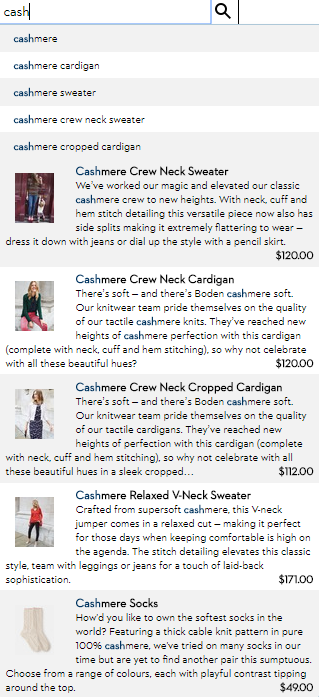
autocomplete site search to increase ecommerce conversion rate

1. Win More High-Purchase Intent Shoppers

Arguably one of the best ways to increase your conversion rate is to win more sales from visitors who already have a high intent to purchase. So how do you know that someone comes to your site with the intention of buying?

Shoppers signal their intent when they use your site search.

SLI studies have found visitors that use search buy at a 2.7x greater rate than visitors who just browse.

Make the act of searching even easier by enticing those visitors who have a specific purchase in mind.

Position your search box in the header and in the center of every page. Provide an engaging prompt to search in the search field. And make the box large and distinctive from other forms. Don’t tuck the search box into the corner or hide it behind a magnifying glass icon that searchers have to click.

Speed up the search by suggesting possible terms as visitors start typing the first letters of a keyword. This autocomplete functionality draws from your product feed to indicate that productive search results are available. Better yet, you can rank the autocomplete terms by the most popular keywords by clickthrough and purchase data, not just keyword matching.

Pro Tip: Enhance your autocomplete feature by presenting specific products in the search suggestions. Display the product name, image, and price for the most relevant products. Boden speeds up the purchase process doing just that.

This enhanced functionality helps your visitors identify products they are looking for even more quickly. Then send them directly to the product page. Skip the extra category page browsing. Bypass the search results page. Get high-purchase intent shoppers directly to a product.

2. Wow Visitors with Visual Merchandising

The key elements of a product landing page are designed to showcase the product so that customers can easily make a purchase decision – product title, descriptions, specs, purchase options, ratings, reviews, and, of course, pricing and discounts.

This product feed information gives shopper the facts. However, we humans actually make purchase decisions emotionally much of the time. Shoppers love the wow factor. That’s where online visual merchandising excels.

e.l.f Cosmetics shows off their eye shadow products with beautiful images and attractive videos from Instagram. These social media images inspire shoppers. Better yet, many of the pictures are user-generated content from customers.

ecommerce visual merchandising with instagram - e.l.f. Cosmetics

Similarly, fashion sites often display extra images since shoppers can’t actually hold the item in their hands. Visual merchandising best practices, like model videos, product pictures from many angles, and custom images that change with color selection, can help drive more sales.

Pro-Tip: Help customers visualize what their experience will be after they make the purchase. Show action shots and product videos that depict how the product is used, what the buyer gets in the box, or how to install it.

3. Merchandising that “You May Also Like”

The top job of merchandising is to promote the products a visitor is most likely to buy. One of the best online merchandising techniques is to use a “You May Also Like” product recommendation strategy on the product page.

Showing alternative products that are similar to the product being viewed is proven to increase conversion rates.

Unfortunately, many e-commerce sites determine the recommended products using simple category and keyword matching. This approach focuses on the product feed data only.

Fortunately, online stores have massive amounts of behavioral and transactional data in addition to product feed data. “You May Also Like” product recommendations that include actual customer behavior are more likely to convert.

For example, Dancewear Solutions recommends several contemporary dance dresses on a product page. It also merchandises complementary products that go with the dresses based on what customers had made purchases in the past.
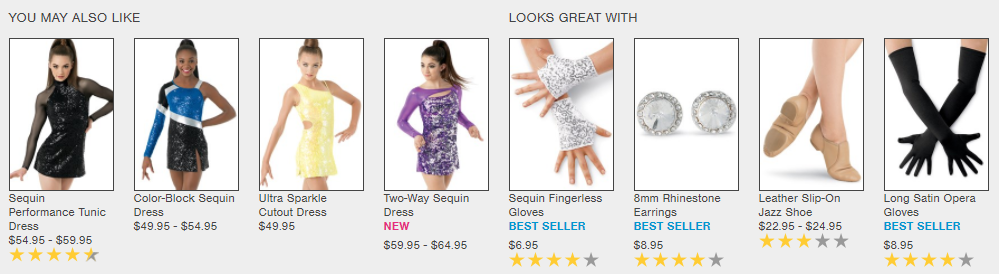
ecommerce product recommendations engine - Dancewear Solutions

Pro Tip: Customers love a personalized shopping experience. In-store salespeople give a personal touch to help customers get exactly what they want. Now artificial intelligence is helping online stores create a similar personal customer experience.

E-commerce personalization uses machine learning to sift through massive amounts of behavioral data to quickly provide smart product recommendations. Contextual personalization can display products that customers are even more likely to buy based on gender, size, brand preference, or the shopper’s location.

4. Help Shoppers Get What They Want Faster
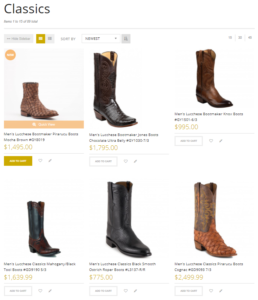
ecommerce merchandising category page buy now button - Allen's Boots

Smart e-commerce companies create as few steps as possible to get to checkout. Customers are more likely to complete their purchase when you allow visitors to add products to shopping carts or go to checkout directly wherever they are on your site.

Don’t limit the use of “Add to Cart” or “Buy Now” buttons to your product pages. Anywhere you merchandise products, even your homepage, is an opportunity for customers to commit to purchasing without an extra click to the product page.

Pro Tip: Include “Add to Cart” button directly in the your category pages and search results pages. That’s what Allens Boots did. This quick enhancement helps speed the conversion, particularly if your customer knows exactly what they want.

5. Eliminate Rational Roadblocks with Content

Don’t rely solely on the product description provided by the manufacturer to influence a buyer. Inform your customers about what a product can do. Offer how-to articles, demo videos, and comparisons against other similar products.

Content has a strong influence on e-commerce conversions both rationally and emotionally. How-to content helps remove rational doubts or questions that make shoppers hesitate. Video content in particular also has an emotional trigger for sales as customers can visualize themselves using the product.

Dollar Tree uses videos to show shoppers curated product ideas and demo top-rated customer favorites.
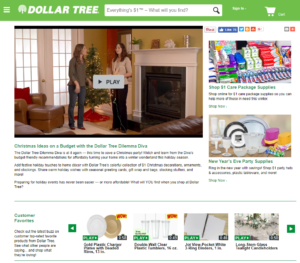
video merchandising for ecommerce - Dollar Tree

Pro-Tip: Include a set of Frequently Asked Questions (FAQs) on the product product. Ask your customer service team for questions that they get about the product. Review common reasons for returns. Think of questions you would have if you were going to pay your own hard-earned money. Then create a strong set of FAQs written in the language that customers use.

There are hundreds more conversion-rate tips that you can test. Make sure to download these best practice e-books to find new ways you can improve your conversion rates:

  • Get the SEO-Driven Revenue You’re Missing

  • The Big Book of Site Search Tips

  • Use Creative Content to Convince Online Shoppers to Buy

  • The Big Book of Navigation Tips

Image Credit: Wikimedia Commons


Say It with Video – 1 Billion Are Watching (and Buying)

Posted by Dawn MortensenDecember 16, 2014eCommerce, Site Search Tips, Social Media, Success Stories

With 1 billion people using YouTube today, video is the most powerful means of spreading information to the world’s 7 billion people. And since more than 6 billion hours of video are watched each month on YouTube, that’s almost one hour for every person on this planet!

As a content marketer in the e-commerce space, I’m especially interested in watching the speed of adoption of video in online retail. Product videos offer details that static images can’t, like how someone might hold or wear the product. According to an Animoto study and infographic, 73% of U.S. adults are more likely to purchase a product after watching an online video that explains it.

A Proven Way to Differentiate

BRStv 15Dec14Many sites use video as a way to set themselves apart from big-name brands. Bulk Reef Supply has created more than 300 videos for its saltwater aquarium and reefing products, even branding its video channel as “BRS TV” to make it more visible on YouTube. This is a smart way to increase product discovery, establish expertise and provide affirmation to buyers that they are choosing the right product. Simply by providing the information consumers need to make the right purchase, Bulk Reef Supply differentiates itself from potentially less knowledgeable competitors.

Northwest River Supply is another business that succeeds by providing expert advice that’s typically not found on many sport supply sites. Search for “kayak” and you’ll see a menu of more than 200 videos about kayaking. You can refine the search by whitewater, tour/rec and other types of rafting sports to find how-to videos that meet your particular interest.

As mentioned in Shaun Ryan’s recent blog, “shopping haul” videos are another type of video format that retailers can leverage in 2015. As the popularity of these videos increases, so does the opportunity.

Worth 1.8 Million Words?

I’ve often found truth in the maxim: “A picture is worth a thousand words.” So naturally, I’ve wondered how many words a video might be worth. I recently found that Dr. James McQuivey of Forrester Research actually made an attempt at calculating the comparative worth – he estimated that one minute of video is worth 1.8 million words. Well, the writer in me thinks that’s too high. But whether or not his assessment is true, it’s evident that video is an incredibly effective way to influence consumers who want bite-sized bits of information and entertainment that will fit into their busy lives.

How Might Retailers Leverage Shopping Haul Videos?

Posted by Shaun RyanNovember 11, 2014eCommerce

There is a largely untapped resource that most retailers aren’t leveraging to the fullest. I’m talking about shopping haul videos, also called unpacking videos. For those of you who aren’t familiar with this weird phenomenon, let me give you a brief description.

2014-holiday-shopper-research-shopping-never-sleeps_articles_02Shopping haul videos are made by people that have been shopping – either at a store, or online – and when they have the goods at home they turn on the camera and record themselves opening up all their goodies. It sounds quirky, right? However, these videos get an amazing number of views and they continue to grow.

Now the nice thing about these videos from a retailer’s point of view is that they are video reviews that feature their products and their stores. They are taken at the time when the shopper is most positive about their purchases, in the afterglow of the buying, before they’ve had an opportunity to be disappointed by them. They are authentic – typically done in their home. So these are authentic, positive video reviews of retailer’s products. Dang!

So how could retailers use shopping haul videos? I think it would be great if they could make the videos viewable on the product pages that are featured in the video. Retailers know the value of videos for improving engagement, yet videos are fairly expensive to produce. With the shopping haul trend, there are millions of videos that have already been produced that retailers can use.

So how do retailers find these videos? A simple search of “[Retailer name] haul” will give you a good start. Then you need someone to watch the video and work out which products are featured. The video can then be embedded in the product page. You could do this now for a few products, test it and see if it helps.

I came up with this idea a few years ago when I first heard about shopping haul videos at the online retailer show in Australia and then heard how popular they were. I had proposed creating a tool to make it easy for retailers (or anyone) to tag these videos and to embed them into product pages. It’s not unlike the recommendations we imbed in product pages now: some supplementary content that helps improve conversions. It could also feature in the search and nav in the same way that we index retailer’s videos as part of our Learning Search offering now.

However my idea has never made it to the top of our priority queue (we have a lot of cool stuff we’re working on). What do you think of it? Have you considered doing something like this? How many shopping haul videos are there for your store?


From Blog to Buy: Content That Converts

Posted by Dawn MortensenAugust 20, 2014eCommerce, Site Search, Site Search Tips, Social Media, Success Stories

It’s no secret here at SLI that we are arming online retailers with the e-commerce tools they need in the battle against Amazon – and creative content is proving to be a valuable weapon of choice. Many savvy e-commerce retailers use content (videos, blogs, social posts, etc.) to draw shoppers and turn browsers into buyers.

Target is a great example. Target’s e-commerce site now allows shoppers to buy items directly from its blog, A Bullseye View. All a shopper has to do is click a red box (“shop this look”) that hovers over the image of the desired product. Instantly, a box pops up with the item ready to be added to the consumer’s shopping cart.

TargetTarget’s new catchphrase? “Buy the products you want from the content you love.”

Creative content is driving sales in a way that it never has before. Converting shoppers into buyers directly on a compelling blog post is what all retailers strive for with their content. While a blog is a pretty traditional form of content, here are two great examples of SLI customers using non-traditional forms of content to ease the shoppers’ path-to-purchase:

1. King Arthur Flour Shares Recipes

Retailer of specialty flours and baking tools King Arthur Flour combines aspects of its community and knowledge base into its site, providing a wealth of searchable recipes, videos and blogs from expert bakers. Visitors can find enticing recipes with high ratings, see that they have been Pinned to Pinterest 1,000+ times, or read reviews from other users who have made those dishes themselves. Since customers can click a link in the recipe to buy ingredients they need from King Arthur Flour, it’s a seamless path-to-purchase for those eager to try the recipe.

Since working with SLI Systems to integrate this recipe content into its e-commerce search (versus its previous use of Endeca), King Arthur Flour has seen its conversion rate jump from 3.7% to nearly 6%.

If you’re an online retailer that sells any kind of food or kitchen product, you’ll want to offer recipes to showcase your expertise and the value of your products. When you create links from your recipes to the products or ingredients needed to complete the recipes, you’ll see the increase in sales.

FTD Infographic2. FTD Gets Graphic

Online flower delivery retailer FTD uses infographics to drive visitors to its site and help generate sales. When the brand created an infographic using interesting stats about Mother’s Day, it was a nice visual article showing that 76% of moms polled would choose flowers as their gift. It was a popular infographic to share on Facebook, Twitter and Pinterest as millions of sons and daughters considered what to give their moms for Mother’s Day. The infographic not only provided the insight and incentive for buying flowers for mom, but it also linked straight to the FTD site, offering easy access to purchase that Mother’s Day bouquet.

Infographics combine visual appeal with condensed information, making them perfect for grabbing people’s attention and giving them content quickly. They are also nice for the skimmers out there – those of us who are short on time or attention span. Finally, infographics are easy to share. Whether on social media or blogs, infographics are just the kind of content thought leaders love to re-post.

To learn more about how e-commerce sites can increase conversions by creating remarkable content, watch a recorded webinar on this subject or download our free e-book, Use Creative Content to Turn Online Shoppers into Buyers.

E-Commerce Sites Fend Off Firefly with Social, Search & Video

Posted by Tim CallanJuly 30, 2014eCommerce, Success Stories, User Experience

Think again, Amazon. The Fire Phone’s new Firefly feature – an alleged “showrooming on steroids” – may be one more way you drive more shoppers to your site, but it can’t beat the hundreds of thousands of e-commerce sites in the U.S. that are driving visitors to their own websites with incredibly creative content. In fact, more than 40% of marketers report that inbound marketing, such as blogs and social media, demonstrates a positive return on investment for their company.

Using compelling content, smart online retailers like Kidrobot, ReNew Life and Artbeads give customers unique and memorable shopping experiences that create powerful brand loyalty and convince customers to buy. Here’s a peek into how they do it:

1. Kidrobot Goes Social

Designer art toy retailer Kidrobot regularly sees its Instagram posts receive 1,000+ Likes, and many of its YouTube videos have received 10,000+ views. So Kidrobot brought its videos, Instagram photos, Twitter feeds and Facebook content into easy view on the search results pages of its site. Now when shoppers search Kidrobot for a product, they’ll also see Tweets, Instagram posts and other social content related to the product searched.

Social content can certainly motivate shoppers to buy. When Kidrobot integrated its social media content into its search result pages, online orders increased 13%.

When going social, the most important consideration is to leverage it in a way that aligns with the way your customers use it. If you have more fans on Pinterest than Twitter, cater to those users with high-quality photos perfect for pinning.

2. ReNew Life Uses Standout Site Search

One of the latest best practices for site search is an advanced autocomplete function that can suggest search terms, categories and specific products – as soon as shoppers type in the first couple letters of their searches. This type of autocomplete is especially powerful for retailers with products that don’t lend themselves to very specific searches, such as health and wellness retailers that often have users searching for conditions rather than specific products. ReNew Life is a great example. A search for “cleanse” offers up product suggestions for a variety of types of cleanses, along with other popular search terms.

Optimized site search has allowed ReNew Life to grow sales in a big way.  The conversion rate for ReNew Life customers who use site search is nearly 10%, more than 4x higher than non-search users.

Implementing content-rich site search is a great way to improve conversions on your e-commerce site. A standout site search can go above and beyond customers’ expectations, building loyalty and driving sales.

Capture3. Artbeads Offers How-To Articles and Videos

Retailer StacksandStacks.com found that a customer who viewed a product video was up to 144% more likely to buy the product.​ Online shop for beads and jewelry supplies Artbeads.com truly exemplifies the power of how-to videos by showing shoppers exactly how to create stylish jewelry looks with their products. In addition to more than 125 videos on its YouTube channel, Artbeads also incorporates these how-to’s into its e-commerce site, displaying links to the exact products viewers need to purchase to make the pieces shown in the videos.

With rich content integrated into its site search, Artbeads’ conversions from search increased 30% (over a 4-week promo period), while overall site conversions rose 8.6%.

Offering how-to articles, particularly in the form of nicely edited videos, displays your brand’s expert knowledge to users. When shoppers see that your company is an authority in the field, they will return to your site as a reliable resource again and again.

To learn more about how e-commerce sites can increase conversions by creating remarkable content, watch a recorded webinar on this subject or download our free e-book, Use Creative Content to Turn Online Shoppers into Buyers.

Retailers Expand Video Content with Help from Manufacturers

Posted by stevegJanuary 26, 2012eCommerce

Video has been proven to be a powerful driver of customer engagement and sales for online retailers. It is so important that retailers have gone beyond simple product videos and are now producing a wider variety of non-product video content.  They are also going to great lengths to make sure their customers can easily find these videos on their retail sites.  Many SLI customers have improved their search capabilities to include non-product content, and are now including graphic flags on products in search results for those that include video. And some are creating entire sections dedicated to video on their search results pages.

With all of this demand for video, the challenge many retailers now face is coming up with ideas for new videos and then finding someone to step in front of the camera.  If this is something you struggle with, the help you need may lie with your manufacturers and suppliers. Here are a variety of ideas for how you can tap into this resource to expand your store’s video library.

Manufacturer’s Videos
One of the easiest and fastest ways to add product videos to your site is to get them from the manufacturer. The quality of these videos is typically very high as manufacturers can justify big budgets for producing them. These videos can often be found with a simple search on YouTube or on the manufacturers web site.  When the video is on YouTube you can simply grab the code to embed it on your related product pages.

Motorcycle Superstore has made good use of this manufacturer’s video of the GoPro HD Hero2 camera by including it on their product page. The video is beautifully shot and features amazing action from those using the camera while they jump from airplanes, pull off extreme freestyle skiing tricks, dive with sharks, and free fall along cliffs in a wingsuit. And with over 8 million views, this is the sort of video that will not only engage your customers but also attract them to your site.

[youtube]GUEZCxBcM78[/youtube]

Manufacturer’s Rep Videos
The next time a manufacturer’s rep stops by to show off their new products, get out your video camera.  Since they have a deep knowledge of the products and are well practiced at presenting them, the manufacturer’s rep is one of the best people to put behind the camera.  This is also a good opportunity for someone in your business to jump in and ask questions.  The dialog between you and the rep makes for a more engaging video and shows your customers how well connected you are with those who produce the products you sell.

Here’s an example from Cruiser Customizing where the supplier and retailer work together to provide a nice overview of the types of motorcycle tool kits they sell.

[youtube]JcNTiy8tfDE[/youtube]

How-To Videos
How to videos are a great way to create demand for your products.  When you teach someone how to do something new, you can expand the range of products they might buy and give them the confidence that they will be successful using those products.  An example from Northwest River Supplies (NRS), a manufacturer of paddling equipment, shows kayaking enthusiasts how to dress for fall touring.  The video showcases a variety of products that one would need, educates about product features and benefits, gives tips for how to use and also provides safety tips.  Since the presenter is an NRS employee who is an avid kayaker he is able to include some personal endorsement of the products.

[youtube]Ugpn8tMMVgE[/youtube]

Trade Show Videos
When you make that trek to your next industry trade show be sure to bring a video camera along.  You’ll find a large number of manufacturers eager to show off their products and answer your questions.  In just a few hours you’ll be able to capture enough video to keep your content pipeline full for months.  Video of the latest products and innovations makes for great Facebook posts and Tweets. These videos are also a great source of material to build a blog post around.

In this example a writer from Rockler Woodworking’s magazine Woodworker’s Journal pays a visit to the JET Powermatic booth at the AWFS show to learn about new changes to their products.

[youtube]Vt0UchGAw0Y[/youtube]

Instructional Videos
For more complex products manufacturers will often create instructional videos and may even include an instructional DVD with their product. In this example, Footwear Etc. has taken an  instructional DVD video included with their MBT Shoes and placed it on YouTube with a slight modification to include their brand name and contact info.  Footwear Etc. then links to the video from all of their MBT Shoes product pages.  Note, if you go this route be sure to get approval from the manufacturer before modifying their video.

[youtube]zrg8W8wwgZg[/youtube]

As you can see from these examples, your manufactures and suppliers can have a big impact on your ability to deliver a steady flow of engaging video content.  As you put these ideas to use and publish exciting new video, don’t forget your responsibility for making sure your videos are easy to find.   Be sure to take advantage of the tools that your search solution provides to promote your videos in your site search results.

If you have other ideas for how manufacturers and suppliers can help retailers create video content and make it easier to find, please post them in the comments below.

Stay up to date with SLI

Featured Posts

  • Maximize Revenue with Enhanced Product Impact Testing
  • Top Five Ways to Prepare for Peak Season
  • Facets, Facets, Who’s Got the Facets?
  • Personalization: It’s Kind of a Big Deal
  • M is the New E: Mobile Commerce Trends and Predictions

Categories

About SLI Systems

  • What We Do
  • Who We Are
  • Why SLI

Learn

  • Webinars
  • News Room
  • Events

Connect

© Copyright SLI Systems, 2018. All Rights Reserved | US: (866) 240-2812 | Legal