SLI home
User login

A BLOG FOR E-COMMERCE LEADERS

  • Blog
  • Resources
  • Webinars
  • Customer Experience Scorecard

SLI Blog

To Combat Retail Disruption, Win the Micro-Moments in a Search-Driven World

Posted by Bob AngusJuly 25, 2017Mobile/Tablets, Uncategorized

mobile

In a recent Forbes article, Retail Strategy and Innovation Consultant Steve Dennis provides a very compelling reason for brick-and-mortar retailers’ recent misfortunes. While he acknowledges the rapid and transformative impact of e-commerce, he believes those who blame e-commerce for the record number of store closings are wrong. Instead, he says:

“A far more profound dynamic is at play, namely what some have termed ‘digital-first retail.’ Digital-first retail is the growing tendency of consumers’ shopping journeys to be influenced by digital channels, regardless of where the ultimate transaction takes place… [and] when it comes to how traditional retailers need to reinvent themselves, several factors related to this phenomenon need to be better understood and, most importantly, acted upon.”

One crucial factor? “It’s a search driven world,” says Dennis.

“Sometimes consumers turn to the web for rather mundane tasks: confirming store hours or looking up the address of a retailer’s location. Other times they are engaged in a more robust discovery process, seeking to find the best item, the best price, or the best overall experience.

Retailers need to position themselves to win these moments that matter – what Google calls micro-moments.”

What’s more, research shows that shoppers that use site search have the highest intent to purchase, significantly outspending those who simply browse. In fact, searchers have 2.7x greater conversion rate, 11% higher average order values, and higher revenue per visit.

To hook these must-win shoppers and clinch the micro-moments in our search-driven world, here are five top best practices:

  1. Use machine learning to power product discovery for big results.

It’s critical that retailers support shoppers conducting searches with the most relevant product results to quickly help them discover, buy, and move on. Search powered by machine learning “learns” from visitors’ behavior and activity to deliver busy shoppers the most relevant results quickly, resulting in a search function that becomes more intuitive and relevant the more it’s used.

  1. Ensure searchers can find what they’re looking for with just one word.

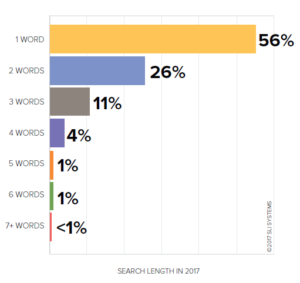
Research shows more and more shoppers choose to conduct site searches with just a single word. In fact, a recent study of more than 1.5 billion search queries found more than half of searchers only use one word, and over 80% of site searches used two words or less. Machine learning is driving more personalized shopping experiences where just one word should be all a shopper needs to find what he’s looking for. Combining machine learning with real-time contextual personalization can identify what that particular person means in one word and deliver what they are most likely to buy in that moment.

  1. Implement a search system containing rich autocomplete with graphics.

By combining intelligent phrase suggestions and product images into its autocomplete feature, Zachy’s Wine and Liquor increased conversion rate by 10x for shoppers using site search, and average order values by 2x for those same shoppers. Using a robust site search system with autocomplete has been recognized as one of the key steps in generating higher revenue.

This is especially true today with more people shopping from mobile devices. Shoppers on mobile devices expect a powerful autocomplete function so that they can easily go directly to the products they want with the convenience of not having to type out complete product names or descriptions on a small screen keyboard. Accommodating this will result in higher revenue per visit and greater customer retention.

  1. Arm your e-commerce site (and site search) with creative content.

Your online presence needs to be about much more than the products you sell. A website or mobile site should be an educational resource for consumers, offering unique photos, videos, tools, blog posts, reviews and more, which amplify your brand and convince shoppers to buy. 100M+ hours of “how to” content have been watched on YouTube so far this year! To make finding valuable content seamless, include it in search results — somewhere below best-selling products or in a tab above the fold.

  1. Marry site search results with paid and organic traffic sources.

If you know how people search on your site, this gives you insights into very likely search terms that people are using in search engines as well. Marry this super high-intent search behavior with your product catalog to automatically create customized landing pages that are very attractive to search engines. For retailers with tens of thousands of SKUs that could never all be manually optimized for SEO, this strategy can be very powerful, as it generates a lot of valuable traffic off of long-tail keywords. According to Jerome’s Furniture, in 2017 alone, capturing these high-converting long-tail SEO targets in an automated way has already brought in thousands of clicks and tens of thousands of dollars in sales.

To learn more about winning the search-driven micro-moments that matter, check out our e-book The Quick Guide to Better Site Search.

Bob Angus, Strategic E-commerce Consultant

Bob is a strategic e-commerce consultant and regular contributor to SLI Systems’ webinars and product marketing. He has helped merchants grow sales in his marketing roles at PayPal, Symantec, and Commission Junction. Bob has been a contributing editor at Practical Ecommerce and provides free marketing templates on his website.
Read More

The One Word That Can Boost E-Commerce Sales

Posted by Bob AngusMay 31, 2017Uncategorized

search-length-in-2017Research shows more and more shoppers choose to conduct site searches with just a single word.
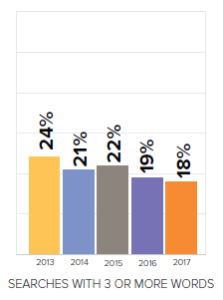
For its recent E-commerce Performance Indicators and Confidence Report (a.k.a. EPIC Report), SLI recently analyzed a global sample of more than 1.5 billion search queries during the last 4 years and found more than half of searchers only use one word. What’s more, over 80% of site searches were two words or less.

In fact, site searches are actually getting shorter over time. Year-over-year, the number of searches with three or more words is decreasing while the number of one-word searches is increasing. In 2013, 24% of searches included three or more words. This year, only 18% have three or more words.

searches-with-3-or-more-wordsSLI’s EPIC Report supports recent trends indicating shoppers expect relevant results immediately. In other words, if relevancy and personalization are not part of your e-commerce search strategy (and searchers can’t find what they’re looking for with one word), then shoppers will simply move on.

This is why machine learning is absolutely critical in search and where the magic happens. E-commerce search powered by machine learning “learns” from visitors’ search activity to deliver busy shoppers the most relevant results quickly.

The result is a search function that becomes more intuitive and relevant the more it’s used.

Machine learning is driving more personalized shopping experiences where just one word should be all a shopper needs to find what he’s looking for; without it, you risk losing shoppers to another site with a better, faster experience.

For more personalization tips, check out our webinar Predict More Sales with Personalization. The complimentary EPIC Report is available for download.

Read More

Survey Says . . . Amazon More E-commerce Foe Than Friend

Posted by Christina StublerApril 27, 2017Amazon, E-commerce Research, EPIC, Uncategorized

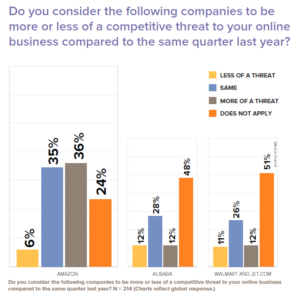
epic-competive-threats-chartWhether friend or foe to your online business, Amazon marketplaces are shaking up retail norms globally – from personalization to fulfillment. Even with Walmart and Jet.com encroaching on Amazon’s discount market share, the online mega mall added “tens of millions” of new Prime subscribers in 2016, reports investor site Motley Fool.

Add consumer expectations for relevance, price and fulfillment speed, and retailers face notable challenges in attracting, converting and keeping customers online as they seek to nab their share of retail e-commerce sales that eMarketer forecasts will top $27 trillion in 2020.

Findings in SLI Systems E-commerce Performance Indicators and Confidence (EPIC) Report illustrate the level of concern about various marketplaces among global online and multichannel merchants. The report provides insight from more than 200 e-commerce professionals — nearly 40% of whom sell on at least one Amazon marketplace, with 42% selling on additional marketplaces.

The key takeaway? Only 6% say Amazon is less of a threat.

“The Amazon Factor”

The e-commerce giant continues to challenge online businesses worldwide, with 11 Amazon marketplaces across North America, Europe and Asia.

Only 6% of the SLI study respondents feel Amazon poses less of a competitive threat. Thirty-two percent of U.S. respondents and 38% of those in the UK report that Amazon is more of a competitive threat compared to the same quarter last year.

And in Australia, where Amazon reportedly plans to open a new marketplace, 47% of respondents viewed the e-commerce giant as an increased threat.

Interestingly, Australian merchants chose “Advertising or Paid Search” as their top online retail initiative for the quarter, potentially indicating that the region’s merchants are gearing up for heightened online competition.

Other Mega Competitors

When it comes to Walmart and Alibaba, the “threat level” depends much more on region. Eighteen percent of the study’s U.S. respondents view Walmart/Jet.com as more of a threat. However, a majority of respondents in the UK (67%), Australia (60%) and New Zealand (62%) said the mega retailer was not a threat to their particular online businesses.

Looking at sentiment about Alibaba, the marketplace is a notable contender for APAC, where 20% of Australia-based and 31% of New Zealand-based merchants view Alibaba as more of competitive threat to their online business in Q1 2017 compared to the same quarter last year.

Whether selling on Amazon (friend) and/or competing with Amazon (foe), online retailers are having to keep pace with the giant as it sets the bar for the front office as well as the back office. When asked to select the single most important initiative for their online retail business, Customer Experience earned the top spot from 26% of all respondents, followed by Inventory, Logistics and Fulfillment, which earned 14% of the “votes.”

To learn about practical ways to combat Amazon, read the The Ecommerce Secret Weapon You Haven’t Heard Of on MediaPost’s SearchMarketingDaily.

Findings in the SLI Systems EPIC Report for Q1 2017 are based on a survey conducted between February 6, 2017 to March 6, 2017. For a copy of the full chart-packed report, visit: http://sitesearch.sli-systems.com/Epic-Report.html

Read More

New SLI Report Finds E-commerce Confidence Strong Globally

Posted by Chris Brubaker, Chief Marketing OfficerApril 7, 2017Customer Experience, E-commerce Research, EPIC, Uncategorized
epic-reprt-cover2-3d

The Q1 2017 EPIC Report found widespread confidence among online retailers with 94% of respondents selecting at least one area of planned growth during the first quarter of 2017.

I am excited to share SLI Systems’ debut E-commerce Performance Indicators and Confidence (EPIC) Report with you. The Q1 2017 EPIC Report includes findings and analyses from an in-depth survey of retail professionals worldwide and a look at consumer behavior trends based on more than 1.5 billion site search queries.

Survey findings in the first-quarter report represent a mix of retail business models, including pure e-commerce, as well as omnichannel merchants. In addition, 87% of the 200+ respondents work in a manager position or above – with 20% holding VP- or C-level positions. The responses, collected between Feb 6-March 6, 2017, come from a qualified cross-section of retailers around the world, offering a solid benchmark for us to compare retailer confidence and shopping behavior regularly.

We have included dozens of colorful charts in the 13-page report to illustrate the Respondent Overview, Confidence and Performance Indicators, Top of Mind (anticipated business impact of the new U.S. presidential administration) survey findings, as well as Search Trend Analysis, which looks at the average number of words in a site search query.

The best news? Ninety-four percent of retail professionals surveyed expected to expand their businesses during the first quarter.

Here are some other highlights:

Confidence – Eighty percent of respondents expect an increase in online revenues and profits, and 46% expect an increase in in-store revenues and profits.

Key Performance Metrics – Comparing Q1 2017 to Q1 2016, metrics include, among others, that 71% expect increased site conversion (CVR) and 76% expect a decrease or no change in their fulfillment costs per order.

Top Q1 Initiative – With 26% of the “Vote” Customer Experience earned the top spot among priorities. Inventory, Logistics & Fulfillment was second (14%), followed by Mobile Site (12%).

Mobile – An impressive 73% of respondents expect an increase in mobile transactions. Among those who cited mobile as their top initiative, the group selected “Mobile Site” six times more than “Mobile App.”

Amazon – Thirty-two percent of U.S. respondents, 38% of those in the UK, and 47% in Australia, see Amazon as more of a competitive threat compared to the same quarter last year.

Trump – U.S. retailers generally anticipate the new U.S. administration will have a positive impact on corporate taxes, a negative impact on selling internationally, and no impact on online sales taxes. Twenty-three percent of UK respondents expect it will have a somewhat or very negative impact on their online business.

As a global provider of cloud-based e-commerce solutions and services, SLI is in a unique position to analyze retailer confidence and online shopping trends. We hope that EPIC quickly becomes a useful resource for you to check the “pulse” of the e-commerce sector globally.

The complimentary report is available for download. Let us know what you think at research@sli-systems.com, and be on the lookout for future EPIC surveys. We’ll send you the resulting report once it’s published.

Read More

Tips for Creating a Personalized Home Furnishings Shopping Experience Online

Posted by Murray Brook, Senior Sales DirectorMarch 22, 2017Uncategorized

E-commerce is rapidly growing, with double-digital growth expected to continue through 2020, and sales reaching an impressive $4 trillion. As this growth continues, so does an increased interest in purchasing home furnishings online, from throw pillows to blankets to a variety of larger furniture offerings.

In fact, by 2019, the global market for furniture and floor coverings is forecasted to reach $695 billion. As interest heats up, so does the competition as more retailers enter this online marketplace. Customers are harder to attract and retain with competitors always just one click away.

Savvy home furnishings companies are deploying a highly effective strategy — one that keeps competition at bay while building greater engagement and stronger relationships with each customer. But how? The answer is simple: greater website personalization.

Personalization significantly increases customer engagement with your brand on your e-commerce site – with forty percent of customers preferring to purchase from retailers that cater to their preferences. These statistics tell an interesting story, yet many home furnishings companies are still reluctant to adopt personalization, oftentimes because they aren’t sure where to start. Here are six tips to inspire greater personalization and higher revenue in the coming year.

Everything starts with a strong customer profile

When shopping for your birthday gift, a close friend has a profile of you in their mind — even if they don’t know it. They say: “Jane loves the color blue and she recently told me the pillows on the couch are wearing out. She needs new ones; in fact, I just saw her looking at some really great pillows at Crate & Barrel last week.” The friend remembers all these small pieces of data, and from this data, she comes up with the perfect birthday gift.

Creating a profile for each customer works in a similar fashion. The very first moment that you interact with the customer, you start collecting data points. But how do you capture this data? A great way is to provide a relevant offer during the first interaction.

crate-and-barrel-pop-up

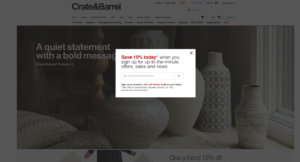
For example, when a new person visits Crate & Barrel’s website, a pop-up offers a special coupon in exchange for an email address. The message says “Save 10% today when you sign up for up-to-the-minute offers, sales, and news.” Once you enter your email address, the retail company starts gathering various pieces of information about your search history, purchases and preferences. As a result, relevant offers can be sent via email, presented on the website and offered up with more precise timing.

However, even if your company doesn’t capture a visitor’s email address, you can still customize their experience. This is an important piece of information to consider since anonymous customers make up to 95 percent of website traffic. Personal data points, such as name, address and email address, aren’t collected, but what you can track is behavioral details, usually through cookies and other resources. As a result, customers can save items in their carts and you can customize recommendations during future visits.

Key takeaway: Track visitor data points from the very first visit, even if you don’t have personal identifying information yet. Doing this will help drive greater conversions through a personalized, more relevant online experience.

Understand customers in context

Building a customer profile for each visitor is a great start for creating more personalized experiences, but it’s also critical to put behavior in context.

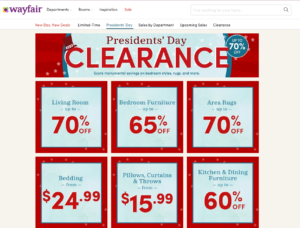
For example, why is the customer interacting with your company at this exact moment? Factors constantly change based on a variety of contextual variables, such as seasonality. Home furnishings retailer Wayfair understands that as the holidays inch closer, customers expect a deal. For example, the week prior to Presidents’ Day, the company promoted a clearance sale, which featured discounts of up to 70 percent off retail prices.

wayfair-clearance

While this offer is certainly appealing, it’s not personal. When clicking on the deal, you view icons, such as “Bedroom Furniture up to 65% OFF” and “Bedding up to 70% OFF.”

wayfair-clearance-2

The offers are clearly a good value, but what if the customer isn’t in the market for new bedroom furniture — or any of the highlighted items? The potential sale is quickly lost. Instead of displaying the various icons above, this retailer could instead list deals specific to the exact customer based on recent search history.

For example, let’s say a visitor recently viewed a specific vase for their dining room table. They didn’t make the purchase, but during an upcoming sale that vase will be on sale. The retailer can then highlight items the customer recently viewed, such as the vase, that are now priced lower during the sale, as well as complementary items the customer may enjoy.

Key Takeaway: Personalization is about more than collecting pieces of information about each customer. It’s about understanding each customer in context. When you combine these two elements — personalization and relevant contextual information — you get much closer to unlocking a greater understanding of your customers and earning long-term loyalty.

Curate product picks

When visiting a mall, you may immediately walk up to the directory to locate retail stores that sell home furnishings. You then identify a few potential stores on the map, visit each store, find the appropriate department and sort through numerous products — until hopefully you find the desired item. Most shoppers know this process lacks efficiency and ultimately leads to shopping fatigue, especially if the customer is not successful in finding the desired product.

Online shopping is more streamlined than a traditional shopping experience; however, it still has inefficiencies. Curating product picks is an effective strategy that retailers can use to improve shopper satisfaction. Relevant items are displayed right off the bat — instead of forcing the customer to wade through numerous options until becoming fatigued and ultimately closing the browser.

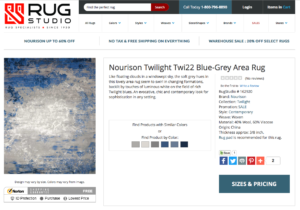
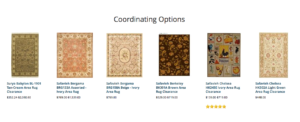
Check out this example from Rug Studio. When displaying rugs, the home furnishings site provides additional customized recommendations based on viewing history. The “Coordinating Options” section ties in related products that complement the purchase. For example, you may see a complementary miniature rug that pairs nicely with your area rug.

rug-studio

rug-studio-2

Key takeaway: High-end stores have used the curated shopping experience for years. They get to know customers by name, learning their preferences and selecting items they’ll love. Curating online works in a similar way but allows retailers to personalize experiences at scale.

Personalize order shipping

Shipping can make or break the ability to convert a sale. This is why many online retailers offer free shipping. For example:

  • Red Door found that adding a free shipping threshold increased orders by 90 percent.
  • 2 Big Feet used a similar strategy and increased orders by 50 percent.
  • ComScore found that having a free shipping day increased orders by 16 percent.

The powerful lure of free shipping is likely why programs such as Amazon Prime have become so popular. But surprisingly, the cost of shipping isn’t the only element that matters. Customers also want options for quicker delivery. These two items — free shipping and accurate and fast arrival options — are key elements to greater personalization. But why?

Shipping is an underused opportunity to personalize the buying experience. For example, your site might have a pop-up that says “Hey, Jane, it looks like you’re ordering holiday items. Do you want them to arrive faster?” At this moment, the customer feels a connection with a brand. The customer gets the sense that the retailer “gets” her pain point and has offered up a solution in the exact moment of relevance. What’s more, that faster shipping option may not be free, but that’s likely alright with Jane because she has a holiday party scheduled and getting items faster is more important than free.

This interaction can be further personalized by creating a customized “thank you” message that might read “Thanks for your order. We know you need these items fast, so rest assured they will arrive by December 15th, per your request.”

Key takeaway: Take advantage of this underutilized opportunity to personalize and forge greater loyalty with customers. As you deliver on your promises, customers will continually return to your brand to make purchases.

Create adaptive calls to action

Some home furnishings companies design one-size-fits all calls to action. For example, they may offer free shipping on orders of $50 or more. And while it often makes sense to provide free shipping, a call to action that is personalized generates greater long-term results.

For example, imagine that you’re a totally new customer of an online home furnishings store. You’re looking for decorative pillows for a new couch that you just purchased. When arriving to the online store, a “new customer” coupon appears. You think, “Wow, they understand I’m a new customer and this retailer is motivated to get my business — I’ll take a look at what they offer.” After viewing a few options, you make a selection and complete the purchase.

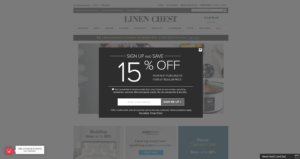
For example, Linen Chest offers a 15 percent off purchase coupon exclusively for new customers. After joining the email list and receiving the coupon, the offer no longer appears.

linen-chest

Let’s say you use the coupon, as highlighted in the example above, and a few weeks later you need to purchase an accent chair. Remembering the great deal you received prior, you visit the website again. But this time, the website offers another personalized coupon, saying “We’re thrilled that you’re back! Use this coupon as a token of our appreciation.”

Key takeaway: Personalized calls to action are an effective strategy for generating greater online conversions and moving customers through the sales cycle with less resistance. Test different offers and content to better understand what works best with your audience.

Personalize emails

How many emails do you receive each day? If you’re like most people, you receive dozens, if not hundreds, daily. This amount of email is simply impossible to open and read carefully, so a prioritization process begins, which involves skimming headlines and “bulk deleting” the majority of the emails.

Personalizing email campaigns increases open and click-thru rates significantly. In fact, according to Experian Marketing Services, personalization emails generate up to 6 times higher revenue per email than do non-personalized emails.

Marketers use personalized email for a variety of purchase situations, from enticing customers to return to abandoned carts to reminding them about items they previously viewed. For example, Amazon sends customers personalized emails that feature a recent product category in which the customer has searched. It might say something like “Customers who have shown an interest in ‘XYZ’ product might also like to know about these products” and highlight a few more options of interest.

Key takeaway: Don’t let personalization stop at the website. Integrate personalization strategies into email campaigns to ensure that customers feel known while maximizing your opportunity to cross-sell, upsell and close deals that would otherwise be lost.

Personalization: The key to greater results

Customers’ needs are changing. It’s true that people are buying more home furnishings online than ever before, but if you want to avoid becoming a commodity — easily interchangeable with your largest competitors — you need to adopt a new, more effective strategy.

Many website visitors shop several retailers at the same time, yet it’s still not only about price: Personalization is moving to center stage. Who understands the customer’s needs best? Who can offer the right product, at the right price — and at the precise moment of relevance? When your home furnishings company cracks this code, you gain an instant point of differentiation that can be leveraged against the competition.

What Is SLI?

At SLI, our machine-learning platform offers the most advanced technology available to accelerate your e-commerce and continuously delight customers at every click.

For more tips, check out our webinar: Predict More Sales with Personalization.


Read More

Jerome’s Furniture Wins eTail Best-in-Class Award with SLI

Posted by Chris Brubaker, Chief Marketing OfficerMarch 21, 2017Uncategorized


jeromes-etailEvery year eTail honors the best of the best retailers with eTail Best-in-Class Awards, recognizing extraordinary achievements in omnichannel, search, email, social media and mobile commerce. This year SLI customer Jerome’s Furniture took home the Best-in-Class Omnichannel Retailer Award for reinventing the furniture-buying experience and offering its shoppers a seamless omnichannel experience with two new apps: a new Augmented Reality App (to use on mobile/at home) and a new Smart Shopper App (to use in store).

While the Augmented Reality App brings the store’s furniture into the shopper’s home virtually, the Smart Shopper App brings the website’s robust content and machine-learning search to shoppers’ fingertips in the store. According to Perry, “It’s the 1-2 punch our customers are loving. The feedback is amazing!”

Congratulations to Jerome’s for winning the most-deserved distinction of eTail’s Best-in-Class Omni-Retailer!

Augmented Reality (AR) App Brings Store Furniture into Shopper’s Home Virtually

With more than 60 years in the home furniture business, Jerome’s understands buying new furniture can be time-consuming and overwhelming. Even when shoppers had measurements, imagining how their new sofa looked in their home was not easy. Until now. The new Augmented Reality App easily allows shoppers to see how an item looks in their home before buying it. The AR app takes out all the guesswork, helping shoppers avoid mistakes and making furniture buying easier than ever – from the comfort of their homes.

And the results are staggering. The Augmented Reality App’s conversion rate is 73% higher than site average, and time on site is 226% higher (more than 14 minutes).

Smart Shopper App Brings Website Content, Reviews, Videos, Search Into the Store

The Smart Shopper App includes a convenient QR Code scanner that allows shoppers to easily scan any tag throughout the brick-and-mortar showroom. Once a furniture item is scanned, the app brings up a library of online product reviews and product videos. The shopper now has a wealth of information, reviews to read, and videos to watch all at their fingertips while in store.

jeromes-etail-2The Smart Shopper App also uses The SLI Buyer Engine™, a machine-learning platform that power its search technology. The Buyer Engine learns from visitors’ search activity to deliver busy Jerome’s customers the most relevant results quickly – both in store or on the go. The result is a search function that becomes more intuitive the more it’s used, driving more personalized shopping experiences within the app.

The Smart Shopper App has proven so useful, Jerome’s is seeing 100-200 downloads a day. What’s more, by using machine-learning to power its search technology with SLI Systems, Jerome’s increased conversion rate 71%.

The new Augmented Reality App and Smart Shopper App enable Jerome’s Furniture to deliver its customers a seamless omnichannel experience with the highest degree of contextual personalization at home, in the store, or on the go – helping them feel increasingly understood, catered to, and apt to buy – and driving remarkable business results.

Read More

Do’s and Don’ts of E-commerce Personalization for Home Furnishings

Posted by Amrita Sohal, Sales Director at SLI SystemsMarch 21, 2017Uncategorized

dos-and-donts-blogThe e-commerce industry today is at a critical point of transition. Consumers are demanding unique, customizable online shopping experiences. At present many online retailers are struggling to capitalize on this desire.

This is particularly true in the home furnishings sector, which has a number of unique challenges catering to online customers. In the past, home furnishings retailers have done most of their sales through brick and mortar storefronts. Customers prefer to see the specific items they are going to purchase. As such, home furnishing online portals have lagged behind other industries in providing personalized shopping experiences.

Yet in almost no other industry is it as important to create a personalized shopping experience in order to transition browsers into shoppers, and one time shoppers into repeat customers. In this article we’ll discuss some of the ways that home furnishing retailers can accomplish effective e-commerce personalization, while highlighting a few of the common pitfalls that can be seen across the industry.

Implement an intelligent search system with rich autocomplete and filtering options

Legacy searching systems that rely on simple text search terms fail to deliver accurate results in the home furnishing market. When using these types of systems, your customers are more likely to end up with a long list of products that they weren’t looking for. This is a particularly common problem in the home furnishing industry, where customers are more likely to have long and very specific search queries.

With the huge amount of product diversity that exists within the home furnishings market, having a personalization system that utilizes a robust search engine will allow your customers to more quickly and efficiently find the products that they are looking for.

For example, if a customer is searching for a yellow sofa, legacy systems will just pull products where the specific item description has a fabric labeled as yellow.  They could then miss out on products described by the manufacturer as marigold. An intelligent search system would pull this result and others that qualified as yellow, but were not inherently labeled as such.

Don’t ignore the transition from online to storefront shoppers

 While many of your customers may conduct searches on your website to gain some sense of product familiarity, once they narrow down which specific products they are interested in, they will most likely visit your storefront to see the product in person. It is important to cater to these types of customers by creating a multichannel shopping experience. This is a shopping experience that allows for the seamless transition between online and offline shopping.

Accomplishing this requires maintaining consistency between products, brands, and pricing both on- and offline. Commonly in the home furnishing industry, customers will also search for your products on their phones while in your store.

Some home furnishing stores have taken the step to have tablets placed throughout their storefront to serve as points of access for their customers, further collapsing the boundaries between online and in store shopping. As such, having a robust mobile site is essential to the success of your e-commerce personalization deployment.

Rely on a system that provides targeted product recommendations

Your e-commerce personalization software should be able to provide targeted, specific product recommendations. This is the backbone of any e-commerce personalization software. Intuitive product and search systems learn as your customers utilize them.  If a customer places a product in their shopping cart, your software system should be able to use that information to provide more accurate product recommendations.

The same is true for their search history.  With an intelligent, machine-driven product recommendation system in place, your customers are more likely to find relevant products and experience higher conversion rates. Additionally, your system should be able to promote certain products, or suggest related items that you carry that have the highest conversion rate from shoppers to buyers.

Successfully revamping your home furnishing website to provide a personalized shopping experience doesn’t need to be a daunting or painful experience. Utilizing these personalization tips can help you find an e-commerce personalization platform that will meet your needs.

Ultimately, the success of your efforts comes down to having the right tools for the job. Having a platform that integrates comprehensive search functionality, intelligent and machine-driven product recommendations, and allows you to seamlessly transition shoppers from online to in-store shopping will give your company the ability to provide a superior customer experience throughout.

Learn more about SLI’s Personalization technology by reading Announcing SLI ESP: Take Mind Reading to the Next Level.

Read More

Why Website Personalization Is Key to Apparel E-Commerce Success

Posted by Kim Presser, Director of SalesMarch 16, 2017Uncategorized

apparel-e-commerce


Imagine that you walk into a store looking for a new shirt. You scan the clothing racks and start your search, sorting through dozens of items. “Wrong style, wrong color – hmmm, these might work.” Then you proceed to the dressing room to narrow your options even further.

After an hour, you’re exhausted but have finally found a shirt that works. Yet sometimes you come up empty-handed, leaving the store with nothing but a whole lot of frustration. Regardless, the process includes a waste of time and energy.

At its core, this is a highly impersonal experience. The store hasn’t done anything to help personalize your shopping experience, and you – the customer – are charged with narrowing down hundreds of items and creating your own personalized experience. Website personalization, on the other hand, does the exact opposite, taking much of the work off the customers’ plates by learning their patterns, likes and dislikes – and eliminating much of the waste. How can this best be accomplished in the apparel e-commerce market?

Web Personalization: A Quick Primer

Website personalization delivers a customized experience to prospective and current customers based on who they are and what they do. That visitor can be brand new or a frequent visitor to the site.

For example, think about a website that requires you to navigate and search through many pages prior to finding the item you desire. This experience is time-consuming and a far cry from delightful. Web personalization is the exact opposite, allowing you to:

  • Identify specific attributes of a website visitor. For example, buying intent, location, and other important pieces of data can be isolated and captured.
  • Present relevant and timely offers. Once you have behavioral data, you can present the visitor with relevant and timely offers. For example, does he or she love shopping for sandals in the spring? If so, you can display those items during the specific relevant periods.

Saving customers time and energy, however, is not the only reason to incorporate web personalization into your apparel strategy – there is another compelling reason: higher revenue. In fact, 40 percent of consumers report purchasing more from retailers who personalize their shopping experience across channels.

Personalization is no longer a “nice to have” for customers; customers demand it. A Marketo study found that over 78 percent of those surveyed said they would engage with a brand’s offer only if it were related to how they previously interacted with that brand. Which brings us to the next point – the consequences of being impersonal.

The Consequences of Being Impersonal

Not sure whether personalization is worth the rewards? If so, here is another factor to consider. Failing to personalize website content may carry serious risks, such as creating a critical divide between you and your customers.

Retail options that aren’t tailored to customers not only feel impersonal, but they also create disconnection, dissatisfaction and less engagement. In fact, 75 percent of online customers report feeling frustrated with websites when the content doesn’t have anything to do with their interests.

For example, imagine that you meet a new person at a company event. You have a detailed conversion, which includes providing this person with information about where you live, your interests and what’s going on in your life. A couple of weeks later, you meet the same person. Upon meeting again, you reintroduce yourselves. Then you realize the person doesn’t remember you. How do you feel? Probably not great.

This is the equivalent of what happens when apparel brands fail to provide in-depth, personalized experiences. In an instant, the customer feels disconnected from the company. Previously you were engaged, feeling loyal and great about a company; then in a second, all that hard work vanishes.

Many apparel companies are realizing the increasing importance of personalization, yet 95 percent of marketers are stuck in “analysis paralysis,” unsure of the next best move. Or they think that personalized strategies are for larger companies with big teams and high budgets, so they get stuck. The right strategies and tools, however, can quickly help apparel companies of all sizes get “unstuck” as they steadily grow customer loyalty and revenue. But where should you start?

4 Steps to Greater Web Personalization

With so many options for creating greater web personalization, some apparel companies aren’t sure where to start. Which step comes first, and what areas should you focus on when creating these strategies? Here are four e-commerce personalization tactics that will help you get on track!

  1. Acquisition

Locating the right customers is a challenge that most companies face. When you invest valuable dollars to attract and capture the interest of potential customers, it’s critical to maximize that ROI. Web personalization ensures that you present the right message at the right time to your buyer. It’s also important to test your strategy so you can determine what works – and what doesn’t.

For example, one way that apparel companies can accomplish this is by pulling together a welcome message for the first-time website visitor. You don’t know anything about that customer – no geographical information, previous buying patterns or preferences. But what you do know is that it’s the customer’s first visit to your website. As a result, you can create a welcome message based on where the customer originated. For example, one company experienced three times the revenue and a six fold boost in leads after launching a welcome message for visitors who came from Pinterest.

The welcome message can also provide an incentive for providing an email address. Instead of a “subscribe message,” the retailer could provide a “welcome message” along with a coupon offer once it has identified the person as new to the site. For example, two minutes into the shopping session, high-end retailer Superette pops up an offer for new site visitors to receive $10 off when they provide their email to sign up for the Superette newsletter.

Once the customer inputs his or her email address, Superette starts sending personalized content and offers to create greater engagement.

  1. Engagement

Personalization is the cornerstone of effective engagement. Providing true personalization, however, requires you to capture relevant information and details from your customers. For example, consider the media company Netflix. From the moment you subscribe, they start collecting details about your preferences. After you have watched a movie or television episode, they ask you to rate it. When you do so, they start to truly understand your likes and dislikes and can make more accurate recommendations and boost engagement. Plus, the media provider allows you to create profiles that distinguish your preferences from those of other members of your family, such as your spouse or children.

Distinguishing the various likes of all family members is something that apparel companies can fine-tune in the future if they don’t serve just one demographic but several. For example, go back to the Chef Works example. This retailer sells clothing for men and women. Greater personalization could help determine whom a customer is shopping for so they can serve up relevant offers. Not sure what data to collect? Here are a few items to consider.

  • Search terms used. What search terms is the prospect using to arrive at your site? Cataloging these terms will help you understand the types of products and services the person is seeking.
  • Referral source. In the example above, a welcome page was developed for those new prospects arriving from Pinterest. Understanding the referral source will help you view customers in context. For example, maybe they arrived from Facebook. If so, that may be how they prefer to receive coupons and offers from your apparel company.
  • Number of visits. How many times has the customer visited your website? When arriving at the website, what does he or she do? Perhaps the person adds several items to their cart, then leaves to comparison shop before returning (or not returning if he or she finds something better). All of this data is valuable in understanding customers’ behaviors in context and their buying journeys.
  • Pages viewed. Pages viewed provide valuable information about the types of clothing that interest the prospective customer most. For example, do they always search dresses? If so, you can send email alerts when new dress inventory is added, creating higher engagement and personalization.
  • Location. Even for online retailers, geolocation data is very useful. For example, let’s say that 50 percent of your customers reside in California, and those customers also include a highly profitable segment. If so, you can offer free shipping to customers by geographic location.

Web personalization allows you to tell your customers “We know you and care about your preferences.” As a result, these customers become more informed about and engaged with your apparel products and offerings.

  1. Conversion

Web personalization is a critical stepping stone to closing the deal. When you attract and start engaging with your customers, you’re training them to recognize your apparel brand, feel more loyal and move toward action. And remember, conversions don’t always have to be sales. It can be a customer signing up for your email list or using a website coupon provided as a special offer.

For example, perhaps you created an offer for a specific demographic based on a variety of factors, such as number of purchases, value of purchases and shopping frequency. Maybe it’s a segment of customers who made one large purchase in the past but haven’t shopped since. When they visit your website, you present them with a compelling offer: 50 percent off one apparel item when it is purchased in the next 24 hours.

These types of offers can drive greater conversions and sales through subtle but impactful website personalization.

  1. Retention and Cross- or Upselling

Online retailer Amazon is perhaps one of the most well-known examples of retention and cross- and upselling. First of all, the website includes a plethora of personalized cross- and upsells.

Amazon remembers your interests and includes related items in “Inspired by your shopping trends.”

But the site does not stop there. It includes other items, such as:

  • More top picks for you
  • Items inspired by your shopping trends
  • New items for you
  • Items recommended for you in specific departments

Plus, they allow you to scroll back in time and check out items you recently viewed. Apparel companies can take a page from Amazon’s playbook and use the above categories to create more in-depth shopping experiences for their customers. For example, even if customers don’t purchase, they can keep track of recently viewed items or view related suggestions in the future.

When you accomplish this, you instantly create a one-on-one conversation with the shopper. You can ask him or her to rate products and then provide even greater personalization in the future based on those details.

Personalization Creates Advocacy

Web personalization puts apparel companies in the perfect position to create long-term loyalty and advocacy. Engaging with customers from the very moment they learn about your company, and throughout the sales cycle, helps you speak to them in a way totally different from ever before. The conversation is no longer one-sided, and customers feel “talked with” rather than “talked at” by the brand. Instead, they’re having a two-way conversation, where the customer is truly heard and understood.

The divide between company and customer is greatly reduced, as the apparel company transforms into a “trusted advisor” that shoppers rely on to make their shopping experience more efficient and delightful. As a result, the “mediocre” shopping experience of the past gives way to experiences where the customer truly feels known by the brand.

What Is SLI?

At SLI, our machine-learning platform offers the most advanced technology available to accelerate your e-commerce and continuously delight customers at every click.

For more tips, check out our platform guide, “SLI Advanced Technology and Infrastructure Overview.”

Read More

Website Personalization Best Practices in the Apparel Industry

Posted by Murray Brook, Senior Sales DirectorMarch 10, 2017Uncategorized

paul-smithOne of the most effective ways to set your company and brand apart from the competition while increasing your bottom line is by creating a personalized, unique shopping experience.  This fact is especially salient in the current e-commerce apparel industry, where a glut of competition and fast moving companies require concerted and ongoing efforts to create distinction, whilst also prioritizing customer experience.

In this article I’ll outline a few of the best practices for website personalization in the apparel industry. In particular, I’ll highlight some of the top features of website personalization software, and how you can leverage those features to create a dynamic, engaging shopping experience.

Dynamic product recommendations

Providing a personalized shopping experience for your customers is largely centered around one thing: accurate product recommendations at the right times. To accomplish this, relying on an e-commerce personalization software program that is automated with machine learning is the only true viable option dynamically merchandising as your customers shop.

Consider using merchandising banners to provide targeted product recommendations to your customers throughout their shopping journey. Based on what they are viewing, what’s in their cart, and past search queries and purchases, your software can generate tailored product recommendations.

Product recommendations generated in this fashion have a higher conversion rate from browsers to buyers, lead to larger purchases per visit, and increase transitions from one-time shoppers to repeat customers.

Brand continuity

One critical, but sometimes overlooked aspect of creating a custom, unique shopping experience is maintaining brand continuity throughout your site. From search result to landing page to product page, your site should have a consistent look and feel throughout.

This approach is more aesthetically pleasing while giving your customers seamless transitions between pages. Prioritizing brand continuity throughout your personalization implementation is an important step in cultivating both brand awareness, and ultimately increased brand loyalty.

 Intelligent search functionality

Merely placing a search box with a magnifying glass on it in the corner of your site is no longer adequate for e-commerce markets. Users require an intuitive, self-correcting product discovery layer which begins as the first few characters are entered.

Automatically incorporate trending and seasonal products into search results, then configure your search to act as a personal shopper for your visitors by curating a relevant selection in real-time based on their activity.

Lastly, your search engine should include navigation assistance such as product filtering by brand or type, so that users can quickly and easily navigate to broad or specific categories.  Each of these features is critical to transforming your customer’s shopping experience from bland to unique.

Geolocation for products

In the apparel industry, geographic differences in fashion trends can have a measurable impact on your bottom line. Customers in the Northeastern United States during December may want significantly different products than their counterparts in the Southwest.

Ensuring that your personalized shopping experience accounts for these differences in location requires enabling geolocation for your products. Geolocation can also take into account regional differences in price, style, or preference.

With geolocation enabled, your intelligent searching system will recommend products based on where the customer is conducting the search from. This will allow you to always provide the most relevant search results, and more accurately predict the products that customers are searching for.

Bespoke landing pages

Creating unique and engaging landing pages for your products is not only a personalization best practice in the apparel industry, it is also an important aspect of Search Engine Optimization. With the right website personalization software in place, creating dynamic, unique landing pages for products can be accomplished easily and effectively.

Customized landing pages offer a cost-effective way to create a unique, personalized shopping experience that will help your apparel company stand out from the competition. Further, by using this technique you can integrate your merchandising team into your website personalization efforts. The result is a more aesthetically pleasing, customized shopping experience.

Download the SLI ESP™ product brief to learn more about how website personalization can help grow your e-commerce business.

Read More

Factors to Consider When Choosing E-Commerce Personalization Software

Posted by Katherine Belshae, Sales Director at SLI SystemsMarch 10, 2017Uncategorized

factors-to-consider-when-choosing-personalization-softwareWebsite personalization software can transform a stagnate shopping experience into one that is dynamic and unique. Online shoppers today expect a personalized shopping experience on every visit.

In the online retail environment, delivering on this expectation can mean the difference between success and failure. But choosing the right e-commerce personalization software for your company can be a daunting process. With so many options on the market that offer varying degrees of features and support, it’s worth taking a hard look at what you need, and what you’ll get out of personalization software.

In this article we’ll discuss some of the key features you should consider when choosing e-commerce personalization software. While this list will by no means be exhaustive, it will help you zero in on critical features that your personalization software package should include, and hopefully lead you to make a more informed, intelligent decision.

 Robust, machine-driven learning

Is the foundation of your potential e-commerce personalization software based on an intelligent, machine-driven learning system? If not, it won’t be able to deliver search results and product recommendations tailored to your shopper and that continually improve without your intervention.

Machine-driven personalization software can more quickly and accurately assess your customer’s needs and provide dynamic search and navigation results, as well as product recommendations based on past shopping history, search history, and seasonal trends.

Machine-driven analytics are necessary to provide the unique shopping experience your customers’ desire in real-time.

Customizable for your needs

Your website personalization software should be customizable for your specific industry and needs. One-size-fits-all software packages fail to deliver the customizability that allows consistent application in different markets.

A customizable software package allows you to tune your personalization software in the ways that best serve you. The result is a sleeker, more tailored software package that offers better support for your products and brand.

Powerful navigation options

Simply having a search function on your site is no longer adequate for providing the customized shopping experience your customers demand. Seek out e-commerce personalization software that includes smart site navigation tools to help your customers quickly and efficiently find the products they want. Intelligent search functionality that provides targeted, personalized product recommendations is a key feature that will allow you to step past the stale search functionality of your competitors.

Additionally, website personalization software that offers smart filtering options will increase ease of site navigation, both for desktop and mobile users. Filtering options should not only include filtering by product, but also filtering by brand or similar products, which will result in larger transactions per visit and higher customer retention.

Desktop and mobile support

It is critical that your e-commerce personalization software includes support for both desktop and mobile shoppers. With more shopping being done on mobile or handheld devices than ever before, it is imperative that your E-Commerce platform taps into these markets.

Having one personalization software provider for both also creates greater continuity between shopping experiences on both types of devices. This allows your customers to have a consistent, customized shopping experience regardless of the device they are accessing your content from.

Ensure that your personalization software platform includes navigation tools that aid both users. Autocomplete is especially important, as screen sizes and on-screen keyboards become smaller and smaller, and shoppers are less likely to type out lengthy search terms to find the products they want.

Cloud-based systems

Seek out an e-commerce personalization platform that relies on cloud-based infrastructure.  Cloud-based software analytics and hardware provides additional redundancy in case of hardware failures or system outages. This ensures that your e-commerce site will have greater depth and breadth of coverage, and that you are less likely to be affected by local issues such as a power outage or ISP failure.

Secondly, cloud-based systems give your personalization software the ability to easily expand with your company’s needs.  If you experience a pre-holiday rush of sales, cloud-based systems can meet the demand for short-term expansion. If you are experiencing rapid growth as an e-commerce site, you will be secure in knowing that your personalization software will be able to keep up with your growth over time.

Both of these factors combined result in a greater continuity of service for your customers, both on a day-to-day basis and in the years to come.

As you search for the e-commerce personalization software that is right for your business, look for one that provides robust site search based on machine learning. For help, read our white paper, 10 Top Considerations for Choosing a Site Search Provider.

Read More

Posts pagination

< 1 2 3 4 5 6 … 64 >

Stay up to date with SLI

Featured Posts

  • Maximize Revenue with Enhanced Product Impact Testing
  • Top Five Ways to Prepare for Peak Season
  • Facets, Facets, Who’s Got the Facets?
  • Personalization: It’s Kind of a Big Deal
  • M is the New E: Mobile Commerce Trends and Predictions

Categories

About SLI Systems

  • What We Do
  • Who We Are
  • Why SLI

Learn

  • Webinars
  • News Room
  • Events

Connect

© Copyright SLI Systems, 2018. All Rights Reserved | US: (866) 240-2812 | Legal