
SLI home
User login

A BLOG FOR E-COMMERCE LEADERS

  • Blog
  • Resources
  • Webinars
  • Customer Experience Scorecard

SLI Blog

Posts with Holiday Shopping Tag

Retail Executive Brief: Customer Experience Trends for 2018

Posted by Bob AngusNovember 30, 2017Analytics, Artificial Intelligence, Customer Experience, E-commerce Research, eCommerce, Merchandising, Mobile, Mobile/Tablets, Personalization, Reporting and Analytics, User Experience

Customer Experience - Convert Buyers with a Great Customer Experience

The pressure is on for retail businesses to deliver on big sales growth expectations. That’s in the face of slow consumer spending growth combined with the tectonic shift in traditional retail channels.

You need to turn more shoppers into buyers. You can’t afford for your investment to bring more shoppers in the door or onto your e-commerce store that leave with an empty cart.

That’s why optimizing your customer experience is more important than ever.

This retail executive brief helps you better understand:

  • How customer experience strategies are evolving
  • What customer experience metrics to track and analyze
  • How to improve your customer experience using top trends in 2018

Let’s first dig into how customer experience is changing.

What is Customer Experience Today?

In the past, customer experience strategies focused on the discrete interactions shoppers had in the sales process. These touchpoints took on even greater importance with online retail channels simply because it was easier to track and optimize each webpage leading up to a sale.

However, this touchpoint-focused approach to improving customer experience can easily miss one critical element… the customer journey.

The journey is the customer experience.

The overall journey can still disappoint customers, even if your online store design, in-store layout and staffing are executed well on individual touchpoints.

Understand the customer journey in your shoppers’ terms. Customer journeys include many things that happen before, during, and after the actual purchase experience.

The journeys can be quite long, though the purchase decision can be extremely fast. Consider the multiple channels, devices, and, yes, direct interactions that may occur over days or even weeks.

Put yourself in their shoes. You buy products for yourself all the time. Think about your entire experience and why you made a purchase or didn’t.

Ask questions like:

  • Where and when did you first learn about a store?
  • What was your first impression of the brand?
  • What triggered you going in the store or to the website?
  • How easy was it to find what you wanted?
  • How did you feel about the product price and value? Product quality? Selection for you?
  • How did you feel about the shopping environment in-store or online?
  • What sales help, customer service or employee interactions did you have?
  • How did the purchase transaction go? Was it fast and easy?
  • How did you get your product? Was shipping fast? Did you need to exchange or return?

Always be asking how you can improve that journey.

Next you need to figure out if you’re on the right path to improvement.

Customer Experience Measurements for Success

How do you know you are improving your customer experience? You’ll want to look at the numbers.

It’s very tempting to dive right into the weeds. Retailers now have so many powerful analytics tools. And data collection is getting easier.

However, direct contribution to macro financial metrics and sales trends can be difficult. Remember, your customer experience is a holistic journey. So your best customer experience metrics are more macro. They are not necessarily analyzing and optimizing discrete touchpoints.

Start by measuring key customer experience outcomes, customer feedback, and employee feedback.

Financial Metrics

The most common outcome metrics are financial. Let’s assume you are already tracking total revenue, profit, and transaction volume. Great financial indicators of your customer experience is Revenue per Customer and Average Transaction Value.

Make sure to also track Revenue per Visit (RPV) for your online channel or if you are a pure e-commerce business. This metric estimates the incremental value of each visitor to your online store. Simply divide your total online revenue by the total number of unique visitors to your website.

Customer Satisfaction

You also need to measure your Net Promoter Score (NPS) to capture how customers feel about you. NPS is a fantastic customer satisfaction metric to track over time. Customer experience and customer satisfaction are closely correlated.

But the most actionable customer experience metric in your NPS comes from the answer to the follow-up question – “Why did you give that rating?”

Categorizing the results of this open-ended “Why” question helps you measure the impact on different factors in the customer journey in your customers’ terms. For example, you may group results by broad areas like customer service, products, or pricing. Or you can go more granular into the touchpoints like checkout experience, shipping, or return policies.

Learn more by further breaking down your NPS by customer segments. You can segment by geography, gender or age demographics, order revenue, or purchase frequency or recency.

Employee Satisfaction

Lastly, you should also measure your Employee NPS. Employee satisfaction is also highly correlated with customer experience. Happier employees lead to better customer experiences.

After all, your employees are most responsible for delivering a great customer experience. All your employees contribute. Even someone behind the scenes in HR, the warehouse, or web development have an impact that trickles into the experience.

Here again, look closely at the “why” to measure and track the drivers that influence your employees’ feelings. Those feelings result in behaviors and actions that directly and indirectly impact your customer experience. Listen to what they say and recommend.

Track these financial and satisfaction metrics consistently. That’s how you will know your customer experience is on the right path.They are your “North Star” numbers.

Once you’ve established those customer experience measurements, you can then go deeper into specific success metrics for operational improvement initiatives. Use Google Analytics and e-commerce platform results for your online channel.

Now let’s look at the latest trends you can leverage to boost your customer experience metrics and sales.

3 Technology Trends that Help You Improve Your Customer Experience in 2018

Retailers continue to leverage technology to improve customer experiences. Much of the change comes from consumer technology use as a pulling factor. For the first time ever, more people say they plan to shop online (59%) than in big box stores during the 2017 holiday season, according to the NRF.

Here are three technology trends that help brands connect better with customers and improve their overall customer experience.

1. Rapid Growth of Mobile Shopping
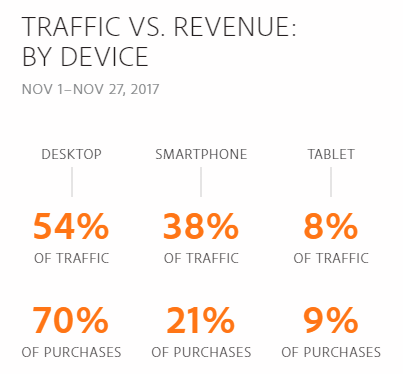
Mobile Traffic and Sales Statistics - Black Friday 2017 Cyber Monday 2017

The continued rapid growth of smartphone use is undeniably impacting retail sales. Similar to how e-commerce is the growth engine of overall retail, mobile sales are powering e-commerce.

The rising tide is driving much of that growth. Mobile traffic from smartphones and tablets peaked on Black Friday and Small Business Saturday (56% of traffic). Then leveled out to 46% of traffic, almost equivalent to desktop traffic (54%), through Cyber Monday 2017, according to Adobe Digital Insights.

However, the mobile shopping experience is a challenge for retailers. Smartphones and tablets earned a lower percentage of overall sales (30% versus 70% for desktop) and lower conversion rates through Cyber Monday.

Retailers can close more sales with mobile shoppers by continuing to improve their mobile customer experience. Shoppers now find mobile as an easy way to check emails (hopefully your emails), find store locations and hours, get product information, snap and share photos, and compare prices.

Optimizing mobile product discovery and mobile payments are the biggest opportunities for retailers to improve the mobile customer experience.

2. Personalized Merchandising with Artificial Intelligence

Customers want a personalized shopping experience. Sales people help shoppers in the store. Now application of artificial intelligence are helping online stores create a similar personal customer experience.

Online stores have massive amounts of behavioral and transactional data now. The challenge is to harness that data to power real-time merchandising decisions.

That’s where artificial intelligence excels.

Fifty-four percent of e-commerce sites have already implemented or plan to add AI in the future, according research from the Q3 2017 E-commerce Performance Indicators and Confidence Report. And 20% expect to add AI within the next 12 months.

The top application is personalized product recommendations. Eighteen percent of online retailers report they are already using artificial intelligence in their product recommendations strategies. But that number will swell dramatically in 2018 with 38% planning to implement within the next 12 months.
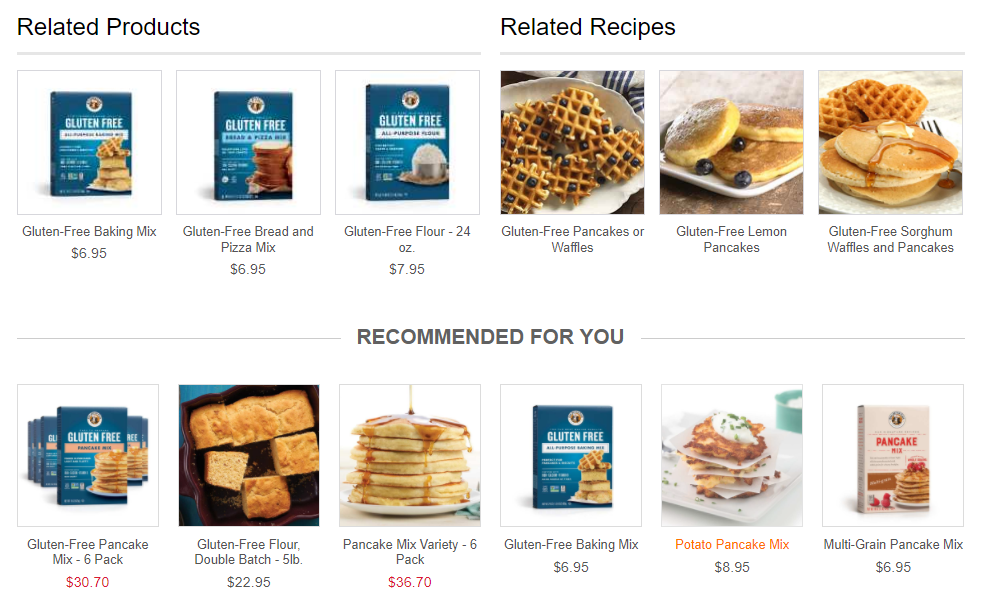
Personalized Product Recommendations Engine - King Arthur Flour

Artificial intelligence can parse user activity, preferences, and sales trends. The result is smart and timely product recommendations that are personal. For example, this type of contextual personalization can be tuned to gender, clothing size, brand preference, or shopper’s location.

Even better for online retailers, this personalization can be experienced by first-time visitors just as well as returning shoppers. So the shopper does not have to take any additional actions to receive the customer experience benefits.

3. Always on Customer Service with Chatbots

Chatbots were introduced as a new technology on the horizon for retailers in our 2017 e-commerce trend webinar. In 2018, chatbots are a must-have element of your online customer experience.

Ecommerce Chatbots - Retail live chat is always on

Think of chatbots like your online version of a sales associate or employee. Except they are always on 24/7/365.

A chatbot is an enhancement from the online chat communication channel. The old chat program still required a human sitting there typing in replies. Those employees had regular shifts. So sometimes customers weren’t getting their questions answered.

Now a chatbot is an always-on program that simulates the conversations your customers have with you. It answers questions, handles specific requests, helps shoppers choose the right product, and executes customer service procedures.

Your customer experience impact is shoppers have better and faster access to what they want when they want it. That’s a huge win. And you win more sales.

Customer adoption, and the resulting better experience and sales, is the biggest reason why chatbots are growing in e-commerce. Additionally two technology drivers are accelerating the deployment of chatbots – smartphones (again) and artificial intelligence (again).

Smartphone use is leading to speaking with a chatbot. Talking is easier than typing. Just say what you need and the chatbot tells you back. Siri, Alexa, and Google Assistant are all voice-enabled chatbots that are quickly growing is use.

Artificial intelligence is helping chatbots be more effective. The chatbot can repeat existing information easily and can be taught to mimic decision-making patterns. But artificial intelligence makes a difference by helping chatbots to actually learn. So your customer experience is continuously improving.

Design Your Customer Experience to Win More Sales

Planning and executing your customer experience strategies is a process of continuous improvement. Deeply understanding your customer’s journey sets you on the right path.

Take advantage of the key trends and technologies. Then test your innovations, measure, and optimize for the satisfaction of your customers and for the results that matter to you.

Ultimately, you can achieve what creative executive Loie Maxwell calls “designed serendipity”. Orchestrate the experiences that produce a customer journey that gives them a winning feeling. Your customers will love it. And you will win more sales.

Is Your Customer Experience Leaking Sales?

Most businesses are leaking online sales in at least 7 critical elements of their customer experience.

The Customer Experience Scorecard grades your e-commerce site using a 42-point checklist proven to increase sales, including:

  • Quickly finding products shoppers are most likely to buy
  • Personalized product recommendations
  • Mobile path to purchase

Want to find your leaks? Find out your quick-win opportunities to take your conversion rates to the next level.


Harness the Power of Mobile for Higher Holiday Sales

Posted by Amy LindseyNovember 1, 2016eCommerce, Merchandising, Mobile, Mobile/Tablets, Navigation, Personalization, Recommendations, Uncategorized

Portrait of a girl shopping online.

Evidence from 2015 suggests that record-breaking numbers of holiday shoppers will make their 2016 purchases online. (Click here to Master 2015 Holiday Trends to Clinch 2016 Holiday Sales.)

Trends show a steady shift from the majority of online purchases being made from a desktop to more purchases being made on mobile devices. While computers still brought the highest average transaction size at $114 (over $89 for tablet and $70 for smartphone), for six of the days leading up to Christmas last year, traffic from smartphones surpassed that of desktops.

Savvy online retailers are preparing to harness the “runaway power of mobile” (NRF) to close more sales than ever during the holiday 2016 buying season.

Here are four strategies to optimize the mobile experience and drive higher sales this holiday and beyond.

Drive Conversions with Interactive Content

Four times as many consumers would now rather watch a video about a product than read about it (NRF). Further, one in four consumers will lose interest in a company if it doesn’t have video. This is great news for retailers who want to capitalize on the rise of mobile for holiday shoppers. Since mobile users are turned off by lengthy text, videos create a clean and attractive design that enhances the user experience. Videos and other interactive content, such as blogs and reviews, can be embedded right into the search results to increase the likelihood that busy holiday shoppers will convert.

Create a Personalized Search and Navigation Experience

Personalization is the next big thing. Customers are increasingly coming to expect a personalized online shopping experience. Nowhere is personalization more important than mobile sites. With long lists of family and friends to buy for and limited time to do it, mobile shoppers this season will want relevant products served up fast, which is a challenge for retailers, given the limited real estate of small screens.

Mobile search and navigation results will win higher conversions when they are automatically fine-tuned on critical facets personal to each shopper, such as gender or size. (See how SLI Systems is personalizing the entire shopping experience.)

Help Searchers Find Your Site

While mobile has yet to surpass desktop for actual purchases, the majority of search is now mobile. Fifty-six percent of searches that resulted in a click to a top retail site during November and December 2015 were conducted on either a smartphone or tablet (NRF).

Mobile users, even more than desktop users, are unlikely to scroll through the first couple of results. While you may not be able to compete with Amazon or other giant online retailers’ rankings for the most commonly used search terms, you can win by capturing long-tail search terms from your shoppers and using them to create dedicated landing pages that are crawlable by search engines. Then, when searchers type those long-tail terms into Google, your landing page will pop right up where mobile shoppers are likely to click.

Use Creative Omnichannel Strategies:

The retail store is not dead. It remains a mecca of holiday spending. Innovative retailers are using the capabilities of mobile to enhance the in-store experience, and vice versa.

To be successful, go beyond what shoppers expect (such as seeing in-store availability for products they see online) and delight them with the unexpected. Offer Wi-Fi during the holidays to make it easier for shoppers to make comparisons and read ratings and reviews on their smartphones. Allow mobile shoppers to set up in-store appointments for services (great for busy holiday shoppers). Or take it another leap forward to create a virtual shopping experience as described in the Forbes article: Virtual Reality Coming Soon to a Clothing Store Near You.

Harnessing the power of mobile for higher holiday sales is all about tailoring the entire shopping experience, from search to purchase, to the wishes of your shoppers. After all, happy holiday shoppers purchase more, and that will make your days merry and bright!


E-commerce Search Queries Hit New High Thanksgiving Weekend

Posted by Tim CallanDecember 4, 2014eCommerce, Site Search

As 2014 holiday shopping statistics roll in, SLI Systems found some interesting trends among search query data for the 800+ e-commerce sites it serves. In addition to seeing a record-breaking Cyber Monday, we identified the weekend’s peak U.S. shopping times, discovered that 40% of weekend shopping was done from mobile devices, saw huge international growth in Black Friday shopping, and hit a new milestone with the number of search queries SLI served.

PeakHolidayShopping_2014Late-Night Shoppers Prevail

Overall, it’s clear that holiday e-commerce shopping is up significantly from last year – The Custora E-Commerce Pulse reported an increase of 15.4% in e-commerce revenue for the holiday weekend (Thanksgiving through Cyber Monday) over the same weekend in 2013. As mentioned in an SLI press release issued today, 10 p.m. EST on Cyber Monday was the peak hour for online shopping in the U.S. Thanksgiving Day shopping also peaked at 10 p.m. EST.

Mobile Monday?

SLI research also found that 37% of Cyber Monday shopping in the U.S. was conducted on mobile devices – this is up from the 29% reported by Marketing Land in 2013. As the percentage of mobile shopping continues to rise – and the term “cyber” becomes more dated (“Cyber Monday” was first coined by Shop.org in 2005 to describe the online shopping peak on the Monday after Black Friday) – this $2 billion shopping day may be on its way toward the new name of “Mobile Monday.”

Black Friday Now a Global Event

While the chart above looks at peak U.S. shopping times, our data surprisingly showed a significant amount of Black Friday traffic coming from Brazil and the UK. Even though these countries don’t celebrate the Thanksgiving holiday that Americans enjoy on the fourth Thursday and Friday of November, retailers have launched Black Friday campaigns in Brazil and the UK to capitalize on the U.S. shopping trend. Amazon was the first to offer Black Friday discounts in the UK in 2000, and clearly, the trend has skyrocketed.

Record Queries Served by SLI

Due to the international growth of Black Friday shopping and online shopping in general, SLI also hit a new record of serving more than 100 million site-search queries in a single day. There are many ways we prepare for supporting our clients’ peak shopping days – from the highly redundant and scalable cloud architecture we offer year-round to the additional site optimizations our engineers conduct well in advance of expected peaks. We’re pleased to be able to support the increased search traffic on any of our clients’ sites, no matter what day of the year.

SaaS Based Site Search Offers Reliability During Black Friday and Cyber Monday

Posted by geoffbNovember 27, 2013eCommerce, Navigation, Site Search

Imagine getting your online storefront ready for holiday shoppers during the lucrative Black Friday and Cyber Monday shopping days and beyond, only to have the entire eCommerce experience shut down due to traffic surges or server problems. The last thing you want your eager buyers to encounter is an error message or a painfully slow shopping experience.

For popular components of your website, like search and navigation, choosing properly hosted solutions can help you avoid failure exactly at the time when you need the highest performance and availability. With eCommerce experts predicting that online spending will increase about 15% in November and December – a total of $61.8 billion – you want to ensure your site is performing at its best during this time.

SaaS based solutions offer far better redundancy than many eCommerce businesses can build in-house. An infrastructure that hosts client sites on multiple servers in multiple data centers, in geographically separated locations, means the site will remain operational even if there is a problem. It’s the smart way to handle spikes in traffic or unexpected outages that could disappoint customers and cause a significant loss of revenue.

The type of highly redundant system described above can help meet many challenges – everything from a hurricane knocking servers offline to unprecedented crowds of shoppers overwhelming your website on Cyber Monday.

At SLI, we use multiple servers in each of our eight data centers in locations around the world to host our client sites, and we make sure to only use a fraction of the capacity of these servers at any given time. In this way, if a disruption occurs, our customers are assured of uptime. If you have questions about bringing greater redundancy to your eCommerce site, ask us by emailing discovery@sli-systems.com.


Cyber Monday Revenues of $1.465 Billion Top Black Friday Sales

Posted by Terry CostaNovember 28, 2012eCommerce, Mobile/Tablets

While we were impressed with Black Friday’s online sales, we were blown away by the revenues generated the following Monday. The biggest Cyber Monday on record saw exceptionally strong sales, with revenues topping $1.465 Billion – up 17 percent from last year and exceeding Black Friday sales. The weekend between the two big shopping days was also hot – bringing in over $1.1 Billion from weekend shoppers.

As with Black Friday, Cyber Monday also saw a huge focus on mobile – as shoppers pulled out their phones and tablets to aid their shopping. Cyber Monday saw an increase in purchases from iPhones over other smartphones or the iPad. These statistics from TabletCrunch show updated mobile numbers based on Cyber Monday sales.

  • Mobile Traffic: 22.4 percent of consumers use a mobile device to visit a retailer’s site
  • Mobile Shopping: 12 percent of consumers use their mobile device to make a purchase
  • The Multi-Screen shopper: The iPhone is driving more retail shopping than any other device with traffic reaching 8.7 percent versus 7.2 percent and 6.3 percent for iPad and Android respectively

Much of the increase around the holidays this year was based around early discounts and deals specifically targeted to online shoppers. Shoppers are increasingly turning to online shopping for around-the-clock shopping convenience, lack of crowds, easy price comparisons and free shipping offers.

As online retail continues to grow, the space is becoming more competitive and finding ways to set your eCommerce site apart from others is essential. Luckily the steps to doing so are not as hard as you’d think – there are simple ways to improve your site that yield great returns. We’ve highlighted a lot of these in previous blogs.

We experienced the impact of the Black Friday and Cyber Monday rush from our clients firsthand, as we saw huge spikes in traffic on our clients’ websites – they more than doubled on Black Friday and increased by 50 percent on Cyber Monday. Interestingly, some of our data shows that Black Friday traffic was helped by shoppers in Brazil, who also jumped online to take advantage of holiday sales.

These major shopping events remind us how our work can mean the difference between a sale and a loss. We provide our clients with peace of mind that our service won’t go down during peak holiday traffic – our servers are “over-optimized” to handle massive spikes in search traffic, as well as natural disasters and other unforeseen issues.

As shoppers become more savvy and continue to reach for their laptop or mobile device from around the globe when they want to make a purchase, make sure you’re in the best possible position to lead customers to the products they want.

‘Tis the Season for Online Pinboards and Mobile Holiday Shopping

Posted by Kemberly GongNovember 14, 2012eCommerce, Mobile/Tablets, Social Media

This holiday season is looking good for online retailers, and interesting new trends are emerging in the eCommerce space for mobile and social media. Increasingly, shoppers are finding products and comparing them through social media and smartphones.

As numbers from eMarketer suggest, smartphones are now being used by 61 percent of consumers to research products while shopping in the store. Other figures from Econsultancy show that up to 38 percent of customers are following through with completing a transaction via that smartphone, and the numbers are continuing to grow every year. Be prepared to see a few tablets at the Thanksgiving dinner table this year and smartphones in hand while at the mall on Black Friday.

As an online retailer, it’s becoming increasingly important to enter the mobile shopping market by creating a mobile-optimized shopping site or app that lets users browse and buy products easily. Though apparel seems like it would be a difficult purchase to make via mobile phones, it’s actually one of the fastest-growing segments of the mobile market.

More shoppers are also turning to their tablets to shop online – it was reported in Yahoo!’s small business advisor blog that “in 2011 tablet users spent 20 percent more per order on average than desktop online shoppers and 50 percent more than smartphone users.”

The Boston Globe also reported that when customers use tablets to shop, they are more likely to be relaxed, shopping from their couch or in a comfortable location, which leads to longer browsing times and a more leisurely shopping experience. Some online retailers are also creating tablet-optimized sites that give a magazine or catalog-type experience with large images, videos and interactive features, which creates a sophisticated and engaging way to view products that is a step above the standard online shopping experience.

Pinterest is driving traffic to online retailers

Consumers are also turning to social media to find new products. Though Facebook was originally targeted as a way to reach groups of like-minded people, the true eCommerce explosion has occurred via Pinterest. According to the eMarketer report, “30 percent of traffic to apparel sites is coming from Pinterest.”

The grid format and image-heavy page layout places a variety of products front and center, and takes users directly to the source of the image with a couple of clicks. If your customers have pinned your product to their Pinterest page, their followers will see it immediately and find your product page by clicking the image. It’s no wonder Pinterest is revolutionizing the way people shop.

According to Shopify, Pinterest users are also more likely to spend more per average order than customers referred from other sites like Google, Amazon or Facebook. It was reported on Mashable that “66 percent of users regularly follow and repin retailers.” Conversely, only 17 percent of Facebook users do the same. This presents a significant opportunity for retailers to start and keep engaging with shoppers through the years.

As users’ engagement rises with mobile devices and social media, it’s imperative to remain relevant to today’s shoppers. Make sure your eCommerce site is optimized for smartphones and tablets and take advantage of the best social media sites to create new channels to promote and sell your products.

Are you seeing additional traffic via Pinterest, other social media pages or on your mobile site during the holidays? We’d love to hear from you!

Online Shopping Forecasts are Looking Merry and Bright

Posted by Terry CostaNovember 12, 2012eCommerce, Site Search

This holiday season, online retailers are expecting to see a much stronger surge in holiday sales – Forrester has predicted online revenues of $68.4 billion this holiday season, a 15 percent increase over last years’ holiday sales, and 3 percent higher than the overall annual online retail growth rate.

With the effects of the economic recession finally starting to ease, slight gains in job growth and signs of recovery in the housing market, many research organizations are predicting an increase in spending.

According to an article in the International Business Times, eShoppers “are expected to spend more in the fourth quarter than in the third on online sales, as they have since the firm started tracking such data in the first quarter of 2007, when Americans spent $28 billion on online purchases.”

Retailers are getting the jump on the expected increase in shopping by starting promotions earlier this year. According to a report by eMarketer, 42 percent of retailers started promotions as early as October, and it was reported that last year, “half of all consumers had completed their holiday shopping before Black Friday.”

Many shoppers will look forward to the deep discounts and large sales offered the day after Thanksgiving with the start to the holiday shopping season. In 2011, the top 500 retail websites had more than 170 million unique U.S. shoppers between Black Friday and Cyber Monday, and online retailers can expect stronger growth this year.

Even with the economy continuing to recover, many shoppers are still price-sensitive. Many online sites feature various offers such as daily deals, free shipping or large discounts during specific periods of time. Because of these promotions, online retailers have become “synonymous with value” according  to Forrester Analyst Sucharita Mulpuru. Online retailers should look at these promotions, as well as loyalty rewards or personalized offers to customers, to determine a workable mix of offers that will make holiday revenues merry and bright.

Are your holiday sales starting to heat up? We’d love to hear from you.

Surprise! Older Shoppers are More Likely to Purchase Online

Posted by Kemberly GongNovember 9, 2012eCommerce, Merchandising, Navigation, Site Search

A surprising fact was just reported: older consumers are most likely to make holidays purchases online this year.

The study, conducted by Velaro, highlighted some interesting facts that online retailers should keep in mind this holiday season when running promotions and thinking about their target audiences.

The study found that 20 percent of shoppers ages 55-64 and will do some portion of their holiday shopping online, which was the highest percentage from any age group surveyed, followed closely by shoppers age 45-54 (19 percent).

Comparatively, shoppers aged 18-24 were least likely to do holiday shopping online. This is an interesting statistic because it’s often assumed that younger shoppers are more technologically savvy and have a higher tolerance for complicated sites to complete transactions.

So, what does that mean for online retailers? When considering an older audience, it’s important to keep in mind that excellent usability and ease of finding products and navigating through your site will be essential to helping your users make purchases. It’s also helpful to make sure your merchandising shows customers the hottest products and special promotions, such as free shipping and free returns, in a variety of ways such like merchandising banners, ribbon overlays and highly-visual pages full of product images.

Additionally, if you are selling electronics, gaming, apparel and other products aimed at the 18-24-year-old demographic, it might helpful to modify your online marketing strategy and aim promotions at parents, not young adults.

Excellent site usability is necessary for all sites – those targeted toward younger demographics may actually have older shoppers accessing them.

Overall, the trends look good for online retailers; 53 percent of respondents said they intended to do at least 25 percent of their holiday shopping online, and some studies are predicting that holiday shopping this season will be up 15 percent overall from last year.

What are your thoughts on the holiday shopping season so far? Please leave your comments below.


Stay up to date with SLI

Featured Posts

  • Maximize Revenue with Enhanced Product Impact Testing
  • Top Five Ways to Prepare for Peak Season
  • Facets, Facets, Who’s Got the Facets?
  • Personalization: It’s Kind of a Big Deal
  • M is the New E: Mobile Commerce Trends and Predictions

Categories

About SLI Systems

  • What We Do
  • Who We Are
  • Why SLI

Learn

  • Webinars
  • News Room
  • Events

Connect

© Copyright SLI Systems, 2018. All Rights Reserved | US: (866) 240-2812 | Legal