SLI home
User login

A BLOG FOR E-COMMERCE LEADERS

  • Blog
  • Resources
  • Webinars
  • Customer Experience Scorecard

SLI Blog

SLI at the Search Marketing Expo!

Posted by Kemberly GongMarch 12, 2013Conferences, eCommerce, SEO

Terry Costa, VP of Marketing at SLI Systems, spoke last night at the Search Marketing Expo (SMX) in San Jose, Calif., on how to improve your eCommerce site’s search engine optimization (SEO). In addition to using techniques like User-Generated SEO, he also highlighted the importance of improving the user experience of landing pages.

According to Costa, most consumers use similar keywords when searching the Internet for an eCommerce site that offers the product they want. When searching for a product on a retail site itself, they tend to vary their search phrases more. He also mentioned that the search box on an eCommerce site is one of rare places where visitors actually tell a retailer what their intent is. Matching those keywords with products they actually click-on and capturing this data is very important in improving not only your conversion rates, but also your SEO efforts.

motorcycle superstore - MBOS1

motorcycle superstore - MBOS

Costa also talked about how imperative it is that you help customers find what they’re looking for quickly once they land on your site. Focusing on the user experience by showing visitors more sorting options, refinements, similar products, merchandising information like “3 left” or “free shipping”, is important to help reduce abandonment.

It’s also helpful to show users other recommended products when they enter your site through a link from an Internet search engine. Let’s say a customer searches google for “scorpion exo 900” and clicks on the first link with that title. It will take them to a Motorcycle Superstore product detail page.

However, if that exact helmet isn’t what they want, Motorcycle Superstore uses that search term to recommend other relevant items that match the phrase, to ensure that customers see other possible items they might like.

Surveys by SLI Systems have shown that 73% of visitors will leave a site within two minutes if they are unable to find what they are searching for. By giving them other options, you’re increasing the chance they’ll stay on the site and make a purchase.

To learn more about improving your site’s SEO, email us at discovery@sli-systems.com

Read More

Don’t Miss our Re-platforming Webinar Tomorrow

Posted by Terry CostaMarch 6, 2013eCommerce

Many eCommerce companies just starting out may not have the budget or need for a large, full-service platform. Because of this, they may choose an eCommerce platform that works for them at the time. But as companies grow, the original platform they started with may not fit the needs of the company they may consider changing platforms or moving to on-demand solutions for more flexibility, reliability and cost savings. This is otherwise known as re-platforming.

There are obvious benefits to re-platforming – upgraded technology, better features or reporting may all fit the company’s current needs and help address major pain points. However, switching platforms should be carefully considered before a big decision is made.

Re-platforming requires a huge commitment not only in dollars but in time, project management, dedicated project team, staff training and overall learning curve. Additionally, a new platform may still not have all of the features that your site needs. For companies that cannot afford or choose not to re-platform, there are alternatives that can help delay or avoid it altogether.

So is it right for you? Join our webinar tomorrow, Thursday, March 7th with Fit for Commerce to learn more about their findings that they published in their recent white paper on the subject. You’ll also hear how from Brandon Finch, Director of eBusiness for Jelly Belly, how they augmented their existing platform and avoided re-platforming altogether.

Download the Fit for Commerce white paper “Site Search vs. Re-platforming: How focusing on site search can eliminate the need to re-platform your eCommerce website” here.


Read More

Replatforming: Is It Right For You?

Posted by Kemberly GongMarch 4, 2013eCommerce, Site Search1 comment

Are you stuck between a rock and a hard spot when it comes to your eCommerce system? Does it have some features that you still like, but is missing crucial others that can make or break your business?

It could be time to change to a new platform. Or maybe, it’s time to explore ways to enhance your existing site with additional site search and merchandising features that will meet your current need while giving you breathing room to look for new solutions. In some cases, eCommerce sites have been able to completely avoid expensive, time-consuming re-platforming entirely by using site search to fill in the gaps that their platforms were not adequately providing.

If you’re at a crossroads about the best way to move forward to grow your site’s functionality efficiently and cost-effectively, you shouldn’t miss our upcoming webinar this Thursday, March 7, on Site Search vs. Re-platforming. You’ll hear from Fit For Commerce about the considerations around re-platforming, and can find out from Brandon Finch, Director of eBusiness for Jelly Belly, about the challenges Jelly Belly faced and the solution that has helped their site grow.

Enhancing the most fundamental abilities of your site’s search and navigation can help remove the pressure to re-platform immediately or entirely, because customers can still complete the most fundamental, revenue-driving actions of searching and finding a product to purchase.

When you are considering re-platforming, it’s best to ask yourself these questions:

  1. Am I completely unhappy with everything about my existing platform?
  2. Do I have 3+ months to devote to changing and implementing a new platform?
  3. Do I have a dedicated cross-functional team that can handle the change in platforms?
  4. Are the goals of all departments met by re-platforming?

If you answered “no” to any of the above, you won’t want to miss our webinar to learn more about the best available options for you. Every company’s business and growth plan is unique, and a one-size-fits-all solution is not the only option.

Also, download the Fit For Commerce white paper on Site Search vs. Re-platforming.

Read More

Non-Product Content for a Full User Experience

Posted by Shaun RyanFebruary 27, 2013Newsletter, Site Search

For many, the process of shopping is social. While social media and online shopping continue to evolve, the essential act of gathering information or sharing our experiences with others is deeply embedded in our shopping behavior. Whether we’re telling our friends about how we like the new car we just bought, getting a recommendation on a particularly comfortable pair of shoes, or hearing about a sales clerk that was a little less than helpful, we enjoy informing others and getting their feedback.

At SLI we understand that, and have created many ways for online shoppers to gather information and share their experiences. We offer shoppers the ability to search non-product content, including reviews, video tutorials and video reviews, blogs, and social media mentions. Having the ability to see products from different angles, get a sense of scale or mechanics through videos, or read reviews builds credibility not only for the product, but for your site.

Making this non-product content available is important because it gives buyers access to information without having to do outside research, thus reducing risk and building confidence in their decision, all without leaving your site.

It’s not always easy to implement, however. Basic search functionality – like what we’ve seen with Google Commerce and some eCommerce platforms – may not allow for easy implementation of non-product content. More advanced site search solutions have this capability and allow you to expand your service offering.

Teaming up with a full-service site search provider can allow you to access a full range of tools to help your customers. It’s important to look for a knowledgeable support team that keeps you updated with data-driven insights about how your customers interact with your site.

I’d like to share with you a few of the ways we can help you improve your site with non-product content.

folica - user reviews2

Indexing Reviews

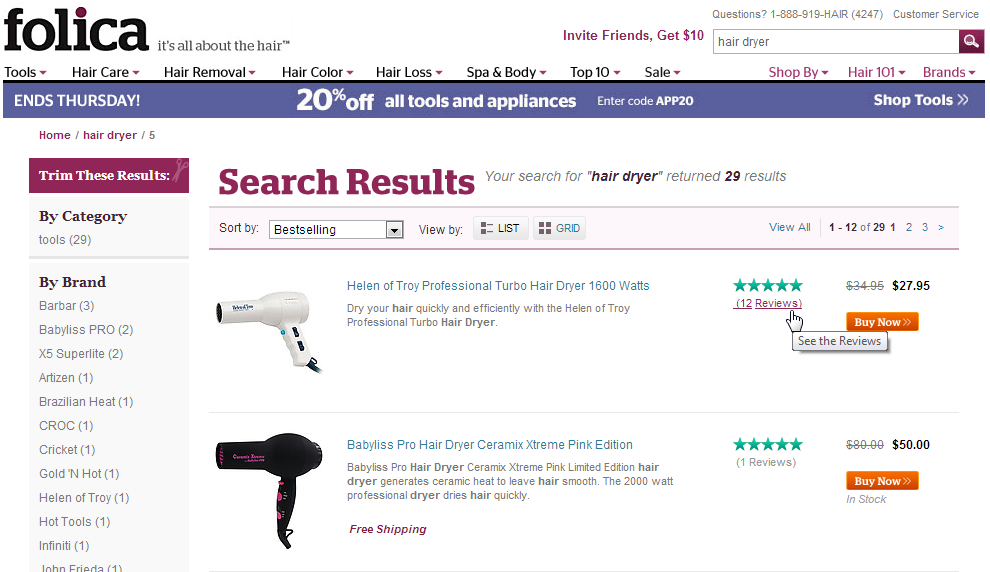
In the age of the Internet, we’ve become accustomed to easily-available reviews. For many purchases with high dollar values, it almost seems crazy not to read reviews before making a decision. Why not make reviews searchable, so that your users can find the products that are ranked most highly? Folica has done this well, so that within a search for “hair dryer”, products can be refined to show the highest-ranked hair dryers first.

Indexing Social Media, Images and Videos

In that same vein, why not show your customers other content that will help them make decisions? This can be videos that show reviews, tutorials or other helpful content. Here are three examples of very different SLI customers who are using these tools to great effect.

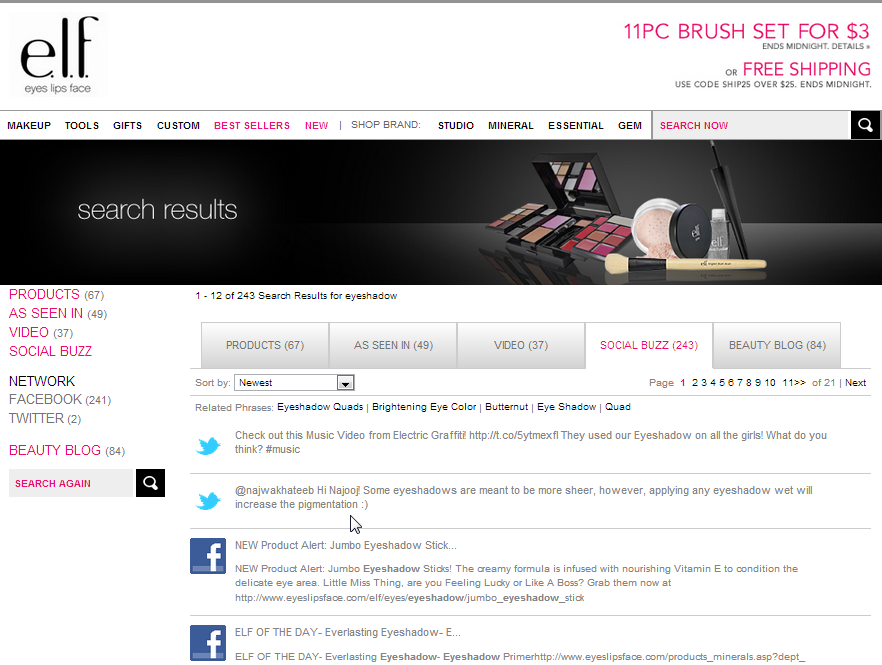
eyeslipsface- social indexEyeslipsface.com allows all social media mentions of their makeup and beauty products to be searchable, as well as an “As Seen In” tab showing the latest fashion magazines to have featured their products. Keyword queries will also turn up blogs with those keywords in them

motochanic - rossi helmet - instagram


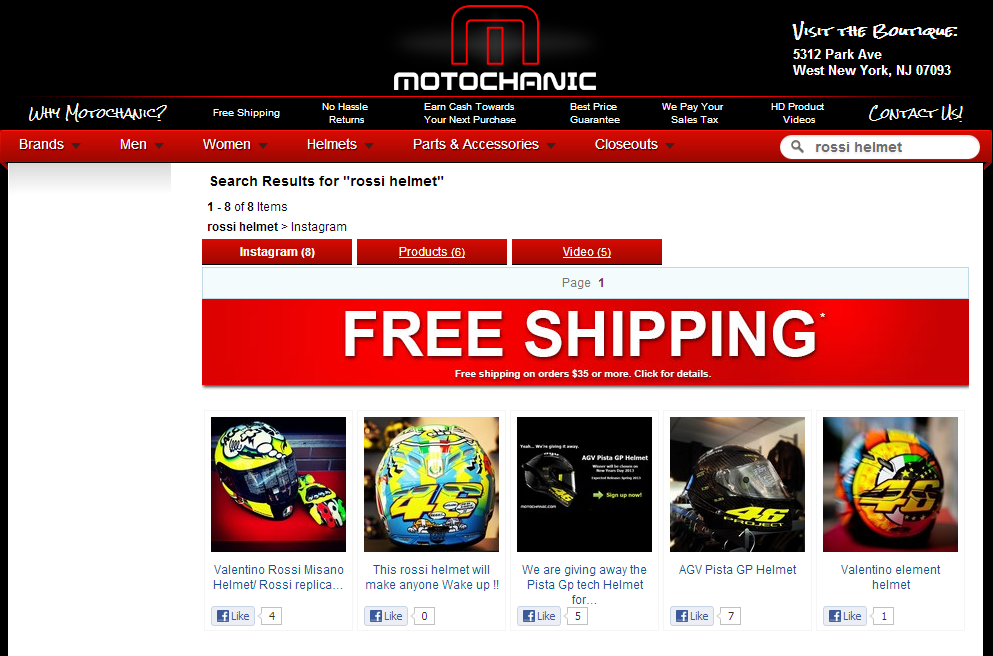
Motochanic.com has led the pack with indexing Instagram photos on their search results pages. Now, searches for “Rossi helmet” will not only return all available helmets of that brand, but all Instagram photos with the same tag, and related videos tagged with the same keywords. There’s also a “Like” button for each product, to share across Facebook.

bulk reef supply - videos

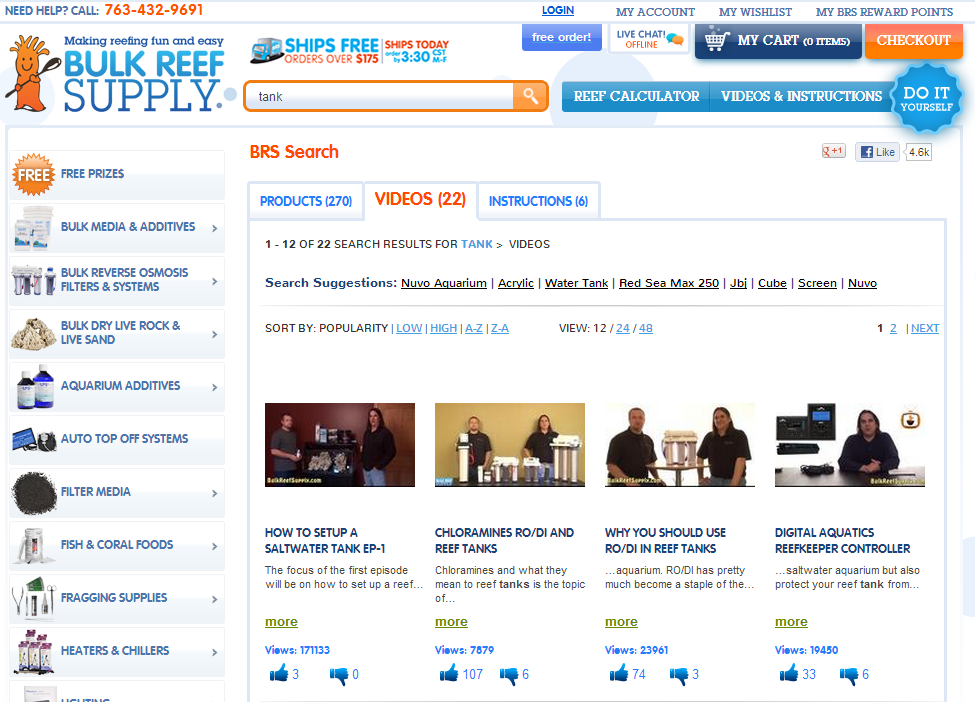
BulkReefSupply.com also indexes their videos alongside product content. Customers interested in building a saltwater aquarium can find informational videos through search, thus establishing Bulk Reef Supply not only as a helpful site for buying products, but an educational resource.


Social Sharing on Search Pages

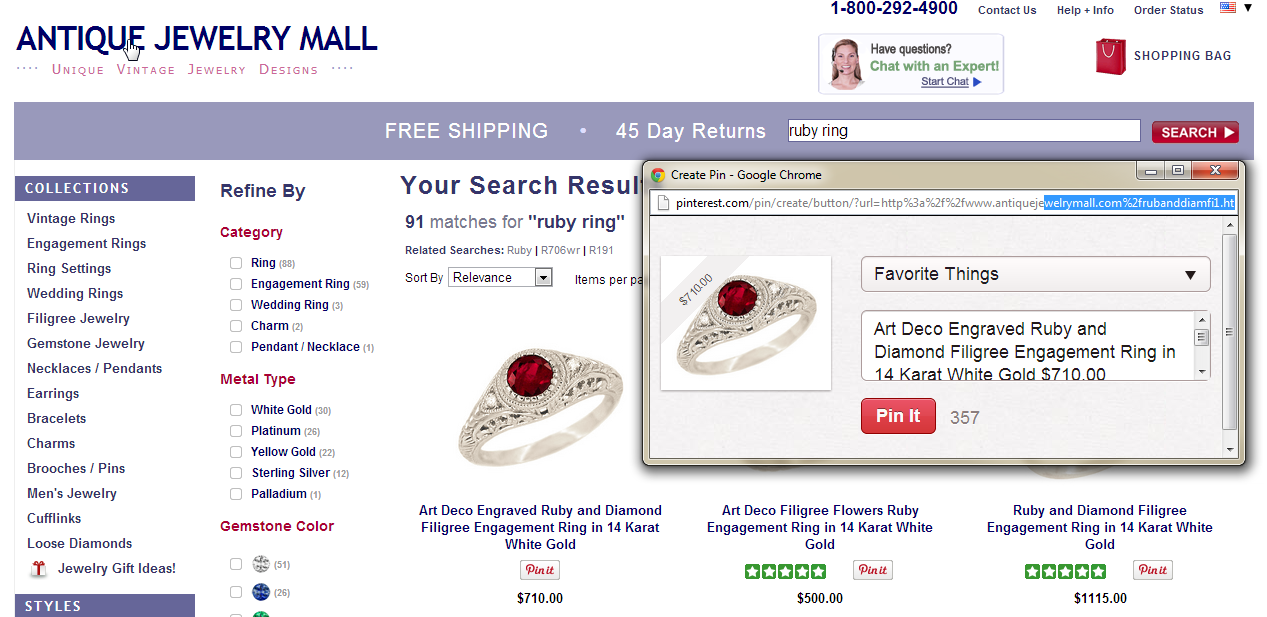
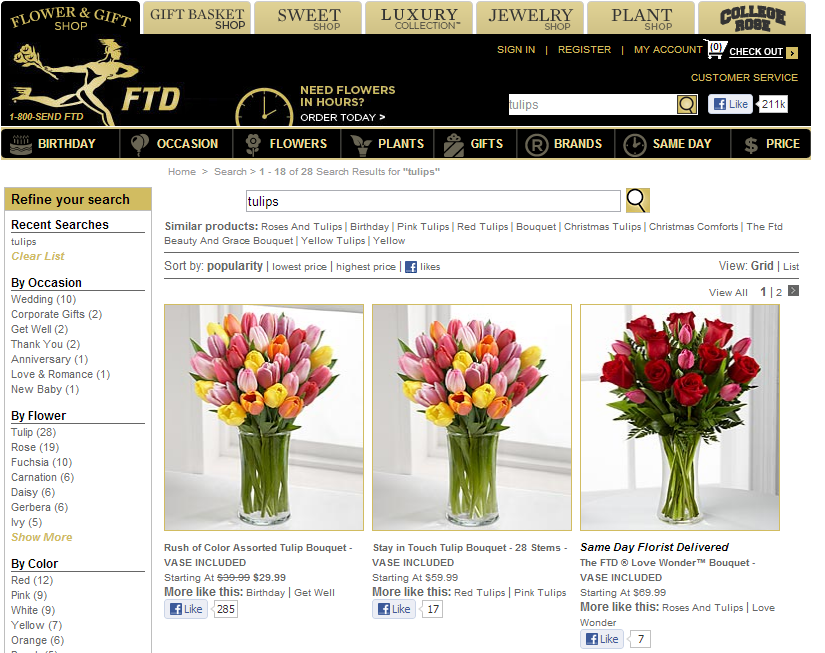
Of course, social sharing features are also important, as we’ve seen the ability to “Like”, “Pin It” and “Tweet” results on most sites. We add that same functionality to your search pages. On AntiqueJewelryMall.com, you can pin your favorite pieces on your Pinterest board. And on FTD.com, you can “Like” the bouquets and flower arrangements and give your friends (or your significant other) a clear hint about what you like.

antique jewelry mall - pinterest

FTD social media


Search on Social Media Pages

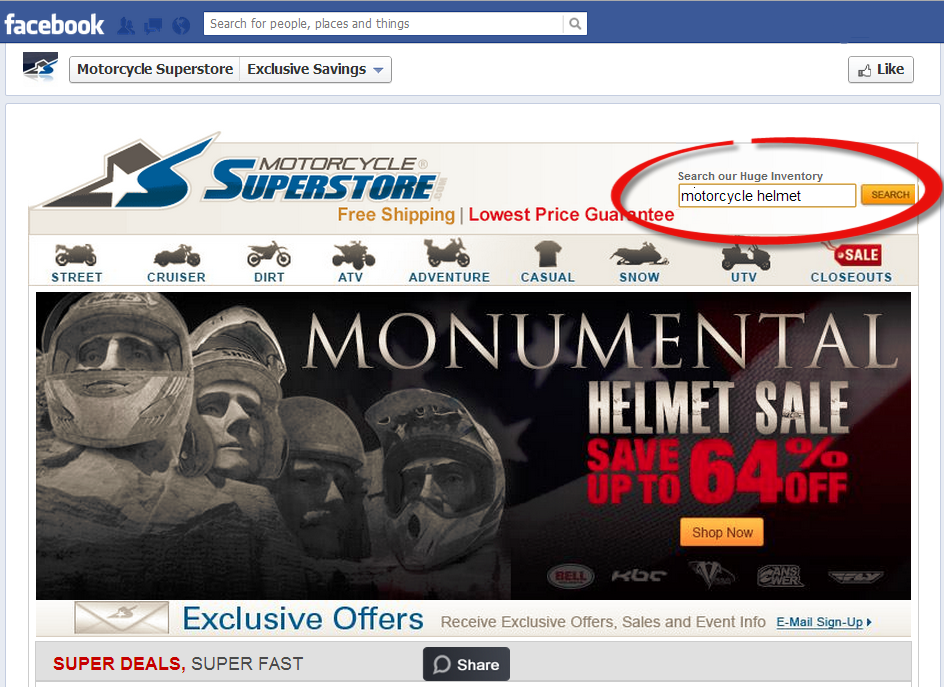
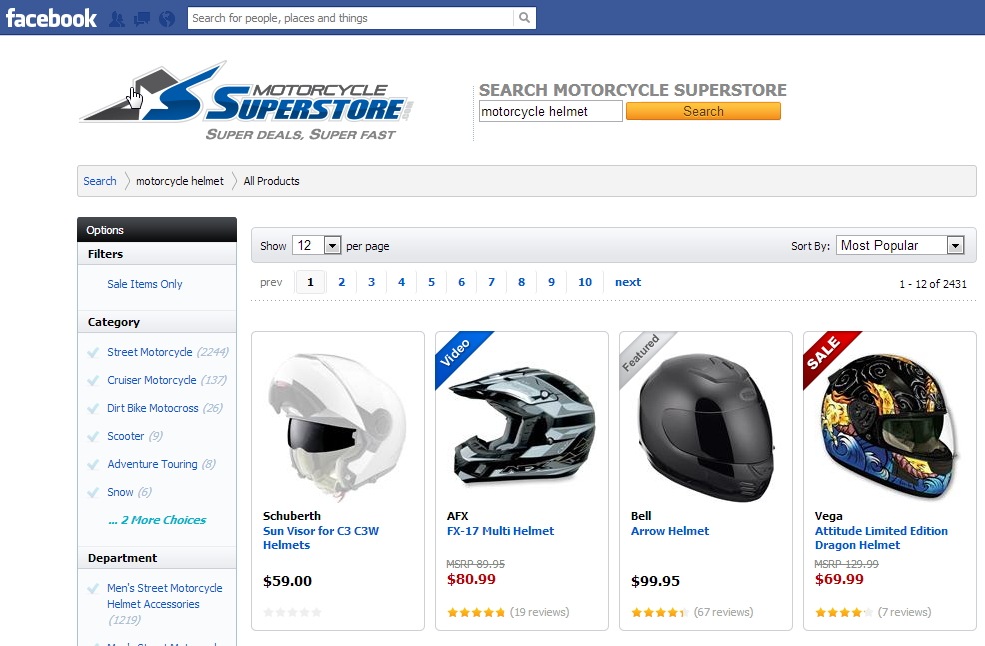
Lastly, some sites use their Facebook pages to drive customer traffic and transactions. Motorcycle Superstore is one that allows visitors to their Facebook page to search products directly, which takes them to a Facebook-specific search results page.

motorcycle superstore - FB2

motorcycle superstore FB2.1

Videos, reviews and other non-product content are all helpful tools that can be used to help customers find what they need and get enough information to make a purchase. Finding the right balance is different for every site. To find the right balance for your site, contact your Customer Success Manager or, email us at: discovery@sli-systems.com.

Read More

3 Ecommerce Navigation Errors to Avoid

Posted by Sasha ButkovichFebruary 26, 2013eCommerce, Navigation, Navigation Tips

Guest Post by Sasha Butkovich of Ecommerce Outtakes

There are plenty of potential errors to be made in ecommerce navigation, and you’ve probably seen them all at one point or another in your own online shopping experiences. But what are the biggest “Don’ts” when it comes to navigation? Here, we’re taking a look at the top 3 mistakes we commonly come across in ecommerce sites. Avoiding these errors is a key step toward creating a great experience for online shoppers.

1. Confusing or insufficient filters and refinements

Some shoppers come to a site knowing exactly what they want, while others come to browse. Every ecommerce site should be able to cater to both shopping styles. One huge factor that can really help (or hurt) in this area is the filtering or refinement options. Making sure there are enough clear and relevant options to help customer narrow down their results is key! Unfortunately, this is a feature that’s very common for ecommerce sites to get wrong.

Take a look at this example from Capezio, a well-known brand in dance shoes and apparel. Throughout the pages of this ecommerce store, there’s a huge lack of filters. For instance, here’s the ballet shoes page. The seasoned dancer will likely come to this page knowing what they need, but for a new dance mom or dancer, this would be a frustrating experience. There aren’t any filtering or sorting menus anywhere! You can’t filter out child or adult, men’s or women’s, size, or even price. Also, many of these shoes are available in several colors, but you can’t tell from this page. Having those filters and refinements would definitely help in an instance when a parent might need to find black ballet shoes for their child’s recital, for example. Without filtering options, shoppers may become overwhelmed and leave the site.

capezio


2. Non-intuitive design

It goes without saying that nobody wants a boring website, and that ecommerce sites should be unique expressions of the brand. That’s definitely a good thing, as long as it doesn’t come at the expense of complicating the navigation. Site design should be intuitive for the shopper. It should be easy, almost instinctive, for them to figure out how to get around and find what they’re looking for. Many sites adhere to a basic format (category tabs along the top, filters and refinements on the left, etc.) which has become habitual for online shoppers. This doesn’t mean you can’t deviate from the formula, but bear in mind the impact it can have on the user experience!

Here’s the website for a German shoe company called Trippen. Right from the home page, it’s hard to see where you’re supposed to go. In fact, if I hadn’t already known that this was an ecommerce site, I might not have even figured out that I can purchase things here. I happened to hover my mouse over the little “Welcome!” link in the upper right corner, and then I could see the menu of shopping options. It’s not a great idea to keep your store hidden if you want people to buy things! Make it easy and intuitive.

trippen


3. Inaccurate search function

Browsing is one thing, but a helpful site search is just as, if not more, important. When shoppers come to your ecommerce site with a product in mind, the search should help them get to it as quickly as possible. Using Rich Auto Complete within the search function is a great feature. By offering up suggestions for keywords and products, a search like this can definitely increase the speed and accuracy of the search process. Some ecommerce sites however are still not there yet, and it’s a shame.

Take for example clothing retailer Forever 21. Although the search function on this site does suggest keywords as you type, the results aren’t very clear. Here, I searched for “red jeans,” and the first 10 results that appeared weren’t even red. Many of them might have a red color option on the product page, but it might be confusing for a shopper not to see the image of the item in the color they’re searching for. It takes more time to click through each product to find out if they come in red, and some people may not want to invest that time. Even providing swatches of the other available colors on this results page would be a step in the right direction. If the search function provided more accurate results, Forever 21 might generate more sales.

forever 21

These three errors are some of the most common mistakes in ecommerce, but you can avoid them. Keep filters and refinement options relevant, feature a design that’s intuitive and simple, and make the search function as accurate as possible. If you have that, your ecommerce site is well on its way to great, user-friendly navigation.

Sasha Butkovich is a contributor to the Ecommerce Outtakes blog, which aims to improve usability and the ecommerce experience one blog post at a time. To read ecommerce tips and news, and to submit your own site for a free review, visit EcommerceOuttakes.com.

Read More

Customer Profile: Steve Elkins from WEBS

Posted by Kemberly GongFebruary 25, 2013Conferences, eCommerce3 comments

While we love talking with our clients about site search and navigation, it’s also a nice break to see our clients in action. Last week, I caught up with Steve Elkins, Co-Owner with his wife Kathy, of WEBS, one of the largest independent retailers of yarn in the country.

photo 5

Elkins was attending Stitches West 2013, one of the largest yarn and crochet shows that features classes and sessions as well as a market for knitting and crochet enthusiasts to buy skeins of yarn in thousands of colors, weights and varieties.

WEBS is a family-owned business that Elkins’ mother started in their basement in 1974. Since then, it has grown to be the largest brick and mortar yarn retailer in the United States. When Elkins took over the business in 2002, he began working to improve the web business. In 2007, WEBS brought on SLI Systems to manage the search for their eCommerce site, www.yarn.com.

For knitters that live in the Northeast, making pilgrimages to their 16,000 square foot store in Northampton, MA is not uncommon. “Some people will go two, maybe three hours out of their way to visit the store,” said Elkins, who said the store has been likened as a Mecca for knitters.

photo 3

But for customers throughout the country who don’t have access to such a wide variety of products, they can access the huge inventory and wide selection that WEBS offers through www.yarn.com. They have a separate, larger warehouse to handle all shipping for the eCommerce business.

Elkins estimated that WEBS stocks roughly 400,000 units of yarn at any given time. With huge varieties, weights and colors to stock and sell, sorting through those products can be confusing for customers. SLI’s search and refinements have figured strongly in helping customers search a product or material, such as angora, and then refine the large selection down by brand, fiber, weight or price range.

“We tend to carry products you won’t find in the larger chain stores,” he said, such as hand-dyed yarns, a larger selection of wool yarns, discontinued and close out items and their own line of products.

photo 7

They’re continuing to develop their online business, starting with redesigning their site with responsive web design, to ensure that the site works well across a variety of mobile devices. He said they are also looking at smaller tweaks to improve the overall usability and site features.

Additionally, Elkins added, SLI’s reports help him stay up-to-date such as trending keywords to indicate popular products and other important analytics. SLI’s customer service team keeps him informed about new features that he can implement to continually improve the online shopping experience. As a longtime customer, he said the personalized service SLI has given through the years and the effectiveness of the search has made the choice easy.

“We have stayed with SLI for so long because it works,” he said. “It’s as simple as that.”


Read More

How Site Search Helped One Company Launch a New Product Line

Posted by Kemberly GongFebruary 22, 2013eCommerce, Reporting and Analytics, Site Search

lovehoney - 50 shades

We talk a lot on this blog about how site search can help retailers improve conversions, merchandise products better and increase average order value. Some retailers have also launched new successful product lines using site search. Because of keywords that kept popping up, that were different from what visitors normally search for, our online retail client Lovehoney, based in the UK, was able to launch a new product line branded for the soon-to-be popular “Fifty Shakes of Grey” phenomenon – before anyone else knew it was a big deal.

Lovehoney, the UK’s largest retailer of adult toys, figured out that its customers were big fans of the 50 Shades of Grey book series, long before the books were heavily covered in the media. Matt Curry, the head of e-commerce for Lovehoney, and his colleagues, looked at keyword search data from Learning Search, and noticed that customers were searching for the name of the books as well as some of adult products mentioned within – terms they had never seen or heard of before.

Sensing demand for 50 Shades-themed products, Lovehoney quickly reached out to its buyers to stock up on relevant items, and also did a partnership deal with the books’ author to become the exclusive distributor for a line of 50 Shades of Grey merchandise. On top of that e-commerce breakthrough, Lovehoney is also reaping the benefits of Learning Search – the conversion rate for site search users is four times that of non-site search users, and average revenue per visit is 15% higher for site search users as well.

Lovehoney has a great story to tell about its ongoing success, and we’re happy to have played a part. You can listen to their recent webinar and hear more about how site search has helped their business grow.

Read More

Cache’s Kevin Metz and SLI’s Shaun Ryan on the Power of Refinements

Posted by Kemberly GongFebruary 12, 2013eCommerce, Navigation, Navigation Tips1 comment

If there is one key takeaway from the Internet Retailer Web Design and Usability Conference, it’s that eCommerce sites must be responsive to the increased sophistication of customers by offering better user journeys, more helpful features and creating safe, more satisfying experiences that meet or exceed customers’ expectations.

Kevin Metz, VP of e-commerce for Caché and SLI Systems CEO Shaun Ryan launched into an exciting discussion at IRWD 2013 about how faceted navigation does just that by allowing customers to find and refine large groups of products by helpful parameters. This in turn can lead to increased conversions and average order value.

In their discussion, “Take search beyond words: Develop a multi-faceted refinement strategy to deliver more sales”, Metz said Caché uses several refinements, such as color swatches, material, level of embellishment and occasion that allow shoppers to narrow down selections to the most applicable group. Through the use of these refinements, their search usage has increased by 42 percent, and they’ve seen an 88 percent increase in conversion rates from those who use search.

He also said that because they design and manufacture their own products, their specifications and attributes allow a richer browsing experience.

“Our merchants take great care in defining attributes and characteristics,” said Metz. “We were able to mine that data and integrate it and serve it up to the consumer,” offering richer search criteria for customers to search.

Ryan also discussed other common SLI-powered faceted navigation features, such as selection sliders, images on facets and effective improvements in the logic of bread crumb trails, which all help create a unique and streamlined browsing experience. Facet sliders let users manually change variables they are searching for, such as price or size ranges, dimensions or ratings. Facet images can help give a visual break to a page full of text and improving the logic of breadcrumb trails can help users travel throughout a site more easily.

These and other navigation features can help give greater leverage in putting top categories front and center for customers and add richness to the way we search and browse for products.

Read More

5 (More) Ways to Enhance Your Site for a Better Tablet Experience

Posted by Kemberly GongFebruary 11, 2013eCommerce, Mobile, Mobile/Tablets, Site Search Tips

Practical Ecommerce magazine recently listed five ways to enhance your site for a smoother, more optimized tablet experience. They tackled many issues to optimize page load times, such as using “lightweight, beautiful images,” replacing graphics with CSS where appropriate, and optimizing the site for faster loading times. They also suggest using techniques to improve viewing and interacting with the site, such as using responsive design templates and making sure navigation is finger-friendly. (Another great article,  The Pursuit of Tappiness, is here.)

Those are all great steps to take to improve the speed and navigability of your site. Additionally, we believe there are other details that should also be addressed when making modifications to your site.

Conduct Regular Usability Testing

We recommend conducting regular usability testing to continually review and understand how users interact with your site and where their pain points exist. Your customers may not know exactly the best way to design it but you’ll start to see trends in what they like and don’t like. As customers become more accustomed to online shopping and experience new and innovative features on other sites, both through laptops and mobile devices, they will come to expect these same or better features on yours. Additionally, search data can provide valuable user insights. Data from search reports can help illuminate product trends and indicate whether users can find what they’re looking for on your site. Usability testing makes sure you have your finger on the pulse of consumer behavior.

Direct to Product Pages Quickly

Take users to the product detail page as quickly as possible. Optimizing your mobile site’s search reduces the number of clicks needed to find a product and will make it easier for shoppers to quickly find and purchase an item. Remember that most users aren’t using their tablet in conjunction with a keyboard or mouse, so it must be easy to find products with fewer taps. Having a site search that returns the best results increases their chances of finding what they want.

Improve Navigation for Easier Browsing

Guide shoppers that are browsing to what they want… quickly. Many shoppers who use tablets to browse may enter a site without knowing exactly what they want. Being able to sort and refine large groups of products through the navigation can help whittle down your products to a manageable selection.

Save Information for Faster Transactions

Allow users to save important personal information on your site so they don’t need to type in a lot of basic content every time they make a purchase. Giving the user the ability to save mailing addresses and payment information, but also the ability to store items in a wish or shopping list can help speed the checkout process. Amazon does an excellent job at this with its “1-Click” ordering option. Additionally, showing “recently browsed” products can quickly show customers something they might be interested in seeing again.

Use High-Quality Content and Photos

Include better product content and many, high-quality images, to clearly display and describe the product. A common complaint among online shoppers is not having enough information to make an informed decision. By showing the product from a variety of angles and giving users the ability to zoom in and out, and clearly conveying product information, shoppers will have less reason to abandon their shopping session.

The eCommerce experience is continually changing, and customers will continue to push for faster sites with better usability. Taking a deeper look at these site search and display details, and conducting routine usability testing to assess and fix pain points are good habits that will keep your business on the cutting edge.

Read More

Come See Us at IRWD 2013

Posted by Terry CostaFebruary 8, 2013Conferences, eCommerce, Press

Join us at the Internet Retailer Web Design & Usability Conference next week in Orlando. We’re talking usability and web design next week. Ryan Hennig from Miles Kimball is doing a presentation on Feb 12 at 9:00 am on the Top 10 Usabilty Challenges. Shaun Ryan, SLI Systems CEO and Kevin Metz VP of e-commerce at Caché will be presenting also Feb 12 at 1:30pm.

You won’t want to miss their presentation, “Take search beyond words: Develop a multi-faceted refinement strategy to deliver more sales”. Learn their best-practices for improving the online shopping experience through refinements and search facets, and hear new ideas for future innovation and improvement.

We will be holding an event on Monday evening from 7:15 pm – 8:15 pm in the Ballroom Commons, just outside from the Expo and Session halls. All attendees can try to ride a YikeBike! Never heard of a YikeBike? Well come see for yourself. There will be food and beverages provided.

Don’t forget to stop by our booth and learn how you can easily increase your site conversions with optimized site search and navigation. We’ll be at Booth #301.

See you there!

Read More

Can Facebook’s Graph Search Learn from E-commerce?

Posted by Terry CostaFebruary 4, 2013eCommerce, Social Media

There’s been a lot of talk the past couple of week’s about Facebook’s new Graph Search which most think is long overdue. While Graph Search – currently still in limited beta – has an interesting and perhaps compelling approach to search, we in the e-commerce search sphere got the end-user experience down a long time ago. You can even say that e-commerce search has been at the forefront of many of today’s search “revolutions” and is a key driver in developing trends around how people search the web.

In fact, a social-oriented search experience already exists on many e-commerce sites, where visitors can filter search results by user reviews to find products that are most highly rated by previous purchasers. SLI also applies this ‘wisdom of crowds’ approach to our own search by delivering results based on items that get clicked on the most for each keyword. Many sites also allow visitors to filter results by the number of Facebook “likes” or Pinterest “pins.” And when integrated with either of these sites, visitors can even see what items their social connections have given the thumbs-up to.

While Facebook users may start to flock to Graph Search to find photos, restaurants, music and other cultural events – and see what their friends have been posting on a given topic – Facebook can still enhance the experience quite a bit by adding features that are prevalent on many e-commerce sites.

The ability to refine searches by attributes like color (red dress or blue shirt), sizes, price, location, etc. is also critical. If a search returns hundreds or thousands of results (which would likely be the case with a Facebook search), people want mechanisms to narrow down those results and get closer to what they want. Mouse-over pop-ups, which provide all the detail of a specific result when the user rolls their cursor over the image, is also a great way to streamline the experience, as are Quick View Windows. 

The team here are all very excited to see Facebook taking search to the next level. It validates the importance of good search, no matter what type of site, and also helps people experience search in a new and innovative way. As search continues to evolve and advance in new directions, it’s intriguing to see how different types of search – web search, e-commerce search, social search – can all borrow from each other.

Read More

Tablet Browsing Made Easy

Posted by Kemberly GongJanuary 30, 2013eCommerce, Mobile/Tablets, Navigation, Site Search

Does it really come as a surprise that eCommerce purchases on tablets is outpacing smartphones? No, probably not. Though they share the same mobility and ease of use as smartphones, tablets are a natural fit for online browsing with larger screens and better displays that mimic the catalog experience but add much richer functionality. Going a step further, tablets are also starting to gain traction in home computing.

Many eCommerce sites are faced with the challenge of providing the best user experience based on the type of device their customers are visiting from. Smartphones require pages that are optimized for quick loading times on small screens, and links that are easily clickable for large fingers. Tablets, being larger in size, are just made to be used for browsing and shopping.

Tablets offer a catalog experience, amplified – a richer experience offering interactive displays with video, specifications and reviews, social sharing features and non-traditional page layouts, and still also have the opportunity to lead buyers to checkout. For example Boden’s outfit maker feature allows an outfit to be tried on using a tablet before being purchased, and is an engaging way to show clothes in an interactive way.

Boden's outfit maker

Other sites have interesting layouts that feature larger images or easy ways to navigate through to find products. It’s always important to keep in mind that shoppers using tablets don’t have a keyboard and mouse to help speed the browsing process. Designing the experience so it’s easy to find products with a few taps on a screen will please your customers and may inspire them to return to your site.

Practical Ecommerce just featured 15 excellent iPad-friendly sites, which you shouldn’t miss.

We believe we’ll start to see more tablet-optimized sites coming soon. Tablets – iPads specifically – took the lead in mobile holiday shopping in 2012, and offer an ideal platform to facilitate browsing, exploration and ultimately purchases.

Do you shop using a tablet? What features do you like most?


Read More

Powerful Merchandising in Three Quick Steps

Posted by Shaun RyanJanuary 28, 2013Newsletter, Site Search

In “brick and mortar” stores, we rely on product design and packaging, product placement such as shelf locations or end caps, and discount signs to help draw shoppers’ eyes to special deals or items we want them to see. In online shopping, we use different techniques and features to create an equivalent merchandising experience that helps visitors identify brands, sales or seasonal promotions and essentially, draws more eyes to products.

Online merchandising allows retailers to adjust the display of their inventory with the click of a button. There are many different ways to create powerful merchandising, and I would like to highlight three primary steps – tuning, merchandising banners and reports – which can add significant value to your eCommerce efforts.

In SLI’s merchandising console, we have created tuning rules that are designed to help promote or demote specific products as the merchandiser sees fit. This works in conjunction with our learning search and navigation, which naturally surfaces the most popular products over time. Learning search works remarkably well in increasing conversions because it adapts to what you visitors want. However sometimes you may want to override that. For example, a product may be new or you may want to promote it because of better margins, excess stock, or to coordinate with other promotional activity. In cases like this, merchandisers can create a “tuning rule” that places certain products at the top of the search results or navigation page. They can also push certain products, such as out-of-stock or seasonal products to the bottom of, or completely off of the results set.

Another useful merchandising tool is the banner. Banners can be shown anywhere on the search or navigation page and can be triggered by a number of different rules. For example the banner could contain logos and other imagery associated with the keyword or facet. If someone searches for a TV or clicks on the TV category you could show a banner that displays a TV selection widget. Banners can be used when people search for products that you don’t carry, with the banner promoting alternative products.

Many of our customers use a combination of banners and tunings to create landing pages for advertising campaigns. They select a keyword that is unique to the campaign, write a rule to show a banner with graphics associated with campaign and then use tunings to select products to show on the page. This allows marketers to quickly and easily create arbitrary landing pages.

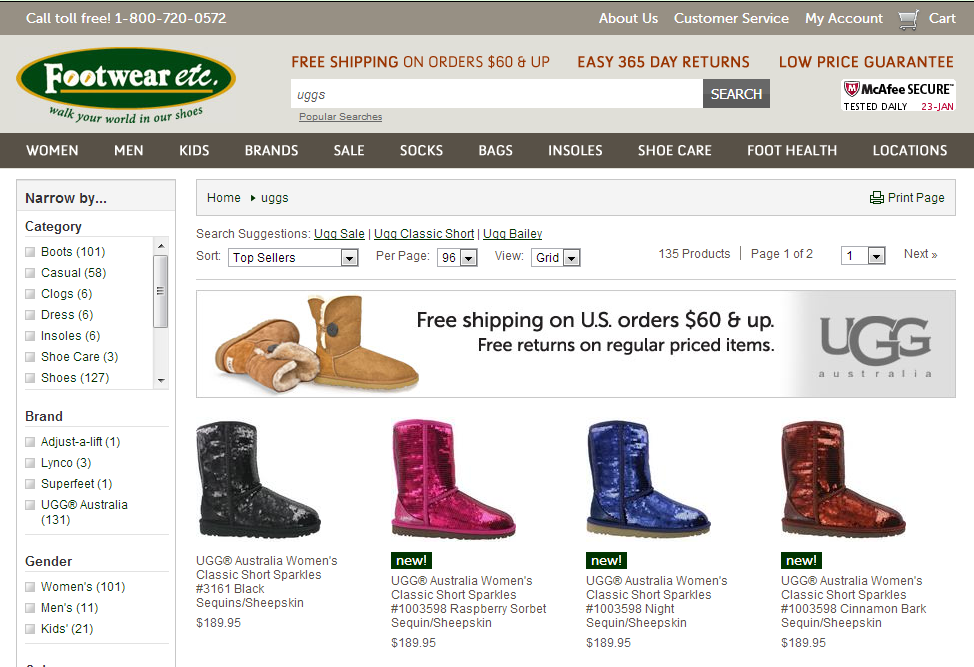
The screenshot below shows a simple merchandising banner promoting free shipping for all UGG boots that displays when searching for UGG boots.

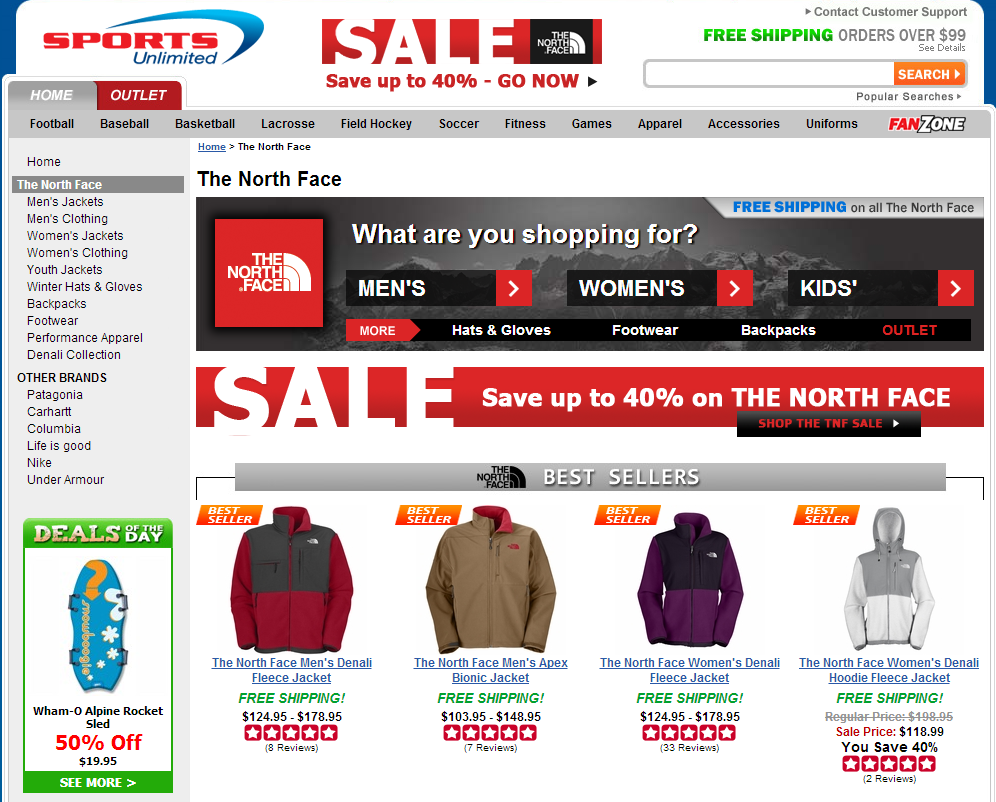
The screenshot below shows a merchandising banner on a search page that advertises North Face products, with clickable links to refine search pages by gender, age and more.


But what good are these tools if you don’t even know what your customers want? Our reporting allows merchandisers to easily access key data about customers’ search behavior. The Top Searches report can give useful insights about the most popular keyword searches, showing you the language that your customers use and identifying some possible candidates for fine tuning or adding banners. Conversely, merchandisers can view reports that show search phrases with poor results to identify phrases that are being searched but have low click-through rates. This may indicate that your customers are using different language to describe your products than you do, or it could give you clues about products that you don’t carry, that your visitors expect to find.

I’ve covered a few of the major aspects of merchandising, but there are a variety of other features and techniques that can be implemented to draw more attention to your products. To learn more about the ways SLI’s features can help aid your merchandising efforts, contact your Customer Success Manger or send us an email at: discovery@sli-systems.com

Read More

What Retailers Can Learn from Fashion Brands – Pt. 2

Posted by Kemberly GongJanuary 25, 2013eCommerce

In part 1 of this series, I discussed our new study of the fashion industry and how apparel, beauty and accessories brands are pushing the envelope on search and merchandising. Today I’ll show you a few specific examples that demonstrate how these brands are delivering a richer, more engaging experience online – and how you can do something similar.

Branding Banners – whether on search or navigation pages, fashion retailers are really good at merchandising their top brands through banners. Take the Sports Unlimited example to the left. This shows you the creative banner they use on the North Face search results page, which gives the user additional refinement options for Men’s, Women’s, or Kid’s items, as well as allows them to click on “Hats & Gloves,” “Footwear,” “Backpacks” and “Outlet.” They also promote their Free Shipping offer on all North Face items in the banner. This type of banner draws the shopper in and gives them easy options to get a better view of items of interest. Sports Unlimited has seen a steady increase in the number of people who click on the banners, and who then convert to buyers.

Rich Auto Complete – our retail clients consistently see a greater increase in conversions when they incorporate Rich Auto Complete into their site search, a feature that not only works well for fashion and apparel but for all retail sectors. By automatically offering suggested keywords and accompanying product images after the first keystroke or two entered into the search box, Rich Auto Complete streamlines the shopping experience and allows people to quickly click on something they want, rather than scroll through a page of results. In the example  from totes-ISOTONER’s site, you can see that in their Rich Auto Complete window they include a high-quality image, description of the product and price – making it super easy for interested buyers to make a purchase.


Color Swatches – showing all the different color options a product is available in is particularly useful on fashion and accessories sites, but can also be beneficial in other categories as well. Dooney & Bourke’s site is a beautifully-designed way to show all the different colors a purse is available in, and let the visitor click on the different colors – and see the image shade change – right in the search results page. I give this approach a double thumbs-up for ease of use as well as its visual appeal.


Index other Media – I’ve noticed that many fashion and beauty brands index other content in their search results to give shoppers a richer, more informative experience. For example, E.L.F. Cosmetics allows visitors to click on different tabs within search results for beauty blog articles, videos, social media buzz, and other types of media that can help them make a decision to purchase. By separating each type of content out by tabs, the results pages avoid being cluttered and give shoppers an easy way to see the breadth of content that’s available. This is yet another way to see conversion rates from search pages go up – and customer engagement as well.

For more examples of how fashion retailers are on the cutting-edge, download our complete study here.

Read More

Don’t Miss our Upcoming Apparel & eCommerce Webinars feat. Tea Collection and Caché!

Posted by Terry CostaJanuary 22, 2013eCommerce, Site Search, Webinar

The fashion and beauty industries lead the way in eCommerce with innovative features and web design that are fun, modern and most importantly, useful. The customer experience has been thoroughly considered as retailers seek to mimic the in-store experience. You’ll learn firsthand from two apparel retailers what it takes to create a dynamic site that engages users and drives clicks and conversions.

Tune in to the first webinar tomorrow, Wednesday 23rd, featuring Michael Stearns and Celine Teoh of Tea Collection. You’ll hear “Insider Tips for eCommerce Apparel Businesses” and learn the best practices that help guide shoppers to a purchase. You can register for the Tea Collection webinar here.

Next Thursday, Jan. 31, you’ll hear from Kevin Metz of Caché as he details which site features are crucial to improving conversions. Register for the webinar, “How Caché Turns Browsers into Buyers,” here.

Whether you’re growing your business or looking to take your brand to the next level, this is your opportunity to ask industry-related questions and hear from experts who’ve managed and grown these successful companies.

Do you have a strategy in place to grow your business?  Let us know what your priorities are for 2013.

Learn more about the strategies and features the fashion and beauty industries are using in our industry brief, available for download here.

Read More

What Online Retailers Can Learn from Fashion Brands

Posted by Kemberly GongJanuary 18, 2013eCommerce, Merchandising, Site Search2 comments

We just released the results of a recent study we conducted among several fashion, accessories, and beauty sites, about how they approach the online user experience (download it here). Understanding that fashion and apparel brands tend to be on the cutting-edge of merchandising their products and delivering a more high-touch experience on the web, we wanted to see what their best practices are when it comes to site search, navigation, and merchandising, that other retailers can emulate.

Fashion retailers strive to deliver a feature-rich web experience that comes as close as possible to shopping in a store where customers can see a product up close, try it on, feel the fabric, and more. They design their site with heavy use of graphics and images, and incorporate features like Quick View Windows, Mouse-over or Clickable Pop Ups, and rich color swatches, all of which lend to making it easier to see a product’s fine details. Other enhancements these sites rely on are Rich Auto Complete, where products and images appear after a few keystrokes to help shoppers get to their desired items more quickly. AJAX search, which speeds up the delivery of search results, and localized information, so online shoppers can see if items are available at nearby stores, also appear prominently. 

Merchandising banners on search results pages are used to engage customers and gain their interest in a particular brand or promotional offer. We also saw some sites incorporating other media and resources into their search results, in order to arm shoppers with information from blogs, news articles, video, and social networks to help them make an informed decision.

If you’d like to download a copy of our study, you can do so here. And in our next post, we’ll do a little deeper digging into who’s using these features and what impact they have.

Read More

Privacy and Retail in 2013: 4 Steps You Can Take

Posted by susanaJanuary 14, 2013eCommerce

Guest Post by Susan Aldrich of Patricia Seybold Group

Every few years, Internet privacy becomes a hot issue. It’s hot now, and many marketers are concerned that regulation or even legislation could ensue. Europe has new regulations on privacy and specifically cookies, which unsurprisingly were diluted in the implementation phase.  The specter of USA regulations haunts, but the court of public opinion is more threatening. Instagram’s humiliation over its new privacy policy retains top-of-mind for marketers, journalists and consumers.

And yet, collecting customer information is undeniably valuable. It helps you present great product recommendations to visitors, follow up with engaging emails, and chase your customers around the Internet with ads. There are also opportunities to monetize customer information, via third party ad exchanges.

I think retailers can postpone privacy panic: you aren’t Facebook or Instragram. But I do recommend taking four small steps. 2013 is the year to learn how to ask for and use customer permission, because customers currently pay little attention to the issue of privacy on retail sites. Here are the 4 things that belong on your privacy to-do list:

1. Set a privacy policy, and track compliance vigorously. I say track, not enforce. Over the course of a few quarters, estimate the impact on your business of adhering to your policy – what circumstances made you violate your policy, what opportunities do you forgo to adhere to it, what costs do you incur? Understanding the impacts of your privacy policy, you can adjust it to meet your business needs while customers are still mostly ignoring it.

2. Plan your technology strategy for collecting and tracking not only customer data, but customer permission to collect and use that data. What approach to balancing privacy, permissions and monetization is budget-appropriate?

3. Start collecting customer permission. Your customers each trust you in certain ways.  Ask them to be explicit about their trust. Try out various programs to get their permission to use their data for various purposes. Your goal is to find out what customers deem acceptable, and what you need to offer in return.

4. Establish tools and skills for testing different approaches to asking permission, to describing how you use customer information, and for different approaches to using the information.

So, you definitely want the freedom to collect customer data, and you definitely want to avoid the gaffes that could make your brand a Twitter #fail phenomenon. You can avoid Instagram-style notoriety by making a deal with your customers about their privacy, and not changing the terms after the fact. The four steps will help you understand what your privacy policy actually means to your company, and what you must do to implement it.

Susan Aldrich is a leading authority on optimizing the methods that help customers find what they need to make buying decisions and/or to solve problems. Her research and consulting address the technologies and practices that help marketers get the most useful content in front of customers at the right moment: personalization, recommendations, search, discovery, targeted marketing, and web content management. Her blog, at www.susanealdrich.com, aims to fill the need for Personalization for Dummies and Experts.

Read More

Boost Views and Repeat Visits with High-Engagement Content – Part 2

Posted by Shaun RyanJanuary 9, 2013eCommerce, Social Media


In my last blog, I mentioned that creating content that drives high user engagement is essential to compete in the new online commerce landscape. Online shopping is more social than ever before. I’m not just talking about “Like” or “Pin It” buttons for easy sharing (though they definitely help), but also features that create an impact for customers by providing relevant information and second opinions to ease decision making.

First, online retailers are encouraging users to upload their own video reviews and testimonials to their website through online video sharing sites like YouTube. Folica does this extraordinarily well, harnessing the opinions of thousands of customers who buy, test and share video reviews and tutorials of products on their site, even though they’re not getting paid to do so.
 

Second, eCommerce sites are creating their own videos and allowing them to be shared via social media and indexed alongside product content. Bulk Reef Supply creates their own educational videos to help those new to building saltwater reefs. These videos can garner more than 40,000 views, proving that content is just as valuable as the products they sell, since they help customers find the exact part or item they need. They have even enabled users to have the ability to grade the helpfulness of the content to increase engagement.


Third, social media interactions, blogs and other media mentions can be indexed into search results, like e.l.f. cosmetics has done. Search for eyeshadow, and you’ll find the most recent magazines that have featured e.l.f. eyeshadows, facebook and twitter mentions, and blog content. When you’re unsure if it’s the right product, seeing other reviews or mentions can help solidify your decision.

Fourth, online retailers are making sure their products can be shared on social media sites – for example, ‘Liked’ on Facebook or “Pinned” on Pinterest. This is a simple addition to any site and quickly becoming a standard feature that customers expect. Village Hat Shop does this well, including a “Like” and “Pin It” button on their search results page.


And lastly, online retailers are the ability creating the ability to shop on their social media pages. Motorcycle Superstore and Boden have both created gateways to their online stores through their Facebook pages.

How else have you seen social media and eCommerce integrated?

Read More

Boost Views and Repeat Visits with High-Engagement Content – Part 1

Posted by Shaun RyanJanuary 7, 2013eCommerce, Ratings and Reviews1 comment

The online shopping experience is more helpful for consumers than ever before. That’s because for any retailer, the question now isn’t whether they’re online, but how easy it is for customers to find what they want and make an informed decision. We’re continuing to see growth of video and other high engagement content such as better product images and gift finders being used to attract and retain customers.

This is of paramount importance for apparel and accessory retailers, since shopping for apparel, accessories and beauty products is a highly-personal activity. Ensuring correct fit or style, testing makeup colors, or seeing how a backpack or bag fits the wearer’s frame all are major influencers in deciding on whether a purchase is right.

For technical gear, users want to know if it’s made well and durable, easy to assemble and what its specifications are. User videos, company-generated videos and images showing the various features are clear ways to give users have a clearer understanding. Other reference points, like product images from multiple angles or with a model can help inform users of scale and fit.

It’s even more helpful to take video integration one step further by embedding videos in search results, so customers don’t need to click onto product detail pages to find video content. Easy access to the right products will help drive clicks and conversions.

A Gift Finder feature is also really useful in helping those shopping for others find the best products by narrowing down possibilities by feature or personality. Bestbuyeyeglasses.com helps users refine their styles by gender, age, and color. Features like these that aid shoppers in finding products and add concrete value will help drive repeat visits.

There are also a variety of ways to integrate social media content in the form of videos, reviews, blogs that I’ll talk about in my next blog post.

What are your favorite sites that feature video or other content that is meant to engage users?

Read More

2013 eCommerce Resolutions Infographic

Posted by Kemberly GongJanuary 4, 2013eCommerce, Merchandising, Ratings and Reviews, Related Search, SEO, Site Search, Social Media

Here’s our infographic from our 2013 eCommerce survey results, showing top resolutions and goals for online retailers in the New Year. You can find the full results of our 2013 survey here.


Read More

Curated Commerce Takes Shopping One Step Further

Posted by Kemberly GongJanuary 2, 2013eCommerce, Ratings and Reviews, Social Media

Happy New Year! As I was finishing up my shopping this season, I got to thinking – wouldn’t it be nice to more easily choose the perfect gift for all of my friends and family? To spend less time searching through countless products and instead see the most unexpected and interesting pieces that you’d never expect, but end up loving?

Ecommerce companies are hoping that’s the experience want. Because as more consumers spend time online, a plethora of eCommerce sites are leading with curated collections that target specific types of customers, in an effort to mimic the personal shopper experience.

Popular curated web magazines like Uncrate show products chosen by their editors that are  targeted to a certain type of hip urban man. On this site, you can always expect to find the coolest of gadgets, cars, gaming gear and stylish duds.

Their sister site, Outblush, features products targeted to a female audience. All links redirect shoppers to the original eCommerce site where they can purchase the item. In the same vein of edited content, Piperlime features celebrity stylist Rachel Zoe’s fashion picks, and in the past has run curated collections by other celebrities and fashion superstars.

Curated commerce is the next step forward from ratings & reviews, since expert suggestions can be the push customers need to make a purchase. It’s a move toward niche rather than generalist shopping experiences, and runs in parallel with the personal sharing and targeting that’s occurring in the social media sphere.

These persuasive techniques give a personalized approach to shopping, although they target a much narrower audience.

User preference is the key driver in other sites, such as ShoeDazzle and OpenSky, which take a different tack by first identifying what customers want through a style quiz. The resulting products that they show to individuals are narrowed down and tailored to their personal preferences. This technique personalizes a site and may help drive engagement and repeat visits.

OpenSky quizzes users to find their preferences before showing tailored content

The Fancy integrates curated commerce and social media sharing


Some curated sites like Pinterest and The Fancy also have strong social media connections. They both allow you to share the same products that you “Fancy it” on Facebook or “Pin it” so your social network can see what you’re currently lusting over.

Many of us love sharing the best information or products with our friends, and eCommerce sites have made the most of that user insight to create sites and tools to harness those social needs.

What other sites did I miss? Let me know other curated shopping sites I should be checking out!

Read More

‘Twas the week before Christmas…

Posted by Kemberly GongDecember 21, 2012eCommerce

In the weeks before Christmas, there was indication
That the elves were burned out, in need of vacation
They were groggy and grumpy from lack of good sleep
So Santa, the good man, had granted them leave

He went to the workshop and looked at the list
Of good little children who still needed gifts
‘Twas longer than reckoned, his heart began dropping
‘Til Mrs. Claus suggested he try online shopping

He picked up his tablet, on his big chair he perched
And found the best products for all that he searched
The shopping was easy, a delightful sensation
Perchance, could it be from Learning Navigation?

He selected refinements on the pages he browsed
To narrow down products to those he espoused
The site search was fast and gave relevant results
He knew he’d find gifts for all kids and adults

There were banners and features that were so surprising
This could only be the work of good merchandising
Refinements, and mobile sites, Rich Auto Complete
These sites were astounding, with features replete

Bike gear for Timmy, and puzzles for Rue
He found all he needed and even more too
In addition to goods, were videos and blogs
Why, he might get done early, and enjoy some egg nog!

He worked and he worked, and found all the best toys
For good little girls and good little boys
Their problems were solved, and Mrs. Claus kissed him
“Thank goodness for sites using SLI Systems”

Happy Holidays from all of us at SLI Systems!

Read More

2013 eCommerce Predictions

Posted by Shaun RyanDecember 20, 2012Newsletter, Site Search3 comments

As 2012 comes to a close, we’ve seen an increase in adoption of new features and general trends among online retailers, including growth in the development of mobile sites, improved merchandising, augmented site search functionality like Auto Complete and Rich Auto Complete, and deeper integration with social media pages. We also saw innovative customer-driven features, such as Merchandising Banners for Organic Search and floating search bars, which we implemented with great success.

In the New Year we’re sure to see a continuation of some of the same trends and a few new ones. From our work with clients and our recent survey of more than 450 online retailers, here are some of the areas we think will see more growth in the coming year.

Site Search and SEO are top priorities
Enhancements to site search and SEO top retailers’ list of priorities in 2013, beyond improving their eCommerce platform strategy. We believe that site search and SEO are two of the most important considerations when building or improving your eCommerce site. If customers can’t find your site, or can’t find a product on your site, you’ve just lost out on a potential sale. It’s important to make sure that your site search is returning the best results and SEO referral traffic is as high as it can possibly be, otherwise all the other bells and whistles you’re adding are essentially irrelevant.

More mobile
If there was anything that this holiday shopping season proved, it’s that more shoppers than ever before are using mobile devices to search for and purchase goods. We expect there will be continued momentum from retailers in building out their mobile sites. Our survey showed that more than 40 percent will be investing in a mobile strategy next year. But mobile isn’t limited to smartphones, and we expect that retailers will not only look at building dedicated mobile sites or mobile apps, but also creating sites built with responsive design templates, which allow webpages to be resized based on the screen of the device on which it’s being viewed. This provides more flexibility in viewing pages on tablets and smartphones of all sizes.

Accountability through analytics
As the online retail industry matures, better tools are needed to improve decision making and accountability. A/B testing, analytics and reporting are features we believe eCommerce sites will focus on as better understanding of ROI becomes the norm. These metrics can prove the success or failure of merchandising, campaigns, and the overall user experience and give retailers more than just clues to improve poorly-performing areas. Additionally, accessing these data in real time gives merchandisers more information quickly, allowing for increased agility and accountability.

Merchandising and navigation for easier browsing (and buying!)
Our survey also showed that retailers are interested in creating more appealing and easily-navigable sites for their customers by improving their merchandising and refinements. More than 39 percent of online retailers said they’d add merchandising to their site next year. Features such as how-to information, videos and blogs comprise just a few of additions. Other “sticky” elements like floating search boxes, which remain in view of the customer, may also be interesting additions to eCommerce pages that help ease the customer search experience and drive conversions.

Greater differentiation between companies, not based solely on price
Previously, retailers drove product sales by offering the best price available. However, price alone isn’t driving traffic to sites – or encouraging repeat purchases – anymore. Building a great customer journey through a site, implementing strong merchandising features and offering great customer service are some of the ways we’ve seen some retailers work to differentiate themselves from competitors. We expect to see more of the same in the New Year as online retailers become more savvy about meeting their customers’ needs.

We at SLI Systems will always work with you to build customized solutions that fit your company’s needs. Our core belief is that the best customer experience is one that is intuitive and that takes users to their destination as easily as possible. Highly-relevant site search, navigation, merchandising, analytics and SEO referrals are the core of our business and we continue to create new features to make the shopping journey that much easier. We have a variety of enhancements slated for the New Year that we’re looking forward to introducing you to, and would love to hear from you about what improvements you’ll be making. We’d like to wish you the best of luck in the New Year!

Read More

CSM of the Month: Freddy Jovel on Lakeshore Learning

Posted by Freddy JovelDecember 20, 2012Newsletter, Site Search

I knew working with Lakeshore Learning would be interesting because we were supplying them with our full suite of products – Learning Search, Learning Navigation, Rich Auto Complete and Site Champion, and it all needed to be done before the holiday rush.

Luckily, I was working with Sam Sarullo, their VP of eCommerce who is very experienced, has clear business priorities and knows what he wants, so we got right to work. Additionally, he had a cross-functional team of developers, merchandisers and marketers to keep the process running smoothly. We had a firm goal to get the project completed before the holiday shopping rush.

Lakeshore Learning sells a variety of educational toys, games and materials. Their two main customer segments are teachers and parents. While teachers shop in summer and beginning of the school year, this time of year is when parents shop for holiday presents.

They came to us because they wanted to increase their conversions, and felt that the best way to start was to better organize and display their products and strengthen the site’s search. Lakeshore Learning has done a lot of testing and knows what works well with their target client segments, all of whom want a straightforward user interface, but tend to search the site in different ways.

We created refinements that targeted both sets of customers based on their preferred search methods – teachers can search by grade level, while parents can search by age range. We are building out a very rich set of features for their Learning Navigation and refinements, which are unique and are raising the bar for industry standards. This is very exciting!

Within our learning navigation and learning search pages, we customized two features specifically for Lakeshore Learning – the first was to have two columns of refinements side by side, which helped shorten the length of the navigation bar. Second, we modified the refinement options so if a product isn’t available within the remaining refinements, the price, age or grade refinement remains visible but cannot be selected. This informs visitors that the refinement is available but there are no products that match that specification.

Although we had a lot to do during our integration, working with Lakeshore Learning was great because their team is very responsive – when you ask for something, they respond right away. They also have someone in-house that maintains their data feed, which is one of the best I’ve seen – it’s well-organized and very clean. The core of our search starts with the data feed, and their attention to detail helps us return better search results.

I’ve enjoyed working with their team throughout the integration; they think outside the box in how they get users to view the product, drive traffic to the site and market specific search pages for maximum value. We all pulled together and were able to get the site launched in advance of the holidays, and they’ve already started to see increased organic search referrals from our Site Champion product and very good initial search results. As a CSM, I take pride in ensuring our clients have a good experience and see great results.

Read More

SLI Systems’ Clients make the Internet Retailer Hot 100

Posted by Kemberly GongDecember 17, 2012Press

This month our clients American Bridal, BodenUSA, and DogIDs all made the list of the Hot 100 companies, as featured in Internet Retailer magazine (purchase required to view full list). The list includes the top 100 eCommerce sites which are going above and beyond to create innovative features that will draw in new users.

In a time when more people are shopping online than ever before, having an online store alone does not thrill customers. Online retailers must create a distinction between themselves and competitors by offering better features to make shopping easier, more informational and engaging. The sites featured within are all doing something that sets them apart from their competitors.

BodenUSA.com was featured for its Quick Shop tool, which lets catalogue recipients quickly enter catalogue product codes to find it online. They were also recognized for their outfit maker tool, which allows shoppers to virtually try different clothing pieces on models and create outfits that can be added to the cart and purchased.

Boden’s Outfit Maker feature

American Bridal, a site for wedding favors and gifts, was featured for its floating search box which also displays discounts. The feature has helped increase average order values for the customers that use it.

DogIDs, a site for pet leashes, collars, accessories and furniture was featured for its visual tools that allow users that are personalizing a dog tag to see what it will look like before it’s engraved.

All of these tools improve customers’ ability to find the products they need and made an informed decision before their purchase.

We’d like to congratulate all of the companies featured in the Internet Retailer Hot 100 list, and look forward to the many new innovations in eCommerce in the coming year.

Read More

Surprising Results from SLI’s eCommerce Survey

Posted by Terry CostaDecember 11, 2012eCommerce, Merchandising, Mobile/Tablets, Reporting and Analytics, SEO, Site Search, Social Media1 comment

SLI Systems just released our latest eCommerce survey and infographic, which illuminates new trends about online retailers’ priorities for the coming year, as well as for this holiday shopping season.

Overall, improving sales conversions was still the most important goal for online retailers, with 63 percent answering it was their main priority. Close behind with 61 percent was attracting more customers to the website. The survey of 457 retailers from around the world also found that expanding to serve international customers was another major priority. The surveyed included companies located in the US and Canada, UK, Europe, Australia/New Zealand and Asia/ Pacific.

In anticipation of this year’s holiday shopping season, more than 40 percent of online merchants worked to drive more customers to their site by making improvements to their SEO, and created a more curated experience for customers by improving their merchandising. Additionally, 37 percent of retailers improved their refinements or navigation on their eCommerce site, according to the results of our survey.

Additionally, retailers are planning out their strategies to grow their site in 2013. The top New Year’s resolutions include making improvements to site search, SEO and mobile. In line with this year’s solid increase in mobile browsing and purchases for holidays shopping, nearly half of retailers said they will add a mobile version of the website, with about 20 percent planning to create a mobile app.

As more commerce moves online, the trends for retailers – improving SEO, driving conversions and finding ways to reach customers at many touch-points continues to drive the need for higher visibility from SEO, thoughtful user experience and innovative features to improve traffic, conversions and retention. We’ll take a deeper look into all of these trending features in the coming weeks and explore the best use cases we’ve seen.

These are just a handful of the results – to learn even more, click here to download the full report.

Read More

Moving Day – SLI’s Offices in New Zealand Tech Hub

Posted by geoffbDecember 10, 2012About us

We’re just completing the relocation of our Christchurch team into the new EPIC Centre. EPIC is a recently completed facility that will serve as a high-tech hub. This move has been eagerly anticipated, not only as a chance to join other tech companies in a cooperative space, but also to move from the cramped temporary offices in which we’ve been located since the February 2011 earthquake fatally damaged our offices.

EPIC, which stands for Enterprise Precinct and Innovation Campus, is an ideal place for SLI as we continue to find new ways to provide innovative and useful products and features. Our temporary offices were very basic and didn’t stimulate our team as much as our older building, but we all stuck it out and made it work. The EPIC Center has good light, spacious offices, meeting spaces and communal areas.

According to Will McLellan, one of the EPIC project’s founders, “The EPIC concept is based on the Silicon Valley model – where a building structure and use promotes innovation,” he said. “Our building will be home to 17 technology companies and will stimulate the growth in the technology sector here in Christchurch.”

SLI employees hard at work in our new offices

SLI Systems is headquartered in the heart of the Silicon Valley, and it made sense to move into a building where we’d join a community of other tech companies. We’re looking forward to inspiring and being inspired by the collective passion for technical innovation that is being housed in this building.

Christchurch Central Business District was heavily damaged in the earthquakes; we feel that EPIC is leading the move back into the city center. The collaboration of tech companies is an important way to develop new innovative approaches, and having different companies in one campus will allow for new ideas which wouldn’t have been possible for one company alone.

Read More

Site Search in Different Languages

Posted by Shaun RyanDecember 3, 2012Newsletter, Site Search

With the way technology has hastened globalization, it’s less easy to qualify languages other than English as “foreign.” It’s easy for us in English-speaking parts of the world to forget that English is not the dominant language – it’s actually the third most popular language spoken globally, behind Mandarin and Spanish.

We work with eCommerce companies in a lot of different countries. We also see many of our existing customers are selling beyond the borders of their native country and often creating websites tailored to the markets they’re selling to. That means we’re working with more and more languages and need to make sure our site search and navigation features work just as well in every language. To do that, we’ve licensed technology to enable us to index all the major languages and we’ve integrated that into our platform.

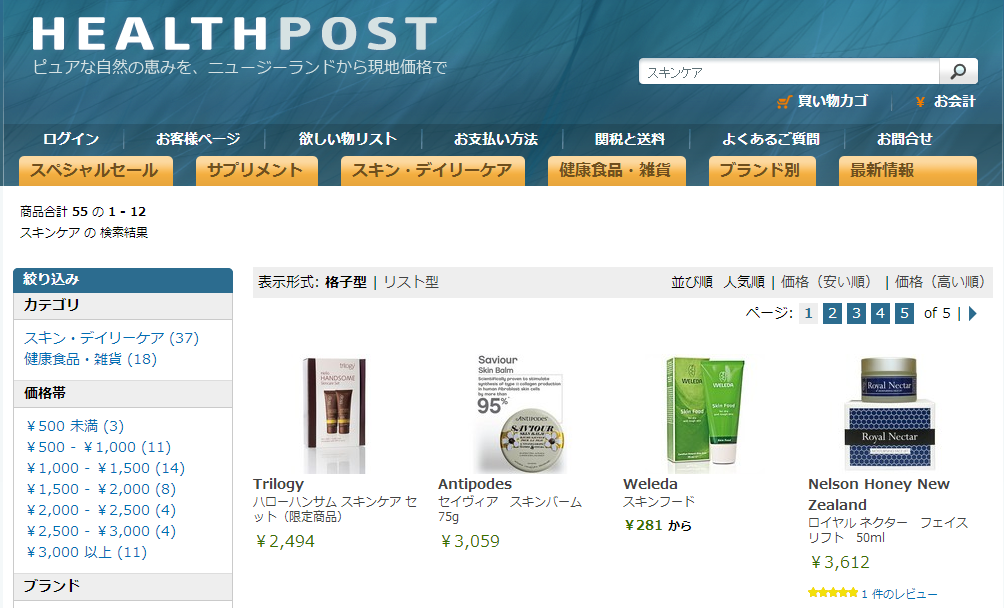
For example we recently integrated our site search onto HealthPost’s Japanese site, which contains a mixture of English and Japanese. Japanese has to be one of the hardest languages in the world for text processing. Like Chinese, there are no spaces, so you need to break a continuous stream of characters into words. Also, Japanese uses many different character sets – kanji (Chinese characters), Hiragana, Katakana, and Latin characters. Some people write and search using Kanji, while others use one of the two phonetic scripts.

A search on HealthPost’s Japanese site in either language will return results. Though the Japanese language is written in a very different series of characters than an English-language alphabet, users will still see the same learning-based results. Our learning algorithms operate on top of the index, improving the relevance based on how people interact with the results, generating related searches in either language and automatically creating pages optimized for popular keywords with good results.

Our analytics engine has been designed with different character sets in mind – so the reports will show popular searches, searches with poor results, facet labels, etc. correctly, regardless of the language used. In addition the console has been designed so we can easily add instructions and help in different languages, so non-English speakers can use it easily. As businesses all over the world move squarely into online commerce, we see the continued importance of offering a set of tools that can be used across languages. For the business tracking the most popular site search terms in a different language or for the customer searching for a product in their native language, a tailored experience is becoming the new norm.

With the indexing, learning and back-end console all working in multiple languages we can build you a relevant search that follows the industry best practices regardless of the languages. There are enough challenges building multi-lingual sites, without the need to worry about the complexities of site search.

As eCommerce becomes truly global, it’s absolutely necessary to cater to all clients, and making products easier to find and searchable in local native languages is one of the most important steps to do that.

Read More

CSM of the Month – Michelle Polglase on HealthPost

Posted by michellepDecember 3, 2012Newsletter, Site Search

When I worked with HealthPost on their Japanese-language site, it was a truly new and educational adventure. SLI Systems’ clients have websites in numerous countries and languages, but this was my first experience integrating a site with Japanese characters in addition to an English alphabet.

HealthPost is a New Zealand-based natural health and beauty website that carries a variety of vitamins and supplements, natural beauty and personal care products. It was founded by Abel Butler when he had a hard time finding discount options for natural health products. The original English-language site was growing well, and when they found an opportunity to enter the Japanese market they took the leap. I worked with them to implement our Learning Search product, and we are exploring other products to add in the future.


While our integrations are usually pretty straightforward, mostly dealing with the technical details of the specific products we are integrating, we were faced with a different challenge  – providing site search for characters in a different language. We wanted to make sure that our search results were just as relevant and complete when dealing with Japanese characters. I really wanted to make sure that our searches were providing exceptional results and that the characters were being handled appropriately. I also made some adjustments to our refinements to adjust for Japanese characters and to our popular searches page, which was pretty easy thanks to the flexibility of SLI.

It’s been fantastic to see the search on the site go live. Eco and Abel from HealthPost were very friendly and easy to work with and I’m happy that we could work to build a great site search solution for them. Knowing that our team has the expertise to work with other languages and characters means that we have the ability to be innovative and respond to new challenges in the future. It’s a great opportunity for us and a real indicator that there is huge potential for SLI Systems in the Asia market for site search.

From this implementation I learned that there are almost limitless possibilities going forward. It’s an exciting time to work at SLI, and I look forward to many more integrations with international companies!

If you would like to learn more about how we can integrate our site search into your eCommerce site, feel free to drop me an email at: Discovery@sli-systems.com.

Read More

Cyber Monday Revenues of $1.465 Billion Top Black Friday Sales

Posted by Terry CostaNovember 28, 2012eCommerce, Mobile/Tablets

While we were impressed with Black Friday’s online sales, we were blown away by the revenues generated the following Monday. The biggest Cyber Monday on record saw exceptionally strong sales, with revenues topping $1.465 Billion – up 17 percent from last year and exceeding Black Friday sales. The weekend between the two big shopping days was also hot – bringing in over $1.1 Billion from weekend shoppers.

As with Black Friday, Cyber Monday also saw a huge focus on mobile – as shoppers pulled out their phones and tablets to aid their shopping. Cyber Monday saw an increase in purchases from iPhones over other smartphones or the iPad. These statistics from TabletCrunch show updated mobile numbers based on Cyber Monday sales.

  • Mobile Traffic: 22.4 percent of consumers use a mobile device to visit a retailer’s site
  • Mobile Shopping: 12 percent of consumers use their mobile device to make a purchase
  • The Multi-Screen shopper: The iPhone is driving more retail shopping than any other device with traffic reaching 8.7 percent versus 7.2 percent and 6.3 percent for iPad and Android respectively

Much of the increase around the holidays this year was based around early discounts and deals specifically targeted to online shoppers. Shoppers are increasingly turning to online shopping for around-the-clock shopping convenience, lack of crowds, easy price comparisons and free shipping offers.

As online retail continues to grow, the space is becoming more competitive and finding ways to set your eCommerce site apart from others is essential. Luckily the steps to doing so are not as hard as you’d think – there are simple ways to improve your site that yield great returns. We’ve highlighted a lot of these in previous blogs.

We experienced the impact of the Black Friday and Cyber Monday rush from our clients firsthand, as we saw huge spikes in traffic on our clients’ websites – they more than doubled on Black Friday and increased by 50 percent on Cyber Monday. Interestingly, some of our data shows that Black Friday traffic was helped by shoppers in Brazil, who also jumped online to take advantage of holiday sales.

These major shopping events remind us how our work can mean the difference between a sale and a loss. We provide our clients with peace of mind that our service won’t go down during peak holiday traffic – our servers are “over-optimized” to handle massive spikes in search traffic, as well as natural disasters and other unforeseen issues.

As shoppers become more savvy and continue to reach for their laptop or mobile device from around the globe when they want to make a purchase, make sure you’re in the best possible position to lead customers to the products they want.

Read More

Posts pagination

< 1 … 5 6 7 8 9 10 11 … 22 >
Facebook
Twitter
LinkedIn
YouTube
Flickr

Stay up to date with SLI

Featured Posts

  • Maximize Revenue with Enhanced Product Impact Testing
  • Top Five Ways to Prepare for Peak Season
  • Facets, Facets, Who’s Got the Facets?
  • Personalization: It’s Kind of a Big Deal
  • M is the New E: Mobile Commerce Trends and Predictions

Categories

About SLI Systems

  • What We Do
  • Who We Are
  • Why SLI

Learn

  • Webinars
  • News Room
  • Events

Connect

© Copyright SLI Systems, 2018. All Rights Reserved | US: (866) 240-2812 | Legal