SLI home
User login

A BLOG FOR E-COMMERCE LEADERS

  • Blog
  • Resources
  • Webinars
  • Customer Experience Scorecard

SLI Blog

Posts with e-commerce Tag

Personalization: It’s Kind of a Big Deal

Posted by Cheri WinterbergOctober 15, 2018E-commerce Research, EPIC, Personalization, Uncategorized

Imagine entering a store customized for you. The sales staff anticipates your unique needs, knows your sizes and tastes, and offers discounts on products you actually want. They make relevant suggestions so you don’t miss out, pointing to things you’re sure to like but may not have otherwise noticed. And they remember your previous purchases, recall what worked and what didn’t, and strive to make this visit even better than the last.

It’s every shopper’s dream come true.

In the not-so-distant past, highly-personalized retail experiences like this existed only for elite consumers. Upscale retailers vying for wealthy customers used personal shoppers and concierge services to ensure select clientele were shown products perfectly suited for them. But in the digital age, what was once an exception for the rich and famous is now within the reach of every shopper. And today’s consumers aren’t merely accepting personalization – they demand it.

Why the demand for personalization?

With so many product options, it’s easy for online shoppers to get overwhelmed and become dissatisfied. And when shoppers become dissatisfied, they abandon carts and brands. Personalization delivers a solution. High-functioning personalization strategies enhance a shopper’s journey and mitigate these frustrations. The result? Most consumers today (91%) opt for retailers who offer a personalized experience over those who don’t.    

Just how deep does the desire for personalization run?

Deep. Consider this – a survey by Salesforce revealed a whopping “82% of customers will share relevant information about themselves in exchange for connections between their digital and in-person experiences” and “85% of customers will share relevant information about themselves in exchange for proactive customer service.”

With numbers like this, it’s clear that growing personalization is imperative for retailers interested in getting – and keeping – customers.

And savvy online retailers haven’t failed to notice the increased demand. According to SLI System’s H1 2018 E-commerce Performance Indicators and Confidence (EPIC) Report, one-third (33%) of retailers across the globe say their companies are already giving their customers a personalized online experience and almost half (49%) plan to add it in the next year. In fact, only 7% of retailers worldwide say they are not adding some form of personalization to their e-commerce strategy.

As e-commerce professionals know, Customer Experience can either entice customers to return or drive them to the nearest competitor. And it’s clear personalization is a must in order to deliver a strong customer experience. But personalization isn’t a single-faceted entity. What’s more? Choosing the correct personalization strategies can make or break a shopper’s online experience – and the bottom line.

So how are e-commerce businesses personalizing and how do they plan to expand?

SLI’s EPIC Report indicates that with 57% of those surveyed saying it’s already in use, Emails Triggered by Online Behavior is the top way retailers currently personalize for their online shoppers. And it’s no surprise. MarketingDive explains that personalized email subject lines “can increase open rates by 50% and lead to 58% higher click-to-open rates.” The second most common way to personalize is Recommendations Based on Online Behavior (55%) followed by Segmentation Based on Demographic Data and Offers Triggered by Online Behavior, which tied for third (34%).

Underutilized strategies offer unique pathways to personalization.

Less used forms of personalization reveal opportunities to improve customized shopping experiences through a variety of alternative strategies. But which strategies can retailers use to take advantage of these opportunities? SLI uncovered that Persistent Profiling through a Data Management Platform (DMP) is the least utilized method of personalization with only 6% of those surveyed reporting it is currently in use. DMP is closely followed by Offers Triggered by Offline Behavior (7%) and Recommendations Based on Offline Behavior (9%).

To be successful, personalization must actually be personal.

Conversant found irrelevant content is the number one way to frustrate shoppers and lose sales. So how do retailers ensure their customers’ personalized experiences are, in fact, personal? Tracking and utilizing online behavior in the right ways. And e-commerce strategists are taking advantage of expanding technology in this arena. SLI discovered the top ways retailers plan to expand personalization all center on online behavior.
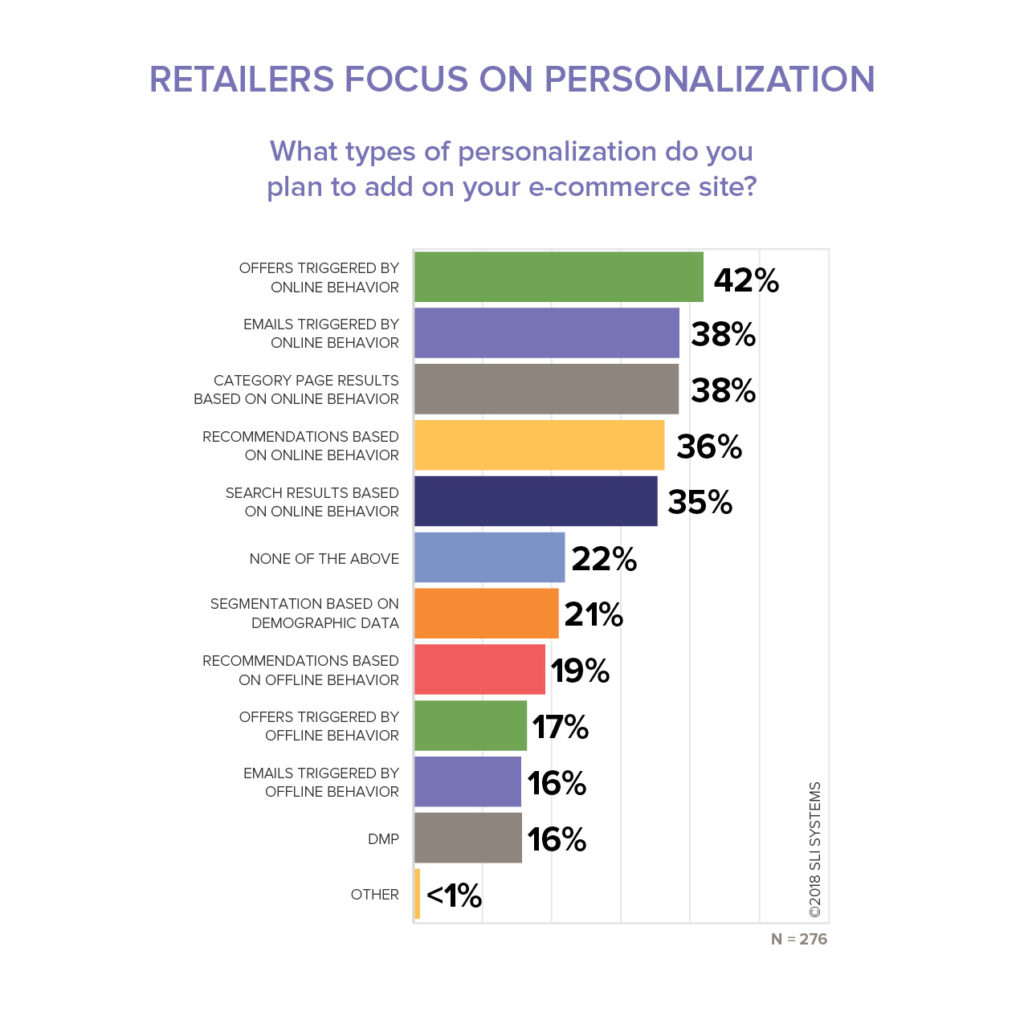
"Offers Triggered by Online Behavior" is the number one way retailers plan to add personalization to their e-commerce site. The top approach selected for implementation this year by 42% of retailers is Offers Triggered by Online Behavior. It was followed by Emails Triggered by Online Behavior and Category Page Results Based on Online Behavior 38% each in second place. Recommendations Based on Online Behavior took third place with 36%.

The Bottom Line

Finding out what your customers want and helping them get it through a personalized e-commerce experience isn’t just good for shoppers, it’s good for business. Sixty percent of those surveyed by SLI believe personalization will increase conversion rates. As technologies to improve personalization expand, retailers must take advantage or risk losing consumers to those who’ve embraced the growing demand for personalization.   

For more on the latest trends in e-commerce personalization, click here to download the H1 2018 EPIC Report.

Three crucial elements to a great e-commerce customer experience

Posted by Bob AngusJuly 5, 2018Customer Experience, Resources, User Experience

Missing the basics on your e-commerce site can cause more than two-thirds of shoppers to flee, according to Retail Dive.

As a result, many shoppers could be leaving before they even hit the “Add to Cart” button. Fortunately, there’s good news.

We have identified three fundamental elements to a great e-commerce customer experience:

  1. Performance
  2. Aesthetics
  3. Relevance

We even created a checklist!

We call it the P.A.R. Checklist. Our e-commerce customer experience checklist identifies the functionality your e-commerce site offers and provides simple suggestions on what you can do to improve.

Let’s break down each of those key performance, aesthetics, and relevance elements.

  1. Performance – The Need for Speed

Performance is the top priority. If your site isn’t fast, your aesthetic and relevance efforts won’t have much impact at all. According the E-commerce Benchmark KPI Study, “reducing the average load time by 1.6 seconds would increase annual revenue growth by 10%.”

A delay in product page load or a search query may result in a lost customer. Forever.

Famously, back in 2006, Amazon presented one of the first studies linking a clear causation between page load time and online customer revenue. Through A/B testing, they showed every 100 millisecond delay in page rendering time resulted in a 1% loss of sales.

More recently, Intuit increased conversion rates 24% when they cut load speed from 15 seconds to 7 seconds. And they gained an additional 8% conversion boost when load time went from 7 seconds down to 2 seconds.

If that wasn’t enough pressure, Google now analyzes page speed as a key factor for its organic search-ranking algorithm.

Bottom line: You need to be fast.

Three Ways to Increase Performance of Your Site

The biggest performance killers are often the same things that make your site such a rich engaging experience. Your website is full of product images, content, Javascript, and CSS page elements. That bloats every page.

Fortunately, you have several ways you can increase site speed while keeping your online store appealing to customers.

  1. Your best first step is to reduce your page size. For e-commerce sites, the best way to do this is to optimize the size of the product images you show.
  2. Reduce the number of requests. Many browser requests are fired off every time a visitor hits any page on your site. Many requests ask for the same elements for each page. Speed things up by caching the elements that are repeatedly downloaded.
  3. Shorten the distance to your customers by using a Content Delivery Network (CDN). The closer your data centers are to your customers, the faster your website loads. CDN services give you a global network of servers. That shortens the distance to your customers, which your website host alone cannot provide.

Google offers even more recommendations to minimize unnecessary bloat on your website.

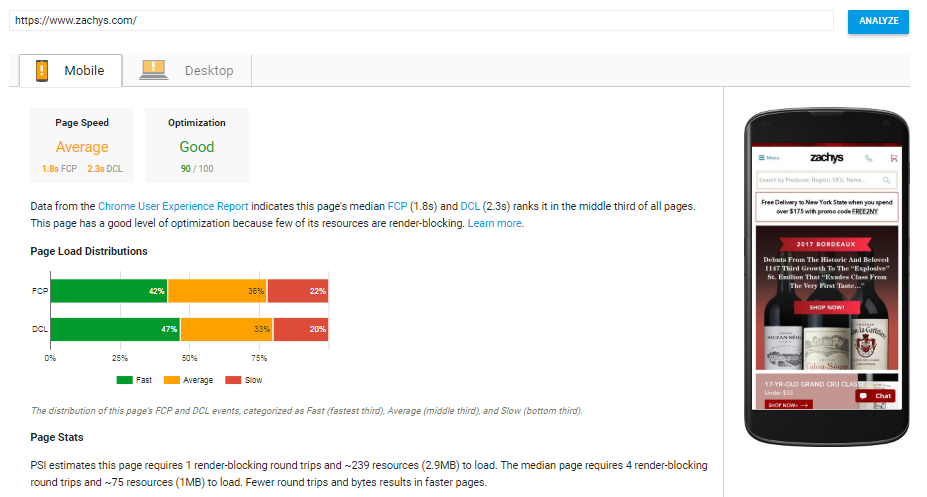
Your Action Item: Visit Google PageSpeed Insights. Enter your website URL. See how Google rates your performance. Follow Google’s optimization suggestions to get your site up to speed.

Google will give your site's speed a clear rating and insight on how to improve.Now that you’re up to speed, let’s boost sales with top e-commerce aesthetic best practices.
  1. Aesthetics Are More than Beauty Alone

Online businesses all want beautiful websites. You want your products to appeal to shoppers. But a beautiful website doesn’t mean it’s tuned to sell.

Your top priority is to drive transactions. Your key pages need to be focused on sales and appearance. Otherwise, those shoppers are “just looking” at your beautiful website. And you’re dramatically less likely to make a sale.

The Best Place to Start Online Merchandising

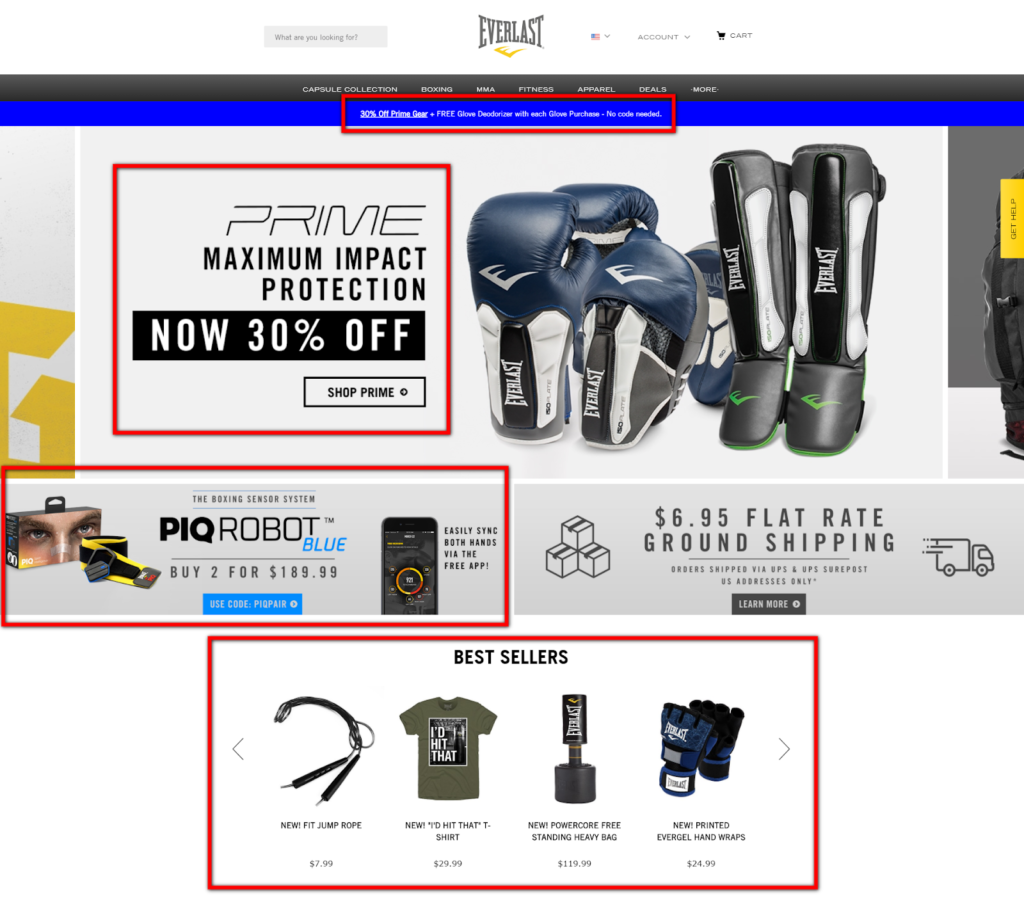
Do you merchandise specific products on your homepage? If not, you need to. You want to get your visitors directly to a product page where they can purchase.

Yet, many e-commerce sites use valuable homepage real estate to promote general categories and shopping ideas, not specific products. Or online stores display big, beautiful “brand experience” images that push anything sales-related down below the fold.

As a result, visitors are just browsing. They might find the site attractive. But they typically won’t move forward toward purchase. They meander. And pretty quickly they are off your site. Nothing in their cart. Or best case, an ineffective homepage simply means shoppers need to make more clicks to maybe find what they want. That’s not good either.

Your Action: Merchandise specific products that visitors are likely to add to their shopping carts right away. Better yet, use AI to determine which products to feature.

Get shoppers in a buying mindset with product recommendations like “Top Sellers” and “What’s Hot” on your homepage.

Your homepage should get shoppers in the buying mindset with "Best Sellers" and other promotions.You can apply this same beautiful, yet impactful merchandising approach to other critical shopping elements, like your navigation, category pages, product pages, and your shopping cart.
The P.A.R. Checklist gives you even more concrete actions you can take to boost sales with a better, more aesthetic shopping journey.

So you know how to increase your site speed. And you’re tuning your site to be beautiful and effective at selling.

Now let’s address the critical e-commerce factor that helps you go from great to world-class.

  1. Relevance – The Secret Weapon to a Higher Conversion Rate

Fast product discovery is critical to sales. Shoppers can’t buy what they can’t find.

Your customer experience needs to be tuned to answer one question: “What is my visitor most likely to buy right now?”

That’s relevance.

Relevant product discovery is proven to increase site-wide conversion rates 19% and average revenue per visit 72%, according to sales analysis of 40 top retailers.

So you need to merchandise hyper-relevant products throughout the shopping journey.

Your Search Box Is Your Revenue Box

SLI studies have found that visitors who use search buy at a 2.7x greater rate than visitors who just browse.

Search users show a higher buying intent by indicating exactly what they want, often including the brands, specifications, materials, and colors they are looking for.

Your search results need to offer more than simple keyword matching from product feed data. You also need to factor in behavioral data from previous visitors.

The most effective e-commerce sites display hyper-relevant search results with the products shoppers are most likely to buy. You can further accelerate the path to purchase with autocomplete functionality in your search box.

Display relevant suggestions as soon as shoppers begin to type. Make sure to order those suggestions based on popularity to further speed up the purchase path.

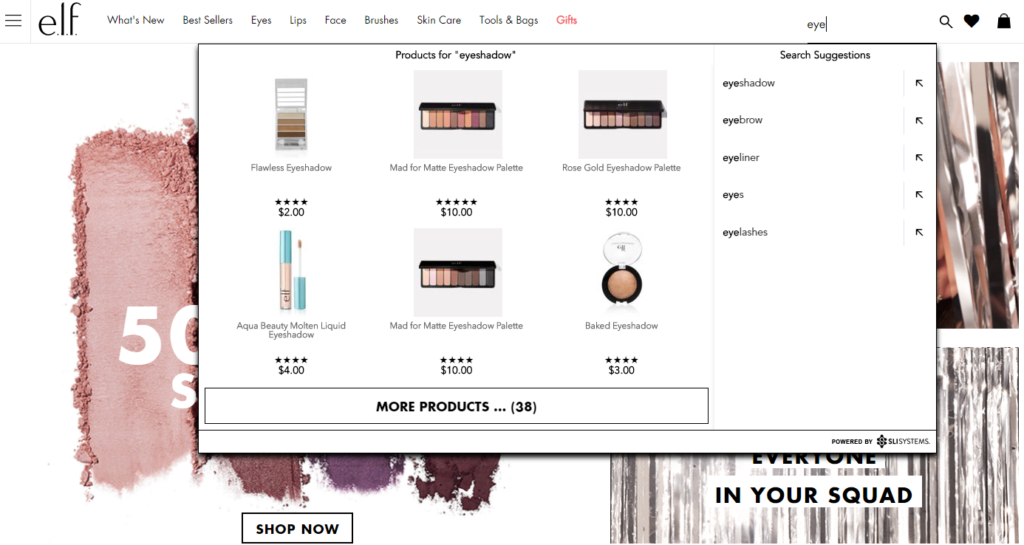
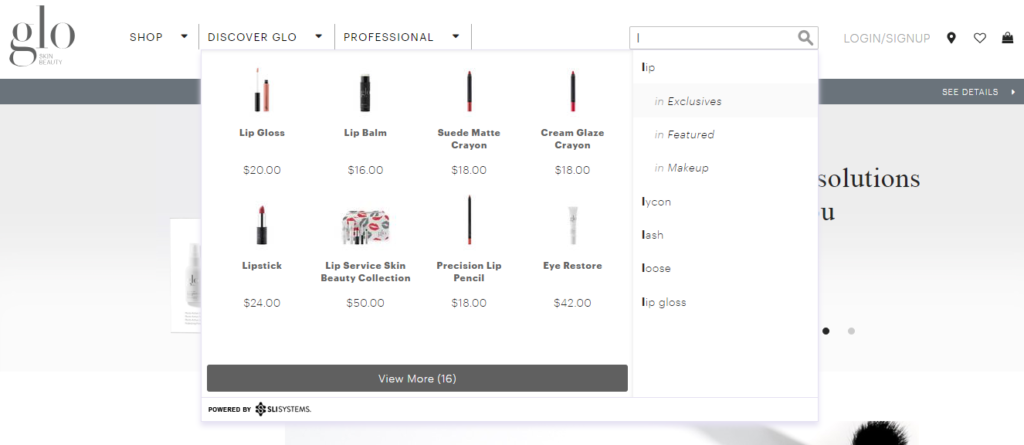
Your Action: Turn your autocomplete into rich autocomplete. Expand the suggested terms to merchandise specific products with images. Eliminate extra browsing and make your suggestions visual to enhance conversion rates.

SLI Rich Auto Complete visually displays the most relevant product names, categories and images as users type into the search box, reducing the number of clicks from search to purchase.

In fact, relevancy is crucial to optimizing many online merchandising functions. Your product recommendations engine, personalization features, and even your SEO efforts can be dramatically improved with greater relevance.

Is Your E-commerce Website Up to P.A.R.?

You understand why Performance, Aesthetics, and Relevance can have a big impact on your online sales. Now it’s time to evaluate your e-commerce website.

You’ve got a prioritized to-do list instantly ready for you. The P.A.R. Checklist provides easily actionable recommendations for each element. And each best practice is ranked in priority order.

Magento Extensions – The 13 Best Magento Plugins to Increase Sales

Posted by Bob AngusJanuary 24, 2018Customer Experience, eCommerce, Resources, SEO, Site Search, Social Media, Testing, User Experience

Best Magento Extensions - Magento Marketplace

You’ve got the core functionality in place on your Magento store. Now you need to enhance your site to increase sales and optimize your customer experience. That’s where Magento extensions help.

But there are thousands of Magento extensions to choose from in the Magento Marketplace. You can easily spend too much time figuring out what’s the right extension across different business needs.

Here’s a helpful guide that gets you right to the best Magento extensions designed specifically to drive more online sales.

How to Find the Best Magento Extension for You

The Magento Marketplace makes it easy to browse and filter the many extensions. However, evaluating which extension is right for you can still be daunting.

It’s not as simple as looking at ratings. Even the most popular plugins typically only have a few reviews.

And just going with free extensions may not be the best way to save money.

Here are few criteria you can consider when choosing a Magento extension.

Free Extensions vs. Paid Extensions

It’s easy to jump toward a free extension. But most free extensions also require a subscription to that service. Calculate your total cost before choosing a solution, including the expense for the time it takes your developer to integrate and maintain that extension. Sometimes the higher priced solution up front is actually less expensive in the long run.

Look for Great Support

Help save your development time by choosing extensions that have excellent installation documentation and user guides. Better yet, check out their support information on the vendor’s website. Evaluate how responsive and helpful they are before making the purchase. That extra contact can help you avoid getting stuck later on.

Recent and Regular Updates

Magento is constantly improving as e-commerce continues to evolve. Your extension provider should be too. Partner with vendors that are committed to the Magento community. Look for extensions with recent or regular updates for new Magento releases and for additional features and bug fixes.

Now let’s look at the detailed list of Magento extensions that can help increase your sales.

Best Magento Extensions – The 2018 List

Winning more sales requires enhancements to each step of the customer experience:

  • Drive more traffic to your store
  • Increase conversion rates
  • Accelerate purchase with fast and easy checkout

We’ve curated a list of 13 top Magento extensions that can help you increase sales in 2018.

Let’s get started with the critical need to bring shoppers to your e-commerce site.

Drive More Traffic

More traffic means more shoppers. More shoppers lead to more sales. It’s that simple.

The challenge is winning shoppers who are ready to buy against competitors hungry for the same customers.

The following Magento extensions give you an edge and help drive more and better traffic to your store.

MageWorx SEO Suite UltimateSEO magento extension - mageworx seo suite ultimate

Magento helps your search engine optimization techniques with core functionality that Google and other search engines want.

The platform gives you the basics, like clean HTML, meta tags, simple URL structure, and automatic XML sitemap generator. These capabilities make your website easy to crawl. However, you’ll need to do more and at scale to win hyper-competitive search ranking.

Many extensions address a single element of good SEO. We recommend a single extension containing an entire SEO suite to really increase your organic search traffic.

MageWorx SEO Suite Ultimate is an all-in-one SEO toolkit that manages a wide array of onpage SEO features that includes:

  • identifying duplicate content
  • enhanced site indexing
  • canonical URLs
  • optimized meta data
  • auto-generated XML sitemaps
  • cross linking
  • SEO redirects
  • advanced rich snippets

Price: $299 for Community edition, $599 for Enterprise edition

Learn more about MageWorx SEO Suite Ultimate

Remarketing with adaploremarketing magento extension - adaplo

Remarketing is a proven advertising tactic to increase sales by bringing previous visitors back to your store. Product remarketing ads are displayed on Facebook and Google Display Network (GDN) that match what your shoppers have already viewed.

The challenge is automating your remarketing ads across all your visitors and for all your product SKUs. adaplo makes automated retargeting easier.

adaplo creates the retargeting campaigns on Facebook and GDN by launching dynamic product history. It can also expand your ads to more audiences and different ad types.

Price: Free, requires an adaplo subscription

Learn more about adaplo

Wyomind Simple Google ShoppingGoogle Shopping Magento Extension - wyomind simple google shopping

This extension is the M2 version of Wyomind’s highly rated Simple Google Shopping. You can easily sync your Magento store’s product feed with Google Shopping.

What sets Simple Google Shopping apart are features that help you synchronize accurately without spending a lot of time, including:

  • Map your product categories to Google categories
  • Schedule tasks to generate your data feed
  • Check that your data feed was generated error free
  • Verify your data feed generation stats (number of items, time and resource)

Price: $80 for Community edition, $120 for Enterprise edition

Learn more about Wyomind Simple Google Shopping

Email Marketing with Brontoemail marketing magento extension - Bronto

Email marketing remains a dominant marketing channel that drives more traffic and sales. Your e-commerce email marketing should be more than broadcasting your sales and discount offers.

That’s why Bronto is the perfect email platform for your Magento store. You can send targeted and personalized emails to your customers and newsletter list.

The Bronto Connector for Magento easily imports purchase information from the Magento platform into Bronto campaign manager. Using that full order history you can curate personalized email and cross-channel marketing campaigns at scale.

Price: Free, requires a Bronto subscription

Learn more about Bronto

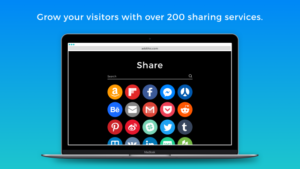
AddThis Social Media SharingAddThis social media magento extension

Let your customers spread the word about your products. You get more already-enthusiastic visitors when your current shoppers share on social media.

AddThis is the easiest way to add sidebar share buttons to your Magento store. This social media extension can connect you with over 200 social networks for easy sharing … for free.

Plus, you have control of the style to match your store in both desktop and mobile browsers. And you can pre-populate the message being shared. As a result, your shoppers are more likely to share.

Price: Free

Learn more about AddThis

Increase Conversion Rates with Better Customer Experience

Now that you have help driving more shoppers to your online store, it’s time to turn those shoppers into buyers.

The best way to increase conversion rates is to provide your visitors with a great customer experience.

Customer experience trends show the most successful retailers are executing well at every step in the buying journey.

Here are some Magento extensions that can help you do the same.

Smart Site Search with Learning Search

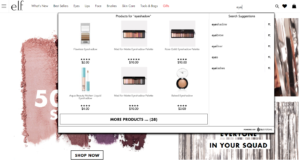
Visual Merchandising Autocomplete E-commerce Site Search - e.l.f. Screenshot

Customers who search for products have higher purchase intent than shoppers who are “just browsing.” You need to make sure you are delivering the search results that those must-win customers are most likely to buy right then. 

Go beyond simple keyword matching from your product feed. With SLI Learning Search, your e-commerce search box becomes an AI-powered tool designed to continuously improve query results and generate more revenue.

Further boost conversion rates with rich autocomplete functionality. Less clicks and browsing is what you want. Display specific product results while adding visual merchandising with appealing product images.

Better yet, you can leverage the same behavioral data to add AI-powered product recommendations to product pages, in your shopping cart, or anywhere on your site. Getting personalized recommendations along with higher converting search results can give you a big advantage over using separate plugins for recommendations and site search.

Price: Free, requires an SLI Systems subscription

Learn more about SLI Learning Search

Social Media Content with Pixlee social media magento extension - Pixlee

Social media content posted by you and shoppers on Instagram, Pinterest, Facebook, and other social channels can really improve engagement. In turn, that more personal social proof increases conversion rates.

Pixlee helps you identify and curate user-generated content so that you can display beautiful look books and social image galleries throughout your site. And those images are shoppable to make it easy to click “buy now.”

Pixlee also delivers the advanced social campaign features you’ll want in a single solution, including the ability to:

  • Launch social contests and promote engagement campaigns
  • Publish visual reviews and social posts on product and category pages
  • Personalize emails with relevant social proof
  • Track your social content’s conversion rate and engagement metrics

Price: Free, requires a Pixlee subscription

Learn more about Pixlee

Special Promotions Propromotions magento extension - amasty special promotions pro

Discount offers and promotions are proven to increase transactions. But managing all the different types of offers across all your SKUs can be incredibly time-consuming. Not to mention, ensuring you don’t kill your profits by discounting the wrong products or by displaying expired sales.

Amasty’s Special Promotions Pro extension reduces your headaches with a powerful promotion manager. The extension gives you access to 22 discount and offer rules for cost-effective promotions building in bulk or for individual products.

Additionally, you can automatically create personalized promotions using customer data. The extension builds one-to-one, hyper relevant deals for you using data like order history and birthdays. That level of personalization can really help drive repeat sales from loyal customers.

Price: $129

Learn more about Special Promotions Pro

Amasty A/B Testinga/b testing magento extension - amasty a/b testing

You should always be running experiments to discover the major and minor updates to your Magento store that can maximize sales. Amasty also provides a helpful A/B Testing extension that gives you everything you need.

You can run A/B split test and multivariate tests for particular products or product groups directly from your Magento admin panel. You can customize one or multiple tests at a time based on different goal metrics, products, and “winner” criteria.

What makes this testing extension even nicer for you is that you aren’t required to develop duplicate product pages with each test variation. No extra development time and site bloat helps you focus on improving your customer experience, not coordinating the tests.

Price: $179

Learn more about Amasty A/B Testing

Full Page Cache Warmer by Magewarespage cache magento extension - magewares full page cache warmer

Front-end site elements and promotions get a lot of attention when improving customer experience. But site speed and page performance is also a must-have consideration.

Page caching extensions like Full Page Cache Warmer are the simplest ways and most effective ways to make sure your Magento store loads fast for your visitors. Full Page Cache Warmer automatically crawls your store to find any uncached pages or newer versions of already cached pages.

Then the “warmer” part of this extension kicks in. This extension uses a special technique warms each page as if a real visitor is hitting on that page. The result is faster page deliver when a shopper does actually does land on your site. Pretty slick.

Price: $129 for Community edition, $379 for Enterprise edition

Learn more about Full Page Cache Warmer

Win More Sales with Frictionless Shopping Cart

So far we’ve covered Magento extensions that increase traffic and then help you improve your conversion rates. Now it’s time to focus on the most critical step – ensure your customer completes their purchase with a fast and easy checkout experience.

Smart One Step Checkoutecommerce shopping cart magento extension - aheadworks smart one step checkout

You’ve optimized your online store so that a customer clicks the “Add to Cart” button on your product. Don’t lose the sale by adding extra steps to completing the purchase after they’ve decided to buy.

Customers now expect a single page checkout process that they are familiar with from shopping on other online stores. Give it to them with Smart One Step Checkout.

Smart One Step Checkout offers all the functionality you need in a single extension, including:

  • Mobile responsive design
  • Customer login for one step purchase or guest checkout
  • Edit items in the cart
  • Apply discount codes and gift cards
  • Checkout behavior and abandonment reporting

Price: $299 for Community edition, $1,499 for Enterprise edition

Learn more about Smart One Step Checkout

Subscription And Recurring Paymentecommerce subscription magento extension - magenest subscriptions recurring payments

Subscription models have become a popular way for e-commerce businesses to sell their products. Keeping customers buying from you month-after-month can be incredibly profitable. However, subscription purchases require a different checkout and payment infrastructure.

Aheadwork’s extension adds subscription and recurring payment functionality you need. It can become your primary checkout experience for pure subscription businesses. Or you can create trial subscriptions or automatic product re-order options.

The recurring payments integrate with your merchant services provider. This makes regular billing easy for you and your customer. Plus, it helps reduce payment failures due to credit card expirations or cancellations.

Price: $249

Learn more about Aheadworks Subscription And Recurring Payment

SimiCart Mobile App Buildermobile app magento extension - simicart mobile app builder ios android

Most Magento themes already support mobile responsive design. So shoppers using a mobile browser usually have a good experience. But you may be missing a segment of customers who prefer to shop in your own branded app.

SimiCart helps you build your own iOS and Android mobile app to boost up your business through the Apple App Store or Google Play. SimiCart integrates directly with your Magento store infrastructure so that product feeds, ordering, and fulfillment are all synchronized.

You can then customize your mobile app’s design and features as you wish. Make it look like an app version of your mobile website. Or create a custom app experience with shopping features. You choose.

Price: Free, with SimiCart subscription starting at $49/month

Learn more about SimiCart Mobile App Builder

Magento Extensions that Improve Your Sales

These 13 Magento extensions are designed to increase your sales in different ways – driving more site traffic, improving conversion rates, and accelerating customers through checkout. Make sure to check out these extensions and see how you can take your sales to the next level.

MageWorx SEO Suite Ultimate

adaplo Remarketing

Wyomind Simple Google Shopping

Bronto Email Marketing

AddThis Social Media Sharing

SLI Learning Search

Pixlee Social Media Content

Amasty Special Promotions Pro

Amasty A/B Testing

Magewares Full Page Cache Warmer

Aheadworks Smart One Step Checkout

Magenest Subscription And Recurring Payment

SimiCart Mobile App Builder

AI in E-commerce: Boon or Bust?

Posted by Kim Presser, Director of SalesNovember 22, 2017Artificial Intelligence, E-commerce Research, Uncategorized

Advancements in artificial intelligence (AI) in e-commerce made headlines everywhere this last year:
  • 1-800-Flowers.com launched Gwyn (a.k.a. Gifts When You Need Them). Within two months, 70% of online orders were completed through GWYN. See learnings.
  • North Face’s conversational engine has the potential to run tens of thousands of consumers through its Q-and-A interface.
  • A Boch Toyota dealership attributed a 60-sale increase per month to the authentic-sounding messages of Conversica “sales reps.”

But what does the future look like for AI in e-commerce?

SLI set out to answer this question by asking more than 200 e-commerce professionals in its third quarterly 2017 E-commerce Performance Indicators and Confidence Report. The responses were revealing. While more than half (54%) have already implemented or plan to add AI in the future – including 20% who expect to add AI within the next 12 months – there remain substantial opportunities for growth and education in AI.
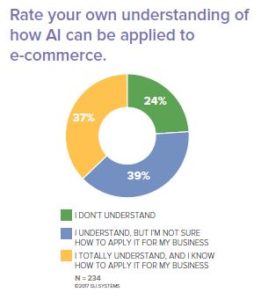
About a quarter (24%) reported not understanding how AI can be applied to e-commerce at all, and more than one-third (39%) said that while they understand AI’s e-commerce applications, they weren’t sure how it applied to their specific business. These responses reveal a huge opportunity for online retailers to learn about emerging and existing AI applications that improve CX and the bottom line.

The Most Popular AI App in E-commerce

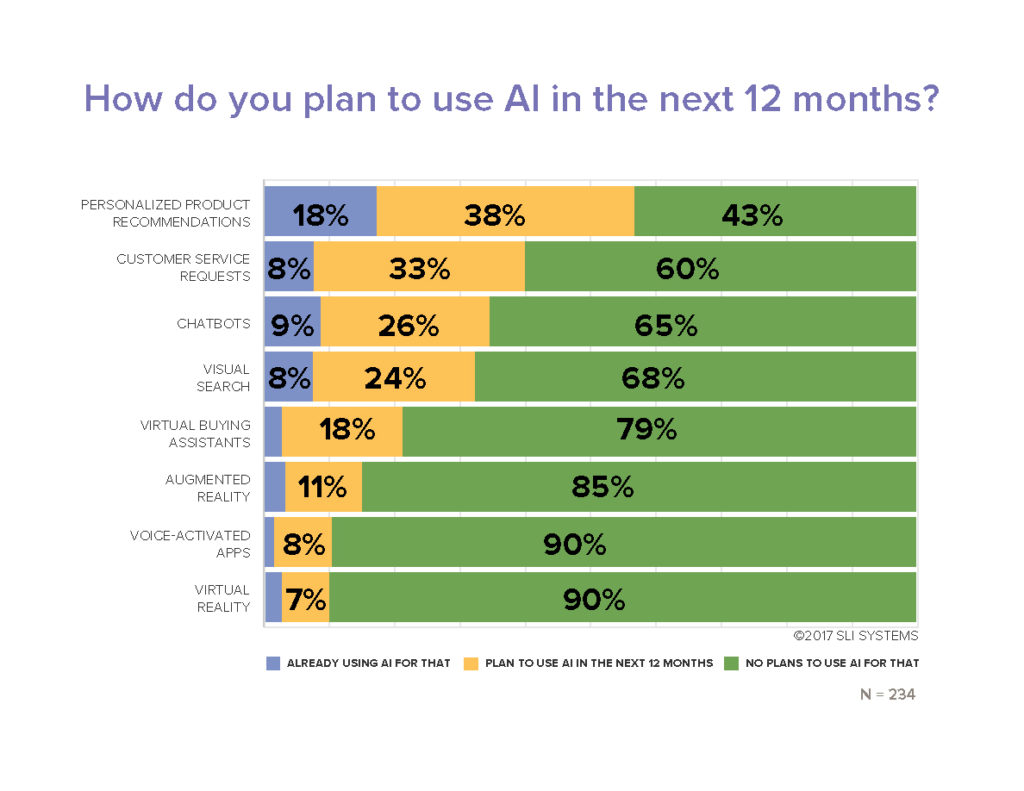
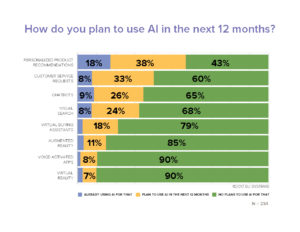
When asked how they’re using or planning to use AI, retailers reported the most-popular applications slated for implementation within the next 12 months were Personalized Product Recommendations (57%), Customer Service Requests (40%) and Chatbots (35%).

However, not all AI apps are popular on the e-commerce front – Virtual Reality and Voice-Activated Apps (90% each), Augmented Reality (85%) and Virtual Buying Assistants (79%) all had large percentages of respondents expressing no plans to use them in their businesses, now or in the future. Not surprisingly, VR and AR headset shipments are also experiencing slower growth than expected.Ecommerce Artificial Intelligence Applications Research Chart - EPIC Report Q3 2017

Cross analysis by geographical region exposes where AI is hot and where it’s been placed on the back burner. In the top three regions surveyed, current AI use is most prevalent in the U.S, with 17% of U.S-based respondents reporting it is already in use. This is closely followed by the the AU-NZ region (15%) and the UK (14%). However, retailers in the UK report the most aggressive plans for implementing AI with one-third (33%) expecting to leverage it within the next year, followed by the U.S. (17%) and the AU-NZ regions (15%).

In line with the cases and findings above, McKinsey uncovered that companies invested $26B to $39B in AI in 2016 and PwC found 72% of business decision makers believe AI will be the business advantage of the future. Without a doubt, the AI revolution is poised to be a boon for retailers.

E-commerce Merchandising: The Ultimate Guide to the Newest Techniques

Posted by Bob AngusNovember 16, 2017Analytics, Artificial Intelligence, Customer Experience, E-commerce Research, eCommerce, Merchandising, Navigation, Navigation Tips, Personalization, Recommendations, Refinements, Resources, Rich Auto Complete, Site Search, Site Search Tips, Testing, User Experience

E-commerce merchandising has one goal in mind – connect shoppers with the right product so that they “Add to Cart” fast. Merchandise well and you’ll increase conversion rates and boost your average order values.

But execution is always incredibly difficult.

You have different visitors with different mindsets toward actually buying. Those shoppers are engaging with different parts of your website through their shopping journey.

On top of that, you have to wrangle massive SKU quantities, constant product and pricing changes, and frequent promotions.

E-commerce merchandising is complex.

It is no longer as simple as choosing the products you want to move, setting an attractive discount, and plastering the offer all over your valuable real-estate.

You need to figure out what each shopper is most likely to buy right then.

The leading retail brands are employing the newest e-commerce merchandising techniques to successfully unlock the complex code to winning more sales. They approach effective merchandising along three dimensions:

  • Understanding different customers need different merchandising strategies
  • Deploying the right techniques along the shopping journey
  • Delivering the right product that is most likely to be purchased

Plus, they’re using data to drive that complex decision at scale. And you can too.

Let’s breakdown what you can do to optimize these three elements… and dramatically increase your sales.

Customer-Focused E-commerce Merchandising Strategies

“Traditional” merchandisers that worked for brick-and-mortar retail stores often had a pure product buying background. They would master the data. But that mastery focused inward to the business for the purpose of increasing unit volumes, maximizing margins, and avoiding too much unsold inventory.

Yes. You still need to successfully manage your product buying to be profitable through your online channel. But you also need to understand what’s pulling through those sales and why.

Today, world-class merchandisers start from a different perspective. They think about the customer first. Then they apply their product expertise and merchandising skills to fit what their customer segments want.

You will want to incorporate specific merchandising strategies to help win these different types of customers – from visitors “just browsing” to your most valuable returning buyers.

Earn loyalty with returning visitors and customers

The first segment of shoppers you should consider are your return visitors and previous buyers. Why? Your conversion rates should be significantly higher than first-time visitors.

Better yet, you have some easily executed tactics available to boost extra sales.

Ecommerce Merchandising Strategy Product Recommendations - Crate and Barrel Home Page Screenshot

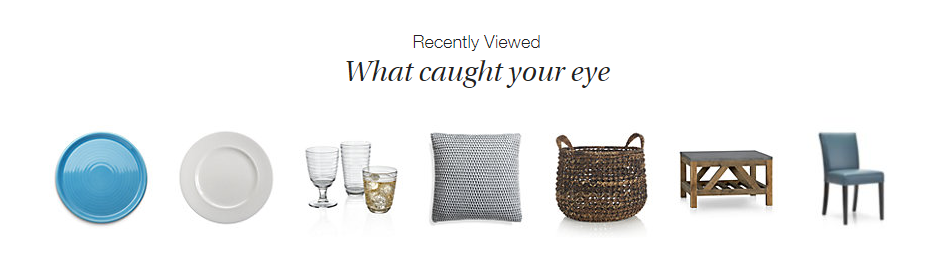
Crate and Barrel promotes “Recently Viewed” items on every product page. This makes it super easy for a returning visitor to jump right back to what they were interested in, without having to browse around your site.

This product recommendation strategy also works great on major entry points into your site like the home page or in your shopping cart.

Another source of product data to use for “personalized” products recommendations is your customers’ wish list shopping cart history. These customers have already clearly indicated exactly what they want. So you should boldly give it to them.

Other uses of your visitors’ shopping history include:

  • Highlight a special promotion for wish list items
  • Recommend complementary products that go great with a recent purchase
  • Show a reminder for abandoned cart items
  • Add an easy “Order Again” button
  • Create custom product landing pages for shoppers who clicked your retargeting ads

All of these online merchandising strategies can help grow loyal, repeat buyers and encourage returning visitors to buy more.

But what if someone is a first time visitor? Fortunately, there is another segment of high-value shoppers that you can convert with powerful merchandising.

Win high-purchase intent shoppers

Certain customers come to your site ready to buy. The question is: Are they going to buy from you or go to your competitor?

Who are these high-purchase intent shoppers? They are the visitors that use your site search functionality. SLI studies have found that visitors that use search buy at a 2.7x greater rate than visitors who just browse.

Search users have indicated exactly what they want. They often include a specific product option like a color, size, or material in their query. So you need to quickly get them to the product page for the best selling match.

Don’t make these folks navigate their way to what they want. No extra clicks. You’ll likely lose them even if you have a great price and an amazing free shipping offer.

In fact, there is one merchandising technology that dramatically helps you convert these must-win buyers – autocomplete.

Visual Merchandising Autocomplete E-commerce Site Search - e.l.f. Screenshot

A great autocomplete example is e.l.f Cosmetics. They go beyond simply displaying matching text keywords as the searcher types. They display specific product results while adding visual merchandising with appealing product images.

You are more likely to convert these shoppers by showing a product, not a category. Again, less clicks and browsing is what you want.

That’s just the start. Lock in more sales from high-purchase intent shoppers with other tactics that use search data to improve merchandising.

Now let’s turn our attention to another customer segment, who likely make up the majority of your traffic.

Convert browsers into buyers

Some customers have an idea in mind but may not be ready to buy. In a brick-and-mortar retail analogy, these folks are the “No thanks. Just browsing” shoppers.

They may be “looky loos.” However, your merchandising can effectively nudge these visitors toward a purchase.

Classically online retailers attempt to attract these browsing shoppers by promoting categories or themed product groups like seasonal or clearance categories. However, this approach just keeps them clicking through your site and you hoping they stumble on something that sparks a sale.

And that’s one of the big reasons why many visitors leave an online store with an empty cart. The merchandising kept them in a browsing mindset, not a buying one.

Do not be afraid to promote specific products. Smart online merchandisers are now curating and promoting sets of individual products, not general categories, on their highest traffic pages.

Product Recommendations Strategy - FTD Best Sellers Screenshot

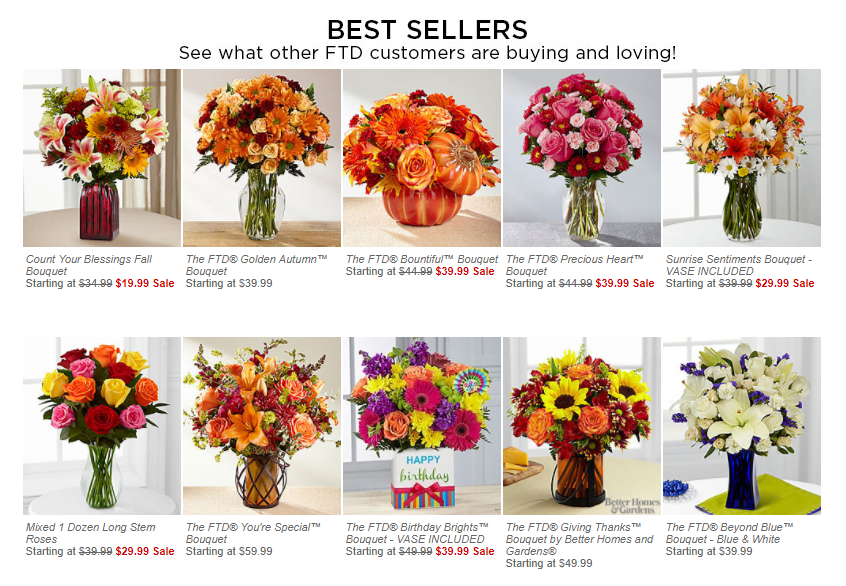
FTD.com gives a big portion of their home page to promote their Best Seller products. What those product recommendations do is switch the shopper to an active “Oh. I need that too.” mindframe. And out of a passive “just looking” mode.

Tap into your massive SKU list to find the top sellers, new products arrivals, seasonal products, or specific sale items. Use your merchandising data analysis expertise.

Then continually test which products are getting the most clicks and conversions.

Simply promoting specific products can help increase the possibility of an impulse purchase, or more likely, can create a desire to come back to your site when they are ready to buy.

Now that you’re thinking from a customer perspective, let’s take your merchandising strategies to the next level. You can optimize the customer experience by where those visitors are on your site.

Merchandising Best Practices For E-commerce Websites

There is a flow to how people shop.

A brick-and-mortar retail store starts merchandising right up front as you walk in the door. Then throughout all the aisles, displays, and checkout counters. The whole store experience is intentionally designed to drive more sales.

An online customer experience also has its flow. Your e-commerce shopping journey can be designed to maximize sales too.

Every part on your site is a merchandising opportunity – the home page, navigation menus, category pages, product pages and your checkout pages.

Hundreds of online site search tips and navigation best practices have been published that can have a big impact on your sales.

Here are the top online merchandising tactics for your e-commerce website that are red hot right now.

Visual Merchandising on Product Pages

Let’s start where customers most often click “Add to Cart” – the product page.

Many elements of the product page help merchandisers showcase that that this is the right product at the right price – product title, descriptions, specs, purchase options, ratings, reviews, and, of course, pricing and discounts.

This information appeals to the rational part of your shopper’s brain.

The part that usually makes the ultimate buying decision is the emotional part of the human brain. That’s where online visual merchandising excels.

Ecommerce Visual Merchandising - Boden Product Page Screenshot

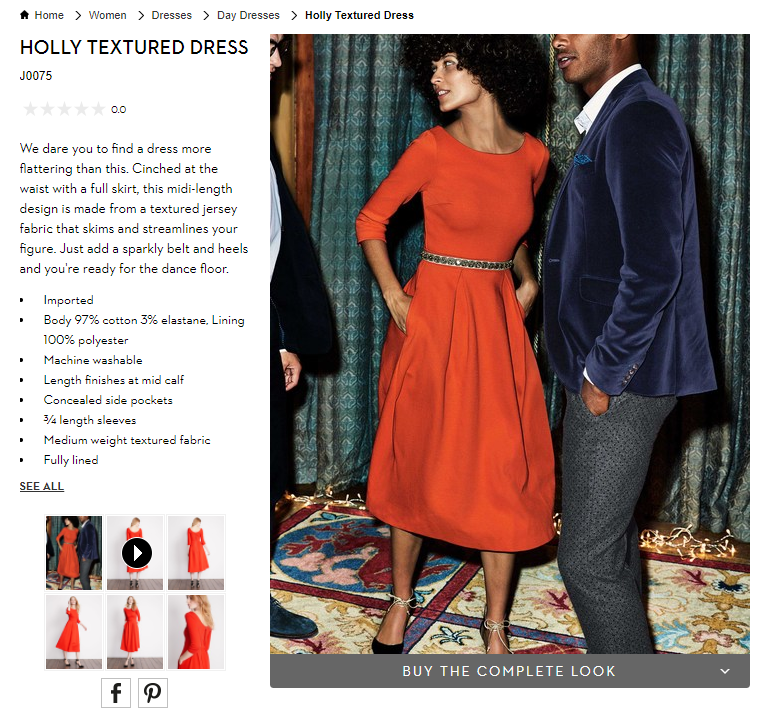
You also want to show off your products. Boden uses model videos, shows products from many angles, and switches custom images by color selection. These extra images give shoppers context when they can’t actually hold the item in their hands. You want them to easily envision what their experience will be after the purchase.

To help shoppers visualize, update product pictures instantly when they select different options like color and allow shoppers to zoom in to the smallest details.

Also, show action shots and product videos that depict how the product is used, what the buyer gets in the box, or how to install it.

Now augmented reality applications are being tested too. From arranging virtual furniture in a picture of your home to trying on different outfits in selfie mode on your smartphone, this next generation of visualization is an e-commerce merchandising innovation you will want to explore.

Personalized Product Recommendations

Product recommendations have long been a valuable online merchandising tool. You can tune your recommendations strategies using best practices for each different page on your site. Now recommendations technology is getting even smarter.

Smart product recommendations are personalized to the individual shopper in real-time. The products displayed adjust automatically based on user activity, preferences, and sales trends.

E-commerce Personalization - Footwear Etc Screenshot

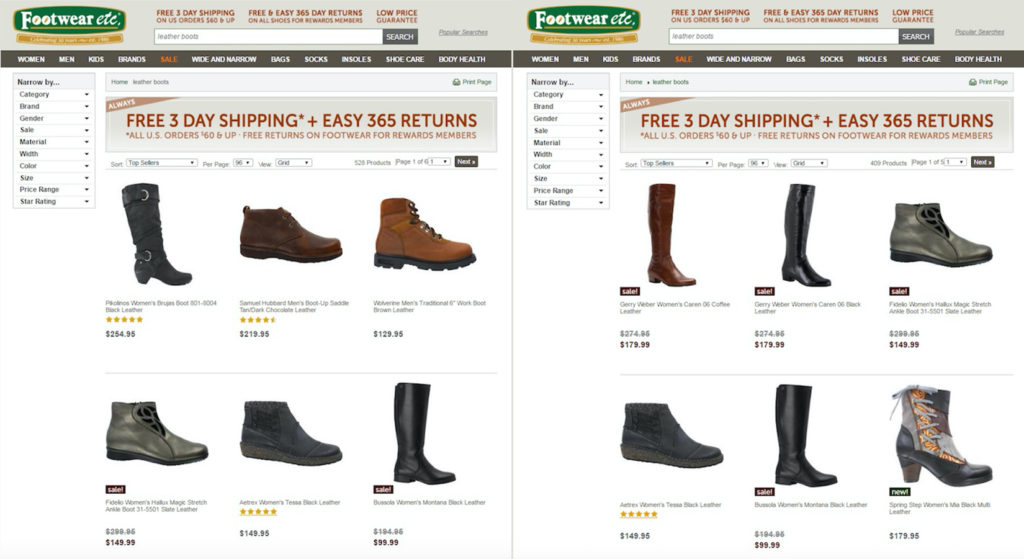
Footwear etc. adds a level of personalization based on gender. Product recommendations, search results and category pages use the products or pages previously viewed by the shopper. If a shopper starts out browsing women’s sandals, then recommended product results would boost women’s shoes or accessories on subsequent pages. The screenshot above shows before and after results when a shopper searches for “leather boots”.

This type of contextual personalization can be tuned for many different facets, including gender, size, brand preference, or location.

Not only are these higher-converting recommendations displayed in real-time, but this personalization works for first-time visitors just as well as returning shoppers.

Complementary Sales in the Shopping Cart

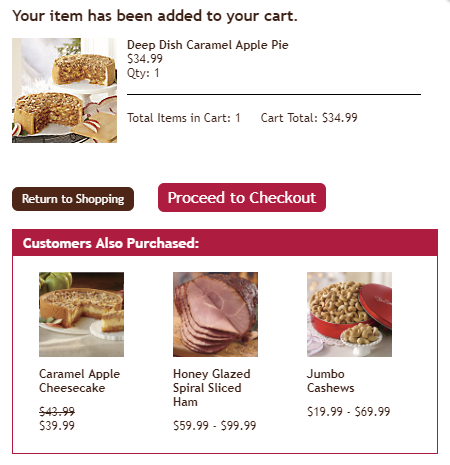
You also want to extend those product recommendations to your shopping cart and checkout experience. Just like your grocery store places a rack of candy and magazines in the checkout line, online stores have a great opportunity to capture extra sales right at the point of purchase.

Only for online stores, this upsell merchandising strategy can be even more profitable.

Again, you can personalize the products you merchandise based on real-time data. You know what products they have added to their cart. You know the other products they have viewed.

And most importantly, you know what other products complement those items.

Online Merchandising Product Recommendations in Shopping Cart - Swiss Colony Screenshot

Swiss Colony promotes “Customers Also Purchased” at the beginning of their shopping cart experience.

Other popular recommendation strategies in the checkout experience are “You may also like” and “Complete the set.”

Just be careful to use complementary products. Do not necessarily use the exact same product recommendation logic as your product page. You don’t want to accidently promote an alternative to the product your customer has already decided to buy.

At best, that mistaken recommendation is ignored, meaning a wasted upsell opportunity. At worst, your customer stops and doesn’t complete their order because now they’re not sure if they’re buying what they really want.

So make sure that you are tuning the product recommendations in your shopping cart to complementary products that add to your sales, not disrupt them.

Now let’s use powerful data analytics and technology to deliver the best results without extra work.

Merchandise the Right Product to Win the Sale

You understand the customer. You know how to merchandise for each step of the online customer experience.

Now we can put it all together with great data and your product expertise to personalize the shopping experience… and get the sale.

Data Mining for E-commerce Merchandising

Your website analytics, your product systems, and your e-commerce platform transaction system combine to provide an astonishing array of data. That data can be mined and used to fuel your merchandising decisions.

You just need to look at what you have.

Data you know about your customer:

Your website analytics software offers useful demographic information about your customers and deep insights into what they are doing on your site.

Here are some of the most useful data types that can help your e-commerce merchandising strategy:

  • Traffic Channel: Where did your visitor come from?
  • History: Are they a first-time visitor or returning shopper?
  • Behavior: Where did they go on your site and what did they do there?
  • Gender: Are they female or male?
  • Age: How old are they?
  • Device: Are they on a mobile device, tablet or traditional computer?
  • Geography: Where in the world are they?

Now pair that up with what you know about transactions stored in your e-commerce platform.

E-commerce Platform Data:

Every past purchase provides information that helps you understand what customers are likely to buy in the future.

  • Product Sold: What product exactly is purchased?
  • Options: What sizes, colors, styles, and other product options are purchased?
  • Price: How much did it cost and what was the discount?
  • Order quantity: How many did customers buy per purchase?
  • Time/Date: When did the purchase occur?
  • Payment Method: How did they pay – credit card type, PayPal, on credit/layaway?
  • Shipping: How did the customer want this delivered?
  • Abandoned Carts: What products are selected but never actually purchased?

Best selling products should always be at the top of your merchandising list. But there is even more product data available to you. And that’s your merchandising experience.

Data from your experience:

Lastly, your own experience and intuition adds the special sauce to your merchandising data recipe.

  • Social trends:What’s hot right now with your customers?
  • Brand trends: What product brands can help pull in buyers?
  • Seasonality: What holiday or seasonality drives purchases?
  • Inventory: How much is in stock?

Compile all of this data, analyze it, and determine what products your customers are most likely to buy right now.

However, the challenge with the plethora of available data is… there’s so much data. It’s incredibly difficult and time consuming to effectively wrangle all the valuable data to merchandise to every single visitor on every single webpage for all your products.

That’s where new artificial intelligence technology helps.

Artificial Intelligence Fuels E-commerce Automation

Automating your data processing to power real-time merchandising decisions is quickly becoming a must-have for online retailers.

Fifty-four percent of e-commerce sites have already implemented or plan to add AI in the future, according research from the Q3 2017 E-commerce Performance Indicators and Confidence Report. And 20% expect to add AI within the next 12 months.

So what is the most popular applications for AI right now?

Not surprisingly, merchandising techniques are at the top. Personalized product recommendations is number one. Fifty-six percent of online retailers report that they are already using artificial intelligence in their product recommendations strategies (18%) or plan to implement within the next 12 months (38%).

Other merchandising solutions and visual merchandising technologies are also being accelerated thanks to AI. Virtual buying assistants, chatbots, visual search, augmented reality (AR), and virtual reality (VR) are all designed to help shoppers purchase the right product fast.

Ecommerce Artificial Intelligence Applications Research Chart - EPIC Report Q3 2017

More automation definitely helps maximize results in less time. And in new ways.

But is artificial intelligence going to take your merchandising job away? Absolutely not.

You won’t hand over the keys entirely to your automation systems. You need to maintain a mix of merchandising techniques and always be testing to get the maximum results.

Testing Your Merchandising Strategy Mix

“Always be testing” is more than just a matra. It’s a requirement to truly maximizing your conversion rates and your total online sales.

Most every online retailer tests performance of different on-page merchandising elements. That helps determine your optimal page design. For example, a simple A/B test of your search box location can pay off big by converting high purchase-intent shoppers.

Or determine how many products should be displayed in your product recommendations. Pro tip: SLI Systems’ merchandising best practices show that 4 or 5 products are ideal. And that scrolling carousel presentation of more products doesn’t generate significantly more incremental sales.

Another high-impact test determines the best rules for your site search and product recommendation results. Keyword matching algorithms alone likely do not give your shoppers the most relevant product results, which lowers your conversion rates.

Merchandising-savvy online retailers use a prioritized mix of multiple rules to drive the most sales. They combine artificial intelligence results with pre-defined tuning rules, product and category keyword matching, and sales leader products to generate the maximum online revenues.

More E-commerce Merchandising Tips

The key to your online merchandising success is to figure out what each visitor is most likely to buy.

It’s not easy. But you can drive many more sales leveraging a deep understanding of your customers, the latest technology, and the leading edge online merchandising strategies.

We’ve shared the newest merchandising techniques here. And you have many more proven strategies and tactics available to you. Make sure to grab the hundreds of site search best practices, e-commerce navigation tips, and watch what leading retail brands are doing in these online merchandising webinars.

Survey Says . . . Amazon More E-commerce Foe Than Friend

Posted by Christina StublerApril 27, 2017Amazon, E-commerce Research, EPIC, Uncategorized

epic-competive-threats-chartWhether friend or foe to your online business, Amazon marketplaces are shaking up retail norms globally – from personalization to fulfillment. Even with Walmart and Jet.com encroaching on Amazon’s discount market share, the online mega mall added “tens of millions” of new Prime subscribers in 2016, reports investor site Motley Fool.

Add consumer expectations for relevance, price and fulfillment speed, and retailers face notable challenges in attracting, converting and keeping customers online as they seek to nab their share of retail e-commerce sales that eMarketer forecasts will top $27 trillion in 2020.

Findings in SLI Systems E-commerce Performance Indicators and Confidence (EPIC) Report illustrate the level of concern about various marketplaces among global online and multichannel merchants. The report provides insight from more than 200 e-commerce professionals — nearly 40% of whom sell on at least one Amazon marketplace, with 42% selling on additional marketplaces.

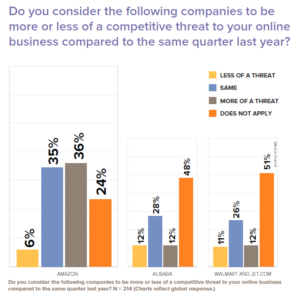
The key takeaway? Only 6% say Amazon is less of a threat.

“The Amazon Factor”

The e-commerce giant continues to challenge online businesses worldwide, with 11 Amazon marketplaces across North America, Europe and Asia.

Only 6% of the SLI study respondents feel Amazon poses less of a competitive threat. Thirty-two percent of U.S. respondents and 38% of those in the UK report that Amazon is more of a competitive threat compared to the same quarter last year.

And in Australia, where Amazon reportedly plans to open a new marketplace, 47% of respondents viewed the e-commerce giant as an increased threat.

Interestingly, Australian merchants chose “Advertising or Paid Search” as their top online retail initiative for the quarter, potentially indicating that the region’s merchants are gearing up for heightened online competition.

Other Mega Competitors

When it comes to Walmart and Alibaba, the “threat level” depends much more on region. Eighteen percent of the study’s U.S. respondents view Walmart/Jet.com as more of a threat. However, a majority of respondents in the UK (67%), Australia (60%) and New Zealand (62%) said the mega retailer was not a threat to their particular online businesses.

Looking at sentiment about Alibaba, the marketplace is a notable contender for APAC, where 20% of Australia-based and 31% of New Zealand-based merchants view Alibaba as more of competitive threat to their online business in Q1 2017 compared to the same quarter last year.

Whether selling on Amazon (friend) and/or competing with Amazon (foe), online retailers are having to keep pace with the giant as it sets the bar for the front office as well as the back office. When asked to select the single most important initiative for their online retail business, Customer Experience earned the top spot from 26% of all respondents, followed by Inventory, Logistics and Fulfillment, which earned 14% of the “votes.”

To learn about practical ways to combat Amazon, read the The Ecommerce Secret Weapon You Haven’t Heard Of on MediaPost’s SearchMarketingDaily.

Findings in the SLI Systems EPIC Report for Q1 2017 are based on a survey conducted between February 6, 2017 to March 6, 2017. For a copy of the full chart-packed report, visit: http://sitesearch.sli-systems.com/Epic-Report.html

Hook “Spearfisher” Shoppers for E-commerce Success

Posted by Shaun RyanApril 20, 2016Mobile, Site Search Tips

spearfisherAt SLI, we’ve always known that shoppers who search are the most valuable. Why? Because these shoppers tell you what they want to buy which gives you a fantastic opportunity.

According to the recent Forrester Research report “Must-Have eCommerce Features,” it’s critical that retailers support “spearfishers” – or shoppers who already have a specific product or brand in mind (versus those aimlessly browsing).

To achieve this, Forrester suggests casting one’s hook with easy-to-use site search, including autocomplete, and clear categories to support spearfishers who want to find, buy and move on. Additional research upholds Forrester’s findings as:

  • 8 seconds is the average time visitors spend before deciding whether or not to remain on a site (MarketingSherpa)
  • 43 percent of visitors immediately go to the search box (MarketingSherpa) and searchers are 2-3x more likely to convert than non-searchers
  • 50 percent of users prefer to use a site’s internal search engine, as opposed to navigating the site (E-Commerce Times)

It’s clear that many online shoppers are spearfishers, which is why it is important for retailers to quickly serve up the products they are looking for.

Top Tips to Hook Spearfishers with Smart Site Search

Here are our top tips to help you provide your most focused shoppers with a satisfying search experience that leads to improved conversions and sales:

Autocomplete with Graphics – Type Less, Buy More

WineA critical feature for speed in site search is the ability to show product results with images from the first letter a searcher types. It gives shoppers one-click access to products they want to buy, reducing the number of clicks from search to purchase.

For even better guidance, also show search suggestions based on category, brand or department to let shoppers quickly jump to the right section of results. For example, a search for wine at Fortnum & Mason immediately shows popular choices and categories for wine gifts, wine glasses, wine and cheese, etc.

Moreover, allow users to preview products of interest right within the autocomplete box. For instance, update products displayed when users hover over search suggestions to give them more choices and increase engagement.

Jump Directly to a Results Page When You Know the Answer

Use redirects when you want to take visitors to a particular page on your site, rather than showing search results for a query or class of queries. For example, if there is only one result, it may make sense to take the visitor directly there, rather than showing them the search results page. When visitors type in a specific product or SKU numbers, take them directly to the product page.

Create Landing Pages Related to Specific Keywords

Sports UnlimitedFor some popular search terms, you may want to redirect users to a specific site search page tailored to that search keyword. For example, you may already have landing pages dedicated to particular brands. When visitors search for specific brands, you can send them to the related brand page instead of a generic search results page.

For example, Sports Unlimited serves up a landing page for any Under Armour brand searches. We recommend examining your site search reports to identify the most popular searches. Then consider whether you can provide a better experience by having dedicated landing pages for some searches.

Optimize the Mobile Experience

Speed and ease are especially critical for mobile “spearfisher” shoppers. Ensure your autocomplete helps you capture sales from your small-screen shoppers with dedicated mobile and tablet designs that automatically display options correctly regardless of device size and orientation.

As John Tomich stated in a recent article for Multichannel Merchant, “A successful mobile interaction with your customer is one in which everything is obvious, easy and fast.” He cites that mobile shoppers overwhelmingly prefer social logins for ease of use. Express checkout and easy payment options are as critical here as with any shopping site.

Learn more about supporting “spearfishers” to accelerate your e-commerce sales by reading our Quick Guide to Better Site Search and Rich Auto Complete solution brief.

Your Shoppers Shouldn’t Need Luck

Posted by Christina StublerMarch 17, 2016eCommerce, Recommendations, Site Search, User Experience

cloverSome people are just born lucky. You know the ones. It doesn’t matter if they are at a garage sale, flea market or thrift store, they are going to find exactly what they are looking for every time. It’s going to be the perfect size, the hottest color and an outrageously good deal. Their natural good fortune seems to be the only help they need.

Good for them, I say. But luck is not everyone’s lot in life.

What about the unlucky ones. The ones who can’t find a parking spot let alone a pair of Jimmy Choo’s for a screaming discount in the exact right fit and shade.

Yes, I know this is a first-world problem. But life is hard enough for the I-never-catch-a-break crowd. Shopping shouldn’t be a burden too. I can hear them muttering, “Why bother looking for a new dress. I never find anything I like anyway.”

Online retailers, you have the power to make even your most unlucky shoppers feel like they’ve won a million bucks.

First of all, I’m going to assume that if you are reading this blog you value site search. Hopefully, you are already delivering amazingly relevant search results based on what shoppers are most likely to buy. (If you have any questions about this, feel free to call us.) OK, moving on.

Give good recommendations. Almost every site has recommendations these days. That doesn’t mean they are any good. Don’t clutter the shopping experience by displaying random products. Smart recommendations provide a personal shopping experience. For instance, people who bought that lipstick also bought this blush. It’s like a knowledgeable salesperson is walking your shoppers through your store, and that makes shoppers feel cared for and understood.

Build buyer confidence. If you think you are unlucky, you might be hesitant about making an online purchase. After all, you might want to see the product in person before deciding to buy. Help shoppers overcome this mental hurdle by showing them every angle of the product in easy-to-view photos. In addition, catwalk and customer videos provide that almost in real life experience. This can be helpful when selling everything from clothes and accessories to dirt bikes and motorcycles.

Provide a seamless experience from any device. Don’t even try to ignore this one. We are a society addicted to our phones and tablets and phablets. Make sure your shoppers can shop at any time from any device. In addition, if your site is not mobile-friendly, it will hurt your site’s ranking in Google’s organic search results. (By the way, you’re invited to the upcoming Internet Retailer webinar: Mobilegeddon: Not Over Yet.)

The bottom line is this: The smarter your site is, the luckier your shoppers will feel. And who doesn’t like feeling lucky?

For more tips on improving your shopping experience, check out our Big Book of Site Search Tips.

Amazon & You: How to Win

Posted by Tim CallanFebruary 5, 2016eCommerce, Merchandising, Site Search

Last week SLI Systems sponsored the Internet Retailer webinar Amazon & You: Top New Competitive Strategies for 2016. eShopportunity founder Fahim Naim and Medelita CMO Dan Stephchew took a look at what is emerging as the best ways for online retailers to compete with Amazon.

The webinar was jam-packed with examples from the recent 2015 holiday shopping season (including how to gracefully opt out of Black Friday without killing your sales).

While Amazon is undeniably a Goliath, you can beat the e-commerce giant by turning its weaknesses into your strengths. Here are a few key takeaways:

Help shoppers find what they are looking for. Amazon isn’t the easiest place to shop. It can feel like you are wandering through a huge warehouse without a soul in sight to help you. You have little choice but to base your purchasing decisions on price and reviews.

Fahim advises, “Do a better job of helping customers engage and find relative products.”

An effective way of providing a more satisfying shopping experience is by delivering relevant site search results. Engage customers further by offering a product or gift finder, which suggests a collection of products based on a series of questions. This level of personalization is impossible to deliver via the Amazon interface and it allows you to build brand loyalty.

Treat shoppers differently. Amazon is one-size-fits-all. There is no room to massage your message for different audiences. As a result, you miss the opportunity to create tailored offers for different shoppers, like first-time buyers and loyal customers. You can outshine Amazon in this area by leveraging your email marketing with content and offers designed to reach specific shoppers.

Own long-tail search terms. It’s OK if Amazon wins broad keyword searches. Shoppers who find your site via long-tail search terms are more likely to find exactly what it is they want to buy. You can build landing pages specific to these keywords. (To learn more about this, check out the webinar Advanced Data Mining.)

For more competitive strategies, watch the Internet Retailer webinar. To see how SLI Systems can help you implement these strategies, join us for our next live demo on March 8.

Refining Your Site Navigation (Part 2)

Posted by Lauri LarjoJanuary 13, 2016Color, eCommerce, Merchandising, Navigation Tips, Refinements, SEO, User Experience

As we discussed last week, the purpose of refinements is to allow shoppers to find what they are looking for more quickly. By indicating specific characteristics to narrow down the number of options shown in a category, visitors don’t have to scroll through pages of products to find the right one.

There are some simple ways you can deliver an exceptional shopping experience through your refinements.

SLI Color PaletteConsider a Color Palette

Color palettes provide a visually appealing way to show color options for a particular product. Plus, it takes the guess work out of identifying colors with names like vermilion (a reddish orange) or verdigris (a yellowish green). Color palettes are often displayed on the left column with other refinements.

Show Products in the Right Color

Display products in the color shoppers requested. For example, if the default image for a shirt is red, but it is also offered in blue, show the blue shirt when shoppers refine the category to blue.

If your product is available in several colors, let visitors see the color options from the navigation page. One effective way of doing this is to allow visitors to hover over the color palettes directly under the picture of the product. The color of the product changes, while other products on the page remain unchanged.

Use Images

The human brain processes images faster than text. Consider using images to signal certain refinements, such as apparel type (dresses, shirts, pants), brands, ratings, colors and shapes. Of course, images won’t work for some refinements, so use your judgment. Make sure the images you use are clear and simple, so your customers won’t be left guessing.

SLI Navigational ImagesUse Easy-to-understand Navigational Images

If you use navigational images to identify subcategories, make sure they are easy to understand. You want to make sure shoppers don’t accidentally confuse the subcategory images for the product selection.

Provide the following visual cues:

  • Show products as well as subcategories
  • Include the number of results for each subcategory
  • Label the subcategory images clearly
  • Distinguish between the layout of your products and subcategories

Offer Multiple Ways to Unselect Refinements

Let visitors easily change and remove refinements. Customers may want to navigate to the top or up one or several levels within a category. Use a Show All link or a breadcrumb trail to enable a quick link back to a category page or higher navigation levels. Breadcrumb trails help visitors see
 exactly where they are on the site and what refinements have been used.

Another best practice is to use an X or checkmark beside the selected refinements. This allows visitors to easily remove a refinement selection without deleting all the selected refinements and gives shoppers the flexibility they need to find the item they’re looking for. A Clear All option offers a quick “back-to-the-top” navigation alternative.

For more tips on how to improve your site navigation, download our Big Book of Navigation Tips.

Load More

Stay up to date with SLI

Featured Posts

  • Maximize Revenue with Enhanced Product Impact Testing
  • Top Five Ways to Prepare for Peak Season
  • Facets, Facets, Who’s Got the Facets?
  • Personalization: It’s Kind of a Big Deal
  • M is the New E: Mobile Commerce Trends and Predictions

Categories

About SLI Systems

  • What We Do
  • Who We Are
  • Why SLI

Learn

  • Webinars
  • News Room
  • Events

Connect

© Copyright SLI Systems, 2018. All Rights Reserved | US: (866) 240-2812 | Legal