SLI home
User login

A BLOG FOR E-COMMERCE LEADERS

  • Blog
  • Resources
  • Webinars
  • Customer Experience Scorecard

SLI Blog

Posts with online retail Tag

Personalization: It’s Kind of a Big Deal

Posted by Cheri WinterbergOctober 15, 2018E-commerce Research, EPIC, Personalization, Uncategorized

Imagine entering a store customized for you. The sales staff anticipates your unique needs, knows your sizes and tastes, and offers discounts on products you actually want. They make relevant suggestions so you don’t miss out, pointing to things you’re sure to like but may not have otherwise noticed. And they remember your previous purchases, recall what worked and what didn’t, and strive to make this visit even better than the last.

It’s every shopper’s dream come true.

In the not-so-distant past, highly-personalized retail experiences like this existed only for elite consumers. Upscale retailers vying for wealthy customers used personal shoppers and concierge services to ensure select clientele were shown products perfectly suited for them. But in the digital age, what was once an exception for the rich and famous is now within the reach of every shopper. And today’s consumers aren’t merely accepting personalization – they demand it.

Why the demand for personalization?

With so many product options, it’s easy for online shoppers to get overwhelmed and become dissatisfied. And when shoppers become dissatisfied, they abandon carts and brands. Personalization delivers a solution. High-functioning personalization strategies enhance a shopper’s journey and mitigate these frustrations. The result? Most consumers today (91%) opt for retailers who offer a personalized experience over those who don’t.    

Just how deep does the desire for personalization run?

Deep. Consider this – a survey by Salesforce revealed a whopping “82% of customers will share relevant information about themselves in exchange for connections between their digital and in-person experiences” and “85% of customers will share relevant information about themselves in exchange for proactive customer service.”

With numbers like this, it’s clear that growing personalization is imperative for retailers interested in getting – and keeping – customers.

And savvy online retailers haven’t failed to notice the increased demand. According to SLI System’s H1 2018 E-commerce Performance Indicators and Confidence (EPIC) Report, one-third (33%) of retailers across the globe say their companies are already giving their customers a personalized online experience and almost half (49%) plan to add it in the next year. In fact, only 7% of retailers worldwide say they are not adding some form of personalization to their e-commerce strategy.

As e-commerce professionals know, Customer Experience can either entice customers to return or drive them to the nearest competitor. And it’s clear personalization is a must in order to deliver a strong customer experience. But personalization isn’t a single-faceted entity. What’s more? Choosing the correct personalization strategies can make or break a shopper’s online experience – and the bottom line.

So how are e-commerce businesses personalizing and how do they plan to expand?

SLI’s EPIC Report indicates that with 57% of those surveyed saying it’s already in use, Emails Triggered by Online Behavior is the top way retailers currently personalize for their online shoppers. And it’s no surprise. MarketingDive explains that personalized email subject lines “can increase open rates by 50% and lead to 58% higher click-to-open rates.” The second most common way to personalize is Recommendations Based on Online Behavior (55%) followed by Segmentation Based on Demographic Data and Offers Triggered by Online Behavior, which tied for third (34%).

Underutilized strategies offer unique pathways to personalization.

Less used forms of personalization reveal opportunities to improve customized shopping experiences through a variety of alternative strategies. But which strategies can retailers use to take advantage of these opportunities? SLI uncovered that Persistent Profiling through a Data Management Platform (DMP) is the least utilized method of personalization with only 6% of those surveyed reporting it is currently in use. DMP is closely followed by Offers Triggered by Offline Behavior (7%) and Recommendations Based on Offline Behavior (9%).

To be successful, personalization must actually be personal.

Conversant found irrelevant content is the number one way to frustrate shoppers and lose sales. So how do retailers ensure their customers’ personalized experiences are, in fact, personal? Tracking and utilizing online behavior in the right ways. And e-commerce strategists are taking advantage of expanding technology in this arena. SLI discovered the top ways retailers plan to expand personalization all center on online behavior.
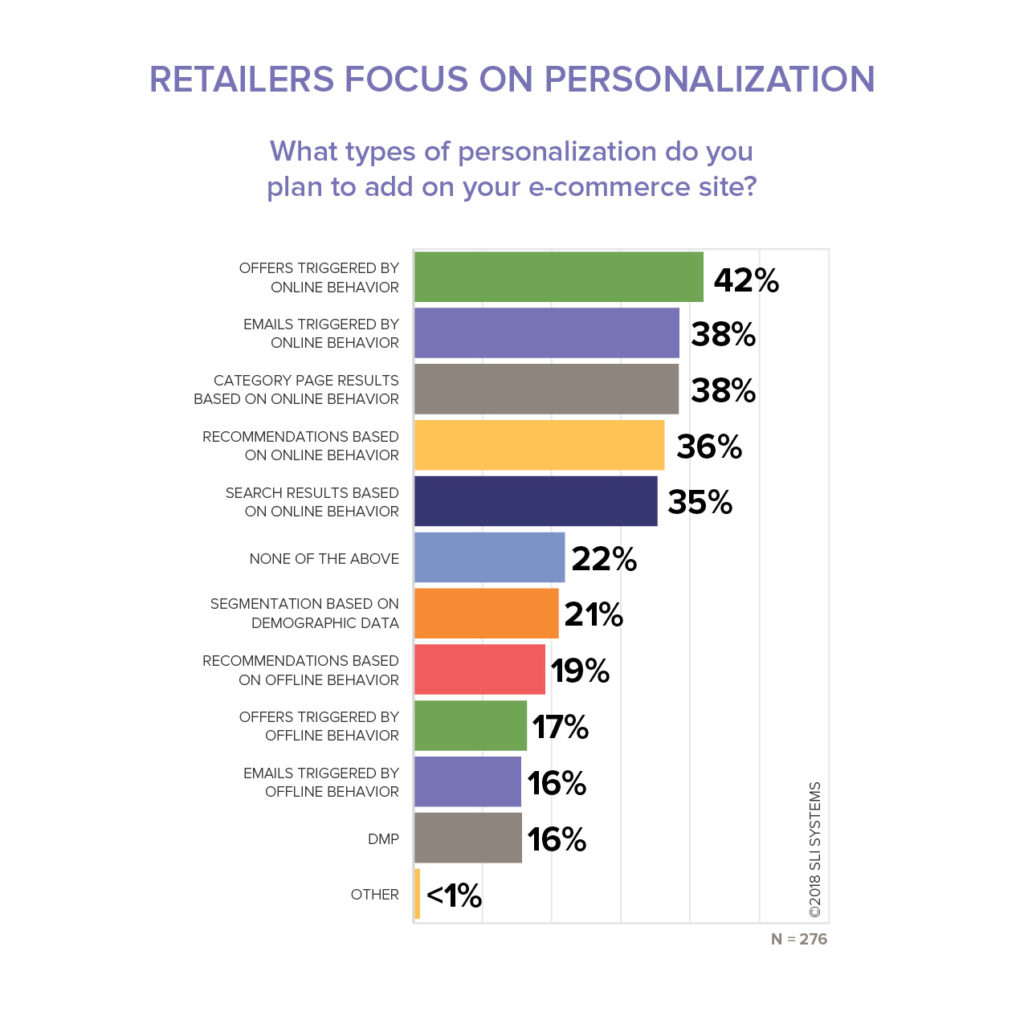
"Offers Triggered by Online Behavior" is the number one way retailers plan to add personalization to their e-commerce site. The top approach selected for implementation this year by 42% of retailers is Offers Triggered by Online Behavior. It was followed by Emails Triggered by Online Behavior and Category Page Results Based on Online Behavior 38% each in second place. Recommendations Based on Online Behavior took third place with 36%.

The Bottom Line

Finding out what your customers want and helping them get it through a personalized e-commerce experience isn’t just good for shoppers, it’s good for business. Sixty percent of those surveyed by SLI believe personalization will increase conversion rates. As technologies to improve personalization expand, retailers must take advantage or risk losing consumers to those who’ve embraced the growing demand for personalization.   

For more on the latest trends in e-commerce personalization, click here to download the H1 2018 EPIC Report.

Magento Extensions – The 13 Best Magento Plugins to Increase Sales

Posted by Bob AngusJanuary 24, 2018Customer Experience, eCommerce, Resources, SEO, Site Search, Social Media, Testing, User Experience

Best Magento Extensions - Magento Marketplace

You’ve got the core functionality in place on your Magento store. Now you need to enhance your site to increase sales and optimize your customer experience. That’s where Magento extensions help.

But there are thousands of Magento extensions to choose from in the Magento Marketplace. You can easily spend too much time figuring out what’s the right extension across different business needs.

Here’s a helpful guide that gets you right to the best Magento extensions designed specifically to drive more online sales.

How to Find the Best Magento Extension for You

The Magento Marketplace makes it easy to browse and filter the many extensions. However, evaluating which extension is right for you can still be daunting.

It’s not as simple as looking at ratings. Even the most popular plugins typically only have a few reviews.

And just going with free extensions may not be the best way to save money.

Here are few criteria you can consider when choosing a Magento extension.

Free Extensions vs. Paid Extensions

It’s easy to jump toward a free extension. But most free extensions also require a subscription to that service. Calculate your total cost before choosing a solution, including the expense for the time it takes your developer to integrate and maintain that extension. Sometimes the higher priced solution up front is actually less expensive in the long run.

Look for Great Support

Help save your development time by choosing extensions that have excellent installation documentation and user guides. Better yet, check out their support information on the vendor’s website. Evaluate how responsive and helpful they are before making the purchase. That extra contact can help you avoid getting stuck later on.

Recent and Regular Updates

Magento is constantly improving as e-commerce continues to evolve. Your extension provider should be too. Partner with vendors that are committed to the Magento community. Look for extensions with recent or regular updates for new Magento releases and for additional features and bug fixes.

Now let’s look at the detailed list of Magento extensions that can help increase your sales.

Best Magento Extensions – The 2018 List

Winning more sales requires enhancements to each step of the customer experience:

  • Drive more traffic to your store
  • Increase conversion rates
  • Accelerate purchase with fast and easy checkout

We’ve curated a list of 13 top Magento extensions that can help you increase sales in 2018.

Let’s get started with the critical need to bring shoppers to your e-commerce site.

Drive More Traffic

More traffic means more shoppers. More shoppers lead to more sales. It’s that simple.

The challenge is winning shoppers who are ready to buy against competitors hungry for the same customers.

The following Magento extensions give you an edge and help drive more and better traffic to your store.

MageWorx SEO Suite UltimateSEO magento extension - mageworx seo suite ultimate

Magento helps your search engine optimization techniques with core functionality that Google and other search engines want.

The platform gives you the basics, like clean HTML, meta tags, simple URL structure, and automatic XML sitemap generator. These capabilities make your website easy to crawl. However, you’ll need to do more and at scale to win hyper-competitive search ranking.

Many extensions address a single element of good SEO. We recommend a single extension containing an entire SEO suite to really increase your organic search traffic.

MageWorx SEO Suite Ultimate is an all-in-one SEO toolkit that manages a wide array of onpage SEO features that includes:

  • identifying duplicate content
  • enhanced site indexing
  • canonical URLs
  • optimized meta data
  • auto-generated XML sitemaps
  • cross linking
  • SEO redirects
  • advanced rich snippets

Price: $299 for Community edition, $599 for Enterprise edition

Learn more about MageWorx SEO Suite Ultimate

Remarketing with adaploremarketing magento extension - adaplo

Remarketing is a proven advertising tactic to increase sales by bringing previous visitors back to your store. Product remarketing ads are displayed on Facebook and Google Display Network (GDN) that match what your shoppers have already viewed.

The challenge is automating your remarketing ads across all your visitors and for all your product SKUs. adaplo makes automated retargeting easier.

adaplo creates the retargeting campaigns on Facebook and GDN by launching dynamic product history. It can also expand your ads to more audiences and different ad types.

Price: Free, requires an adaplo subscription

Learn more about adaplo

Wyomind Simple Google ShoppingGoogle Shopping Magento Extension - wyomind simple google shopping

This extension is the M2 version of Wyomind’s highly rated Simple Google Shopping. You can easily sync your Magento store’s product feed with Google Shopping.

What sets Simple Google Shopping apart are features that help you synchronize accurately without spending a lot of time, including:

  • Map your product categories to Google categories
  • Schedule tasks to generate your data feed
  • Check that your data feed was generated error free
  • Verify your data feed generation stats (number of items, time and resource)

Price: $80 for Community edition, $120 for Enterprise edition

Learn more about Wyomind Simple Google Shopping

Email Marketing with Brontoemail marketing magento extension - Bronto

Email marketing remains a dominant marketing channel that drives more traffic and sales. Your e-commerce email marketing should be more than broadcasting your sales and discount offers.

That’s why Bronto is the perfect email platform for your Magento store. You can send targeted and personalized emails to your customers and newsletter list.

The Bronto Connector for Magento easily imports purchase information from the Magento platform into Bronto campaign manager. Using that full order history you can curate personalized email and cross-channel marketing campaigns at scale.

Price: Free, requires a Bronto subscription

Learn more about Bronto

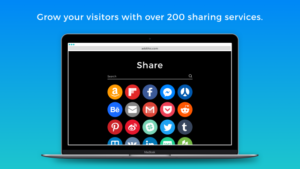
AddThis Social Media SharingAddThis social media magento extension

Let your customers spread the word about your products. You get more already-enthusiastic visitors when your current shoppers share on social media.

AddThis is the easiest way to add sidebar share buttons to your Magento store. This social media extension can connect you with over 200 social networks for easy sharing … for free.

Plus, you have control of the style to match your store in both desktop and mobile browsers. And you can pre-populate the message being shared. As a result, your shoppers are more likely to share.

Price: Free

Learn more about AddThis

Increase Conversion Rates with Better Customer Experience

Now that you have help driving more shoppers to your online store, it’s time to turn those shoppers into buyers.

The best way to increase conversion rates is to provide your visitors with a great customer experience.

Customer experience trends show the most successful retailers are executing well at every step in the buying journey.

Here are some Magento extensions that can help you do the same.

Smart Site Search with Learning Search

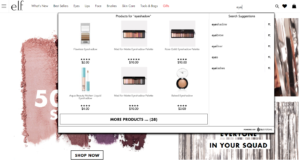
Visual Merchandising Autocomplete E-commerce Site Search - e.l.f. Screenshot

Customers who search for products have higher purchase intent than shoppers who are “just browsing.” You need to make sure you are delivering the search results that those must-win customers are most likely to buy right then. 

Go beyond simple keyword matching from your product feed. With SLI Learning Search, your e-commerce search box becomes an AI-powered tool designed to continuously improve query results and generate more revenue.

Further boost conversion rates with rich autocomplete functionality. Less clicks and browsing is what you want. Display specific product results while adding visual merchandising with appealing product images.

Better yet, you can leverage the same behavioral data to add AI-powered product recommendations to product pages, in your shopping cart, or anywhere on your site. Getting personalized recommendations along with higher converting search results can give you a big advantage over using separate plugins for recommendations and site search.

Price: Free, requires an SLI Systems subscription

Learn more about SLI Learning Search

Social Media Content with Pixlee social media magento extension - Pixlee

Social media content posted by you and shoppers on Instagram, Pinterest, Facebook, and other social channels can really improve engagement. In turn, that more personal social proof increases conversion rates.

Pixlee helps you identify and curate user-generated content so that you can display beautiful look books and social image galleries throughout your site. And those images are shoppable to make it easy to click “buy now.”

Pixlee also delivers the advanced social campaign features you’ll want in a single solution, including the ability to:

  • Launch social contests and promote engagement campaigns
  • Publish visual reviews and social posts on product and category pages
  • Personalize emails with relevant social proof
  • Track your social content’s conversion rate and engagement metrics

Price: Free, requires a Pixlee subscription

Learn more about Pixlee

Special Promotions Propromotions magento extension - amasty special promotions pro

Discount offers and promotions are proven to increase transactions. But managing all the different types of offers across all your SKUs can be incredibly time-consuming. Not to mention, ensuring you don’t kill your profits by discounting the wrong products or by displaying expired sales.

Amasty’s Special Promotions Pro extension reduces your headaches with a powerful promotion manager. The extension gives you access to 22 discount and offer rules for cost-effective promotions building in bulk or for individual products.

Additionally, you can automatically create personalized promotions using customer data. The extension builds one-to-one, hyper relevant deals for you using data like order history and birthdays. That level of personalization can really help drive repeat sales from loyal customers.

Price: $129

Learn more about Special Promotions Pro

Amasty A/B Testinga/b testing magento extension - amasty a/b testing

You should always be running experiments to discover the major and minor updates to your Magento store that can maximize sales. Amasty also provides a helpful A/B Testing extension that gives you everything you need.

You can run A/B split test and multivariate tests for particular products or product groups directly from your Magento admin panel. You can customize one or multiple tests at a time based on different goal metrics, products, and “winner” criteria.

What makes this testing extension even nicer for you is that you aren’t required to develop duplicate product pages with each test variation. No extra development time and site bloat helps you focus on improving your customer experience, not coordinating the tests.

Price: $179

Learn more about Amasty A/B Testing

Full Page Cache Warmer by Magewarespage cache magento extension - magewares full page cache warmer

Front-end site elements and promotions get a lot of attention when improving customer experience. But site speed and page performance is also a must-have consideration.

Page caching extensions like Full Page Cache Warmer are the simplest ways and most effective ways to make sure your Magento store loads fast for your visitors. Full Page Cache Warmer automatically crawls your store to find any uncached pages or newer versions of already cached pages.

Then the “warmer” part of this extension kicks in. This extension uses a special technique warms each page as if a real visitor is hitting on that page. The result is faster page deliver when a shopper does actually does land on your site. Pretty slick.

Price: $129 for Community edition, $379 for Enterprise edition

Learn more about Full Page Cache Warmer

Win More Sales with Frictionless Shopping Cart

So far we’ve covered Magento extensions that increase traffic and then help you improve your conversion rates. Now it’s time to focus on the most critical step – ensure your customer completes their purchase with a fast and easy checkout experience.

Smart One Step Checkoutecommerce shopping cart magento extension - aheadworks smart one step checkout

You’ve optimized your online store so that a customer clicks the “Add to Cart” button on your product. Don’t lose the sale by adding extra steps to completing the purchase after they’ve decided to buy.

Customers now expect a single page checkout process that they are familiar with from shopping on other online stores. Give it to them with Smart One Step Checkout.

Smart One Step Checkout offers all the functionality you need in a single extension, including:

  • Mobile responsive design
  • Customer login for one step purchase or guest checkout
  • Edit items in the cart
  • Apply discount codes and gift cards
  • Checkout behavior and abandonment reporting

Price: $299 for Community edition, $1,499 for Enterprise edition

Learn more about Smart One Step Checkout

Subscription And Recurring Paymentecommerce subscription magento extension - magenest subscriptions recurring payments

Subscription models have become a popular way for e-commerce businesses to sell their products. Keeping customers buying from you month-after-month can be incredibly profitable. However, subscription purchases require a different checkout and payment infrastructure.

Aheadwork’s extension adds subscription and recurring payment functionality you need. It can become your primary checkout experience for pure subscription businesses. Or you can create trial subscriptions or automatic product re-order options.

The recurring payments integrate with your merchant services provider. This makes regular billing easy for you and your customer. Plus, it helps reduce payment failures due to credit card expirations or cancellations.

Price: $249

Learn more about Aheadworks Subscription And Recurring Payment

SimiCart Mobile App Buildermobile app magento extension - simicart mobile app builder ios android

Most Magento themes already support mobile responsive design. So shoppers using a mobile browser usually have a good experience. But you may be missing a segment of customers who prefer to shop in your own branded app.

SimiCart helps you build your own iOS and Android mobile app to boost up your business through the Apple App Store or Google Play. SimiCart integrates directly with your Magento store infrastructure so that product feeds, ordering, and fulfillment are all synchronized.

You can then customize your mobile app’s design and features as you wish. Make it look like an app version of your mobile website. Or create a custom app experience with shopping features. You choose.

Price: Free, with SimiCart subscription starting at $49/month

Learn more about SimiCart Mobile App Builder

Magento Extensions that Improve Your Sales

These 13 Magento extensions are designed to increase your sales in different ways – driving more site traffic, improving conversion rates, and accelerating customers through checkout. Make sure to check out these extensions and see how you can take your sales to the next level.

MageWorx SEO Suite Ultimate

adaplo Remarketing

Wyomind Simple Google Shopping

Bronto Email Marketing

AddThis Social Media Sharing

SLI Learning Search

Pixlee Social Media Content

Amasty Special Promotions Pro

Amasty A/B Testing

Magewares Full Page Cache Warmer

Aheadworks Smart One Step Checkout

Magenest Subscription And Recurring Payment

SimiCart Mobile App Builder

AI in E-commerce: Boon or Bust?

Posted by Kim Presser, Director of SalesNovember 22, 2017Artificial Intelligence, E-commerce Research, Uncategorized

Advancements in artificial intelligence (AI) in e-commerce made headlines everywhere this last year:
  • 1-800-Flowers.com launched Gwyn (a.k.a. Gifts When You Need Them). Within two months, 70% of online orders were completed through GWYN. See learnings.
  • North Face’s conversational engine has the potential to run tens of thousands of consumers through its Q-and-A interface.
  • A Boch Toyota dealership attributed a 60-sale increase per month to the authentic-sounding messages of Conversica “sales reps.”

But what does the future look like for AI in e-commerce?

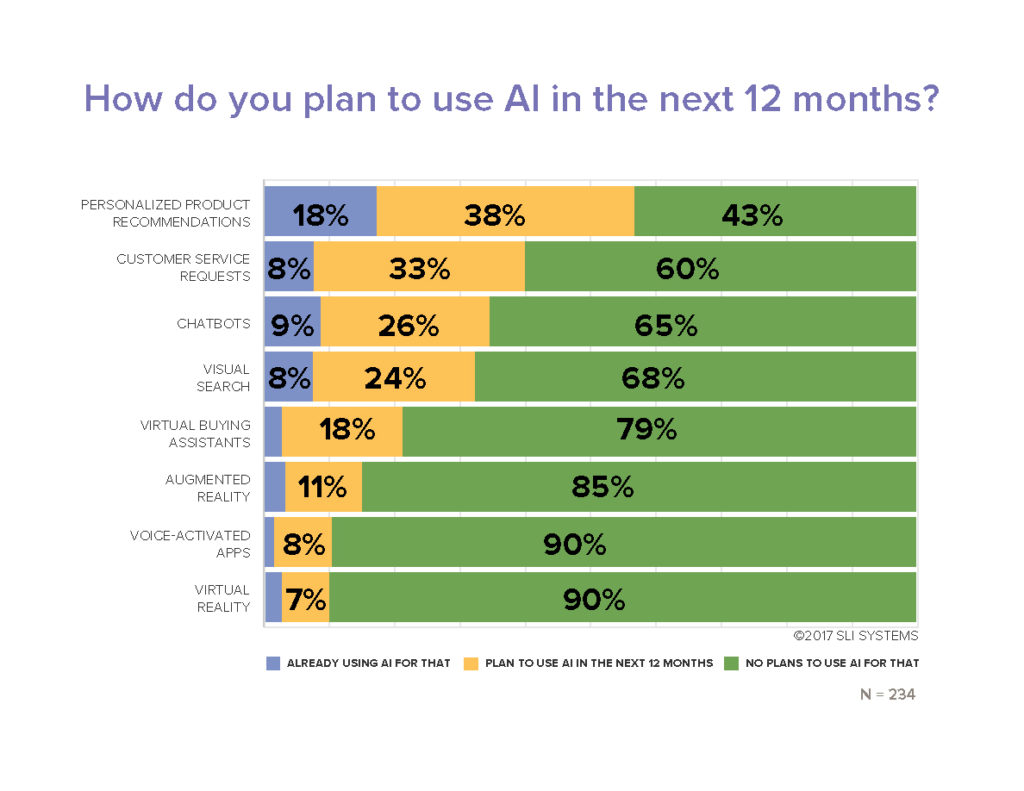
SLI set out to answer this question by asking more than 200 e-commerce professionals in its third quarterly 2017 E-commerce Performance Indicators and Confidence Report. The responses were revealing. While more than half (54%) have already implemented or plan to add AI in the future – including 20% who expect to add AI within the next 12 months – there remain substantial opportunities for growth and education in AI.

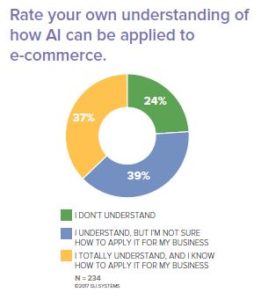
About a quarter (24%) reported not understanding how AI can be applied to e-commerce at all, and more than one-third (39%) said that while they understand AI’s e-commerce applications, they weren’t sure how it applied to their specific business. These responses reveal a huge opportunity for online retailers to learn about emerging and existing AI applications that improve CX and the bottom line.

The Most Popular AI App in E-commerce

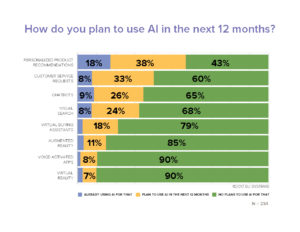
When asked how they’re using or planning to use AI, retailers reported the most-popular applications slated for implementation within the next 12 months were Personalized Product Recommendations (57%), Customer Service Requests (40%) and Chatbots (35%).

However, not all AI apps are popular on the e-commerce front – Virtual Reality and Voice-Activated Apps (90% each), Augmented Reality (85%) and Virtual Buying Assistants (79%) all had large percentages of respondents expressing no plans to use them in their businesses, now or in the future. Not surprisingly, VR and AR headset shipments are also experiencing slower growth than expected.Ecommerce Artificial Intelligence Applications Research Chart - EPIC Report Q3 2017

Cross analysis by geographical region exposes where AI is hot and where it’s been placed on the back burner. In the top three regions surveyed, current AI use is most prevalent in the U.S, with 17% of U.S-based respondents reporting it is already in use. This is closely followed by the the AU-NZ region (15%) and the UK (14%). However, retailers in the UK report the most aggressive plans for implementing AI with one-third (33%) expecting to leverage it within the next year, followed by the U.S. (17%) and the AU-NZ regions (15%).

In line with the cases and findings above, McKinsey uncovered that companies invested $26B to $39B in AI in 2016 and PwC found 72% of business decision makers believe AI will be the business advantage of the future. Without a doubt, the AI revolution is poised to be a boon for retailers.

E-commerce Merchandising: The Ultimate Guide to the Newest Techniques

Posted by Bob AngusNovember 16, 2017Analytics, Artificial Intelligence, Customer Experience, E-commerce Research, eCommerce, Merchandising, Navigation, Navigation Tips, Personalization, Recommendations, Refinements, Resources, Rich Auto Complete, Site Search, Site Search Tips, Testing, User Experience

E-commerce merchandising has one goal in mind – connect shoppers with the right product so that they “Add to Cart” fast. Merchandise well and you’ll increase conversion rates and boost your average order values.

But execution is always incredibly difficult.

You have different visitors with different mindsets toward actually buying. Those shoppers are engaging with different parts of your website through their shopping journey.

On top of that, you have to wrangle massive SKU quantities, constant product and pricing changes, and frequent promotions.

E-commerce merchandising is complex.

It is no longer as simple as choosing the products you want to move, setting an attractive discount, and plastering the offer all over your valuable real-estate.

You need to figure out what each shopper is most likely to buy right then.

The leading retail brands are employing the newest e-commerce merchandising techniques to successfully unlock the complex code to winning more sales. They approach effective merchandising along three dimensions:

  • Understanding different customers need different merchandising strategies
  • Deploying the right techniques along the shopping journey
  • Delivering the right product that is most likely to be purchased

Plus, they’re using data to drive that complex decision at scale. And you can too.

Let’s breakdown what you can do to optimize these three elements… and dramatically increase your sales.

Customer-Focused E-commerce Merchandising Strategies

“Traditional” merchandisers that worked for brick-and-mortar retail stores often had a pure product buying background. They would master the data. But that mastery focused inward to the business for the purpose of increasing unit volumes, maximizing margins, and avoiding too much unsold inventory.

Yes. You still need to successfully manage your product buying to be profitable through your online channel. But you also need to understand what’s pulling through those sales and why.

Today, world-class merchandisers start from a different perspective. They think about the customer first. Then they apply their product expertise and merchandising skills to fit what their customer segments want.

You will want to incorporate specific merchandising strategies to help win these different types of customers – from visitors “just browsing” to your most valuable returning buyers.

Earn loyalty with returning visitors and customers

The first segment of shoppers you should consider are your return visitors and previous buyers. Why? Your conversion rates should be significantly higher than first-time visitors.

Better yet, you have some easily executed tactics available to boost extra sales.

Ecommerce Merchandising Strategy Product Recommendations - Crate and Barrel Home Page Screenshot

Crate and Barrel promotes “Recently Viewed” items on every product page. This makes it super easy for a returning visitor to jump right back to what they were interested in, without having to browse around your site.

This product recommendation strategy also works great on major entry points into your site like the home page or in your shopping cart.

Another source of product data to use for “personalized” products recommendations is your customers’ wish list shopping cart history. These customers have already clearly indicated exactly what they want. So you should boldly give it to them.

Other uses of your visitors’ shopping history include:

  • Highlight a special promotion for wish list items
  • Recommend complementary products that go great with a recent purchase
  • Show a reminder for abandoned cart items
  • Add an easy “Order Again” button
  • Create custom product landing pages for shoppers who clicked your retargeting ads

All of these online merchandising strategies can help grow loyal, repeat buyers and encourage returning visitors to buy more.

But what if someone is a first time visitor? Fortunately, there is another segment of high-value shoppers that you can convert with powerful merchandising.

Win high-purchase intent shoppers

Certain customers come to your site ready to buy. The question is: Are they going to buy from you or go to your competitor?

Who are these high-purchase intent shoppers? They are the visitors that use your site search functionality. SLI studies have found that visitors that use search buy at a 2.7x greater rate than visitors who just browse.

Search users have indicated exactly what they want. They often include a specific product option like a color, size, or material in their query. So you need to quickly get them to the product page for the best selling match.

Don’t make these folks navigate their way to what they want. No extra clicks. You’ll likely lose them even if you have a great price and an amazing free shipping offer.

In fact, there is one merchandising technology that dramatically helps you convert these must-win buyers – autocomplete.

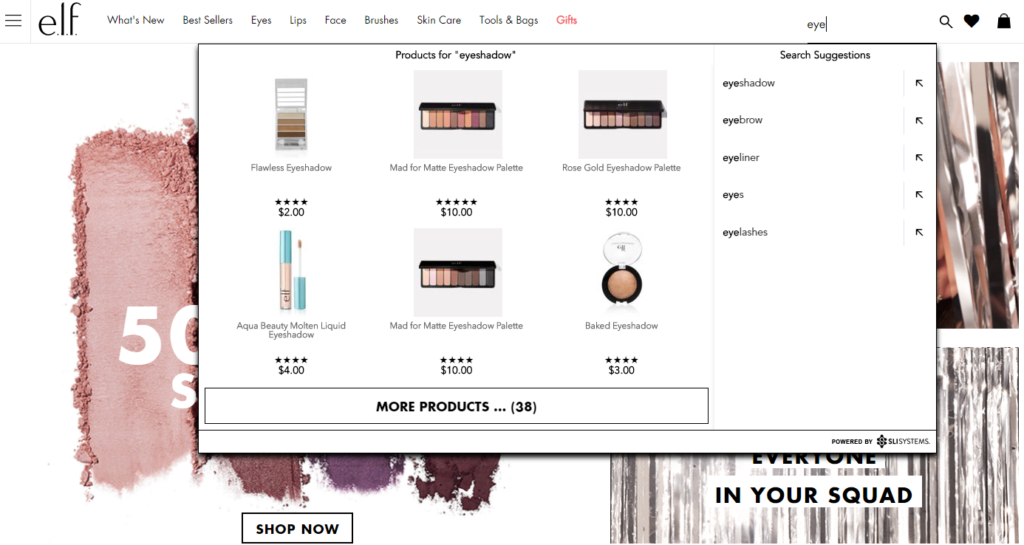
Visual Merchandising Autocomplete E-commerce Site Search - e.l.f. Screenshot

A great autocomplete example is e.l.f Cosmetics. They go beyond simply displaying matching text keywords as the searcher types. They display specific product results while adding visual merchandising with appealing product images.

You are more likely to convert these shoppers by showing a product, not a category. Again, less clicks and browsing is what you want.

That’s just the start. Lock in more sales from high-purchase intent shoppers with other tactics that use search data to improve merchandising.

Now let’s turn our attention to another customer segment, who likely make up the majority of your traffic.

Convert browsers into buyers

Some customers have an idea in mind but may not be ready to buy. In a brick-and-mortar retail analogy, these folks are the “No thanks. Just browsing” shoppers.

They may be “looky loos.” However, your merchandising can effectively nudge these visitors toward a purchase.

Classically online retailers attempt to attract these browsing shoppers by promoting categories or themed product groups like seasonal or clearance categories. However, this approach just keeps them clicking through your site and you hoping they stumble on something that sparks a sale.

And that’s one of the big reasons why many visitors leave an online store with an empty cart. The merchandising kept them in a browsing mindset, not a buying one.

Do not be afraid to promote specific products. Smart online merchandisers are now curating and promoting sets of individual products, not general categories, on their highest traffic pages.

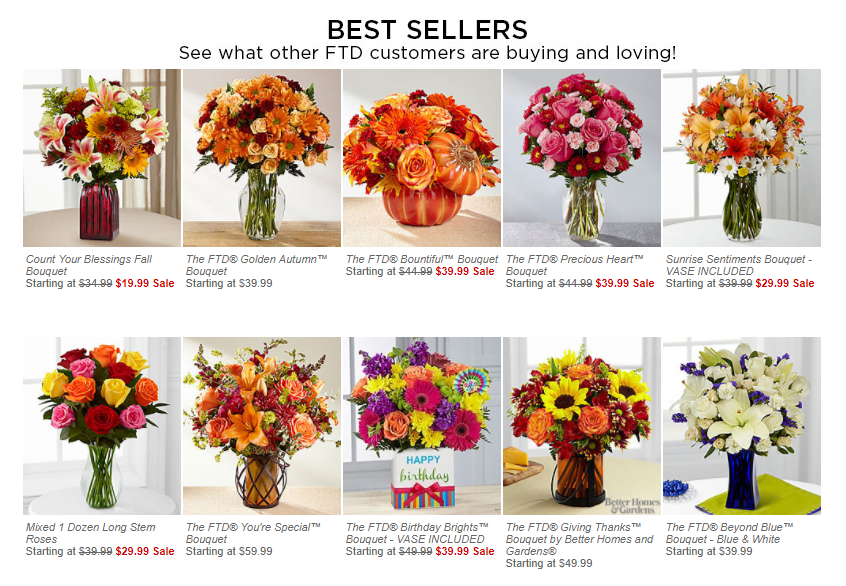
Product Recommendations Strategy - FTD Best Sellers Screenshot

FTD.com gives a big portion of their home page to promote their Best Seller products. What those product recommendations do is switch the shopper to an active “Oh. I need that too.” mindframe. And out of a passive “just looking” mode.

Tap into your massive SKU list to find the top sellers, new products arrivals, seasonal products, or specific sale items. Use your merchandising data analysis expertise.

Then continually test which products are getting the most clicks and conversions.

Simply promoting specific products can help increase the possibility of an impulse purchase, or more likely, can create a desire to come back to your site when they are ready to buy.

Now that you’re thinking from a customer perspective, let’s take your merchandising strategies to the next level. You can optimize the customer experience by where those visitors are on your site.

Merchandising Best Practices For E-commerce Websites

There is a flow to how people shop.

A brick-and-mortar retail store starts merchandising right up front as you walk in the door. Then throughout all the aisles, displays, and checkout counters. The whole store experience is intentionally designed to drive more sales.

An online customer experience also has its flow. Your e-commerce shopping journey can be designed to maximize sales too.

Every part on your site is a merchandising opportunity – the home page, navigation menus, category pages, product pages and your checkout pages.

Hundreds of online site search tips and navigation best practices have been published that can have a big impact on your sales.

Here are the top online merchandising tactics for your e-commerce website that are red hot right now.

Visual Merchandising on Product Pages

Let’s start where customers most often click “Add to Cart” – the product page.

Many elements of the product page help merchandisers showcase that that this is the right product at the right price – product title, descriptions, specs, purchase options, ratings, reviews, and, of course, pricing and discounts.

This information appeals to the rational part of your shopper’s brain.

The part that usually makes the ultimate buying decision is the emotional part of the human brain. That’s where online visual merchandising excels.

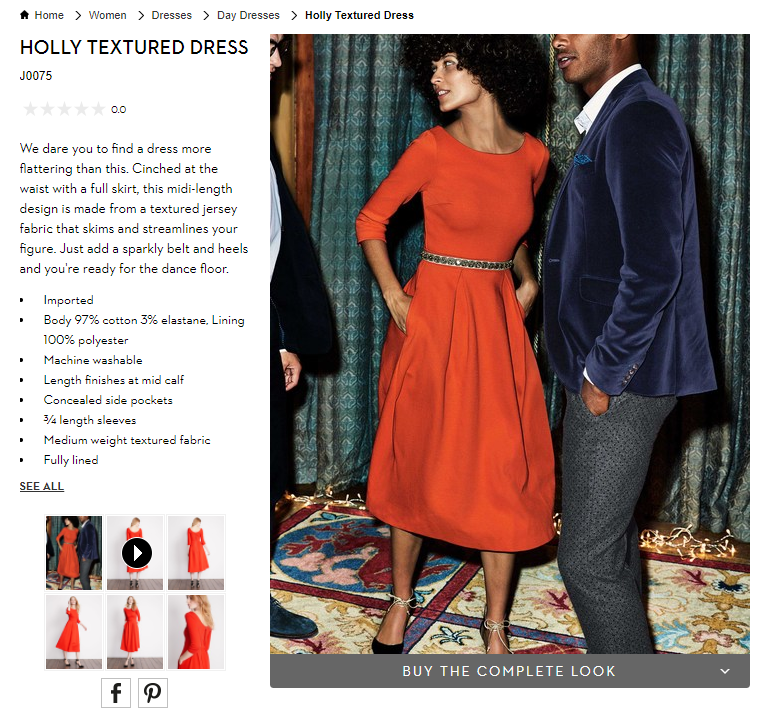
Ecommerce Visual Merchandising - Boden Product Page Screenshot

You also want to show off your products. Boden uses model videos, shows products from many angles, and switches custom images by color selection. These extra images give shoppers context when they can’t actually hold the item in their hands. You want them to easily envision what their experience will be after the purchase.

To help shoppers visualize, update product pictures instantly when they select different options like color and allow shoppers to zoom in to the smallest details.

Also, show action shots and product videos that depict how the product is used, what the buyer gets in the box, or how to install it.

Now augmented reality applications are being tested too. From arranging virtual furniture in a picture of your home to trying on different outfits in selfie mode on your smartphone, this next generation of visualization is an e-commerce merchandising innovation you will want to explore.

Personalized Product Recommendations

Product recommendations have long been a valuable online merchandising tool. You can tune your recommendations strategies using best practices for each different page on your site. Now recommendations technology is getting even smarter.

Smart product recommendations are personalized to the individual shopper in real-time. The products displayed adjust automatically based on user activity, preferences, and sales trends.

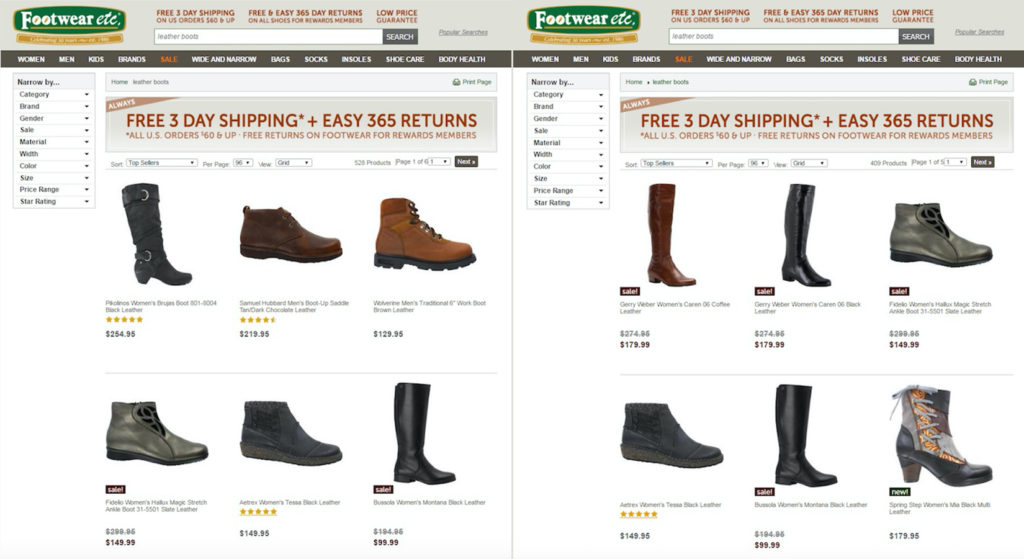
E-commerce Personalization - Footwear Etc Screenshot

Footwear etc. adds a level of personalization based on gender. Product recommendations, search results and category pages use the products or pages previously viewed by the shopper. If a shopper starts out browsing women’s sandals, then recommended product results would boost women’s shoes or accessories on subsequent pages. The screenshot above shows before and after results when a shopper searches for “leather boots”.

This type of contextual personalization can be tuned for many different facets, including gender, size, brand preference, or location.

Not only are these higher-converting recommendations displayed in real-time, but this personalization works for first-time visitors just as well as returning shoppers.

Complementary Sales in the Shopping Cart

You also want to extend those product recommendations to your shopping cart and checkout experience. Just like your grocery store places a rack of candy and magazines in the checkout line, online stores have a great opportunity to capture extra sales right at the point of purchase.

Only for online stores, this upsell merchandising strategy can be even more profitable.

Again, you can personalize the products you merchandise based on real-time data. You know what products they have added to their cart. You know the other products they have viewed.

And most importantly, you know what other products complement those items.

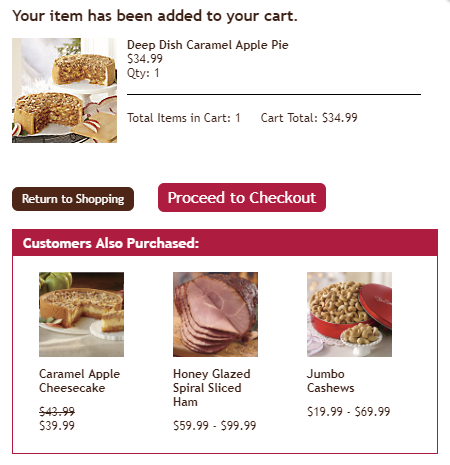
Online Merchandising Product Recommendations in Shopping Cart - Swiss Colony Screenshot

Swiss Colony promotes “Customers Also Purchased” at the beginning of their shopping cart experience.

Other popular recommendation strategies in the checkout experience are “You may also like” and “Complete the set.”

Just be careful to use complementary products. Do not necessarily use the exact same product recommendation logic as your product page. You don’t want to accidently promote an alternative to the product your customer has already decided to buy.

At best, that mistaken recommendation is ignored, meaning a wasted upsell opportunity. At worst, your customer stops and doesn’t complete their order because now they’re not sure if they’re buying what they really want.

So make sure that you are tuning the product recommendations in your shopping cart to complementary products that add to your sales, not disrupt them.

Now let’s use powerful data analytics and technology to deliver the best results without extra work.

Merchandise the Right Product to Win the Sale

You understand the customer. You know how to merchandise for each step of the online customer experience.

Now we can put it all together with great data and your product expertise to personalize the shopping experience… and get the sale.

Data Mining for E-commerce Merchandising

Your website analytics, your product systems, and your e-commerce platform transaction system combine to provide an astonishing array of data. That data can be mined and used to fuel your merchandising decisions.

You just need to look at what you have.

Data you know about your customer:

Your website analytics software offers useful demographic information about your customers and deep insights into what they are doing on your site.

Here are some of the most useful data types that can help your e-commerce merchandising strategy:

  • Traffic Channel: Where did your visitor come from?
  • History: Are they a first-time visitor or returning shopper?
  • Behavior: Where did they go on your site and what did they do there?
  • Gender: Are they female or male?
  • Age: How old are they?
  • Device: Are they on a mobile device, tablet or traditional computer?
  • Geography: Where in the world are they?

Now pair that up with what you know about transactions stored in your e-commerce platform.

E-commerce Platform Data:

Every past purchase provides information that helps you understand what customers are likely to buy in the future.

  • Product Sold: What product exactly is purchased?
  • Options: What sizes, colors, styles, and other product options are purchased?
  • Price: How much did it cost and what was the discount?
  • Order quantity: How many did customers buy per purchase?
  • Time/Date: When did the purchase occur?
  • Payment Method: How did they pay – credit card type, PayPal, on credit/layaway?
  • Shipping: How did the customer want this delivered?
  • Abandoned Carts: What products are selected but never actually purchased?

Best selling products should always be at the top of your merchandising list. But there is even more product data available to you. And that’s your merchandising experience.

Data from your experience:

Lastly, your own experience and intuition adds the special sauce to your merchandising data recipe.

  • Social trends:What’s hot right now with your customers?
  • Brand trends: What product brands can help pull in buyers?
  • Seasonality: What holiday or seasonality drives purchases?
  • Inventory: How much is in stock?

Compile all of this data, analyze it, and determine what products your customers are most likely to buy right now.

However, the challenge with the plethora of available data is… there’s so much data. It’s incredibly difficult and time consuming to effectively wrangle all the valuable data to merchandise to every single visitor on every single webpage for all your products.

That’s where new artificial intelligence technology helps.

Artificial Intelligence Fuels E-commerce Automation

Automating your data processing to power real-time merchandising decisions is quickly becoming a must-have for online retailers.

Fifty-four percent of e-commerce sites have already implemented or plan to add AI in the future, according research from the Q3 2017 E-commerce Performance Indicators and Confidence Report. And 20% expect to add AI within the next 12 months.

So what is the most popular applications for AI right now?

Not surprisingly, merchandising techniques are at the top. Personalized product recommendations is number one. Fifty-six percent of online retailers report that they are already using artificial intelligence in their product recommendations strategies (18%) or plan to implement within the next 12 months (38%).

Other merchandising solutions and visual merchandising technologies are also being accelerated thanks to AI. Virtual buying assistants, chatbots, visual search, augmented reality (AR), and virtual reality (VR) are all designed to help shoppers purchase the right product fast.

Ecommerce Artificial Intelligence Applications Research Chart - EPIC Report Q3 2017

More automation definitely helps maximize results in less time. And in new ways.

But is artificial intelligence going to take your merchandising job away? Absolutely not.

You won’t hand over the keys entirely to your automation systems. You need to maintain a mix of merchandising techniques and always be testing to get the maximum results.

Testing Your Merchandising Strategy Mix

“Always be testing” is more than just a matra. It’s a requirement to truly maximizing your conversion rates and your total online sales.

Most every online retailer tests performance of different on-page merchandising elements. That helps determine your optimal page design. For example, a simple A/B test of your search box location can pay off big by converting high purchase-intent shoppers.

Or determine how many products should be displayed in your product recommendations. Pro tip: SLI Systems’ merchandising best practices show that 4 or 5 products are ideal. And that scrolling carousel presentation of more products doesn’t generate significantly more incremental sales.

Another high-impact test determines the best rules for your site search and product recommendation results. Keyword matching algorithms alone likely do not give your shoppers the most relevant product results, which lowers your conversion rates.

Merchandising-savvy online retailers use a prioritized mix of multiple rules to drive the most sales. They combine artificial intelligence results with pre-defined tuning rules, product and category keyword matching, and sales leader products to generate the maximum online revenues.

More E-commerce Merchandising Tips

The key to your online merchandising success is to figure out what each visitor is most likely to buy.

It’s not easy. But you can drive many more sales leveraging a deep understanding of your customers, the latest technology, and the leading edge online merchandising strategies.

We’ve shared the newest merchandising techniques here. And you have many more proven strategies and tactics available to you. Make sure to grab the hundreds of site search best practices, e-commerce navigation tips, and watch what leading retail brands are doing in these online merchandising webinars.

All Things Amazon and Personalization Prevail at SLI Connect NYC

Posted by Chris Brubaker, Chief Marketing OfficerNovember 9, 2016Conferences, eCommerce, Personalization, Search Conferences, Site Search, SLI Buyer Engine, Uncategorized

sli-connect-2016-top-image

Dozens of e-commerce companies, thought leaders and SLI partners convened this fall at Carnegie Hall in New York City for our third annual SLI Connect event. During packed presentations and breakout sessions the group tackled many issues and opportunities for online retailers today. Among the over-arching themes were strategies to compete with Amazon, ways to offer a personalized experience, and best practices in quickly connecting buyers with the products they are most likely to buy.  Here are some highlights.


Many Ways to Compete with Amazon

 E-commerce is growing 12%, offering many opportunities to grow sales. As SLI Systems CMO, I shared ways that online merchants can seize the greatest share of sales, particularly when competing with Amazon, which is “ruthlessly efficient in selling online.” SLI’s goal is to give everyone else the tools that the big players have, so that they can increase traffic, turn shoppers into buyers, and sell more to each buyer. SLI enables a virtuous cycle of predictive product discovery: increased site traffic powers the SLI Buyer Engine to improve user experience; this converts more shoppers into buyers and increases AOVs; then, analysis of user behavior drives new site traffic. It’s the beauty of processing data streams in real time.

eShopportunity Founder Fahim Naim offered methods for retailers to expand sales, using examples from e-commerce trailblazers Jet.com, Boxed.com and Enjoy.com. Offer membership and subscription options to drive engagement, use sample boxes for trials and awareness, and add marketplaces to expand the share of wallet. He also explained key trends to watch, such as:

  • Showcasing video on mobile; customers are 64% more likely to buy after watching a video
  • Increasing personalization via emails; Jupiter said relevant emails drive 18x more revenue
  • Personalizing the site experience, including search, recommendations and displays
  • Ensuring site search considers out of stocks, smart autocomplete, trending items, location
  • Making use of augmented/virtual reality, like apps from IKEA and Converse

 Jeff Fox with SLI partner Feefo shared how customer reviews and ratings provide invaluable business insights for teams, service and products functions across industries. He net out best practices in capturing the customer experience to drive sales, including engaging genuine customers, evaluating feedback and responding, expanding content reach, driving traffic to the website, sharing reviews across social platforms and generating Gold stars to increase Google QS. In fact, Google rewards you for having an improved quality score by lowering your Adword spend – and in some instances, good ratings can cover your ad spend.


From Site to Paid, #SearchIsSexy

 SLI Chief Innovation Officer Shaun Ryan recapped the evolution of e-commerce and site search, beginning in 2001, covering the rise of user-generated content, social media – from Myspace to Pinterest, e-mail marketing, SEO and paid Search/Google Shopping, mobile, personalization, video, and marketplaces. He explained that the future of site search is about perfecting cross-channel selling, buying for profiles (implicitly OR explicitly letting users specify who they are buying for), and for non-Amazon merchants, exploring the (controversial) opportunity to collectively use preferences to offer a better experience for the shopper.

 Panel session moderator Melissa Campanelli, with Total Retail publishing, who earlier spoke on the state of retail amidst digital disrupters (notably the presidential election) (watch video here), asked the panel whether search has lost its edge, like email, the group agreed that search remains important given the strong value/intent to buy when someone uses a site search box. One panelist explained “Amazon is great if you know what you want but it sucks if you just want to browse. Think about how can people browse and find things easily. Not many sites do this well.” Another panelist added, “Search is sexy” – and a new hash tag was born: #searchissexy.

Greg Bauman of e-commerce paid search management firm ROI Revolution shared Google Shopping strategies, including tracking keywords, spending where the cost for CVR is less (such as with umbrellas in AZ vs. OR), and not using up your daily budget before peak hours. It’s important to leverage the data Google gives you when defining your strategy. Optimize your titles with the most impactful keywords at the front of a description (using brand or manufacturer; not company) and descriptions using the fewest number of keywords that will increase views. And, use Custom Labels to make use of best sellers or clearance based on seasonality, price, profitability, and stock location.


Make it Easy and Personalized

SLI customer Everlast teamed with SLI partner Bronto to share a results-packed case study about their use of Bronto’s software for email management. The duo provided a detailed playbook with strategies for list growth and customer segmentation, as well as how lifecycle messaging drives revenue. By executing on a series of well-timed – yet unpredictable – personalized email messages, Everlast has seen 13% list growth in less than one year.

On the future of e-commerce, panelist Marc Lippmann, Managing partner with Debra Lippmann cosmetics, stressed the value of providing shoppable content. That is, enabling shoppers to buy an item, in the moment, while they are looking at commerce content and video. Delivering frictionless mobile checkout is also critical for future success. Marc explained that Apple Pay is revolutionizing mobile commerce, with users calling the feature “delightful!”


To learn more about e-commerce personalization, read how SLI Enhanced Search Personalization™ instantly and dynamically personalizes the shopping experience for both first-time visitors and loyal customers in real time.

Harness the Power of Mobile for Higher Holiday Sales

Posted by Amy LindseyNovember 1, 2016eCommerce, Merchandising, Mobile, Mobile/Tablets, Navigation, Personalization, Recommendations, Uncategorized

Portrait of a girl shopping online.

Evidence from 2015 suggests that record-breaking numbers of holiday shoppers will make their 2016 purchases online. (Click here to Master 2015 Holiday Trends to Clinch 2016 Holiday Sales.)

Trends show a steady shift from the majority of online purchases being made from a desktop to more purchases being made on mobile devices. While computers still brought the highest average transaction size at $114 (over $89 for tablet and $70 for smartphone), for six of the days leading up to Christmas last year, traffic from smartphones surpassed that of desktops.

Savvy online retailers are preparing to harness the “runaway power of mobile” (NRF) to close more sales than ever during the holiday 2016 buying season.

Here are four strategies to optimize the mobile experience and drive higher sales this holiday and beyond.

Drive Conversions with Interactive Content

Four times as many consumers would now rather watch a video about a product than read about it (NRF). Further, one in four consumers will lose interest in a company if it doesn’t have video. This is great news for retailers who want to capitalize on the rise of mobile for holiday shoppers. Since mobile users are turned off by lengthy text, videos create a clean and attractive design that enhances the user experience. Videos and other interactive content, such as blogs and reviews, can be embedded right into the search results to increase the likelihood that busy holiday shoppers will convert.

Create a Personalized Search and Navigation Experience

Personalization is the next big thing. Customers are increasingly coming to expect a personalized online shopping experience. Nowhere is personalization more important than mobile sites. With long lists of family and friends to buy for and limited time to do it, mobile shoppers this season will want relevant products served up fast, which is a challenge for retailers, given the limited real estate of small screens.

Mobile search and navigation results will win higher conversions when they are automatically fine-tuned on critical facets personal to each shopper, such as gender or size. (See how SLI Systems is personalizing the entire shopping experience.)

Help Searchers Find Your Site

While mobile has yet to surpass desktop for actual purchases, the majority of search is now mobile. Fifty-six percent of searches that resulted in a click to a top retail site during November and December 2015 were conducted on either a smartphone or tablet (NRF).

Mobile users, even more than desktop users, are unlikely to scroll through the first couple of results. While you may not be able to compete with Amazon or other giant online retailers’ rankings for the most commonly used search terms, you can win by capturing long-tail search terms from your shoppers and using them to create dedicated landing pages that are crawlable by search engines. Then, when searchers type those long-tail terms into Google, your landing page will pop right up where mobile shoppers are likely to click.

Use Creative Omnichannel Strategies:

The retail store is not dead. It remains a mecca of holiday spending. Innovative retailers are using the capabilities of mobile to enhance the in-store experience, and vice versa.

To be successful, go beyond what shoppers expect (such as seeing in-store availability for products they see online) and delight them with the unexpected. Offer Wi-Fi during the holidays to make it easier for shoppers to make comparisons and read ratings and reviews on their smartphones. Allow mobile shoppers to set up in-store appointments for services (great for busy holiday shoppers). Or take it another leap forward to create a virtual shopping experience as described in the Forbes article: Virtual Reality Coming Soon to a Clothing Store Near You.

Harnessing the power of mobile for higher holiday sales is all about tailoring the entire shopping experience, from search to purchase, to the wishes of your shoppers. After all, happy holiday shoppers purchase more, and that will make your days merry and bright!


4 Things Retailers Should Learn from Pokemon Go

Posted by Dawn MortensenJuly 11, 2016Social Media, Uncategorized

Pokemon

If you noticed far more people engrossed in their smart phones while walking through neighborhoods or strip malls this weekend, it wasn’t just your imagination – it was Pokemon Go, the new augmented reality game that uses location-based technology to allow users to catch, train and battle with Pokemon as they walk through their real-world environment.

Just 5 hours after its release on July 7, Pokemon Go became the most popular iPhone app in the United States. According to July 10 data from SimilarWeb, it will only take a couple more days before Pokemon Go hits as many Daily Active Users as Twitter.

This is a phenomenon anyone who does anything online should pay attention to. After watching my kids, their friends, and even my husband get caught up in the real-world Pokemon hunt over the past 96 hours, I’ve noticed some of the basic elements of the game that are making it very popular, very fast. And I think that these same principles are key to succeeding in retail.

  1. Connect People with Their Favorite Things. Pokemon were already one of kids’ (or kidults’) favorite things. Smart phones are another. And this new game allows them to interact with both in a unique way. Technology is appealing when it helps people connect more with what they love. It’s the same with online retail – allowing customers to better engage with and experience what they love is always going to deliver positive returns.
  1. Make It Fun. All around the country, strangers are suddenly collaborating in parks or at storefronts about how and where to catch the local Pokemon. Most people get an endorphin boost from acquiring something new – especially something rare – as well as from achievements and prizes, no matter how small. I think this same principle gave rise to the term “retail therapy.”
  1. Everyone Loves a Treasure H Pokemon Go is proof of this – it’s turning into one of the biggest hunts in history. Good merchandisers know how sometimes, making something a bit harder to acquire can increase demand. Secret sales or specials to those customers “in the know” are often effective.
  1. Getting People Active Is a Win. Whether playing online games or shopping, we love our computers and mobile devices and spend an ever increasing amount of time sitting in front of screens. Most of us want to get more active, but we don’t want to give up our technology. Any app that causes us to do the things we love online while also getting the exercise of moving around the real world naturally gains quick support. (I know my kids got more exercise this weekend than they have all summer!)

Beyond these basic principles, there are other reasons for retailers to pay attention to Pokemon Go. Many store fronts have Pokemon assigned to their GPS coordinates, and you can only catch these Pokemon by walking near the store. Imagine the possible tie-ins with promotions.

We’ve said this is the year of virtual reality, and that online shopping experiences will soon involve more of it. Pokemon Go is yet another way that the online world is merging with reality, and the possibilities for retailers are exciting.

Advice for Amazon: Be Honest with Search Results

Posted by Dawn MortensenJuly 8, 2015eCommerce, Merchandising, No Results, Site Search, Site Search Tips

Amazon’s practice of misleading customers with search results is again on trial, after the 9th Circuit U.S. Court of Appeals overturned a lower court ruling on a trademark infringement suit by Multi Time Machine, Inc. (MTM).

Amazon trademark lawsuit by MTMMTM charged Amazon with infringing on its trademark by creating “a likelihood of confusion” when customers search Amazon for “MTM Special Ops Watch,” which is the name of a military-style watch sold by MTM. Amazon uses the MTM Special Ops name multiple times on search results pages, even though they do not sell MTM watches.

Now MTM is entitled to a new trial, or Amazon may try to settle. Either way, it’s time for Amazon to stop fooling its shoppers. Whether they win or lose the case, Amazon should think more about site search best practices that will win loyal customers.

Here’s some advice on how Amazon and other retailers can expertly handle searches that turn up zero results:

  1. Be honest. Search results should never be tricky. The search box is the one area of your site where customers get to tell you exactly what they want. Smart retailers either give customers what they ask for or apologize for not having it. If you mislead customers into looking at other items, they’ll soon realize that you aren’t showing what they want. They’ll feel fooled and will leave frustrated.
  1. Think of the customer experience first. Online businesses depend on repeat customers. You’re not a temporary pop-up shop trying to get quick impulse buys without the concern of having buyers return to your store. When you show customers that you understand what they’re requesting and you’re doing your best to help them find it, it builds lasting respect.
  1. Be smart about merchandising on no-results pages. When you don’t have the specific product or brand that a customer requests, you can still offer alternate items without insulting his or her intelligence. There are a number of possible responses, like “We’re sorry we don’t carry items from that brand, but the following brands are popular with our customers.” In the case of MTM watches, Amazon should state up-front: “We don’t sell MTM watches, but here are similar products you might like.”Sports Authority SLI Systems Site Search
  1. Give suggestions for better search results. Sports Authority handles the no-results page by offering a “Did you mean _____” suggestion, along with the text: “You may have typed your word incorrectly or are being too specific. Try using a broader search phrase or try one of our most popular search phrases,” followed by a word cloud of popular searches.
  1. Reduce the number of no-results pages. Be sure your site search provider includes synonyms and alternate spellings in your search to reduce the number of “no result” searches. After implementing this practice with SLI Systems Learning Search®, Sports Authority saw a 300% reduction in no-results searches.
  1. Study the search terms that end in no results. In its Big Book of Site Search Tips, SLI encourages clients to review their Top No-results Search Report regularly to see what customers look for that does not come up in search results. Paying attention to no-results searches often uncovers opportunities for new items to add to the inventory. It also allows businesses to craft creative responses to a specific no-results result.

Maternity no-results page exampleUK clothing retailer Oasis handles a search for maternity clothes with the message: “Whoops, we’re sorry we don’t cover bumps – shop our accessories instead.”

Beyond potential legal ramifications, Amazon should change the language on its search results pages for the sake of delivering what customers want. Other retailers can follow best practices from the start, and not have to worry about trademark infringement.

Five Site Features that “Speed Shoppers” Love

Posted by Dawn MortensenMarch 9, 2015eCommerce, Mobile, Navigation, Ratings and Reviews, Rich Auto Complete, Site Search, Social Media, User Experience

50+ years ago, futurists predicted that advances in technology would provide a life of ease. Instead, we use today’s technology to do more, faster – even with shopping. As an increasing number of online shoppers want to find, buy and get on with life as quickly as possible, here are five must-have features for e-commerce sites that want to meet the needs of these “speed shoppers.”

1. Learning-based Site Search

Speed shoppers are likely to go straight to the search box and expect relevant results within the first few items displayed. To deliver such on-target results, a site search provider needs to offer technology that learns from multiple aspects of user activity and continually re-ranks items that are most relevant. The smarter the technology, the better the accuracy and speed for shoppers.

2. Autocomplete with Graphics

aero finalA critical feature for speed in site search is the ability to auto-populate product results and images from the first letter a searcher types, as offered by SLI Rich Auto CompleteTM. If I want to quickly find polo shirts and I start typing “polo,” I appreciate a retailer who shows me “polo” shirts after just typing “po.”

In this example, the retailer also uses SLI Learning SearchTM technology, which intelligently infers that by typing “po” I was most likely looking for a polo shirt and not a “pocket tee” or “popover hoodie.” Smart – and fast.

3. Social Content and Reviews Integrated Into Search

Keep in mind that not all speed shoppers know exactly what they want when they search. A last-minute gift-buyer, for instance, may search for “makeup set” at e.l.f. cosmetics, but before clicking “buy” the giver wants to make sure it’s a quality product. Since e.l.f. incorporates a special “As Seen In” feature into its search, the gift shopper can see that this item has been featured in magazines like O and Woman’s Day. And if that doesn’t instill enough confidence to click “buy,” the shopper can see that it’s a 4-star product with more than 61 reviews. This quick-reference information, placed on the product page, can make a speed shopper giddy about the efficiency of it all.

4. Easy Payment Options

Online shoppers are quickly getting fed up with multiple-step checkouts that require them to provide personal and financial information. As more consumers experience the convenience of PayPal, Apple Pay, Google Wallet or similar payment options, paying with credit cards could soon become a relic. Be sure you offer the payment experience your customers prefer, or they’ll find other sites that do.

5. Optimized Mobile Experience

Speed and ease are especially critical for mobile shoppers. The smaller the screen size, the smaller the amount of patience a customer has before giving up. As John Tomich stated in a recent article for Multichannel Merchant, “A successful mobile interaction with your customer is one in which everything is obvious, easy and fast.” He cites that shoppers overwhelmingly prefer social logins for ease of use. Express checkout and easy payment options are as critical here as with any shopping site. Other critical features are those that will improve findability, like learning-based search and navigation.

The investment in meeting the needs of speed shoppers will undoubtedly pay off. Speed shoppers are usually searchers, which are 2-3x more likely to convert than non-searchers. And when you meet speed shoppers’ needs for efficiency, they’ll quickly become some of your most loyal repeat customers.

2014 Could Be the Year that Online Retailers Outsmart Amazon

Posted by Shaun RyanJanuary 21, 2014eCommerce, Site Search

As I look through articles on trends and business strategies for 2014, it’s clear that Amazon is driving many online retailers’ business decisions this year. With Amazon’s advantages in fulfillment speed, pricing, inventory, and the sophistication of its e-commerce engine, I imagine the question of how to effectively compete with the behemoth keeps many online retailers up at night.

However, there is a category of savvy online business owners – many of whom we have the pleasure of working with – who are keeping the Amazons, eBays and Walmart.com’s of the world at bay by finding their own niches.

These retailers are discovering that they can maintain dominance on their home turf and draw new shoppers to their sites by showcasing their domain expertise and augmenting their unique assets with services from third-party providers. For example, a merchant can use videos and social media marketing to effectively emphasize its unique specialty.

Additionally, retailers are looking to service providers to handle critical areas of their website like search, shopping cart and check-out, mobile design, personalization, and more. When a service provider has a single best-of-breed offering and leverages it across hundreds of retailers, it’s possible for that service provider to surpass Amazon’s own offered capabilities in these areas.

The key for retailers of any size is to maintain a solid focus on delivering the best overall shopping experience possible – through both technology and easy access to great customer service. In other words, don’t worry so much about what Amazon is doing, just worry about making sure you’re doing the best you can at what you do well, and look to your technology service partners to optimize performance for your website, which is what we do well.

Kidrobot_MUNNY_21Jan14As an example, look at Kidrobot, whose pop art and designer toys are constantly shared over Facebook, Instagram and other social media sites. SLI incorporated social media content into Kidrobot’s on-site search. Now, when you search for MUNNY (see screen shot below), not only can you easily find a MUNNY product, but you can click on the Instagram tab to view photos of MUNNY toys, click on the Video tab to view videos of MUNNYs, and so on. Even though you can buy MUNNY toys and other Kidrobot products on Amazon, many shoppers still want to buy directly from Kidrobot’s site because they enjoy the delightful user experience that Kidrobot has created for shoppers.

So if you’re looking to beat Amazon at its own game, leverage the assets you have that they don’t. It may be your physical stores, unique access to products, a deep knowledge of your niche, or something else. Also ensure they know that your service and responsiveness is the best around. I wrote more about how we do this in the recent blog, A Unique Approach to Customer Service.

I’d love to hear your thoughts on what retailers should focus on in the coming year to compete effectively with the online giants. Please comment below to start a conversation.

Load More

Stay up to date with SLI

Featured Posts

  • Maximize Revenue with Enhanced Product Impact Testing
  • Top Five Ways to Prepare for Peak Season
  • Facets, Facets, Who’s Got the Facets?
  • Personalization: It’s Kind of a Big Deal
  • M is the New E: Mobile Commerce Trends and Predictions

Categories

About SLI Systems

  • What We Do
  • Who We Are
  • Why SLI

Learn

  • Webinars
  • News Room
  • Events

Connect

© Copyright SLI Systems, 2018. All Rights Reserved | US: (866) 240-2812 | Legal